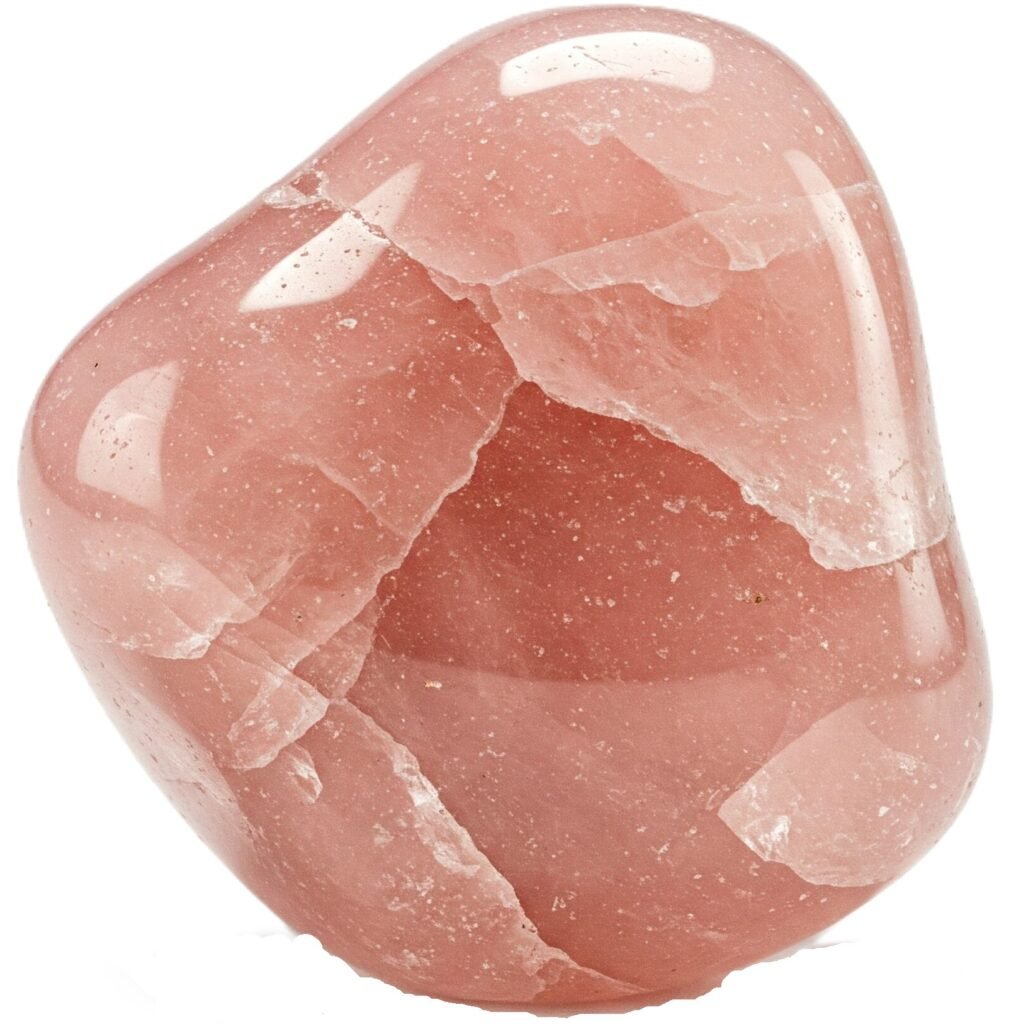
Guava quartz is a striking, peach-to-raspberry variety of macrocrystalline quartz distinguished by its warm, tropical undertones and radiant translucency. Unlike traditional cool-pink rose quartz, guava quartz exhibits a sunset-like coral glow caused by fine natural inclusions of iron oxides, manganese, and lithium-bearing amphiboles. As an emerging darling of both lapidary artisans and energy practitioners, it unites the structural resilience of the silicate family with a tender, heart-centered energy. Whether cut into high-polish cabochons or displayed as raw crystalline clusters, guava quartz serves as a bridge connecting modern geological appreciation with uplifting emotional restoration.
Alternate Names
Because guava quartz is a commercial and lapidary designation rather than an official mineral species, it appears under various descriptive and regional marketing names across the gemstone trade:
- Peach Strawberry Quartz: Often applied when specimens display speckles of reddish haematite suspended within a peach matrix.
- Pink Amphibole Quartz: Used when fibrous inclusions from the amphibole group impart a creamy, opaque salmon blush.
- Coral Quartz: A jeweller’s moniker referencing specimens displaying vibrant orange-pink hues.
- Salmon Quartz: Commonly used in European markets to describe milky, salmon-colored nodules.
- Tangerine Rose Quartz: An informal name highlighting its colour profile between classic rose quartz and tangerine quartz.
The Stone’s Science and Composition
From a mineralogical perspective, guava quartz is primarily silicon dioxide ($\text{SiO}_2$), belonging to the trigonal crystal system. It develops through igneous and hydrothermal processes where silica-rich fluids cool inside pegmatite pockets, fractures, and lithic cavities.
The fundamental difference between classic rose quartz and guava quartz lies in the chromophores and structural inclusions. While standard rose quartz derives its cloudy pink tint from microscopic dumortierite-like borosilicate nanofibres, guava quartz obtains its warmer, coral-to-peach tint from iron oxides (haematite/goethite) combined with trace manganese and occasionally lithium silicates scattered through the silicate lattice.
Key Physical Characteristics
Chemical Formula: SiO₂ (Silicon Dioxide)
| Characteristic | Field Expression & Diagnostic Value |
| Chemical Formula | SiO₂ (Silicon Dioxide) |
| Mohs Hardness | 7.0; scratches window glass and knife blades easily; highly durable for jewellery. |
| Lustre | Vitreous (glass-like) on crystal faces; sub-vitreous to waxy on fractured surfaces. |
| Diaphaneity | Ranges from semi-transparent to translucent; rarely fully transparent due to micro-inclusions. |
| Colour Zoning | Displays swirled, banded, or mottled peach, rose-gold, and melon tones. |
| Origin of Colouration | Trace Fe³⁺, Mn²⁺, Ti⁴⁺, and micro-inclusions of lepidolite or amphibole |
| Tenacity | Brittle; fractures cleanly along conchoidal planes under severe impact. |
| Streak | White, common across the macrocrystalline quartz group. |
Common Geologic Varieties
Guava quartz occurs in several distinct geological habits depending on crystallisation speed and regional impurity concentrations:
- Massive Guava Quartz: Lacks distinct crystal faces, forming dense, veined aggregates within pegmatites; widely cut into beads, spheres, and palm stones.
- Euhedral Scepters & Points: Highly coveted prismatic crystals terminating in sharp hexagonal pyramids, occasionally featuring phantoms or interior colour curtains.
- Inclusion-Rich “Guava Strawberry”: Exhibits visible flakes of haematite or lepidolite suspended within clear-to-blush quartz, creating a shimmering aventurescence.
- Amphibole-Included Guava: A semi-opaque, silky variety shot through with fibrous minerals, yielding a velvety, pastel peach finish.
Global Mining and Volcanic Sources
Guava quartz forms in continental pegmatite districts and hydrothermal vein networks rather than direct volcanic lava flows:
- Minas Gerais, Brazil: The world’s premier source. Granitic pegmatites in this region yield richly coloured salmon and coral-pink quartz blocks alongside beryl and tourmaline deposits.
- Madagascar (Antsirabe & Fianarantsoa regions): Produces gem-grade guava quartz celebrated for its optical translucence and high concentration of fine lithium-mica inclusions.
- Namibia: Arid pegmatite formations yield rarer, crystallised specimens displaying striking colour zoning and sceptre habits.
- Tunduru, Tanzania: Yields alluvial gravels containing water-worn guava quartz pebbles rich in manganese impurities.
Crystal Pairings: What to Combine and Avoid
Optimal Crystal Pairings
- Morganite or Rhodochrosite: Enhances heart centred and emotional-support layouts by combining heart-resonant pink frequencies.
- Citrine: The solar energy of natural citrine activates the Sacral and Solar Plexus chakras, complementing guava quartz’s warmth to fuel creative and romantic manifestation.
- Clear Quartz: Acts as an energetic amplifier, expanding the reach and intensity of the stone’s subtle inclusions.
- Black Tourmaline or Smoky Quartz: Provides grounding anchor points, ensuring heart healing stays rooted and emotionally manageable.
Crystal Pairings to Avoid
- Rough Moldavite: The high-frequency, disorienting kinetic kick of tektites can drown out the gentle, stabilising frequency of guava quartz, creating emotional fatigue or restlessness.
- Carnelian (Overly Dominant Specimens): While both carry warm tones, overly aggressive, fiery carnelian can hijack the soothing, empathetic nature of guava quartz during meditative introspection.
Archaeology, Art and Ancient History
Because “guava quartz” is a 20th- and 21st-century mineral trade designation, it does not appear under this name in classical antiquarian texts. However, ancient lapidaries in the Mediterranean, Mesopotamia, and Pre-Columbian Americas actively carved warm-hued pink and orange chalcedonies, carnelians, and coloured quartzites into protective scarabs, cylinder seals, and talismans.
In imperial Chinese lapidary workshops, warm pink and peach quartz varieties were carved into snuff bottles, longevity peaches (pantao), and figurines representing deities of benevolence, serving as emblems of immortality, sweetness, and enduring affection.
Folklore, Legends and Sacred Tales
Modern crystal folklore views guava quartz as the “Stone of the Sweet Life” (La Dolce Vita). Contemporary metaphysical tales position this crystal as an energetic tonic for those whose spirits have grown cynical or hardened:
- The Legend of the Nectar Heart: Modern intuitive folklore teaches that guava quartz formed when rays of sunrise became locked into crystallised drops of fruit nectar, gifting the stone the power to turn emotional bitterness into compassion.
- The Healer’s Compassion: Practitioners regard the stone as a talisman for empathetic listeners, believing it absorbs sharp emotional friction during tough conversations and replaces it with mutual understanding.
Metaphysical and Mystical Healing Properties
- Emotional Rejuvenation: Guava quartz soothes internalised stress, eases panic spikes, and releases old romantic grievances.
- Self-Worth & Acceptance: Inspires a warm, non-judgemental acceptance of one’s own quirks, shadow self, and physical body.
- Creative Renewal: By bridging heart energy with sacral warmth, it stimulates creative passions, artistic expression, and joyful play.
- Restful Sleep: Placed beneath a pillow or on a bedside table, its steady vibrational output encourages soft dreams and relieves racing thoughts before sleep.
Astrological Connections
Guava quartz shares natural affinities with signs ruled by the elements of Earth and Water:
- Taurus (Primary): Ruled by Venus, Taurus resonates deeply with the stone’s sensory beauty, grounded comfort, and heart centred stability.
- Cancer: Guava quartz acts as a gentle energetic shield for sensitive Cancerians, nurturing their empathetic spirit while keeping emotional burnout at bay.
- Libra: Venus-ruled Libra finds in guava quartz a touchstone for harmonic equilibrium, graceful diplomacy, and self-love.
The Chakra System
Guava quartz serves as an energetic bridge across two primary energy centres:
- Heart Chakra (Anahata): The stone’s pink matrix clears blockages, soothes heartache, and expands the capacity to give and receive unconditional love.
- Sacral Chakra (Svadhisthana): The orange-coral undertones stimulate personal passion, zest for life, and emotional intimacy.
Interesting Facts
- Not Strawberry Quartz: While both contain iron inclusions, strawberry quartz features distinct red flake-like specks in clear quartz, whereas guava quartz displays an even, pastel peach-to-pink colouration throughout the stone.
- Thermal Sensitivity: Prolonged exposure to harsh, direct ultraviolet sunlight can cause the delicate manganese and iron chromophores in guava quartz to fade over time.
- Piezoelectric Power: Like all quartz varieties, guava quartz generates an electrical charge under applied mechanical stress, a property harnessed in micro-circuitry and chronometers.
Modern Milestones: Birthstones and Anniversaries
- Alternative Birthstone: Serves as an alternative birthstone for October (alongside tourmaline and rose quartz) and May (celebrating spring blooms and Taurus vitality).
- Anniversary Milestone: A favoured modern gift for the 2nd and 5th Wedding Anniversaries, symbolising sweet, maturing affection and emotional harmony.
- Modern Talisman: Popular in holistic bridal jewellery as an anchor for open-hearted commitment and calm nerves on wedding days.
Frequently Asked Questions
Is Guava Quartz natural or dyed?
Natural guava quartz is 100% natural, deriving its peach-pink hue from trace minerals and inclusions. However, the market contains dyed crackle quartz and synthetic glass beads sold dishonestly under this name. Authentic specimens show gentle internal colour variations and natural inclusions rather than dye pooled in cracks.
How do I tell Guava Quartz apart from rose quartz?
Rose quartz has a cool, blue-leaning baby pink colour with a hazy or milky translucence. Guava quartz carries visible warm peachy-orange, coral, or salmon undertones due to the presence of iron oxide and manganese inclusions.
Can Guava Quartz go in water?
Yes. With a Mohs hardness of 7 and an absence of cleavage planes, guava quartz is water-safe. You can clean it safely using lukewarm running water and mild soap. Avoid soaking it in salt water, which can degrade polished coatings and penetrate microscopic fissures.
How should I cleanse and recharge Guava Quartz?
Cleanse it using white sage smoke, sound frequencies (singing bowls or bells), or a bed of selenite. To recharge, place it under moonlight (especially during the Full Moon). Avoid extended midday sun exposure to preserve its delicate colour.
Can I wear Guava Quartz every day?
Yes. Because it rates a durable 7 on the Mohs scale, guava quartz resists everyday scratches and holds up exceptionally well in daily-wear rings, bracelets, and pendants