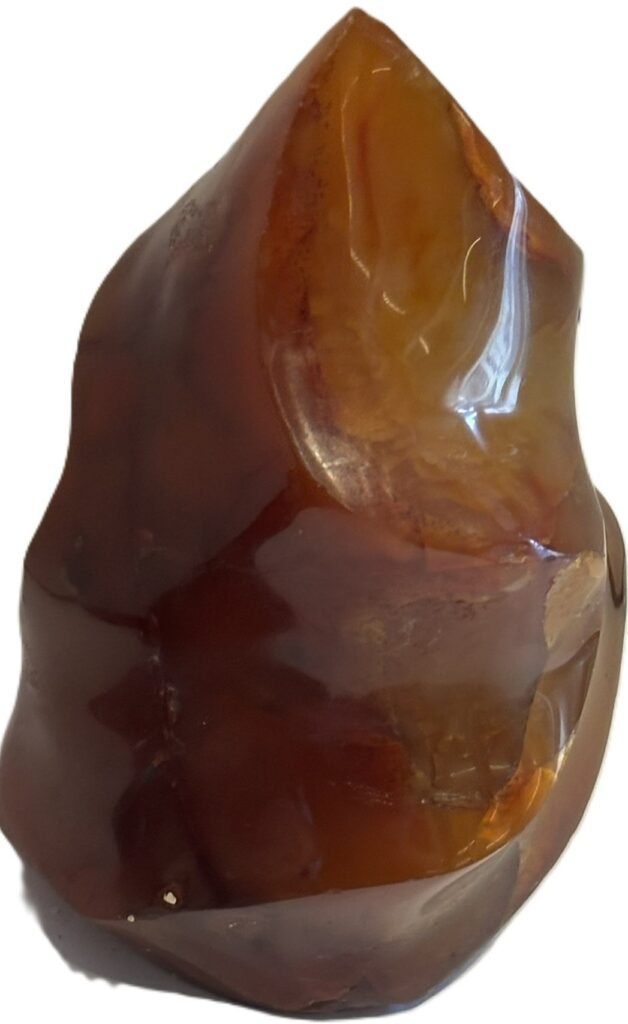
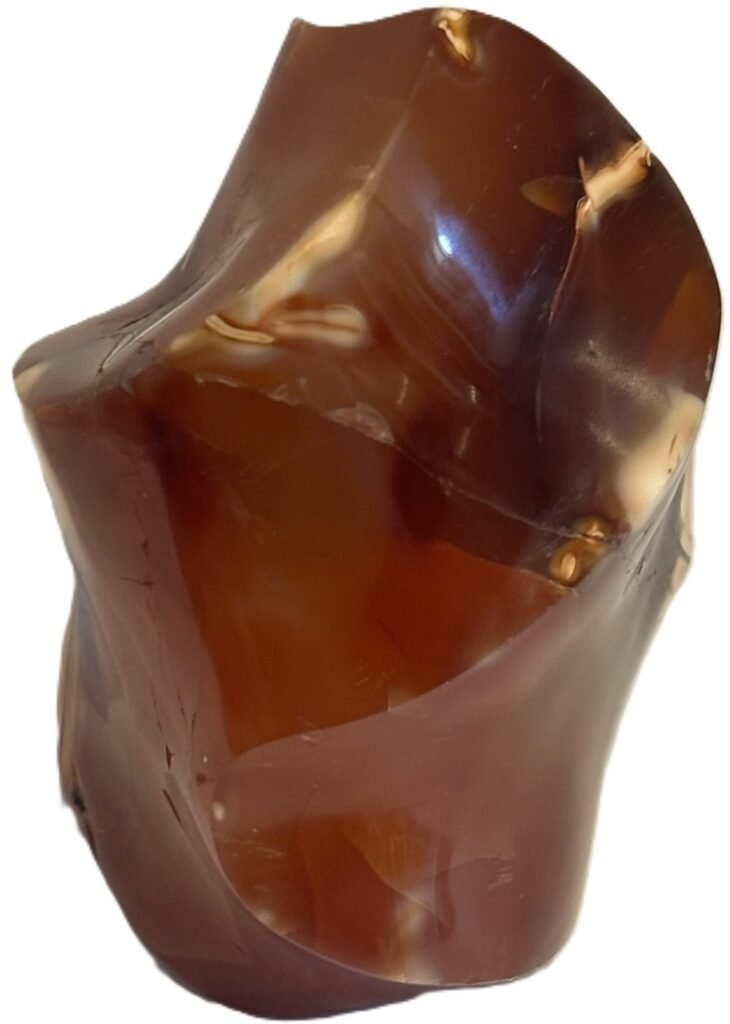
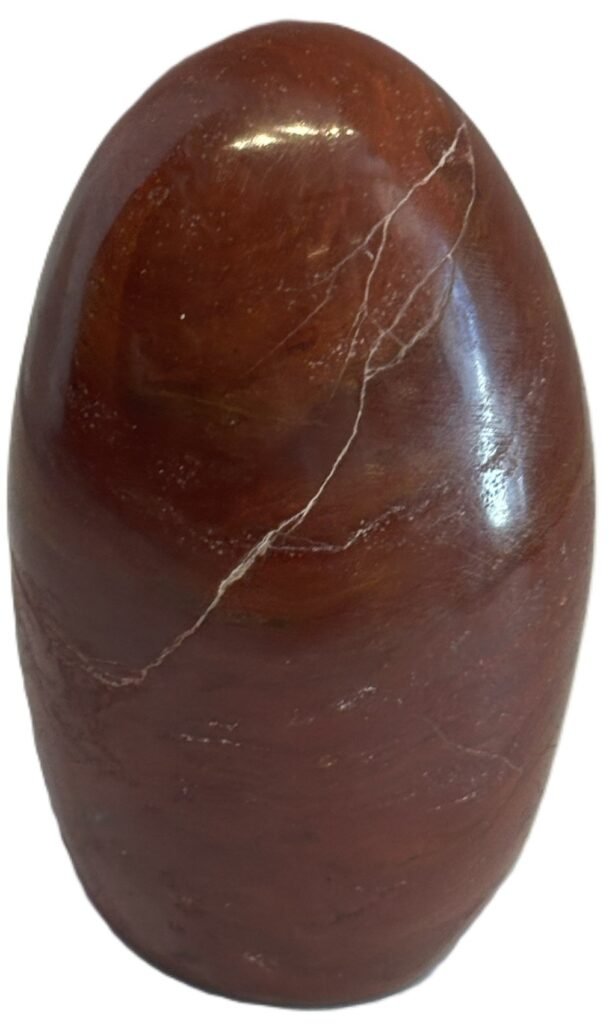
Epitomising vital spark, creative fire, and ancient courage, Carnelian stands as one of the most culturally significant and historically revered gemstones in the world. Characterised by its translucent, warm, sunset-like radiance, this captivating mineral has served humanity for over four millennia as an unyielding symbol of life, endurance, and personal empowerment. From the sacred tombs of Egyptian pharaohs to the signet rings of Roman warriors, Carnelian has consistently been sought after to stir the spirit, overcome fear, and ignite motivation. Today, it remains an essential cornerstone in holistic crystal healing, coveted equally by discerning mineral collectors and fine jewellery artisans for its striking aesthetic appeal and deeply grounding, life-affirming energy.
Alternate names
Throughout its incredibly long history, Carnelian has acquired several evocative names across various civilisations and eras:
- Cornelian: A prominent alternative spelling heavily used in historical European texts, antique jewellery registries, and classical geological treatises up until the 20th century.
- The Sunset Stone: A poetic moniker derived from its fiery, golden-orange glow, which mirrors the fading rays of the sun.
- The Flesh Stone: Originating from historical translations of its classical name, referencing its uncanny resemblance to healthy, vital muscle tissue and blood.
- Sard: While scientifically distinct (being a darker, browner variety), the boundaries between Carnelian and Sard are fluid, and the names were frequently used interchangeably in ancient Mediterranean trade routes.
The stones Science and Composition
From a scientific perspective, Carnelian is an exquisite cryptocrystalline variety of Chalcedony, which is itself a fibrous sub-variety of the broader Quartz mineral group.
- Chemical Formula: SiO2 (Silicon Dioxide) accompanied by micro-inclusions of iron compounds.
- Colour Genesis: The signature translucent red, orange, and amber palette of Carnelian is dictated by the presence of trace impurities of iron oxide (specifically haematite) interspersed uniformly within the sub-microscopic quartz crystal lattice. When exposed to natural geothermal heat or intentional, controlled artisan baking, these internal iron compounds oxidise further, noticeably deepening the stone’s red saturation.
- Crystal System: Trigonal/Hexagonal (Microcrystalline aggregate).
Key Physical Characteristics
To accurately identify genuine Carnelian, gemmologists and collectors evaluate its unique physical properties:
- Mohs Hardness Scale: 7. This substantial rating renders Carnelian an exceptionally durable gemstone, highly resistant to scratching, completely scratchable by a steel file, and perfectly suited for intricate lapidary carving, signet engraving, and everyday jewellery wear.
- Lustre: Vitreous to waxy when polished; dull or greasy in its raw, unworked state.
- Transparency: Translucent to semi-opaque. True Carnelian should allow light to pass through its edges or thinner sections unevenly, highlighting its internal cloudy structure.
- Fracture: Conchoidal to splintery, showing smooth, curved surfaces typical of silicate minerals.
- Specific Gravity: 2.58 – 2.64.
Common Geologic Varieties
Carnelian exhibits distinct optical variations depending on its specific geographic formation environment and exact mineral inclusions:
- Light Carnelian: Specimens dominated by pale orange, salmon, or honey-amber hues, showing high levels of semi-translucency and minimal dark inclusions.
- Deep Red Carnelian (Carnelian Jasper-like): An intense, highly saturated, blood-red variety loaded with dense concentrations of haematite. It can occasionally be mistaken for Red Jasper, though Carnelian retains its characteristic interior translucency when held up to a bright light source.
- Banded Carnelian: A beautiful hybrid variety featuring alternating ribbons of fiery orange and milky white or cream Chalcedony bands, beautifully blurring the geological dividing line between Carnelian and Agate.
Global Mining and Volcanic Sources
Carnelian forms primarily in low-temperature hydrothermal environments, cooling slowly within the gas cavities (amygdales), veins, and fissures of volcanic basalt and ancient sedimentary rock formations. Over millions of years, weather erosion liberates these ultra-hard nodules, allowing them to be harvested from alluvial riverbeds. Notable global deposits include:
- India (Ratnapura and Gujarat regions): Historically renowned for producing the absolute finest quality Carnelian. The local practice of solar-baking mined nodules in clay pots to amplify their deep red saturation has been perfected here for thousands of years.
- Brazil (Rio Grande do Sul): A major modern commercial source producing massive, high-grade Carnelian geodes and banded nodules.
- Madagascar: Yields exceptionally vibrant, translucent specimens with unique, glowing orange and deep amber red tones.
- Germany & the United States: Notable historical and localised deposits found within ancient volcanic fields, particularly across Oregon, Washington, and the Lake Superior region.
Crystal Pairings: What to Combine and Avoid
In metaphysical energy work and crystal grid alignment, combining stones with compatible structural compositions and vibrational frequencies is vital for achieving balance.
Optimal Crystal Pairings
- Tiger’s Eye (For Vitality & Courage): Combining Tiger’s Eye with Carnelian creates a powerhouse of solar and lower-chakra energy. Tiger’s Eye provides structured mental focus and physical protection, perfectly stabilising Carnelian’s raw, fluid passion and driving motivation.
- Citrine (For Abundance & Creativity): As two premier manifestation stones, pairing Citrine with Carnelian supercharges the Sacral and Solar Plexus chakras. Citrine brings intellectual clarity, joy, and golden prosperity, while Carnelian provides the raw endurance and physical momentum needed to turn creative ideas into reality.
- Red Jasper (For Ultimate Grounding): Pairing Carnelian with Red Jasper deepens your connection to the physical plane. Red Jasper offers slow, steady, and unshakeable root chakra endurance, acting as a secure anchor for Carnelian’s fast-burning, creative fire.
Crystal Pairings to Avoid
- Amethyst: Amethyst operates on a high-frequency, spiritual, and deeply tranquillising plane designed to quiet the mind and induce meditative stillness. Carnelian’s intense, action-oriented, and fiery lower-chakra output directly opposes this calmness, causing the two opposing energetic frequencies to blunt or cancel each other out.
- Sodalite: Sodalite encourages detached logic, calm truth, and emotional cooling. While both stones can individually enhance clarity, Sodalite’s icy blue, throat-and-third-eye focus clashes with Carnelian’s passionate, warm, lower-body vitality, resulting in a fractured, chaotic environment within a single crystal grid.
Archaeology, Art and Ancient History
The archaeological record proves that Carnelian was one of the very first gemstones systematically mined, worked, and traded by humanity.
- The Indus Valley Civilisation: As early as the 3rd millennium BCE, advanced artisans in Mehrgarh and Lothal used specialised copper drills to create highly polished, elongated Carnelian beads, which were traded across vast distances into Mesopotamia.
- Minoan Crete: Archaeological excavations at the Palace of Knossos revealed magnificent, finely carved Carnelian seal stones dating to 1800 BCE, used by royal bureaucrats to stamp wax documents.
- Ancient Rome: The Romans elevated the use of Carnelian in glyptic art to an absolute peak. It was the premier gemstone chosen for carving intaglios—signet rings featuring recessed engravings of gods, emperors, and protective symbols. Because hot wax does not stick to the smooth, waxy surface of polished Chalcedony, these rings served as highly practical, unforgeable legal signatures for the Roman elite.
Folklore, Legends and Sacred Tales
Rich narrative lore from diverse global cultures surrounds the fiery history of Carnelian:
- The Blood of Isis: In the Egyptian Book of the Dead, Carnelian is explicitly tied to the protective, magical blood of the goddess Isis. The Thet amulet (the Buckle of Isis) was routinely carved from Carnelian and placed around the necks of mummies to safeguard the deceased soul during its dangerous journey through the underworld.
- The Ring of the Prophet: In Islamic tradition, Carnelian holds a place of profound spiritual respect. It is written that the Prophet Muhammad wore a silver signet ring set with an engraved, red Abyssinian Carnelian on his right hand, a historical detail that popularised the stone throughout the Islamic world for centuries.
- Renaissance Oratory: During the European Renaissance, scholars, actors, and political orators routinely kept a polished Carnelian pocket stone nearby. It was believed to dispel illusions, banish stage fright, and dramatically strengthen the human voice, empowering the speaker with unshakeable eloquence and poise.
Metaphysical and Mystical Healing Properties
In holistic crystal wellness, Carnelian is widely celebrated as the supreme “Stone of Motivation and Vitality.” It acts as a powerful energetic battery, designed to clear stagnant, sluggish blockages and restore an individual’s natural drive and enthusiasm.
- Emotional Support: It is used by crystal practitioners to combat apathy, self-doubt, and chronic procrastination. It replaces fear of failure with an inner sense of boldness, helping individuals make decisive life choices.
- Physical Energy: Practitioners work with Carnelian to stimulate blood circulation, combat chronic fatigue, support lower back issues, and boost physical stamina during intense training or recovery.
Astrological Connections
Carnelian’s fiery cosmic profile aligns beautifully with three specific signs of the zodiac, offering tailored energetic support to each:
- Aries: As a cardinal fire sign ruled by Mars, Aries thrives on action. Carnelian perfectly amplifies the Arian traits of boldness, leadership, and raw physical courage while helping to channel impulsive frustrations into productive, focused outcomes.
- Leo: Ruled by the Sun, Leo aligns deeply with the golden-orange warmth of the “Sunset Stone.” Carnelian stimulates the Leonine heart, fuelling their natural artistic creativity, dramatic self-expression, and generous passion.
- Virgo: While Virgo is a analytical earth sign, Carnelian provides immense value here by offering decisive clarity. It helps the overactive Virgo mind move past analysis paralysis, quietening the inner critic and encouraging them to confidently act on their goals.
The Chakra System
Carnelian is a vital, multi-chakra stone that acts as a bridge between your earthly foundations and your emotional, creative centres.
- The Sacral Chakra (Svadhisthana): Situated just below the navel, this is Carnelian’s primary energetic home. By placing a vibrant orange Carnelian over this centre during meditation, it clears creative drought, ignites sensuality, balances reproductive energies, and restores a joyful, fluid passion for life.
- The Root Chakra (Muladhara): Because of its dense, iron-rich silicate base, Carnelian simultaneously activates the base of the spine. It provides a secure, physical anchor to the Earth, supplying the continuous grounding, survival instincts, and primal stamina required to support your higher creative pursuits.
Interesting facts
- A 4,000-Year Legacy: Carnelian stands alongside Lapis Lazuli as one of the earliest documented gemstones used continuously in human body adornment and state craft.
- Napoleon’s Talisman: The French Emperor Napoleon Bonaparte cherished a unique, octagonal Carnelian seal ring that he found during his military campaign in Egypt, wearing it religiously as a protective charm against battlefield harm.
- Thermal Transformations: The stunning red depth of many antique Carnelian beads is a result of calculated, ancient heat-treatment techniques, wherein raw stones were left out to bake under intense desert suns for months at a time.
Modern Milestones: Birthstones and Anniversaries
- Alternative August Birthstone: While Peridot is the primary modern birthstone, Carnelian serves as a highly popular traditional alternative for August. It resonates perfectly with the late-summer solar energies of Leo and early Virgo.
- The 17th Wedding Anniversary: Carnelian is the officially designated milestone gemstone gifted to celebrate 17 years of continuous marriage. The enduring, scratch-resistant hardness of the stone mirrors a resilient relationship, while its deep, glowing red-orange hues symbolise the undiminished warmth, passion, and vitality of a lasting love.
Extensive FAQ Section
Q: Can Carnelian safely go in water?
A: Yes, generally speaking, Carnelian is highly resilient in water. Because it is a grade 7 quartz-based silicate with no open copper or water-soluble mineral cavities, it can be safely washed in lukewarm water to remove dust and oils. However, you should strictly avoid submerging it in saltwater for extended periods, as salt can slowly microscopic-penetrate the exterior surface of polished stones, dulling their natural, waxy lustre over time.
Q: How can I easily tell if my Carnelian is real or a dyed fake?
A: Because Carnelian is heavily sought after, cheap imitations made by chemically dyeing plain gray Agate or Chalcedony are common. To spot a genuine stone, check these three key indicators:
- The Pattern: Natural Carnelian features cloudy, swirling, organic, and beautifully irregular distributions of iron oxide colour. If a stone displays perfectly crisp, sharply defined, alternating concentric stripes, it is likely a dyed Agate.
- The Translucency: Hold the stone up directly against a bright torch. Real Carnelian will showcase a dreamy, milky, or cloudy internal translucency. Fake glass or plastic versions are either perfectly see-through or show tiny, trapped circular air bubbles.
- The Temperature & Weight: Natural Carnelian is cool to the touch and takes a moment to absorb your body heat. Plastic counterfeits feel light and warm almost immediately upon being picked up.
Q: Is it safe to leave Carnelian in direct sunlight to charge?
A: Yes, natural Carnelian loves sunlight and aligns beautifully with solar energy. Leaving your Carnelian on a sunny windowsill for an hour or two is an excellent way to recharge its fiery vitality. However, do not leave it exposed to extreme, blistering outdoor heat for weeks on end; while heat deepens iron oxide, unregulated thermal shock can occasionally cause micro-fractures inside cryptocrystalline quartz.
Q: Can I wear Carnelian as an everyday ring or bracelet?
A: Absolutely. Thanks to its robust Mohs hardness rating of 7, Carnelian does not possess the structural fragility of softer minerals like Calcite, Fluorite, or Aragonite. It resists common airborne dust scratches excellently and handles the knocks of daily wear with ease, though removing it before heavy gardening or cleaning with harsh chemical solvents is still highly recommended to protect its polish.
Q: How should I safely clean and energetically cleanse my Carnelian?
- Physical Cleaning: Simply wash your Carnelian under a running tap of lukewarm water, use a drop of mild dish soap if necessary, and dry it immediately with a soft, clean micro fibre cloth. Never use ultrasonic steam cleaners on natural gemstones.
- Energetic Cleansing: To reset its energetic frequency without risking water or chemical damage, pass your Carnelian thoroughly through the smoke of a sacred incense (such as frankincense, sandalwood, or dried white sage), or place it near a sound-healing instrument like a Tibetan singing bowl.
- Energetic Charging: To safely replenish its active, creative properties, place it on a Selenite charging plate, leave it out overnight to soak in the light of a full moon, or expose it to the gentle rays of the morning sun.
These are my personally selected and curated Carnelian products
Carnelian products to buy now

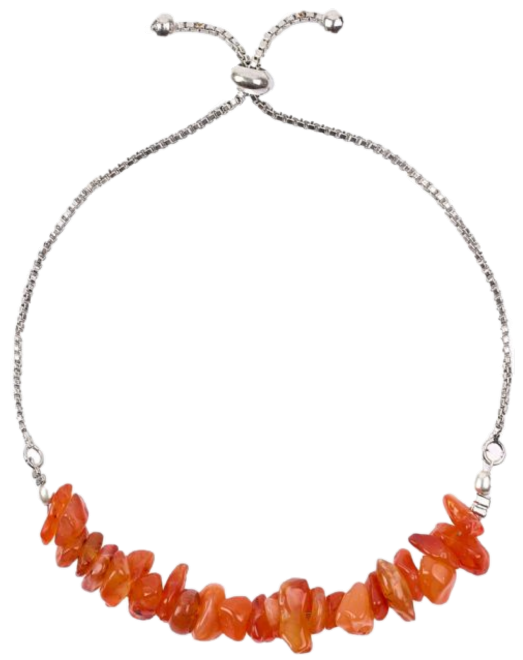
Carnelian Adjustable Bracelet
£7.50
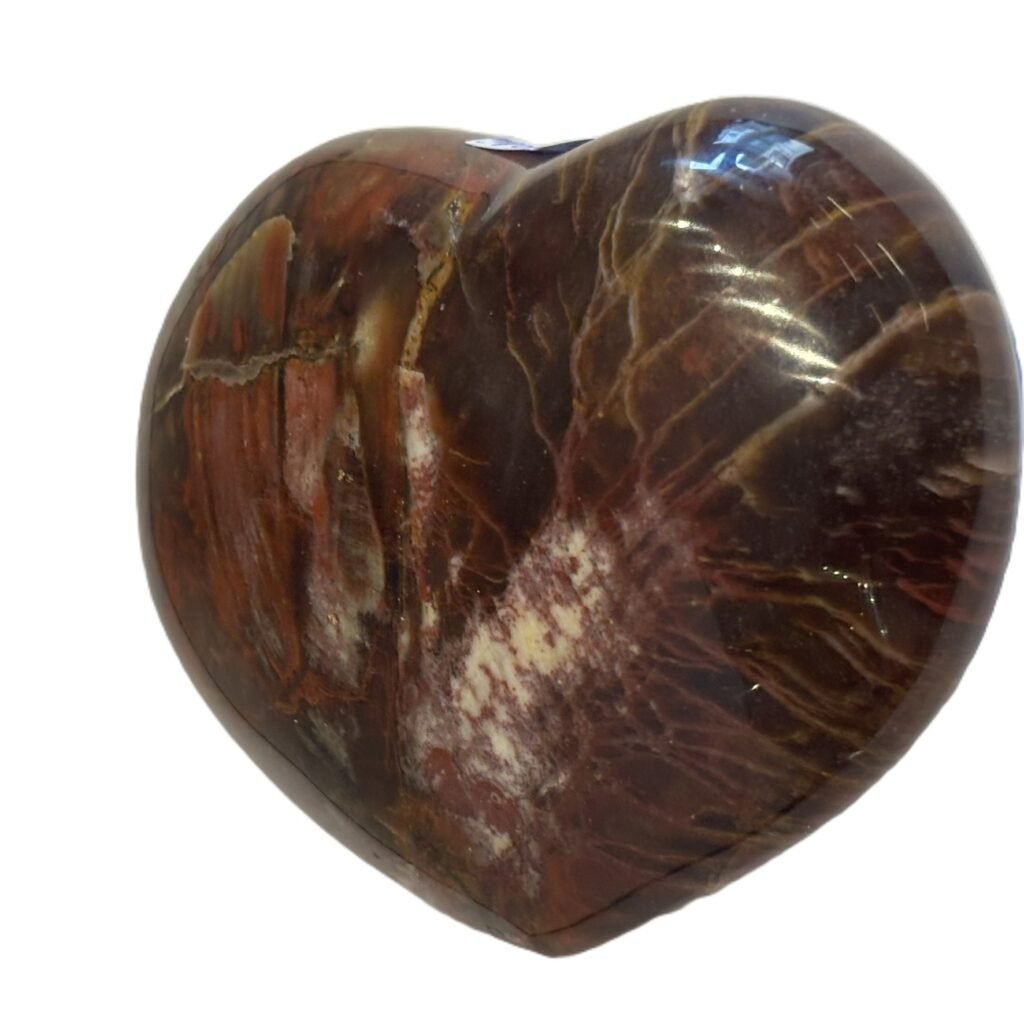
Polished Carnelian Carved Heart 7
£20.00
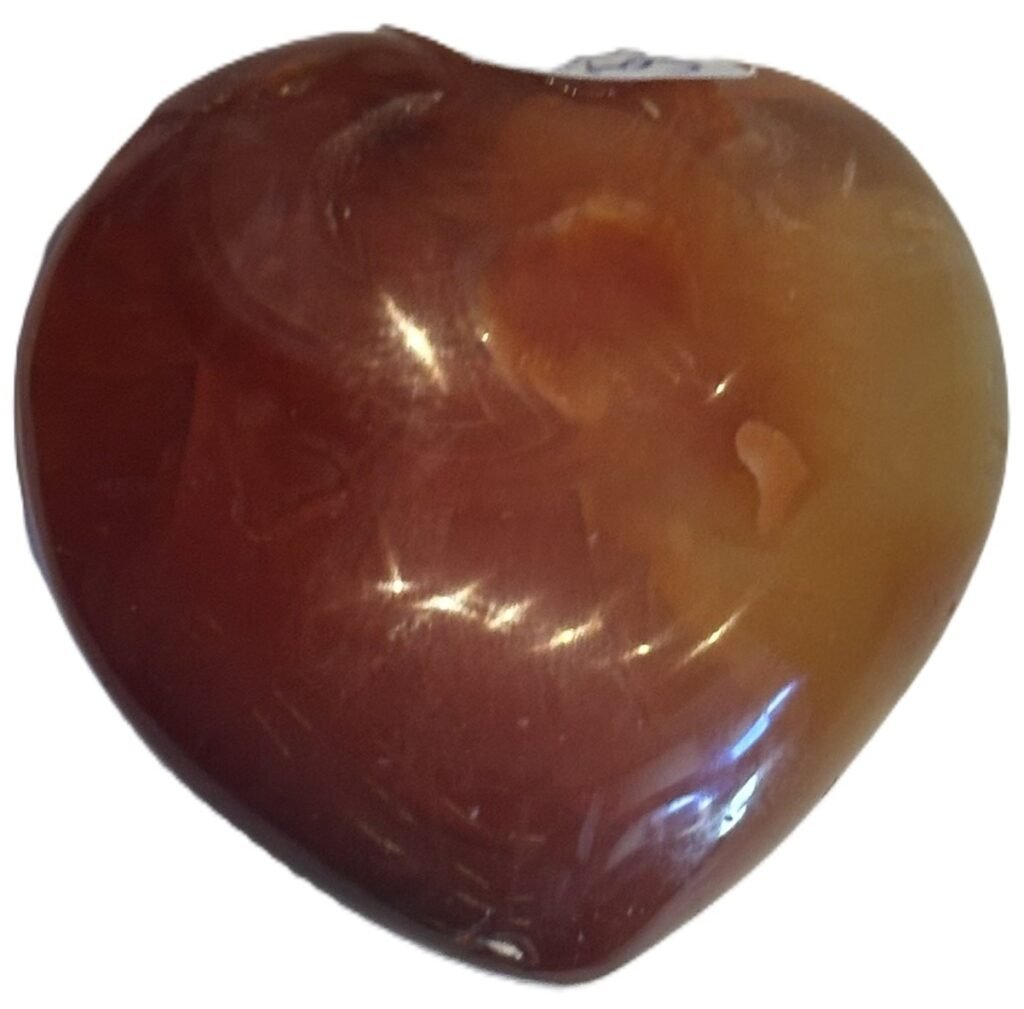
Polished Carnelian Carved Heart 97
£12.00
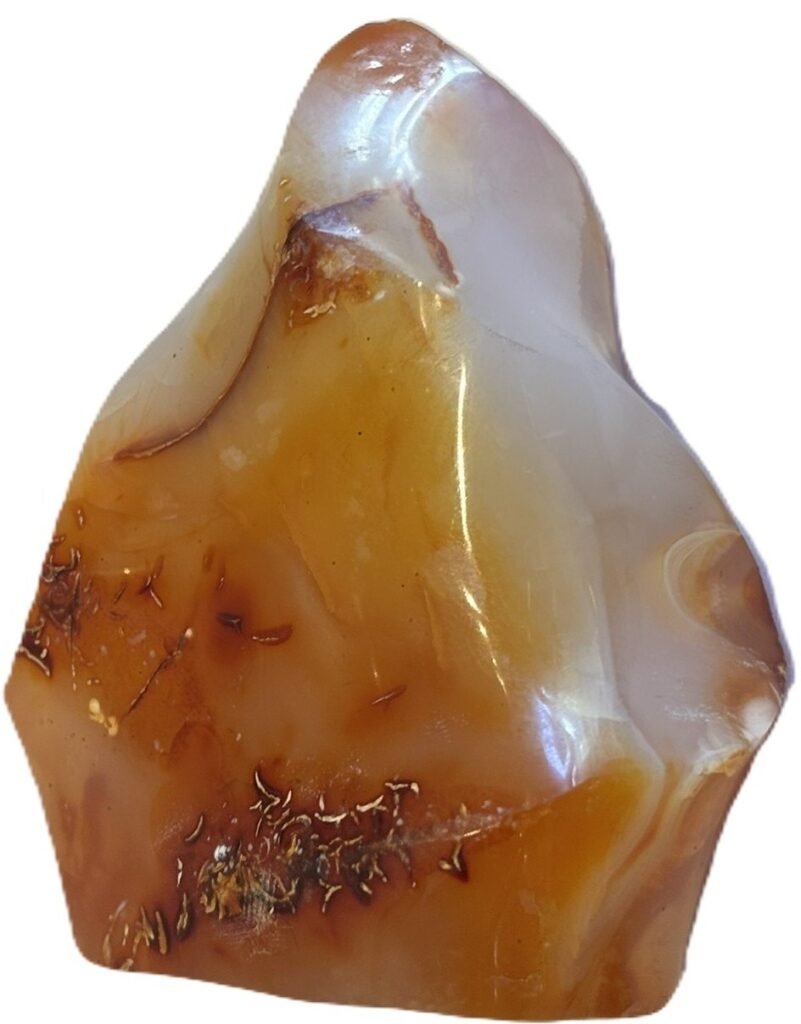
Polished Carnelian Flame Sculpture 1
£55.00
Polished Carnelian Flame Sculpture 11
£26.00
Polished Carnelian Flame Sculpture 2
£60.00
Polished Carnelian Flame Sculpture 3
£55.00
Polished Carnelian Standing Freeform 1
£250.00