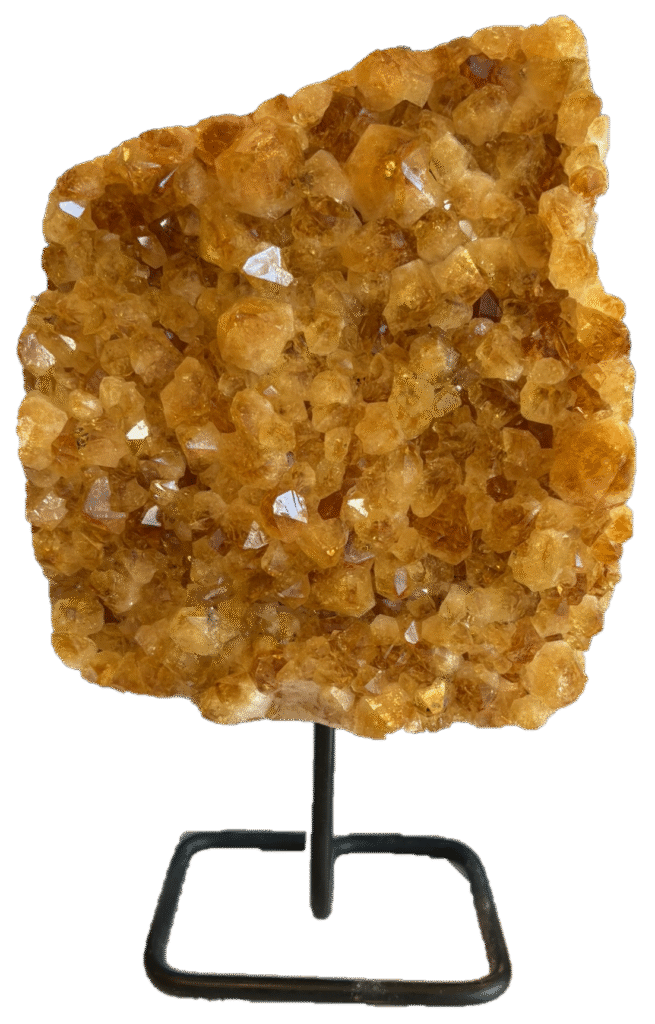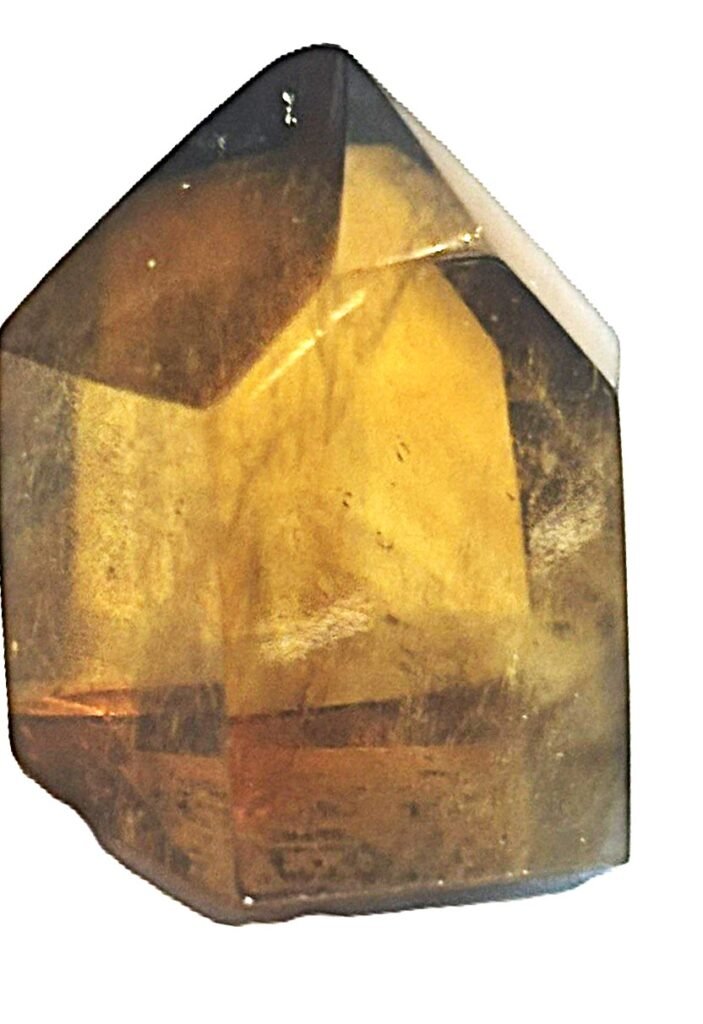
Epitomising the warmth of the sun, joy, and boundless prosperity, Citrine stands as one of the most beloved and visually captivating varieties of the quartz mineral family. Celebrated for its radiant yellow and golden-brown hues, this spectacular gemstone has captured human imagination for millennia.
Unlike many stones that absorb or store negative energies, Citrine is historically revered as a master purifier that dispels negativity and transforms it into positive, creative action. Whether you are looking to invite financial abundance into your life, spark creative inspiration, or simply admire the miraculous artistry of subterranean geology, Citrine serves as a powerful bridge between physical groundedness and spiritual elevation.
Alternate names
Throughout its long history across mineralogical and metaphysical circles, Citrine has been identified by several distinct monickers:
- The Merchant’s Stone: A name reflecting its historical role as a talisman for attracting wealth, commercial success, and financial abundance.
- The Sun Stone: Used colloquially by spiritual practitioners due to its vibrant, life-giving solar energy.
- Golden Quartz: A descriptive mineralogical alternative highlighting its place within the broader quartz family.
- Madeira Citrine: A specialised trade name reserved exclusively for deep orange-brown or reddish-brown specimens.
The stones Science and Composition
From a scientific perspective, Citrine is a macrocrystalline variety of Silicon Dioxide ($\text{SiO}_2$), making it a member of the diverse quartz group. Its signature yellow-to-amber colouration is caused by sub-microscopic, interstitial trace elements of trivalent iron ($\text{Fe}^{3+}$) evenly distributed within the crystalline lattice.
In nature, Citrine grows as hexagonal crystal prisms, often within hydrothermal veins or magmatic pegmatites. True natural Citrine is geologically rare. The vast majority of commercially available Citrine is created through human technological innovation, whereby natural Amethyst or Smoky Quartz is carefully heat-treated in specialised kilns to permanently shift its iron oxidation state and change its colour from purple or grey to a warm golden hue.
Key Physical Characteristics
Citrine is tough, durable, and highly wearable, making it an excellent gemstone for daily jewellery and elaborate ornamental carvings.
- Chemical Formula: $\text{SiO}_2$ (Silicon Dioxide)
- Mohs Hardness Scale: 7 (highly scratch-resistant, easily resisting airborne dust)
- Crystal System: Hexagonal / Trigonal
- Lustre: Vitreous (glassy)
- Transparency: Transparent to translucent
- Streak: White
- Fracture: Conchoidal (smooth, shell-like curves when broken)
- Cleavage: None (indistinct)
Common Geologic Varieties
Citrine displays an elegant spectrum of natural tones and structural variations, which are typically classified into four key types:
- Natural Citrine: Displays a highly uniform, pale, smoky, or greenish-yellow tone. It lacks a stark white base and is exceptionally rare and expensive.
- Heat-Treated Citrine: Displays intense, deep golden-yellow to bright orange tones. These specimens often feature crumbly, stark white bases where they were detached from original amethyst geode walls.
- Madeira Citrine: Characterised by its deeply saturated, fiery orange-red and rich tawny-brown tones, highly prized by fine jewellers.
- Ametrine: A miraculous natural intergrowth where Citrine and Amethyst form within the exact same crystal lattice, displaying distinct zones of purple and yellow due to localised temperature differentials during formation.
Global Mining and Volcanic Sources
Because natural Citrine requires highly specific geological conditions involving deep geothermal warmth and iron-rich environments, its raw deposits are limited.
- Brazil: The undisputed global capital of Citrine production. The Rio Grande do Sul region yields massive quantities of high-grade amethyst geodes that are expertly heated, alongside natural golden specimens.
- Madagascar: Renowned for producing exquisite, completely untreated natural smoky-citrine clusters with exceptional clarity.
- Russia (The Ural Mountains): A historic source famous for pale, ice-clear natural specimens.
- Spain: Deposits in regions such as Salamanca yield notable pale-yellow crystals.
- United States: Notable small-scale dbeposits occur within Colorado, North Carolina, and California.
Crystal Pairings: What to Combine and Avoid
When combining crystals, the primary goal is energetic synergy. Citrine’s dynamic, high-frequency solar vibration pairs beautifully with stones that amplify manifestation or benefit from an active, uplifting anchor. Conversely, it can conflict with minerals whose energetic properties act at cross-purposes.
Optimal Crystal Pairings
- Tiger’s Eye: An exceptional pairing for personal empowerment. Tiger’s Eye introduces deep grounding and practical focus, anchoring Citrine’s expansive luck and manifestation properties into real-world achievements.
- Carnelian: The ultimate creative powerhouse combo. Carnelian stimulates physical vitality and passion, which beautifully complements Citrine’s joyful mental clarity, making it ideal for artists and entrepreneurs.
- Green Aventurine: Known as the “Stone of Opportunity.” Melding Green Aventurine with Citrine creates a highly potent auric field for wealth attraction, combines luck with deliberate abundance programming.
Crystal Pairings to Avoid
- Blue Kyanite: Blue Kyanite is a stone of high-frequency tranquillity, inner throat chakra stillness, and silent meditation. Its deeply cooling, passive nature can completely counteract and dampen Citrine’s vibrant, active solar energy.
- Black Obsidian: While grounding is useful, Black Obsidian’s intense, protective, shadow-work energy forces internal reflection and the purging of hidden trauma. This heavy, deep-earth frequency can easily overshadow and clash with Citrine’s light-hearted, joyful, and purely outward-focused radiance.
Archaeology, Art and Ancient History
Citrine has held an esteemed position in human art and craftsmanship across several distinct geological and historical epochs. During the Hellenistic Age in Greece (approx. 300–150 BCE), the stone experienced a major renaissance as a luxury gem; master lapidaries carved complex, intaglio images directly into transparent citrine stones for signet rings.
Centuries later, in the 1800s, Queen Victoria developed a deep personal affinity for the gem. Her fondness for Scottish culture led her to decorate her summer residence, Balmoral Castle, with locally sourced Cairngorm quartz and citrine. This royal trend sparked a massive fashion movement throughout the British Empire, cementing Citrine’s place as the centrepiece for traditional Scottish kilt pins, brooches, and shoulder plaids.
Between World War I and World War II, Citrine experienced another major milestone during the Art Deco era. Hollywood icons like Greta Garbo and Joan Crawford regularly stunned audiences by wearing massive, oversized, and structurally elaborate Art Deco citrine cocktail rings and geometric necklaces on the red carpet.
Folklore, Legends and Sacred Tales
The tapestry of human myth is rich with tales celebrating Citrine’s solar lineage. In ancient Egypt, the gem was intimately bound to Sekhmet, the fearsome warrior goddess portrayed with a lion’s head. Egyptians wore citrine talismans to harness her protective, fiery solar energy, believing it would shield them from plagues and defeat enemies in battle.
In ancient Rome, priests fashioned large citrine cabochons into rings to guard against evil thoughts, malice, and mental manipulation. In the 17th century, Scottish weapon makers tapped into this protective lore by adorning the handles of traditional daggers (dirks) with large, hand-carved citrine crystals.
According to ancient global legends, this “success stone” was so saturated with life-force that it possessed gender-specific blessings: it was believed to enhance a man’s social attractiveness and tactical intelligence while simultaneously helping women bear more children and experience enduring emotional happiness.
Metaphysical and Mystical Healing Properties
In modern holistic wellness and crystal healing practices, Citrine is universally regarded as a master stone of abundance, self-belief, and personal transformation. Because it channels the active frequency of light, it works like a spiritual battery, dissolving deep-seated patterns of self-doubt, lethargy, and chronic pessimism.
Metaphysical practitioners use Citrine to stimulate a sluggish mind, upgrade focus, and encourage a proactive “can-do” attitude. It acts as an emotional cleanser, helping individuals let go of past emotional baggage or financial anxieties, replacing those fears with a radiant sense of optimism, confidence, and unyielding personal power.
Astrological Connections
Citrine carries an intense cosmic resonance that aligns beautifully with the dynamic elements of the zodiac, particularly benefiting three specific signs:
- Leo: As a sign naturally ruled by the Sun, Leo shares a symbiotic bond with Citrine. The crystal strengthens a Leo’s natural leadership qualities, magnifies their innate confidence, and keeps their generous heart shielded from arrogance.
- Aries: This fiery sign benefits immensely from Citrine’s uplifting vibration, which helps channel raw Aries ambition and courage into organised, successful avenues while mitigating impulsive behavior.
- Gemini: Citrine brings superb mental adaptability and analytical clarity to the often-overactive Gemini mind, supporting focus and preventing intellectual burnout.
The Chakra System
In energetic anatomy, Citrine operates as a primary catalyst for the lower-to-middle chakra centres:
- The Solar Plexus Chakra (Primary Aligment): Located in the upper abdomen, this is the seat of personal power, willpower, and identity. Citrine clears blockages here, instantly boosting self-esteem, restoring gut instinct, and igniting the drive to accomplish goals.
- The Sacral Chakra (Secondary Alignment): Located just below the navel, this center governs creativity, passion, and emotional manifestation. Citrine infuses this chakra with warmth, unlocking creative blocks and assisting in the physical manifestation of abstract dreams.
Interesting facts
- A Master of Non-Retention: Citrine is one of only a handful of minerals on Earth that metaphysically never needs to be energetically cleansed, as it naturally transmutes negative energy rather than storing it.
- The Geode Transformation: Almost all deep-orange “Citrine” geodes found in modern crystal shops were actually born as purple Amethyst before being baked in industrial ovens at temperatures exceeding 450°C.
- Vinegar Diagnostic: Because Citrine is a pure silicate mineral, it will completely fail to react or fizz when exposed to household acids like vinegar, making it easy to distinguish from cheap, dyed calcium carbonate counterfeits (such as Calcite).
Modern Milestones: Birthstones and Anniversaries
In modern gemology, Citrine serves as the official contemporary alternative birthstone for November, offering a warm, affordable, and glowing option for Scorpios and Sagittarians who prefer its solar energy over traditional Topaz. Furthermore, Citrine marks a beautiful milestone in relationships, serving as the traditional gemstone gift for the 13th wedding anniversary. At this stage in a marriage, the stone symbolises the enduring warmth, hard-earned comfort, and joy of a mature, lasting partnership.
Citrine Frequently FAQ Section
How can I tell if my Citrine is natural or heat-treated Amethyst?
Look closely at its colour density and base. Heat-treated Amethyst typically displays a stark, opaque white base, with the tips of the crystals turning a saturated, burnt orange-brown colour. It also tends to be highly concentrated at the points and crumbly. Natural Citrine is consistently pale, smoky, or honey-yellow throughout its entire structure, has no stark white areas, and often forms in elongated singular points rather than compact geode clusters.
Can Citrine fade if left in the sun?
Yes. While Citrine is a solar stone metaphysically, prolonged exposure to harsh, direct afternoon sunlight or intense UV rays over several weeks will cause the delicate iron colour centres inside the quartz lattice to break down. This will permanently fade your vibrant crystal to a dull, washed-out grey or pale white. It is best displayed away from sunny windowsills.
Is Citrine safe to go in water?
Yes. Thanks to its robust Mohs hardness rating of 7 and its pure silicate composition, Citrine is entirely safe for brief submersions in water. It lacks the structural fragility of softer minerals and will not dissolve or rust. However, avoid keeping it submerged for months on end, and never expose it to extreme thermal shock (moving from boiling water to ice water), as this can stress micro-fractures inside the stone.
How should I safely clean and energetically charge my Citrine?
- Physical Cleaning: Wash your polished or raw Citrine under a running tap of lukewarm water, using a drop of mild dish soap if necessary, and dry it immediately using a soft microfibre cloth. Never use ultrasonic steam cleaners.
- Energetic Cleansing: While Citrine rarely holds negative energy, you can reset its frequency safely by passing it thoroughly through the smoke of a sacred incense like sandalwood or frankincense.
- Energetic Charging: To safely replenish its active properties without risking UV fading, place your Citrine on a Selenite charging plate or leave it outside overnight to soak in the gentle light of a full moon.
Q: Can I use vinegar to test if my Citrine is genuine?
A: Yes, as a negative diagnostic test. Because Citrine is a silicate mineral ($\text{SiO}_2$), it is completely inert to standard household acids. If you apply a single drop of white vinegar to a raw area of genuine Citrine, it will completely fail to react. This easily distinguishes it from cheap, dyed purple-or-yellow calcium carbonate imitations (like Calcite or Aragonite), which will immediately begin to bubble and fizz the moment the acid touches them.
These are my personally selected and curated Citrine products