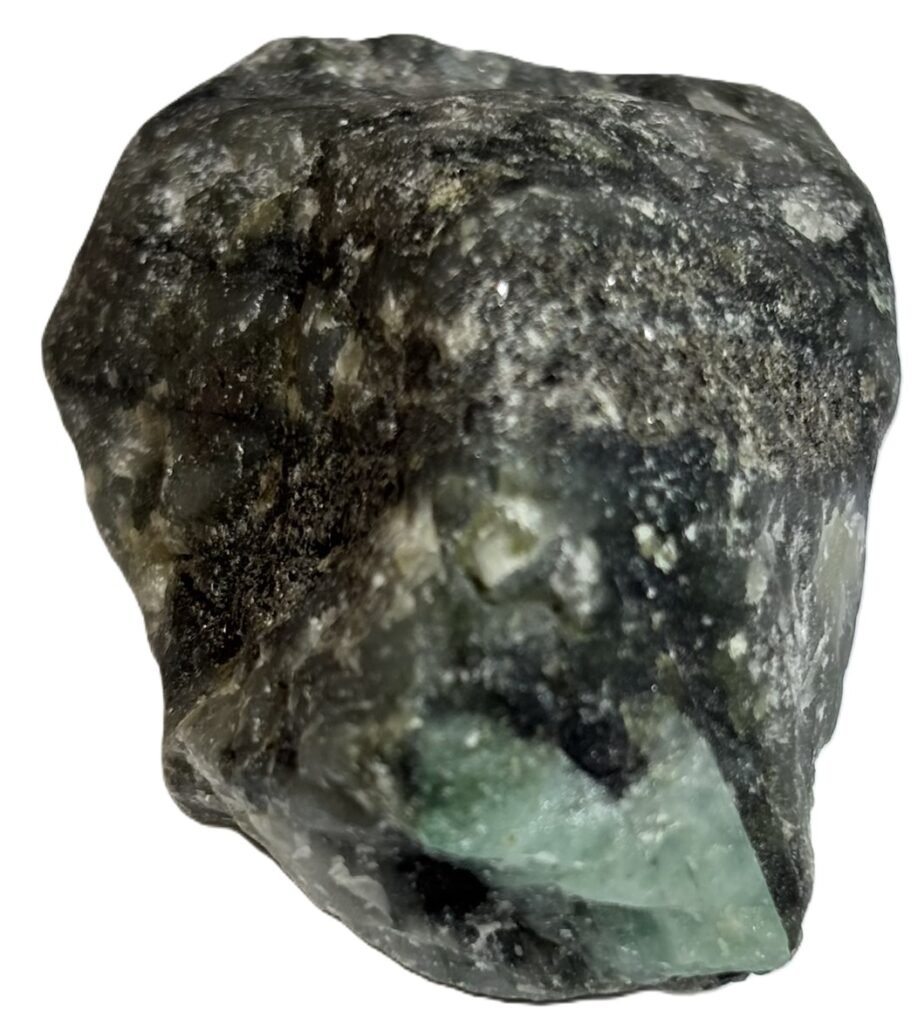
Green Aventurine is a shimmering, emerald-to-forest-hued variety of microcrystalline quartz celebrated worldwide as the premier “Stone of Opportunity.” Distinguished by its distinctive internal sparkle—known gemologically as aventurescence—this mineral forms when tiny, platy inclusions of chromium-bearing fuchsite mica crystallise inside the quartz matrix. Revered across centuries from ancient Tibetan monasteries to contemporary gemological workshops, Green Aventurine bridges geological curiosity and metaphysical tradition. It is globally sought after by collectors, lapidaries, and energy practitioners alike for its grounding durability, smooth tactile lustre, and enduring reputation as an earthly catalyst for good fortune, vitality, emotional resilience, and financial prosperity.
Alternate Names
Across different eras, mineral markets, and cultural traditions, Green Aventurine has accumulated several popular aliases and trade names:
- The Stone of Opportunity: Its most famous metaphysical title, referencing its association with luck, favourable circumstances, and wealth manifestation.
- The Gambler’s Stone: A moniker earned through its historical use as a pocket talisman during games of chance and financial risk-taking.
- Indian Jade: A widely used commercial trade name, referencing both India’s extensive deposits and the stone’s visual similarity to nephrite and jadeite.
- Avanturine Quartz: An archaic gemological spelling derived from the 18th-century Venetian glass work term.
- Fuchsite Quartzite: The formal petrological descriptor often applied when the material forms as a metamorphic quartzite densely packed with green chromium mica.
The Stone’s Science and Composition
Green Aventurine is not merely stained quartz; it is an aggregate mineral rock composed primarily of silicon dioxide ($\text{SiO}_2$) interlaced with microscopic mineral platelets.
The stone’s signature optical phenomenon, aventurescence, is caused by light entering the translucent quartz matrix and reflecting off parallel, microscopic inclusions. In green varieties, these inclusions consist of fuchsite—a chromium-rich variety of muscovite mica ($\text{K(Al,Cr)}_2(\text{AlSi}_3\text{O}_{10})(\text{OH})_2$). The chromium ions ($Cr^{3+}$) absorb red wavelengths of light while reflecting vibrant greens. When light hits these structural mica flakes at aligned angles, it produces an unmistakable glitter or metallic shimmer across the cabochon or polished surface.
Key Physical Characteristics
Green Aventurine shares the resilience of the macro crystalline and cryptocrystalline quartz families, making it highly durable for carving and daily jewellery wear.
| Property | Value / Specification |
| Chemical Formula | $\text{SiO}_2$ (Silicon Dioxide matrix) with inclusions |
| Crystal System | Trigonal (Hexagonal system) |
| Mohs Hardness | 6.5 – 7.0 (slightly softer than pure quartz if mica concentration is dense) |
| Lustre | Vitreous to waxy or silky |
| Diaphaneity | Translucent to nearly opaque |
| Refractive Index | 1.544 – 1.553 |
| Specific Gravity | 2.64 – 2.69 |
| Cleavage | None (shows poor parting along mica planes) |
| Fracture | Conchoidal to uneven, granular |
Common Geologic Varieties
While green is the most widely recognised shade, the aventurine family encompasses several colour varieties dictated by the exact mineral inclusions embedded during petrogenesis:
- Green Aventurine: Coloured by inclusions of fuchsite mica flakes rich in chromium.
- Blue Aventurine: Coloured by microscopic inclusions of dumortierite, crocidolite, or lazulite fibres, yielding a dusky, celestial sheen.
- Red, Orange, and Peach Aventurine: Formed when haematite ($\text{Fe}_2\text{O}_3$) or goethite platelets disperse throughout the quartz body, imparting warm, shimmering copper tones.
- Brown and Bronze Aventurine: Rich in heavy concentrations of oxidised iron or ilmenite inclusions.
- Yellow Aventurine: Typically tinted by fine muscovite mica alongside traces of iron oxides.
- White or Grey Aventurine: Contains untinted muscovite or sericite flakes that yield a silver-white flash without strong pigmentation.
Global Mining and Volcanic Sources
Aventurine forms primarily within regional metamorphic terrains where quartzites recrystallise under heat and directional tectonic pressure alongside mica schists. It is also recovered from hydrothermal veins and pegmatite-associated environments.
- India: The world’s primary commercial source of fine Green Aventurine. Massive deposits are actively mined throughout the states of Karnataka (particularly around the Bellary and Hassan districts) and Tamil Nadu. The term “Indian Jade” originated from these vibrant green deposits.
- Brazil: Vast deposits in regions like Minas Gerais and Bahia yield massive, carving-grade green and peach material often extracted from metamorphic quartz belts.
- Russia: Renowned historical quarries in the Ural Mountains have produced dense, ornamental aventurine blocks utilised in Russian imperial palaces.
- South Africa: Sources robust crystalline varieties often displaying deep forest hues.
- Spain, Austria, and Tanzania: Smaller, mineralogically significant deposits yielding unique matrix patterns and secondary mineral associations.
Crystal Pairings: What to Combine and Avoid
Combining crystals requires assessing complementary mineral energies, elemental associations, and underlying intentions. Green Aventurine’s grounding, expansive Heart Chakra energy harmonies naturally with stones that stabilise growth or amplify heart centred manifestation.
Optimal Crystal Pairings
- Rose Quartz: The definitive heart pairing. While Green Aventurine sparks outward expansion, vitality, and external opportunity, Rose Quartz nurtures deep inner compassion and emotional healing, creating a balanced energetic loop.
- Citrine: Known as the “Merchant’s Stone,” Citrine brings fiery Solar Plexus manifestation and motivation, which multiplies Green Aventurine’s natural propensity for luck and abundance.
- Clear Quartz: Acts as an organic amplifier. Placing Clear Quartz with Green Aventurine magnifies its reflective aventurescence and speeds up manifestation practices.
- Malachite: Another chromium- and copper-based green powerhouse. Malachite delivers bold transformation and protection, while Green Aventurine softens the emotional journey with calm optimism.
- Black Tourmaline or Smoky Quartz: Provides an essential grounding root anchor, preventing the expansive luck and opportunity of Aventurine from feeling ungrounded or chaotic.
Crystal Pairings to Avoid
- High-Velocity Fire Stones with Disjointed Intent (e.g., Raw Carnelian + Red Jasper simultaneously): While controlled amounts of carnelian can ignite action, overwhelming Green Aventurine with high-stimulus, aggressive lower-chakra stones can dilute the peaceful, heart centred balance needed for calm decision-making.
- Conflicting Vibrational Frequencies: Pairing Green Aventurine with starkly disruptive or erratic stones (such as Moldavite) can cause energetic friction unless you have an established practice, as Moldavite forces rapid upheaval while Aventurine thrives on gentle, progressive luck and steady emotional ease.
Archaeology, Art and Ancient History
Throughout human material culture, Green Aventurine was prized for its carvable nature and luminous, jade-like visual appeal:
- Ancient China: Carvers frequently utilised aventurine alongside genuine nephrite jade to construct ornamental imperial seals, small incense vessels, brush washers, and intricate figurines representing longevity, balance, and administrative success.
- Tibetan Statuary: Ancient and medieval Tibetan craftspeople carved aventurine into talismans and set tumbled beads into the eye sockets of sacred statues and deities. They believed the shimmering inclusions mirrored divine vision, granting the icon the power to look into the wearer’s soul and bless them with spiritual foresight.
- Pre-Columbian Americas: In Central and South America, quartzites bearing fuchsite were flaked and polished into small ornamental axes, lip plugs, and protective personal adornments worn by elite lineages.
- European Decorative Arts: By the 18th and 19th centuries, Russian artisans were sculpting large urns, centrepieces, and decorative table slabs from Ural aventurine quartzite, which were displayed in Saint Petersburg’s Hermitage and exchanged as diplomatic gifts among royal houses.
Folklore, Legends and Sacred Tales
Centuries of folk belief and esoteric oral traditions have woven rich mythology around the glittering green mineral:
- The Legend of Accidental Glass: The root word a ventura (“by chance”) dates to 17th-century Murano, Italy, where Venetian glassblowers accidentally dropped copper shavings into molten silica to produce shimmering aventurine glass (goldstone). When natural fuchsite-quartz was later classified, it inherited the name because it miraculously duplicated that accidental golden-green fire.
- The Roman Soldier’s Ward: Roman legionnaires purportedly carried green stone amulets inscribed with solar and martian sigils, trusting the gem to grant divine favour (fortuna) during uncertain engagements and protect the heart against cowardice.
- Amazonian Earth Legends: Indigenous mythologies of the Amazon basin occasionally tied shimmering green river pebbles to the tears of protective forest spirits, claiming carrying one guaranteed bountiful fishing and safe passage through perilous jungle terrain.
- The Merchant’s Till: In European and Middle Eastern commercial lore, merchants slipped a small piece of rough green aventurine into coin pouches or beneath money ledgers, alleging that money spent in the presence of the stone would inevitably return doubled.
Metaphysical and Mystical Healing Properties
In modern holistic healing and crystal lore, Green Aventurine operates as an emotional anchor and energetic amplifier:
- Optimism and Confidence: Disperses persistent thought loops of self-doubt, encouraging wearers to embrace calculated risks, take on leadership roles, and approach changes in career or lifestyle with optimistic fortitude.
- Emotional Trauma Release: Resonating directly with the emotional body, it dissolves lingering resentment, unresolved heartbreak, and energetic blockages caused by past relational trauma.
- Manifestation of Wealth: Widely crowned the supreme stone for inviting coincidences, synchronicity, and serendipity into professional and financial pursuits.
- Energetic Vitality and Balance: Proponents use it in restorative sessions to soothe physical exhaustion, regulate vitality, and mitigate electromagnetic frequencies (EMF) emitted by modern electronic devices.
Astrological Connections
Green Aventurine harmonises with several zodiac signs, resonating particularly with earth and fire placements seeking balance:
- Taurus (The Bull): As an Earth sign ruled by Venus, Taurus appreciates material security, terrestrial beauty, and lasting investments. Green Aventurine mirrors Taurean energy by grounding ambition while actively breaking stubborn patterns that might hinder financial or romantic growth.
- Aries (The Ram): The fast-acting, passionate nature of Mars-ruled Aries frequently risks burnout or impulsive miscalculations. Green Aventurine tempers this inner fire, providing mental clarity and tactical patience without dampening natural drive.
- Virgo(The Maiden): Provides respite from relentless internal critique and analytical worry, encouraging Virgo natives to trust natural timing and welcome intuitive opportunities.
The Chakra System
Green Aventurine is primarily aligned with the Heart Chakra (Anahata), the central conduit governing love, empathy, inner peace, and equilibrium between physical and spiritual planes.
- Clearing Blockages: When Anahata is closed or sluggish, individuals often experience jealousy, fear of intimacy, defensive emotional reactions, or lingering grief. Green Aventurine’s vibrational frequency gently stimulates the heart centre, encouraging vulnerability, compassion, and forgiveness.
- Integration with the Solar Plexus (Manipura): When combined with golden stones or placed just above the upper abdomen during body layouts, Green Aventurine builds an energetic bridge between personal will (Manipura) and compassionate wisdom (Anahata), ensuring that outward ambitions remain rooted in heartfelt integrity.
Interesting Facts
- It Inspired the Man-Made Material’s Name (In Reverse): In a rare mineralogical reversal, the natural mineral Aventurine was named after a synthetic glass (aventurine glass or goldstone), rather than the man-made material being named after the natural stone.
- Optical Illusion of Jade: Due to its density, fine grain, and rich colour, high-grade Green Aventurine has historically been substituted—both intentionally and dishonestly—for costly imperial jadeite and nephrite.
- Micaceous Glint: Under a 10x jeweller’s loupe, you can see distinct, flat hexagonal plates of green fuchsite mica suspended in clear quartz, which distinguish it from chalcedony or chrysoprase.
- A Garden Talisman: Many modern practitioners bury small tumbled stones of Green Aventurine in flowerbeds and potted houseplants, believing its earthy frequencies encourage healthy root systems and ward off environmental stress.
Modern Milestones: Birthstones and Anniversaries
While modern commercial lists establish Emerald as the primary gemstone for the month of May, Green Aventurine serves as a cherished alternative May birthstone, embodying identical themes of springtime renewal, abundant fertility, and vernal green vitality.
In modern gift-giving traditions, Green Aventurine is celebrated as the commemorative stone for the 8th Wedding Anniversary. Signifying renewal, comfortable companionship, and the preservation of financial and marital harmony, an anniversary gift of green aventurine symbolises enduring affection that continues to grow and bear fruit through life’s unexpected turns.
Frequently Asked Questions
How can I tell genuine Green Aventurine from dyed quartz or green jade?
Look for aventurescence. Natural Green Aventurine displays a dispersed, internal, glitter-like shimmer caused by mica platelets under direct lighting. Dyed quartz shows pigment concentrated heavily along internal fracture lines and cracks. Genuine jade (nephrite or jadeite) possesses an interlocking fibrous or granular lustre without the sparkling mica flakes characteristic of aventurine.
Can Green Aventurine go in water?
Yes. With a Mohs hardness of 6.5 to 7.0, Green Aventurine is structurally safe for brief contact with cool or lukewarm water. However, avoid submerging it for prolonged periods in salt water, as microscopic surface fractures can slowly weaken or dull the stone’s polished surface over time.
How should I cleanse and recharge Green Aventurine?
You can energetically cleanse the stone by smudging it with ethically sourced sage or Palo Santo, resting it on a bed of raw Himalayan salt, or placing it alongside Selenite or Clear Quartz. To recharge its vitality, leave it on soil among healthy green houseplants or set it under the gentle light of the full moon. Avoid extended exposure to intense, direct afternoon sunlight, which can fade its colour over time.
Why does my Green Aventurine look different from another piece?
Because Green Aventurine is an aggregate rock containing natural inclusions, no two specimens are identical. Stones with dense concentrations of fuchsite appear dark forest-green and nearly opaque, whereas stones with sparse mica distributions look pale, watery mint, and semi-translucent.
What is the best way to wear Green Aventurine daily?
Wearing it as a pendant resting over your sternum directly engages the Heart Chakra. Alternatively, wearing a bracelet on your non-dominant (receiving) wrist helps absorb receptive, calming energies and attracts opportunities, while wearing it on your dominant (giving) wrist projects confidence and leadership outward into professional interactions.