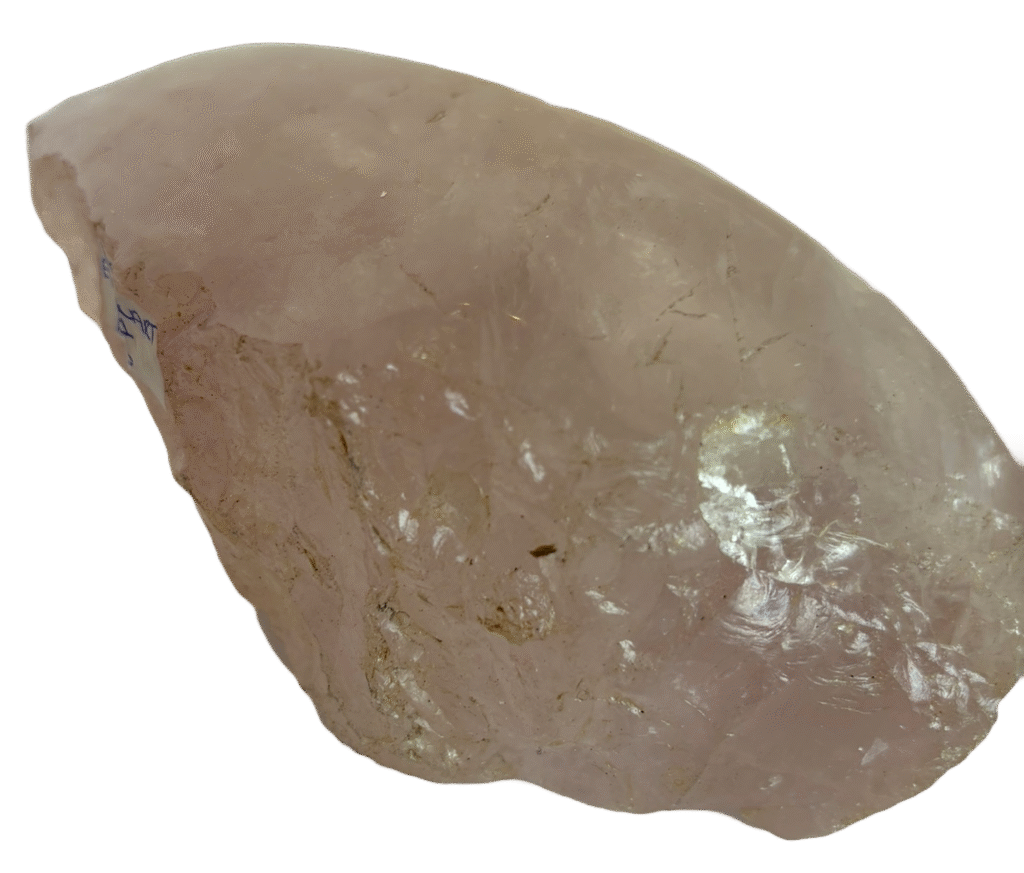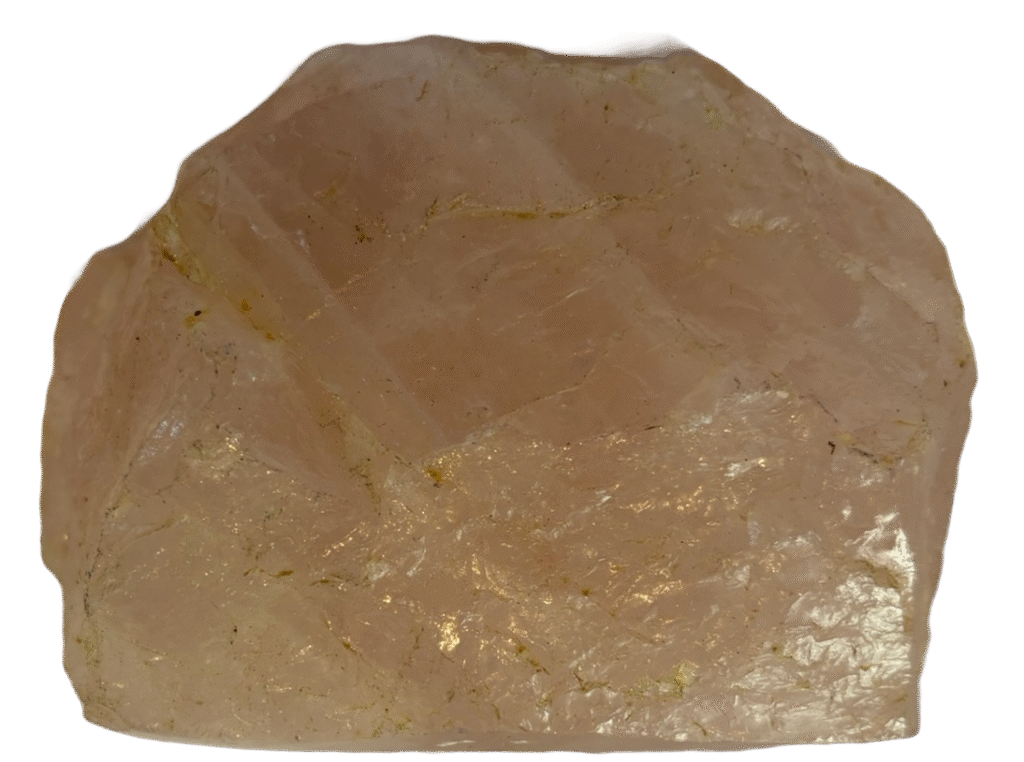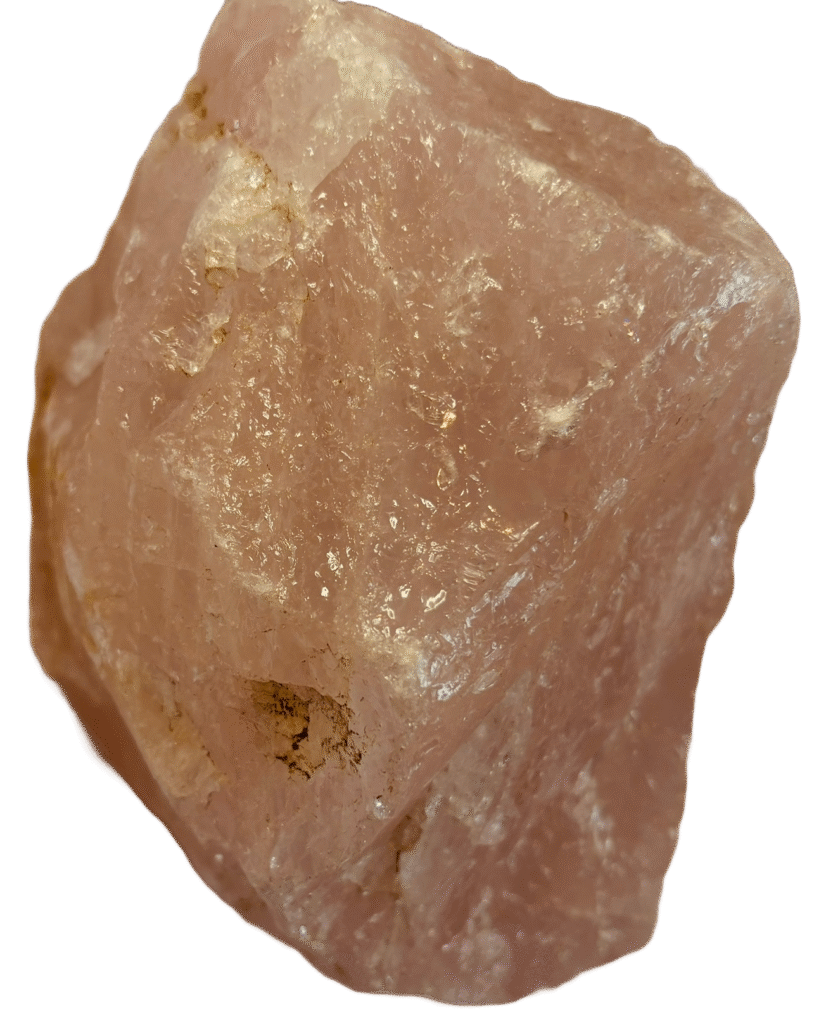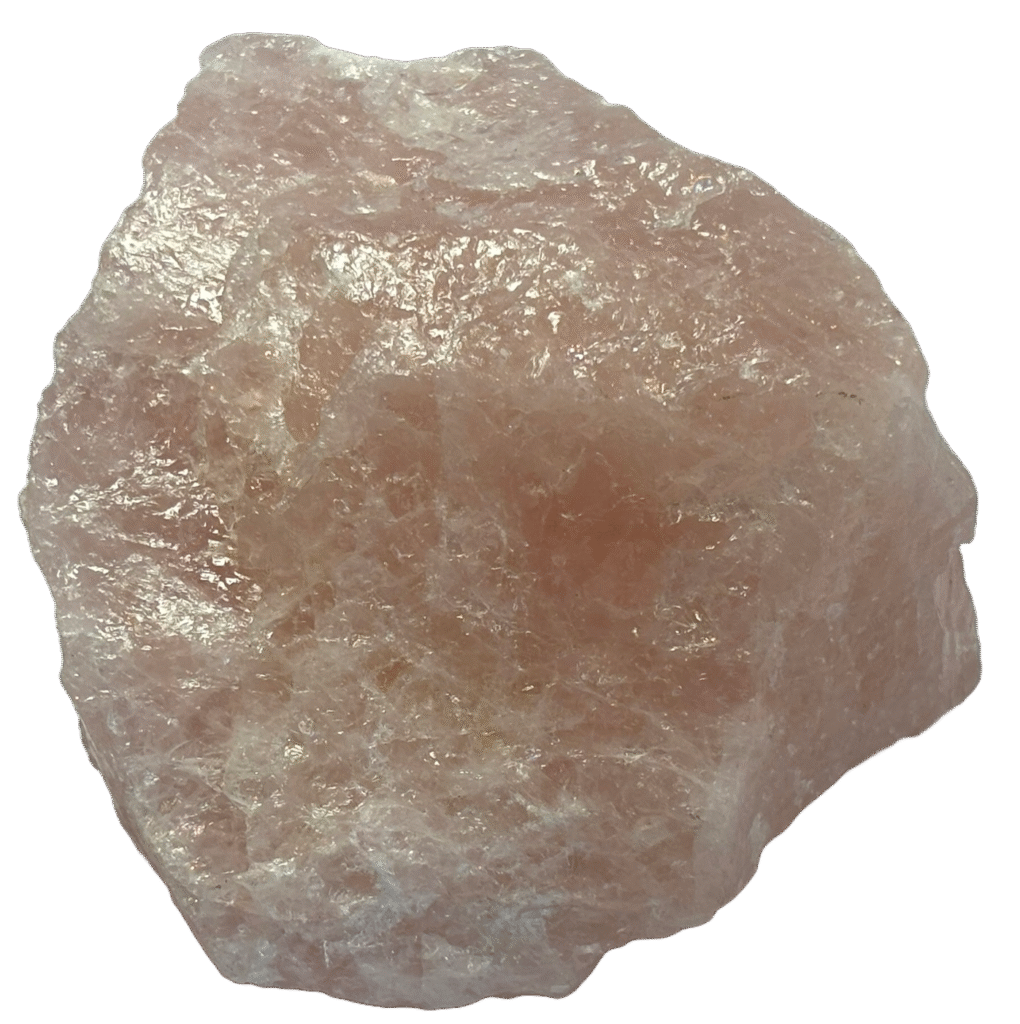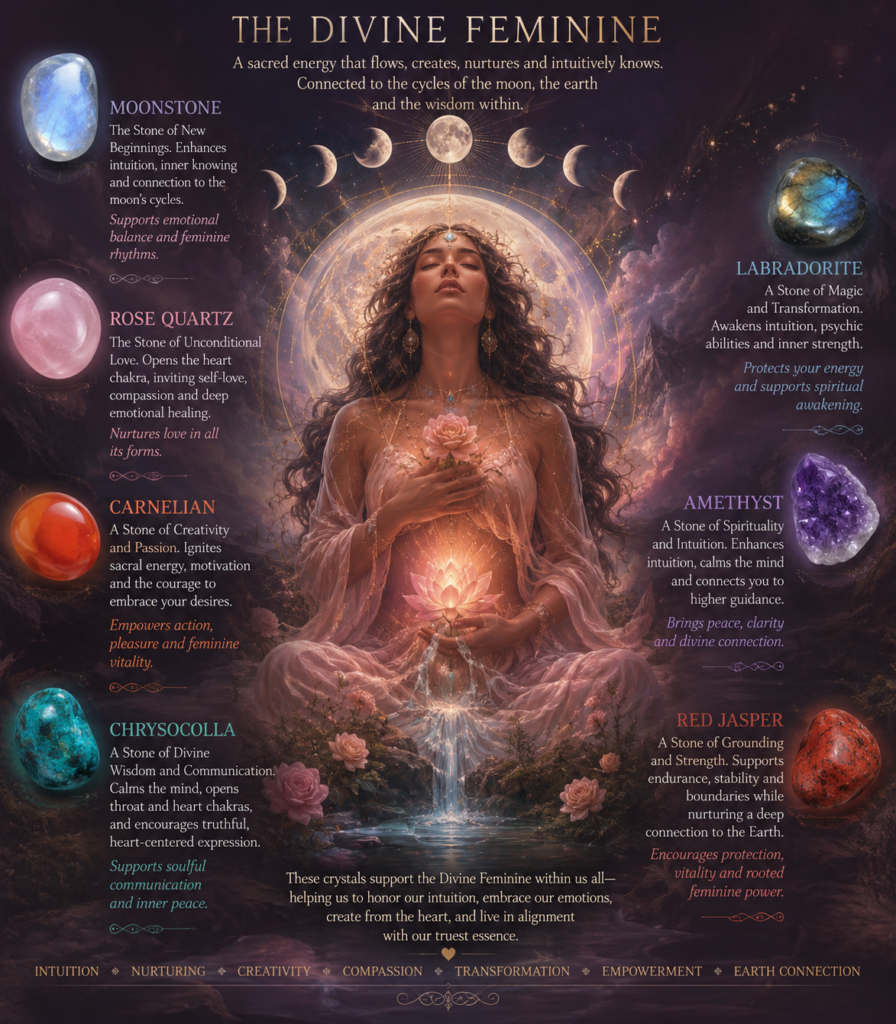
The divine feminine energy represents a sacred, universal frequency centred on intuition, emotional fluidity, receptivity, and the magic of creation. Throughout history, specific gemstones have been revered for their unique ability to tap into this nurturing archetype, providing emotional healing and spiritual empowerment. Divine Feminine Crystals such as Moonstone, Rose Quartz, Carnelian, Chrysocolla, Labradorite, Amethyst, and Red Jasper serve as potent conduits for these higher frequencies. Whether you are looking to awaken creative fires, settle deep-seated emotional trauma, or align your chakra system, exploring the mineral kingdom offers a transformative path toward self-discovery and inner equilibrium.
Alternate names
- Goddess Stones: A collective spiritual trade name for minerals that exhibit strong lunar or maternal vibrational qualities.
- Yin Crystals: Taoist-inspired term highlighting the passive, receptive, cooling, and inward-focused nature of these minerals.
- Sacred Mother Crystals: Historically used to describe specimens that assist with fertility, child-bearing, and protective domestic environments.
The stones Science and Composition
To truly appreciate these tools, it is vital to examine their mineral baselines. The collection spans various geological classifications:
- Moonstone: A potassium aluminium silicate variety of orthoclase feldspar ($KAlSi_3O_8$). Its signature glow (adularescence) is caused by alternating microscopic layers of orthoclase and albite that scatter light.
- Rose Quartz & Amethyst: Both are macrocrystalline varieties of Silicon Dioxide ($SiO_2$). Rose Quartz owes its pink colour to sub-microscopic fibrous inclusions of a borosilicate mineral, while Amethyst is coloured by trace iron impurities exposed to natural gamma radiation.
- Carnelian & Red Jasper: Crypto-to-microcrystalline quartz varieties (Chalcedony). Carnelian is highly translucent and coloured by iron oxides (hematite), while Jasper is completely opaque due to a high concentration of foreign mineral sediments (up to 20%).
- Chrysocolla: A hydrated copper silicate mineral ($Cu_2H_2Si_2O_5(OH)_4$). It is exceptionally soft and frequently forms mixed matrices with malachite, azurite, or quartz.
- Labradorite A plagioclase feldspar mineral. It demonstrates “labradorescence”—an optical illusion created by internal structural lamellae that cause light waves to interfere and flash vivid blues, greens, and golds.
Key Physical Characteristics
| Crystal Type | Mohs Hardness Scale | Crystal System | Optical Properties & Lustre |
| Moonstone | 6.0 – 6.5 | Monoclinic | Pearly to vitreous; distinct adularescence |
| Rose Quartz | 7.0 | Trigonal | Vitreous; translucent to hazy pink fields |
| Carnelian | 6.5 – 7.0 | Trigonal | Vitreous to waxy; highly translucent |
| Chrysocolla | 2.0 – 4.0 | Orthorhombic | Dull, earthy to vitreous; deeply opaque |
| Labradorite | 6.0 – 6.5 | Triclinic | Vitreous; iridescent multi-colour flash |
| Amethyst | 7.0 | Trigonal | Vitreous; transparent light lilac to deep violet |
| Red Jasper | 6.5 – 7.0 | Trigonal | Dull, vitreous; completely opaque terracotta red |
Common Geologic Varieties
- Rainbow Moonstone: Technically a white labradorite variety rather than orthoclase, offering multi coloured instead of blue-white adularescence.
- Star Rose Quartz: A rare cutting variant containing microscopic rutile needles that reflect a six-rayed star when placed under direct light.
- Band Agate Carnelian: Highly layered specimens showing alternating orange-red chalcedony and white micro-quartz bands.
- Stilbite Apophyllite Chrysocolla Matrices: Hydrothermal pocket associations where soft chrysocolla blankets growing zeolites.
- Spectrolite: An ultra-rare, high-grade variety of Labradorite found exclusively in Finland that displays the entire visible spectrum of color.
Global Mining and Volcanic Sources
These minerals are found all across the globe. Premium Moonstone specimens are traditionally pulled from the historic mines of Sri Lanka and Southern India. High-volume deposits of Rose Quartz, Amethyst, and Labradorite are mined from the massive pegmatite fields of Minas Gerais, Brazil, and the ancient metamorphic shields of Madagascar. Carnelian and Red Jasper occur extensively within volcanic basalt fields across India, Uruguay, and the United States. Chrysocolla is exclusively sourced in copper-rich arid regions, notably within the Atacama Desert of Chile, the copper belts of the Democratic Republic of Congo, and the Southwestern mountains of Arizona.
Crystal Pairings: What to Combine and Avoid
Optimal Crystal Pairings
- Moonstone + Selenite: Combining Moonstone with Selenite forms a potent lunar pairing. Selenite acts as an energetic broom, clearing out external static so Moonstone’s intuitive whispers can be processed without mental clutter.
- Rose Quarbltz + Green Aventurine: This classic dual-action Heart Chakra grid pairs the emotional self-love of Rose Quartz with the external luck, prosperity, and emotional expansion of Green Aventurine.
- Carnelian + Orange Calcite: An elite pairing for moving past artistic blocks. The physical vitality of Carnelian supercharges the creative, joyful, and fluid energy of Orange Calcite.
Crystal Pairings to Avoid
- Amethyst + Shungite / Black Tourmaline: High-frequency spiritual stones like Amethyst, which open the Crown Chakra, can occasionally feel muted or choked if directly paired with heavy, dense, carbon-rich EMF protectors like Shungite or Black Tourmaline. The opposing vectors (intense upward spiritual flow vs. heavy downward physical anchoring) can lead to a sluggish or conflicting energetic baseline.
- Carnelian + Blue Lace Agate: The high-octane, passionate expression of Carnelian directly clashes with the quiet, soothing, and silence-inducing frequency of Blue Lace Agate. This combination can create an analytical gridlock, neutralising the benefits of both stones.
Archaeology, Art and Ancient History
Goddess iconography and female talismans represent some of the earliest art objects carved by human hands. Archaeologists working in the Indus Valley and ancient Mesopotamian tombs have unearthed extensive carnelian bead necklaces dating back over 4,500 years, used to adorn high-status royal women and priestesses. In ancient Egypt, lapidaries crafted protection amulets out of red jasper and chrysocolla to represent the protective blood of Isis. Roman soldiers wore engraved carnelian signet rings, while noblewomen used highly polished moonstones in hairpins to represent the shifting lunar phases during night ceremonies.
Folklore, Legends and Sacred Tales
Eastern mythology tells us that moonstone is formed directly from frozen moonbeams, bringing good fortune to anyone who gazes upon it during a full moon. In ancient Greek mythology, Rose Quartz was believed to have been stained pink by the blood of Aphrodite, who cut herself on a briar bush while trying to save her dying lover, Adonis. Because of this, Zeus designated the stone as the ultimate symbol of unconditional love. Celtic folklore links Labradorite directly to the Aurora Borealis, claiming an ancient warrior struck the coastal stones with his spear, releasing the fiery northern lights into the sky while leaving a shimmering cosmic remnant embedded within the rock face.
Metaphysical and Mystical Healing Properties
Metaphysically, these stones act as emotional tuners. Moonstone stabilises the emotional body, smoothing out mood swings by aligning the user with natural biological rhythms. Rose Quartz operates on a gentle vibrational frequency that slowly dissolves heavy emotional armour, soothing deep heartaches and lingering trauma. Carnelian sparks the vital fire of the sacral region, restoring self-worth, warming low libidos, and replacing chronic procrastination with passionate action. Chrysocolla acts as a comforting presence during major life transitions, helping you express your inner truth without fear or aggression. Labradorite serves as a protective shield for empathy, ensuring you don’t absorb other people’s negative emotional baggage.
Astrological Connections
- Cancer (June 21 – July 22): Deeply ruled by the Moon, Cancers find an immediate home in Moonstone, which helps them process their natural emotional waves safely.
- Taurus & Libra (April 20 – May 20 / Sept 23 – Oct 22): Ruled by Venus, these signs vibrate perfectly with Rose Quartz, enhancing their innate capacity for beauty, diplomacy, and self-care.
- Leo & Aries (July 23 – Aug 22 / Mar 21 – Apr 19): These fierce fire signs find a stabilising match in Carnelian and Red Jasper, which ground their passionate natures into useful, long-term creative projects.
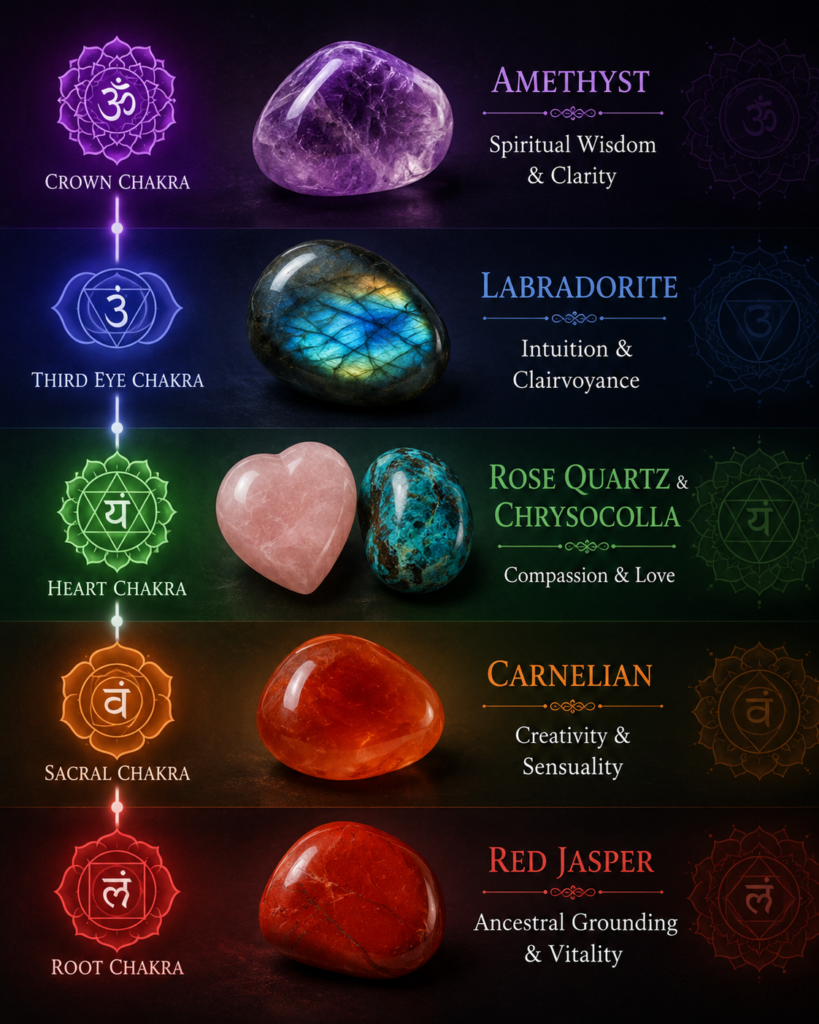
The Chakra System
The stones outlined inside this comprehensive guide work together to form a highly integrated chakra alignment system:
Interesting facts
- A Natural Fire Hazard: Large, transparent clear quartz or amethyst spheres must never be displayed on sunny window sills. They can act as powerful magnifying glasses, focusing intense solar rays into a hot beam that can catch household fabrics or paper on fire.
- Feldspar Dominance: Moonstone and Labradorite belong to the feldspar group, which makes up over 50% of the Earth’s crust, yet gemstone-grade specimens remain highly elusive.
- The Cleopatra Connection: While Cleopatra is famously linked to Egyptian emerald mines, historical accounts suggest she also favoured deep carnelian and lapis ornamentation during state receptions to assert her royal divine heritage.
Modern Milestones: Birthstones and Anniversaries
- June Birthstone: Moonstone stands as an official alternative birthstone for June, offering a creamy, glowing option next to traditional pearls.
- February Birthstone: Amethyst is the official birthstone for February, celebrating the deep winter months with its rich royal violet hue.
- 2nd & 5th Wedding Anniversaries: Cosmos charts assign Cosmos Quartz (Rose Quartz) to the 2nd wedding anniversary and Carnelian to the 5th anniversary to celebrate the maturation of deep passion and enduring trust.
Devine Feminine Crystals FAQ
Can these divine feminine crystals be safely submerged in water?
No, you must separate them by their mineral hardness. Amethyst, Rose Quartz, Carnelian, and Red Jasper all rate a solid 7 on the Mohs hardness scale and are completely water-safe for brief cleansing routines. However, Moonstone and Labradorite (Mohs 6-6.5) should not be submerged for long periods. You must completely keep Chrysocolla out of water; it is a highly porous copper silicate that can degrade and lose its finish if exposed to moisture.
How do I properly cleanse and recharge my moonstone and labradorite?
Because Moonstone and Labradorite are deeply connected to light refraction and lunar energies, the absolute best way to energetically charge them is by placing them outside under the direct light of a Full Moon overnight. To physically clear away accumulated dust, simply wipe them gently down with a soft microfibre cloth. Avoid coarse dry sea salt, which can scratch the delicate surface of feldspar minerals.
Why does my Labradorite only flash colour from specific angles?
This is a completely natural geological characteristic known as directional labradorescence. The optical flash is created by light passing through thin, microscopic mineral plates inside the stone. If the crystal is cut or viewed away from these specific planes, it will look like a dull gray stone. The colour flash requires the light source to hit the crystal structure at just the right angle.
Is dyed carnelian common, and how can I spot a fake specimen
Yes, abundant grey chalcedony is frequently boiled in iron nitrate solutions and baked to turn it an artificial bright orange. You can spot dyed carnelian by looking closely at the colour distribution. Real carnelian features organic, swirling, and cloud-like internal gradients. If the specimen shows perfectly sharp, dark zebra-like stripes or concentric bands along the edges, it is likely dyed agate masquerading as true carnelian.
Can I wear a Chrysocolla ring every single day?
It is highly discouraged unless the stone is housed inside a deep, protective bezel setting. Chrysocolla is a very soft mineral, ranking as low as 2 to 4 on the Mohs scale. Daily impacts against counter tops, door frames, or keys will easily chip, scratch, or shatter the gemstone. It is much better suited for low-impact jewelry such as pendants, brooches, or earrings.
These are personally selected and curated products for the Divine Feminine Crystals
Products by Category

Rose Quartz freeform EVENT1
£35.00
Rose Quartz freeform EVENT2
£30.00
Rose Quartz freeform RQWIN
£75.00
Rose Quartz freeform RQY
£20.00
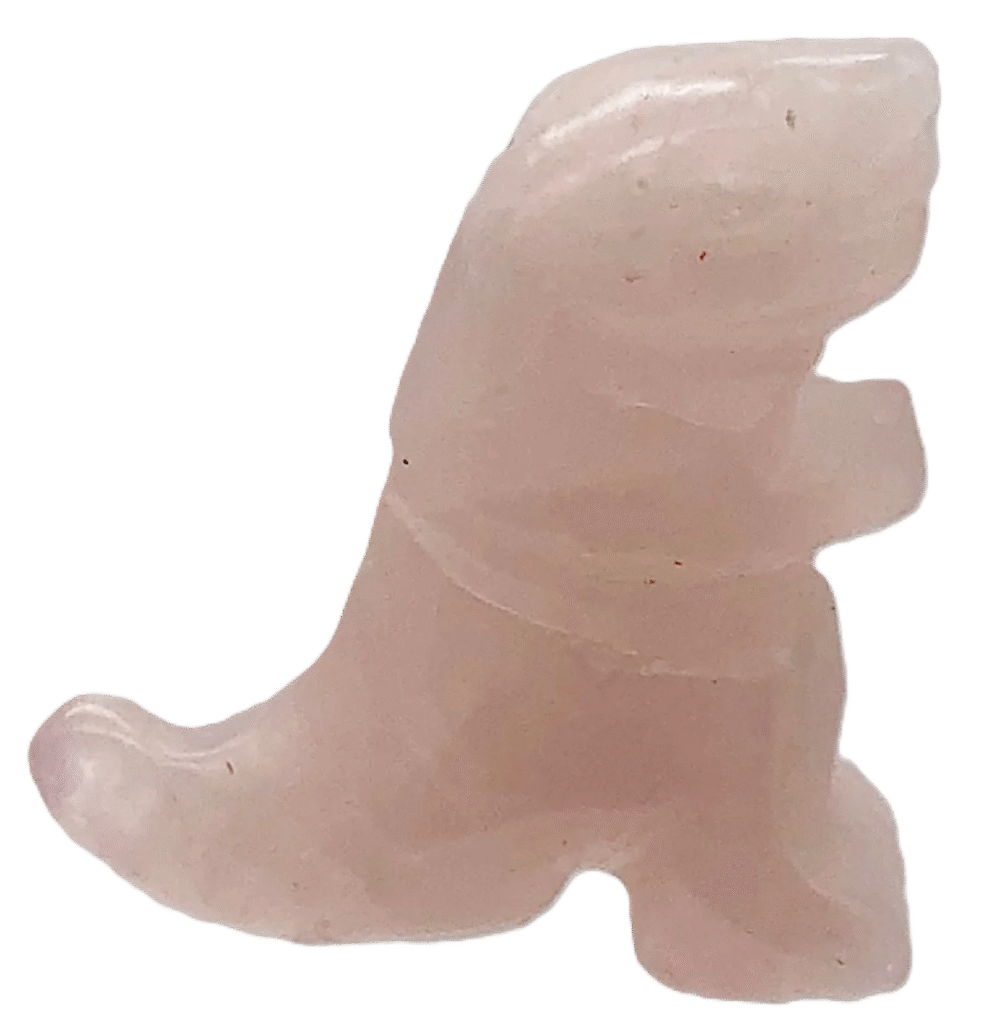
Rose Quartz Mini T-Rex
£5.00
Rose Quartz point NEW2
£20.00