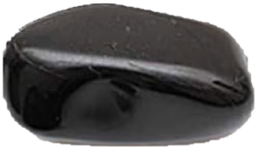
Black chalcedony is a striking variety of cryptocrystalline silica, closely related to quartz. Renowned for its deep, velvety-black colour and smooth, waxy lustre, this gemstone is admired just as much for its sophisticated appearance as it is for its rich history in folklore, ancient lapidary arts, and modern metaphysical practices.
Whether you are looking to add a touch of classic elegance to your jewellery collection or seeking a powerful stone for spiritual anchoring, this guide explores everything you need to know about black chalcedony.
What is Black Chalcedony? Science and Composition
From a geological perspective, black chalcedony is a compact, microcrystalline form of quartz. Unlike traditional quartz crystals, which grow in large, visible prisms, chalcedony is composed of billions of sub-microscopic fibrous crystals packed tightly together.
It forms over millions of years at relatively low temperatures, typically within the gas cavities (vesicles) of volcanic rocks, lava flows, and ancient hot springs. As silica-rich water filters through these cavities, it leaves behind dense mineral deposits. The solid, pitch-black hue is caused by the heavy presence of microscopic iron oxide, manganese, or carbon inclusions trapped during the stone’s formation.
Key Physical Characteristics
- Mohs Hardness: 6.5–7 (highly durable, scratch-resistant, and perfect for everyday wear)
- Lustre: Waxy to dull in its raw state; brilliantly vitreous (glass-like) when polished
- Transparency: Opaque to faintly translucent around the thin edges when held up to a bright light
- Texture: Extremely fine-grained and smooth
Global Sources and Mining Origins
Black chalcedony is primarily sourced from regions with a history of intense, ancient volcanic activity. The most significant global deposits include:
- India: A prolific, historic producer of high-grade chalcedony varieties, yielding stones with a remarkably uniform, deep black tone.
- Mexico: Famous for its diverse gemstone deposits, Mexico supplies highly sought-after black chalcedony used extensively in artisanal jewellery.
- Botswana: Renowned for producing dense, premium chalcedony specimens that often feature subtle variations of midnight black and dark charcoal grey.
- United States: Key mining localities across the volcanic fields of Arizona, California, and Oregon yield excellent raw material for lapidary artists.
Crystal Pairings: What to Combine and Avoid
In energy work and crystal therapy, black chalcedony acts as an absorbent energetic shield and an intense anchor. Because its energetic vibration is slow, steady, and protective, it reacts dynamically when placed alongside other stones.
Optimal Crystal Pairings
- For Ultimate Shielding: Black Tourmaline or Shungite. Combining black chalcedony with these stones creates an impenetrable energetic barrier. While the tourmaline actively repels negativity, the chalcedony absorbs and neutralises lingering emotional stress.
- For Mental Mastery: Rainbow Fluorite or Tiger’s Eye. If you are using black chalcedony to improve focus, pairing it with fluorite organises mental clutter, while tiger’s eye adds the necessary willpower and drive to see your tasks through to completion.
- For Emotional Resilience: Rose Quartz or Rhodonite. The pitch-black depth of chalcedony can sometimes feel clinical or stark. Pairing it with the soft, heart-centred vibrations of rose quartz ensures you stay grounded without locking away your empathy or emotional warmth.
Crystal Pairings to Avoid
- High-Vibrational Ascension Stones: Phenakite, Natrolite, or Libyan Desert Glass. These ultra-high-frequency stones are designed to elevate consciousness into cosmic, ungrounded realms. Black chalcedony’s fierce desire to anchor energy into the physical earth will completely counteract these stones, resulting in a stagnant, unhelpful energetic stalemate.
- Hyper-Stimulating Crystals: Carnelian or Zincite. These fiery stones accelerate your energy flow to inspire passion and immediate action. Black chalcedony’s calm, cooling, and absorbing presence can dull this vital fire, making you feel frustrated or emotionally stuck.
History, Alchemy and Ancient Talismans
The word chalcedony derives from the Latin chalcedonius, a term first recorded by the Roman scholar Pliny the Elder in his encyclopedic Naturalis Historia around 77 AD. The name is traditionally tied to the ancient maritime town of Chalcedon in Asia Minor (modern-day Turkey).
- Signet Rings and Seals: Because chalcedony has a smooth, fine-grained structure and lacks a distinct mineral cleavage, it does not splinter when carved. Roman, Greek, and Minoan artisans used it to engrave intricate signet rings, royal seals, and cameos. Crucially, hot sealing wax does not stick to polished chalcedony, making it the premier functional office tool of antiquity.
- Egyptian Regeneration: Archaeologists have excavated numerous chalcedony amulets from ancient Egyptian tombs. While the deep black shade was used for protection in the afterlife, it also symbolised the dark, nutrient-rich silt left behind by the flooding Nile River—representing the eternal cycles of life, fertility, and rebirth.
- Native American Grounding: In several Native American traditions, chalcedony is revered as a sacred stone of the cosmos. It was utilized in spiritual gatherings to promote community coherence, anchor prayers to the earth, and instill physical endurance.
Metaphysical and Healing Properties
Often referred to as the “Stone of the Protector,” black chalcedony is primarily used to restore balance to a chaotic lifestyle.
- Psychic and Emotional Protection: Much like a spiritual sponge, black chalcedony excels at absorbing negative energy, anxiety, and external psychic pressure before it can affect your personal aura. It is an exceptional stone for empaths or anyone working in high-stress, toxic environments.
- Overcoming Emotional Turmoil: If you are wrestling with deeply rooted anger, grief, or fear, this stone acts as a stabilising force. It encourages you to process these heavy feelings consciously rather than burying them, promoting long-term emotional resilience.
- Astrological Connections: In astrology, black chalcedony resonates beautifully with Gemini and Cancer. It helps ground the racing, easily overstimulated mind of intellectual Gemini, while providing a soothing, protective emotional anchor for deeply sensitive, moon-ruled Cancers.
- The Root Chakra: This gemstone aligns directly with the Root Chakra (Muladhara) located at the base of the spine. By clearing and activating this energy centre, black chalcedony reinforces your sense of personal safety, physical vitality, and deep connection to the Earth.
Extensive FAQ Section
Is black chalcedony the same thing as black onyx?
They are incredibly close relatives, but they are not identical. Both are forms of cryptocrystalline quartz (chalcedony). The difference lies purely in their internal structure: “chalcedony” refers to solid-coloured stones or pieces with irregular, cloud-like patterns, whereas “onyx” strictly refers to pieces that feature parallel, straight-banded layers.
Is black chalcedony naturally black?
Yes, genuine black chalcedony gets its natural dark appearance from iron oxide and manganese inclusions trapped inside the quartz structure. However, because chalcedony is highly porous, a large percentage of perfectly black stones on the commercial market are actually dull grey chalcedony that has been soaked in a sugar solution and then boiled in sulfuric acid to carbonise the sugar black. This treatment is permanent, historically accepted, and virtually impossible to detect without advanced laboratory equipment.
Can black chalcedony go in water?
Yes, black chalcedony can safely handle water. With a hardness rating of 6.5–7 on the Mohs scale, it will not dissolve, crack, or degrade during a quick wash. You can clean it using warm, soapy water and a soft microfibre cloth. However, you should avoid exposing it to harsh industrial chemicals, ultrasonic cleaners, or leaving it submerged in saltwater for days on end, as this can damage its polished lustre.
How do I cleanse and charge my black chalcedony?
Because black chalcedony actively absorbs negative energies and emotional stress from its environment, it requires frequent cleansing. You can cleanse the stone by holding it under running tap water for a few minutes or passing it through the smoke of sage or frankincense incense. To recharge its grounding properties, bury it in a small bowl of dry brown rice or place it directly on the soil of a healthy houseplant overnight.
Where should I place black chalcedony for the best Feng Shui?
To protect your living space from external negativity, place a polished piece of black chalcedony on a console table near your front door or entryway. This acts as an energetic filter for anyone entering your home. If you suffer from a racing mind or stress-induced insomnia, placing a piece on your nightstand can help quieten your thoughts and promote a stable, restful sleeping environment.
How can I tell if my black chalcedony is real or fake?
Real black chalcedony will always feel cold to the touch when you first pick it up, and it will carry a reassuring, heavy weight in your hand. Plastic or resin imitations will feel warm right away and will feel suspiciously lightweight. Furthermore, because chalcedony is highly durable quartz, a steel pocket knife or a copper coin will not be able to scratch its surface. If the stone scratches easily, it is likely made of soft plastic or glass.