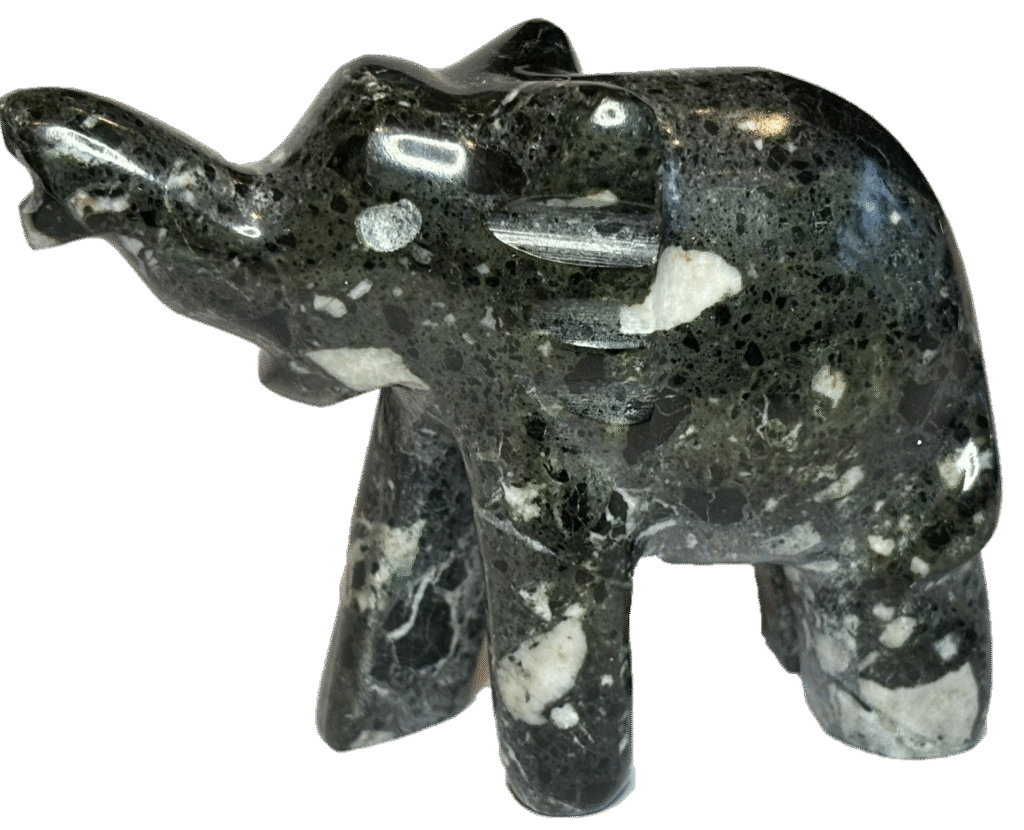
Black marble is a breathtaking metamorphic rock that has epitomised luxury, artistic mastery, and structural permanence for thousands of years. Characterised by its deep midnight background—often intersected by dramatic, lightning-like veins of white calcite or gold mineral deposits—this stone is celebrated equally in high-end architecture and metaphysical practices.
Whether you are looking to incorporate black marble into your interior design or want to harness its profound grounding frequencies in energy work, this comprehensive guide covers everything you need to know about this timeless stone.
What is Black Marble? Science and Composition
Geologically, black marble is a metamorphic rock that begins its life as ordinary sedimentary limestone or dolomite. Over millions of years, intense heat and crushing pressure deep within the Earth’s crust completely recrystallise the stone.
The intense black colouration is caused by the presence of rich organic matter, bitumen, or mineral impurities like graphite and iron sulphides trapped within the original sediment. As the rock shifts, cracks emerge and are filled by infiltrating mineral-bearing waters. This creates the stark, striking veins of white calcite (CaCO_3) or gold pyrite that snake across the dark background.
Key Physical Characteristics
- Mohs Hardness: 3–4 (relatively soft and prone to acid etching, but highly polishable)
- Lustre: Dull or matte in its raw state; brilliantly glossy and reflective when polished
- Transparency: Entirely opaque
- Texture: Fine to medium-grained with distinct, unpredictable veining patterns
Iconic Global Varieties and Origins
Black marble is quarried in tectonic regions across the globe, with specific locations yielding legendary, internationally sought-after varieties:
- Nero Marquina (Spain): Quarried in the Basque Country, this is perhaps the most famous black marble in the world, renowned for its deep black background and intense, compact white veining.
- Noir Saint Laurent (France): A highly luxurious French variety featuring dark cocoa-black tones highlighted by elegant white and amber-gold veins.
- Portoro Marble (Italy): Sourced from the Gulf of Poets in Liguria, this exceptionally rare variety displays intense, golden-yellow veins slicing through a jet-black base.
- Ashford Black Marble (United Kingdom): A historic, deep-black limestone rock found in Derbyshire that takes a flawless, glass-like mirror polish.
Crystal Pairings: What to Combine and Avoid
In energy healing and holistic space clearing, black marble acts as a structural anchor, room stabilizer, and a slow-release shield. Because it is a dense rock rather than a single crystal, its energy is incredibly patient, structural, and foundational.
Optimal Crystal Pairings
For Structural Protection: Selenite or Satin Spar. Placing selenite directly on or next to black marble creates a beautiful “yin and yang” energy grid. The marble anchors the home’s energy to the earth, while the selenite continually purifies the upper aura and fills the space with white light.
For Manifestation and Logic: Pyrite or Golden Tiger’s Eye. Pyrite (which naturally veins some black marbles) enhances the stone’s solar plexus connections, boosting your personal determination, business luck, and logical decision-making skills.
For Stress Relief: Hematite or Lodestone. Pairing marble with these iron-rich stones amplifies its innate grounding properties, helping to pull frantic, overactive thoughts out of your head and down into the floor.
Crystal Pairings to Avoid
High-Frequency Cosmic Stones: Tektites, Moldavite, or Herkimer Diamonds. These fast-vibrating, ethereal stones pull consciousness upwards into higher spiritual dimensions. Black marble’s dense, earthly metamorphic weight will anchor that energy too severely, which can leave you feeling physically heavy, sluggish, or spiritually blocked.
Unstable, Chaotic Crystals: Fire Opal. Fire opal demands wild, unpredictable, and passionate emotional expression. Black marble represents boundaries, structure, and calm restraint. Combining them creates an unhelpful energetic friction that can leave you feeling uninspired or frustrated.
History, Architecture and the Arts
From ancient temples to Renaissance sculptures, black marble has long been a favourite medium of history’s greatest builders and artisans.
- The Roman Empire: Roman emperors imported premium black marbles from North Africa and Greece to construct the massive pillars and floors of their villas, using the dark stone to convey unmatched wealth, gravity, and permanence.
- The Medici and the Renaissance: In Italy and France, dark marbles were used extensively to frame white marble sculptures, creating dramatic visual contrasts. It was also used to inlay exquisite pietra dura mosaics in chapels and palaces.
- Modern Luxury Design: Today, black marble remains a premier choice for architectural statement pieces, including minimalist fireplaces, luxury bathroom vanities, kitchen splashbacks, and monolithic furniture.
Metaphysical and Spiritual Meanings
Metaphysically, black marble is regarded as a stone of inner strength, self-mastery, and absolute stability.
- Emotional Fortitude: Because marble undergoes immense heat and pressure to become beautiful, it is used by practitioners to support individuals going through major, high-pressure life crises. It reminds the subconscious of your ability to endure and transform.
- Mental Organisation: The structured, crystalline nature of metamorphic marble helps clear chaotic thinking. It promotes a structured mind, making it excellent for anyone studying complex fields or managing large-scale projects.
- Chakra System: Black marble works directly on the Root Chakra (Muladhara). By clearing blocks in this energy centre, it fosters a deep sense of belonging, physical safety, and grounded confidence.
Black Marble frequently asked questions Section
Is black marble suitable for kitchen worktops?
While black marble looks incredibly luxurious, it requires a high amount of maintenance in kitchens. Because it is primarily composed of calcium carbonate, it is soft and highly susceptible to “acid etching”. Lemon juice, vinegar, wine, and tomato sauce will chemically react with the stone upon contact, permanently dulling the polished surface and leaving white, hazy marks. If used in a kitchen, it must be sealed regularly and wiped clean immediately.
How can I tell if my black marble is real or fake?
Genuine black marble will always feel remarkably cold to the touch and features a heavy weight. Examine the veins closely: on a real slab, the veins run deep through the stone and show natural variations, crystal pockets, and imperfections. Porcelain or quartz fakes feature a repeated printed pattern on the surface, while plastic or resin fakes will feel warm to the touch and scratch easily under a copper coin.
Can black marble go in water?
Yes, black marble can handle water, which is why it is frequently used in luxury wet rooms, showers, and baths. However, you must never clean it with acidic bathroom cleaners or limescale removers, as these will instantly destroy the polished finish. Stick to pH-neutral stone soaps and dry the surface after use to prevent unsightly water marks.
How do I cleanse and charge black marble?
Because of its size and density, black marble does not need to be cleansed as frequently as small crystals. You can cleanse its energy by wiping it down with a damp cloth infused with a drop of frankincense essential oil or by smudging the space with sage. To charge its grounding energy, place a cluster of clear quartz or raw hematite directly on top of the stone for 24 hours.
Does black marble scratch easily?
Yes, compared to granite or engineered quartz, marble is relatively soft, sitting at a 3 to 4 on the Mohs hardness scale. Metal keys, rings, or sliding ceramic plates can easily scratch a polished black marble surface. Using coasters, placemats, and protective felt pads under ornaments is highly recommended to keep the surface pristine.
Why is some black marble more expensive than others?
The price of black marble is dictated by rarity, quarry location, and veining consistency. Varieties like Italian Portoro are incredibly scarce and difficult to extract, making them highly premium. Additionally, slabs that feature bold, balanced, high-contrast veining without structural flaws command a much higher price on the global stone market.
These are my personally selected and curated Black Marble products