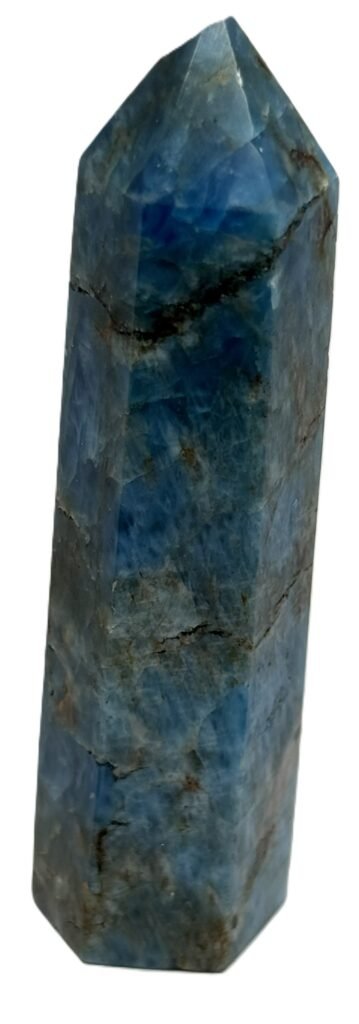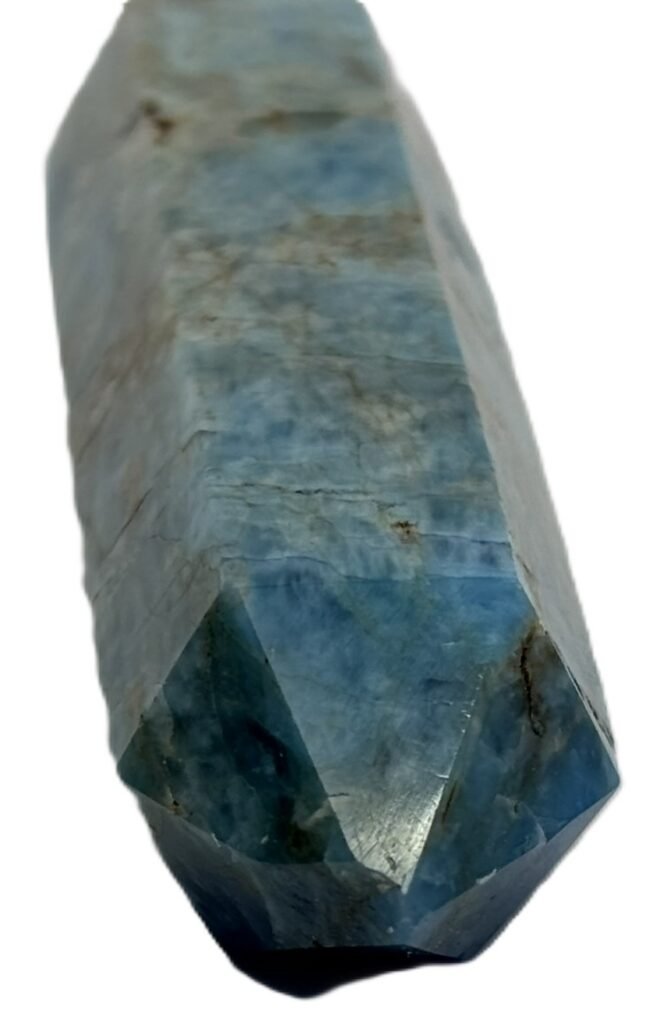
Renowned for its breathtaking palette of electric blues, vivid teals, and earthy greens, Apatite is a uniquely powerful stone that bridges the worlds of human biology, industrial science, and spiritual manifestation. Its striking brilliance has fascinated collectors for decades, yet it remains one of the most misunderstood minerals in gemmological history.
In this ultimate guide, we explore the history, geological varieties, and metaphysical properties of Apatite, along with essential tips for crystal pairing and care.
The Origins and History of Apatite
The name “Apatite” is derived from the Greek word apate, which translates to “deception” or “to deceive”. This unusual title was given to the mineral by German geologist Abraham Gottlob Werner in 1786 because it is a master of disguise. Throughout antiquity, Apatite was consistently misidentified as more expensive gemstones, such as beryl, topaz, tourmaline, and peridot.
Because of this historical confusion, Apatite is rarely mentioned by name in ancient folklore. However, modern metaphysical traditions link Blue Apatite to the legendary lost city of Atlantis, with practitioners claiming the stone holds the records of ancient, highly evolved civilisations.
Geological Composition and Characteristics
Geologically, Apatite is not a single mineral but rather a group of phosphate minerals share the chemical formula Ca5(PO4)3(F,Cl,OH).
What makes Apatite profoundly unique is that it is primarily composed of calcium phosphate. This is the exact same bio-mineral material that makes up the bones, tooth enamel, and teeth of all vertebrate animals—including humans.
- Mohs Hardness: It ranks at a 5 on the Mohs hardness scale. This makes it relatively soft and brittle compared to quartz or diamonds. Consequently, it requires expert handling and protective settings when used in commercial jewellery.
- Space Mineral: Interestingly, Apatite is one of the few minerals found in both terrestrial and lunar samples. Analysis of Apatite-rich rocks brought back from the Moon by NASA Apollo missions provided early proof to scientists that water existed within the lunar crust.
Major Varieties of Apatite
Apatite occurs worldwide in a beautiful array of chemical compositions, each altering its visual form:
- Fluorapatite: Rich in fluorine, this is the most common variety and the source of the famous neon-blue specimens.
- Chlorapatite: Contains chlorine in place of fluorine, often resulting in muted yellow tones.
- Hydroxyapatite: Rich in hydroxyl groups, this is the primary compound found inside human bones and is used synthetically in modern bone grafting and dental implants.
- Asparagus Stone: A charming, classic yellow-green variety named for its uncanny resemblance to the vegetable.
- Moroxite: A highly sought-after, deep blue-green variety.
Global Source Locations
Gem-quality Apatite is mined across the globe, with distinct regions producing unique variations:
- Brazil & Madagascar: Famous for producing highly prized, neon-blue and electric teal specimens.
- Mexico & Russia: Major sources of bright forest greens and honey-yellow varieties.
- Canada: Deposits in Ontario and Quebec yield large, well-formed crystals from igneous rocks.
Metaphysical Meaning and Healing Properties
In modern spiritual circles, Apatite is universally revered as a stone of manifestation. It is an action-oriented ally designed to clear confusion, stimulate the intellect, and expand personal willpower.
1. The Energy Centres (Chakras)
Apatite’s healing properties shift depending on its natural coloration:
- Blue Apatite (Third Eye & Throat Chakras): This variety clears mental fog, heightens psychic intuition, and encourages authentic self-expression. It is highly recommended for public speakers, writers, and artists.
- Green Apatite (Heart Chakra): Fosters deep emotional healing, counteracts fatigue, and restores compassionate balance.
- (Solar Plexus Chakra): A potent dynamo for self-confidence, clearing lethargy and stimulating motivation.
2. Astrological Alignments
While not a traditional birthstone, Apatite serves as a popular alternative March birthstone due to its resemblance to aquamarine.
- Gemini: Blue Apatite complements the twin sign by channelling their scattered thoughts into coherent, brilliant communication.
- Libra: Green Apatite assists in creating inner peace and objective balance.
- Leo: Yellow Apatite boosts the lion’s innate leadership qualities and personal power.
Crystal Pairing: What Works and What to Avoid
Because Apatite is a high-vibrational stimulus for the mind and voice, it acts as a spiritual accelerator.
Crystals That Pair Well
- Clear Quartz (For Manifestation): Clear Quartz amplifies Apatite’s inherent focusing power, acting as a direct laser beam for setting intentions and achieving goals.
- Black Tourmaline or Smoky Quartz (For Grounding): Because Blue Apatite can make you feel overly intellectual or “daydreamy,” pairing it with a heavy root-chakra stone ensures you stay anchored to the physical world.
- Rose Quartz (For Self-Expression): Combining Rose Quartz with Blue Apatite allows you to speak your inner truths from a place of love and gentle compassion rather than cold logic.
Pairings to Avoid
- Carnelian Calnelian projects a heavy, fiery, passionate physical energy. When mixed with the cool, ethereal, communicative nature of Blue Apatite, the opposing elements can create mental static, leading to frustration or restless sleep.
- Phenacite or Herkimer Diamond: These are exceptionally high-frequency stones. Because Apatite already accelerates mental and psychic activity, pairing it with these powerhouses can overstimulate the nervous system, resulting in headaches, anxiety, or insomnia.
Frequently Asked Questions (FAQ)
Can Apatite go in water?
Yes, Apatite can be cleansed in warm water for short intervals. However, because it is a softer mineral (Mohs 5), you should never leave it submerged for long periods, and you must absolutely avoid saltwater or acid-based cleansers, which can erode its polished surface.
Why is Apatite used in toothpaste?
Synthetic hydroxyapatite (a form of Apatite) is highly biocompatible with human teeth. It is added to premium toothpastes because it physically bonds with your teeth to help remineralise and strengthen enamel, sealing microscopic fractures naturally.
Is Apatite safe for daily jewellery wear?
It is safe but requires caution. Because it scratches easily, it shouldn’t be used in everyday rings unless it has a highly protective bezel setting. It is ideally suited for earrings, pendants, and brooches where it won’t suffer direct impacts.
These are my personally selected and curated Apatite products