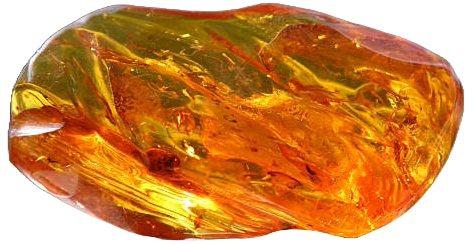
Unlike traditional minerals formed deep within the Earth’s crust, Amber holds a unique place in the gemstone world. Capturing the warmth of ancient suns, Amber is an organic gemstone created from the fossilised resin of prehistoric trees. Known for its rich, golden hues and the mesmerising secrets trapped within its translucent depths, this timeless substance has been used for protection, adornment, and medicine for millennia. Whether you are drawn to its fiery beauty, historical significance, or grounding energetic vibrations, this guide explores everything you need to explore Amber meaning..
The classical Latin term electrum and its Greek counterpart elektron both trace back to elektor, meaning ‘beaming Sun.’ Not only do these words reference amber’s warm, golden glow, but they also gave rise to the term ‘electricity’ because of amber’s ability to generate a static charge
Composition, Physical Characteristics, and Varieties
To answer a common question: is amber a gemstone? Yes—but it is classified as an organic gemstone, placing it in a rare family alongside pearls, coral, and jet.
When ancient coniferous trees were injured millions of years ago, they exuded a sticky, viscous resin to seal their wounds. Over vast stretches of geological time, this resin underwent a process of polymerisation, gradually hardening into the durable, lightweight material we collect today.
Geographical Locations
Amber is predominantly found in:
- The Baltic region (Lithuania, Poland, Russia, Estonia, Latvia)
- Dominican Republic (notable for its rare blue amber)
- Myanmar (Burma) (yielding high-quality amber since ancient times)
- Mexico, Colombia, and Indonesia
Baltic amber, the most famous variety, dates back approximately 40 million years and is highly prized in jewellery and artefacts.
Archaeological and Significant Finds
Amber artefacts date back to the Stone Age, found in gravesides as amulets, beads, and carved pendants. The Mycenaeans and other Mediterranean civilisations also used amber for ornamental purposes.
During the Roman Empire, amber was traded along the ‘Amber Road’ from the Baltic to Rome. It was believed to hold protective properties, making it highly desirable among the nobility.
Interesting Facts
- Amber can contain perfectly preserved insects, some over 100 million years old.
- When rubbed, amber produces static electricity, attracting small particles.
- Amber oil, extracted when heated, was historically used in perfumery and medicine.
- The scent of burning amber resembles pinewood due to its resinous origins.
Folklore, Legends, and Tales
Ancient cultures wove many legends around amber.
In Greek mythology, the historian Nicias believed amber was the congealed sweat of the Earth as the Sun set into the ocean. Another tale involves Phaethon, the son of Helios, who lost control of the Sun chariot. Zeus struck him down to save the world, and in their grief, his sisters transformed into poplar trees, weeping amber tears.
In Chinese tradition, amber was thought to house the souls of tigers after death. It was commonly burned during festivities for its fragrance and used in medicine.
A famous Lithuanian tale tells of Jurate, a sea goddess who lived in an amber palace. She fell in love with a mortal fisherman, Kastytis, angering her father, Perkunas, the God of Thunder. In his rage, Perkunas destroyed the amber palace, killing Kastytis and imprisoning Jurate for eternity. The amber pieces that wash up on the Baltic shores are said to be fragments of her shattered home, and the tear-shaped pieces symbolise her eternal sorrow.
Ovid, the Roman writer describes the tale that amber is the crystallised tears of his mother Clymene and her daughters. The family were so grief stricken, after Phaethon’s death, they were transformed into poplar trees.
Mystical Healing Properties
Spiritually, Amber acts as a direct conduit to the stabilising, revitalising energies of old-growth Earth. It is deeply tied to light, warmth, and preservation. Because it takes millions of years to form, Amber carries a steady, patient vibration that helps scatter negative thoughts, ease stress, and absorb depressive ambient energies.
Often called the “Soul of the Tiger” or “Liquid Sunshine,” Amber reminds us of our inner vitality. It is an exceptional tool for anyone feeling spiritually cold, stagnant, or stuck in a cycle of overthinking, providing a gentle push toward action and self-healing.
Solar Plexus Chakra Cleansing
Because of its bright golden, yellow, and orange color palette, Amber aligns perfectly with the Solar Plexus Chakra (the center of personal power, self-esteem, and manifestation). It helps dissolve emotional blocks, clears out deep-seated insecurities, and restores your sense of confidence and purpose.
Natural Pain Relief and Warmth
Historically, Baltic amber properties have been celebrated for their soothing physical qualities. Baltic amber contains trace amounts of succinic acid, a natural compound historically believed to have anti-inflammatory properties when warmed against human skin.
Windows to the Past: Inclusions
One of Amber’s most valuable properties is its ability to preserve life. It is not uncommon to find fossilized ants, beetles, mosquitoes, and ancient plant spores perfectly suspended inside a specimen. These inclusions trap a snapshot of an ecosystem from 30 to 90 million years ago, adding immense historical value to the stone.
Amber has long history in folk medicine for its alleged healing properties. Amber and its extracts have been used for a wide variety of treatments from the time of Hippocrates in ancient Greece through to the Middle Ages and to the early twentieth century.
The Roman historian, Pliny notes in his Natural History that some people believed amber could help with problems with the tonsils, mouth, and throat, as well as mental disorders and the bladder. Amber was ground and mixed with rose oil and honey to treat eye and ear infections. Amber contains succinic acid which is a mild antibiotic which was used before modern antibiotics.
The Vikings believed animal carved in amber inherited the strengths of the original animals. In Ancient Greek and Roman times, women wore amber fish, frog, and rabbit figurines to ensure fertility.
Traditional Chinese medicine still uses amber to “tranquilise the mind”.
Crystals that pair with Amber
When pairing Amber with other stones, the key is to enhance its warm, stabilising qualities or blend its physical grounding with spiritual awareness.
Best Crystals and Stones to Pair with Amber
1. For Magnifying Abundance & Vitality (Solar Plexus & Sacral)
- Citrine: Both Citrine and Amber share a bright, warm, solar frequency. Pairing them creates a powerhouse for manifesting wealth, opportunities, and success. While Citrine inspires optimism and joy, Amber helps clear out any lingering emotional or psychological blockages holding you back from your potential.
- Carnelian: If you are seeking a surge of motivation, passion, and physical energy, Carnelian is a brilliant partner. It stokes the creative fires of the Sacral chakra, while Amber provides a nurturing, soothing blanket to keep that creative spark from burning out too quickly.
- Sunstone: As a stone explicitly tied to the sun’s vitality, Sunstone boosts self-confidence and leadership qualities. Combined with Amber, it delivers a deeply warming effect that lifts seasonal blues and increases personal willpower.
2. For Balanced Insight & Emotional Safety (Lower & Higher Chakra Bridge)
- Amethyst: This is a highly regarded, beautifully balanced combination. Amber naturally draws your awareness downward, anchoring you safely into your physical body and dropping stress. Amethyst expands consciousness upward into spiritual clarity. Together, they create a gentle bridge, allowing you to process deep emotions safely without feeling overstimulated.
- Lapis Lazuli or Blue Apatite: Blending these intellectual, Throat and Third Eye stones with Amber connects your physical gut instinct (the “second brain”) with mental clarity. This allows your inner truth and divine purpose to be brought to life practically.
3. For Grounding and Manifestation
- Tiger’s Eye: This stone balances inspiration with practical focus. Amber turns toxic thoughts into faith and hope, while Tiger’s Eye supplies the courage and determination required to see your goals through to the end.
Crystals and Stones to Avoid Pairing with Amber
When combining stones, you generally want to avoid clashing intentions or combinations that create physical risk. Keep the following in mind when working with Amber:
1. Overly Aggressive, Ultra-High Vibration Transformers (e.g., Moldavite)
- Why to avoid: Moldavite carries a fast, cosmic, and often jarring spiritual energy that forces sudden, dramatic transformations. Amber operates on an ancient, slow, and deeply nurturing earthly rhythm meant to stabilise and heal your energetic baseline. Pairing them can result in an overwhelming energetic mismatch, making you feel entirely ungrounded, anxious, or spacey.
2. Conflict of Intention: Deep Emotional Diggers (e.g., Malachite)
- Why to avoid: Malachite acts like an energetic mirror, intensely pulling hidden emotional trauma to the surface for rapid clearing. Amber is used to calm the nervous system and absorb toxic stress. Mixing them simultaneously can create a confusing tug-of-war where one stone forcefully excavates heavy emotional baggage while the other tries to maintain an environment of calm and comfort. It is often better to use Malachite first to clear the energy, and Amber later to soothe and rebuild.
3. Physical Safety Mismatches (e.g., Hard Minerals like Quartz, Diamonds, or Sapphire)
- Why to avoid (Physical Preservation): Beyond metaphysical qualities, Amber is not a mineral—it is soft organic resin (ranking at only 2 to 2.5 on the Mohs hardness scale). It can be scratched, dented, or chipped incredibly easily.
- If you tumble Amber in a bag or string it into a bracelet touching hard crystals like Clear Quartz, Amethyst, Tiger’s Eye, or Jasper, the harder stones will easily gouge and permanently ruin the surface of your Amber. If you intend to wear them together, ensure they are separated by knots, fabric, or individual settings.
Astrology and the Zodiac
Amber is linked to Leo, representing the Sun’s warmth and life-giving energy. It is also associated with Cancer, offering emotional stability, and Aquarius, fostering intellectual clarity.
The Chakra System
Amber resonates primarily with the Solar Plexus Chakra, promoting self-confidence and personal power. It also influences the Sacral Chakra, encouraging creativity and emotional balance.
Birthstone and Wedding Anniversary Use
Amber is an alternative birthstone for November and is linked to the 10th wedding anniversary. It symbolises longevity, warmth, and protection, making it a cherished gift for significant milestones.
Amber Frequently Asked Questions (FAQ)
Is Amber a rock or a mineral?
Neither. Amber is classified as an organic gemstone. Unlike traditional minerals (such as quartz or diamonds) that form deep within the Earth’s crust from mineral compounds, Amber is the fossilised, hardened resin of prehistoric trees that lived millions of years ago.
What is the difference between Amber and Copal?
The primary difference is age. Copal is a young, immature form of tree resin that is typically less than a few hundred thousand years old. True Amber must be completely fossilised, a natural polymerisation process that takes anywhere from 2 to 90 million years. Because Copal hasn’t fully hardened, it is much softer, stickier when warmed, and far less valuable than true Amber.
Why is Baltic Amber considered the best type?
Baltic Amber (sourced from the Baltic Sea region of Europe) is considered the gold standard because it contains the highest concentration of succinic acid, ranging from 3% to 8%. It is also incredibly rich in fossilised plant and insect inclusions from the Eocene epoch, making it highly prized by scientists, collectors, and jewellers alike.
Can Amber melt?
Yes. Because Amber is an organic hydrocarbon compound born from tree resin, it will soften at around 300°F (150°C) and begin to completely melt between 480°F and 600°F (250°C to 300°C). When burned, it gives off a pleasant, aromatic scent of pine and natural resin rather than the chemical odour of plastic imitations.
What do insects trapped in Amber mean?
Insects suspended inside Amber are known as inclusions. Millions of years ago, these creatures stepped onto sticky, fresh tree resin and became permanently trapped. As the resin fossilised over deep geological time, it functioned as a perfect, airtight capsule, preserving the ancient DNA, structures, and fragile features of prehistoric life for millions of years.
Can Amber go in water?
Amber can manage brief contact with lukewarm water for cleaning, but it should never be submerged or soaked for extended periods. Because it is highly porous and soft, long-term exposure to water—especially chlorinated pool water or saltwater—can break down its natural polish and leave the surface looking dull and cloudy.
These are my personally selected and curated Amber products