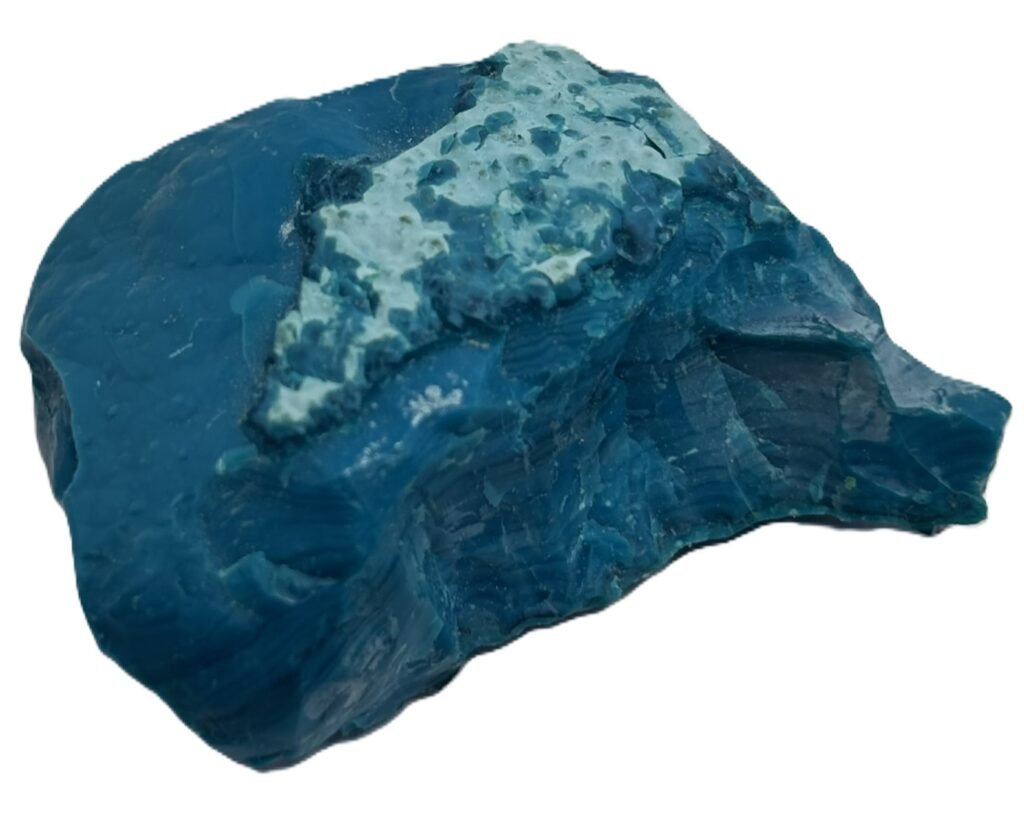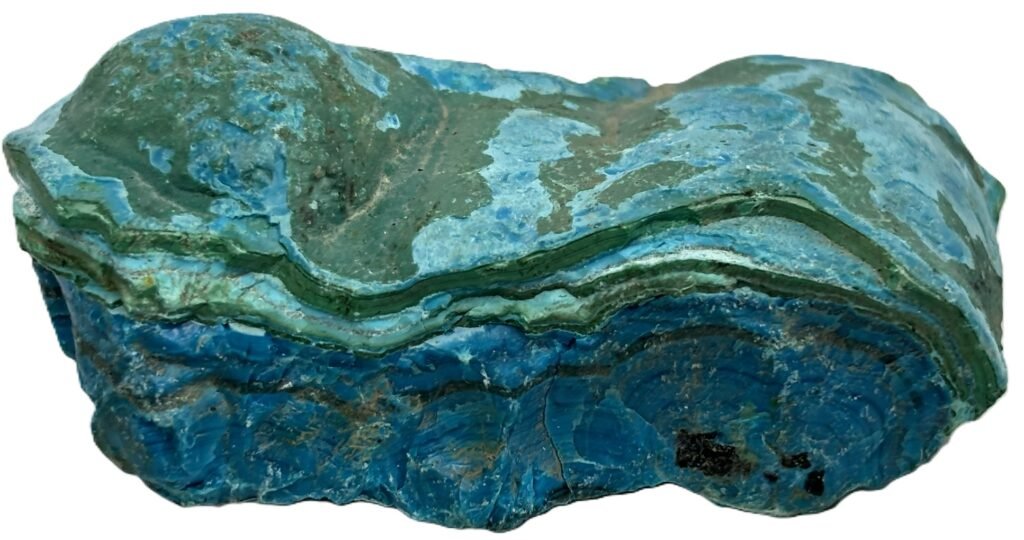
Few gemstones blur the line between rugged geology and high-grade jewellery quite like gem silica. Scientifically classified as a rare, copper-bearing variety of cryptocrystalline quartz, it is essentially chalcedony naturally infused with chrysocolla. While chrysocolla on its own is soft, brittle, and notoriously difficult to cut, the secondary infiltration of silica locks in its vivid turquoise-to-peacock-blue hue while elevating its hardness to a durable 7 on the Mohs scale. The result is a vibrant, translucent stone that carries the intense saturation of fine turquoise paired with the vitreous lustre and toughness of agate.
Formed in the oxidation zones of major copper deposits—most famously in Arizona, Peru, and Taiwan top tier gem silica represents the most valuable variety of chalcedony on the market. Its appeal lies in its optical depth: light penetrates beneath the surface, illuminating a rich cyan matrix that ranges from pristine electric blue to striking dendritic patterns. Whether examined through the lens of mineral formation, market valuation, or lapidary challenge, gem silica stands as one of the mineral world’s most compelling anomalies.
Alternate Names
While scientifically categorised as a variety of chalcedony, Gem Silica is known by several commercial, regional, and mineralogical titles:
- Chrysocolla Chalcedony: The primary descriptive name, highlighting its core composition.
- Gem-Grade Chrysocolla: Used trade-wide for specimens exhibiting high translucency.
- Ray Copper Blue: A regional name for high-quality material sourced from Arizona’s Ray Mine.
- Silicified Chrysocolla: Refers specifically to the geologic process of quartz replacing or enveloping chrysocolla.
The Stones Science and Composition
Gem Silica is fundamentally microcrystalline quartz ($\text{SiO}_2$) that has been naturally stained or replaced by inclusions of chrysocolla, a hydrous copper silicate mineral $(\text{Cu},\text{Al})_2\text{H}_2\text{Si}_2\text{O}_5(\text{OH})_4\dot n\text{H}_2\text{O}$.
Unlike pure chrysocolla—which is soft, fragile, and prone to flaking—Gem Silica inherits the hardness and durability of cryptocrystalline quartz. During its secondary formation process in copper deposits, silica-saturated groundwater permeates soft chrysocolla aggregates, trapping microscopic particles inside a resilient quartz lattice. This gives Gem Silica its distinctive vitreous lustre and toughness.
Key Physical Characteristics
Understanding these physical properties helps distinguish authentic Gem Silica from softer copper minerals.
It also helps tell them apart from synthetic imitations.
- Chemical Formula: $\text{SiO}_2$ with inclusions of hydrous copper silicate.
- Mohs Hardness: 6.5 to 7 (significantly harder than pure chrysocolla, which rates 2 to 4).
- Crystal System: Trigonal / micro-crystalline (no visible external crystal faces).
- lustre: Vitreous to waxy.
- Diaphanous: Semi-translucent to transparent (higher translucency directly increases value).
- Specific Gravity: 2.58 – 2.64.
- Refractive Index: 1.530 – 1.540.
- Cleavage: None; exhibits a conchoidal fracture.
Common Geologic Varieties
While all Gem Silica shares a common formation process, secondary mineral co-formations create distinct visual varieties:
- Pure Cyan Gem Silica: Highly translucent, uniformly coloured blue-green material with minimal matrix inclusions.
- Drusy Gem Silica: Quartz crusts composed of tiny, sparkling quartz crystals growing over a chrysocolla-infused chalcedony base.
- Malachite-Inlaid Gem Silica: Specimens featuring swirling green bands or spots caused by concurrent malachite inclusions.
- Agatized Gem Silica: Displays subtle concentric banding or orbicular structures typical of chalcedony formation.
Global Mining and Volcanic Sources
Gem Silica forms exclusively in secondary oxidation zones of copper deposits, making commercial-grade deposits exceptionally rare.
- United States (Arizona): Historically the premier global producer. Famous mines include the Inspiration Mine (Globe) and the Ray Mine (Pinal County). Arizona specimens set the standard for deep, electric blue colouration.
- Peru: Produces notable quantities of rich blue-green material, often displaying high translucency and large nodular formats.
- Mexico: Yields gem-quality material alongside chrysocolla and drusy quartz, mainly from copper-rich regions in Sonora.
- Indonesia: Known for unique blue-green chalcedony formations featuring distinct translucent zoning.
- Democratic Republic of the Congo: Produces dark green-blue specimens rich in copper and malachite associations.
Crystal Pairings: What to Combine and Avoid
Optimal Crystal Pairings
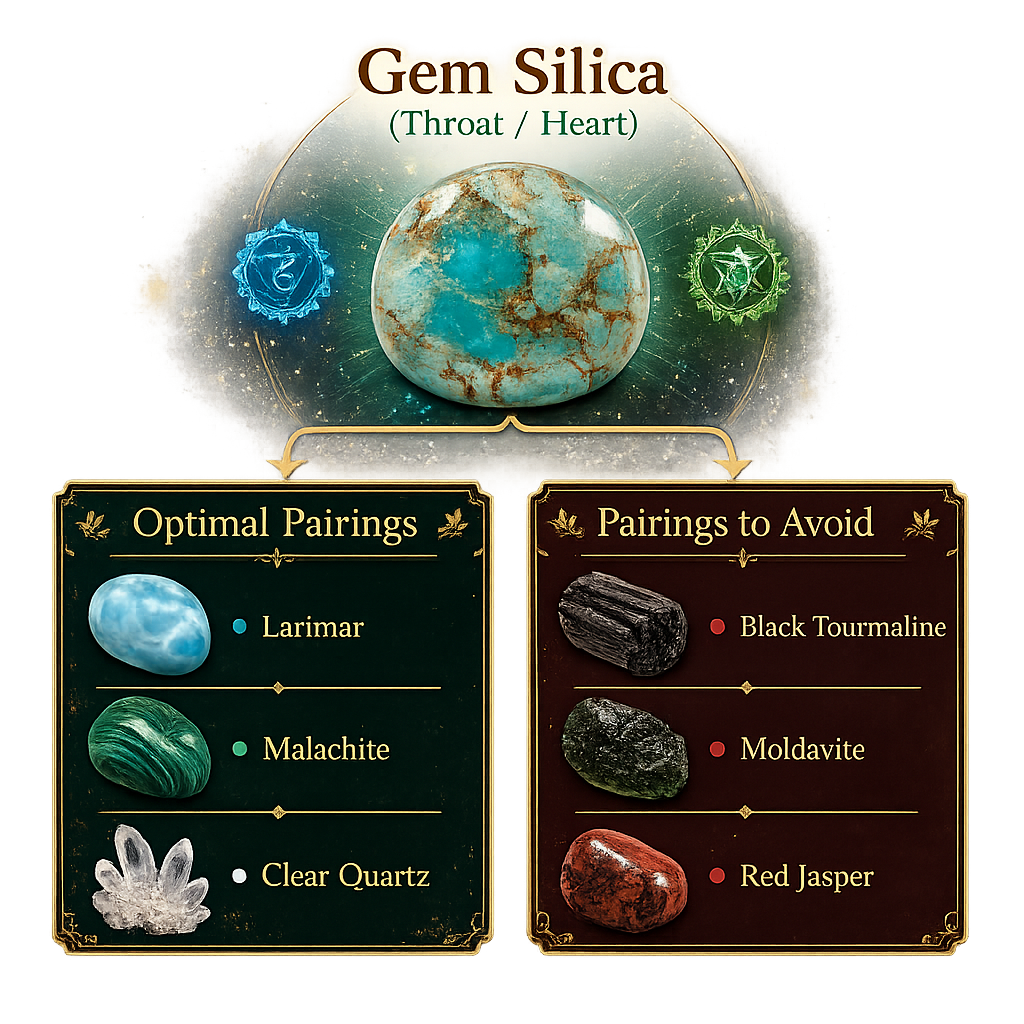
- Larimar: Combines throat-chakra resonance with peaceful, water-element energies to foster serene expression and stress relief.
- Malachite: Enhances heart-chakra clearing and transformation, balancing Gem Silica’s soft emotional healing with dynamic grounded growth.
- Clear Quartz: Amplifies Gem Silica’s subtle energetic vibrations, aiding deep intuitive work and meditation clarity.
Crystal Pairings to Avoid
- Black Tourmaline / Heavy Grounding Stones: Their dense, downward energy can clash with Gem Silica’s light, high-vibrational flow.
- Moldavite / High-Intensity Tektites: Can overwhelm the calm, expressive quality of Gem Silica, leading to energetic disorganisation.
- Red Jasper / High-Fire Root Stones: Aggressive, fiery vibrations tend to mute the soothing, water-element qualities of copper-based gems.
Archaeology, Art and Ancient History
Because true Gem Silica is geologically scarce, distinct ancient records treat it alongside its primary precursor minerals; chalcedony and chrysocolla.
- Ancient Egypt: Artisans used copper-rich blue stones to carve protective amulets, scarabs, and inlay work for royal jewellery.
- Classical Greco-Roman Era: Intaglios, cameos, and signet seals were frequently carved from chalcedony due to its toughness and ability to yield clean lines without fracturing.
- Pre-Columbian Americas: Inca, Aztec, and Native Southwestern cultures incorporated blue-green copper minerals into ceremonial masks, beads, and sacred adornments, associating blue stones with rain and fertility.
Folklore, Legends and Sacred Tales
Across various cultures and lore traditions, copper-infused chalcedony holds symbolic power:
- The Voice of the Divine Feminine: Legend views Gem Silica as a physical embodiment of compassionate expression, calming angry tempers and facilitating honest dialogue.
- Merchant’s Charm: Historic trade lore held that blue-green copper stones attracted wealth, successful negotiations, and protection against deceit in business.
- Water Spirit Conduit: Indigenous folklore linked blue chalcedonies to river spirits, using them in rainmaking rituals and emotional purification ceremonies.
Metaphysical and Mystical Healing Properties
Gem Silica is widely celebrated in energy medicine for its soothing yet potent vibrational signature.
- Emotional Equilibrium: Calms grief, releases past traumas, and neutralises irrational fears or anxieties.
- Empowered Expression: Facilitates clear, articulate speaking from the heart without defensiveness or aggression.
- Intuitive Awakening: Enhances meditative states, allowing practitioners to access inner wisdom and gentle spiritual guidance.
Astrological Connections
Gem Silica aligns closely with celestial energies that govern communication, harmony, and mental focus:
- Zodiac Signs:
- Gemini: Balances dualities, refines communication, and grounds overactive mental energy.
- Virgo: Enhances intellectual clarity while softening overly critical self-talk.
- Sagittarius: Anchors philosophical exploration with emotional wisdom and truth.
- Planetary Rulers: Mercury (intellect and speech) and Venus (harmony, beauty, and emotional connection).
- Elements: Water (emotional fluidity, intuition) and Air (clarity, thought, expression).
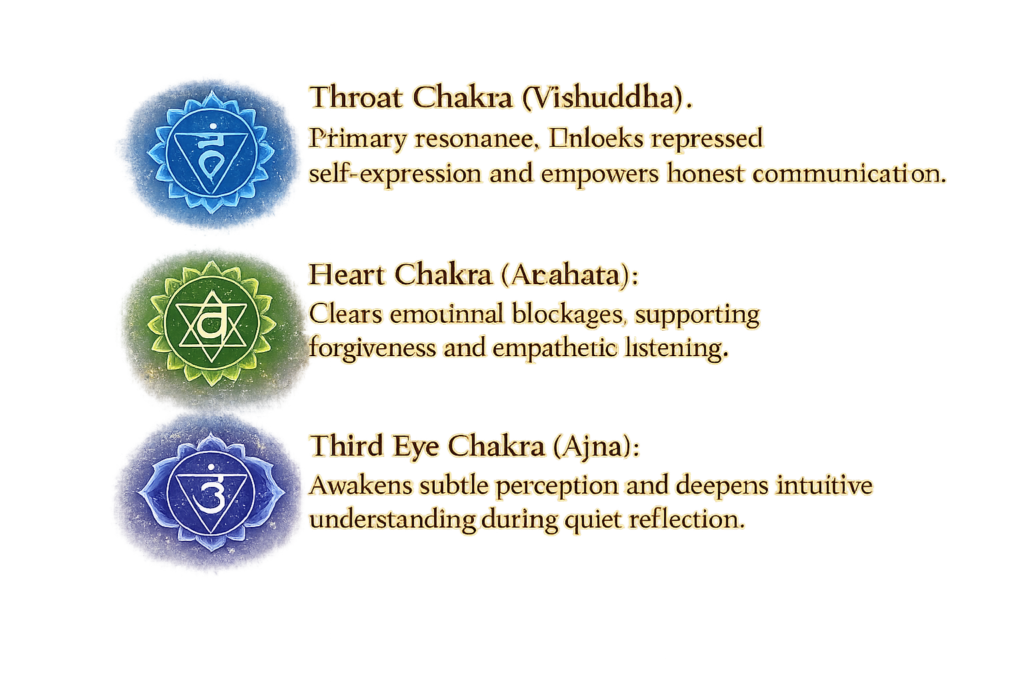
The Chakra System
Gem Silica acts as an energetic bridge across the upper energy centres:
Interesting Facts
- Rare Blend: It is one of the few gemstones where a very soft mineral (chrysocolla, Mohs 2–4) becomes durable (Mohs 7) through quartz replacement.
- Copper Indicator: Historically, finding Gem Silica floats near surface soils signalled major copper ore bodies underneath.
- Collector’s Dream: Top-tier Gem Silica from dried-up Arizona mines commands higher price-per-carat rates than many fine diamonds.
Modern Milestones: Birthstones and Anniversaries
- Alternative Birthstone: Serves as a modern alternative birthstone for May (associated with copper-rich emerald colours) and December (alongside blue turquoise and zircon).
- Anniversary Gemstone: Frequently gifted on the 21st Wedding Anniversary as a symbol of mature communication, trust, and lasting emotional tranquility.
Gem Silica Frequently Asked Questions
How can I tell if my Gem Silica is genuine?
Authentic Gem Silica displays a vitreous lustre, a Mohs hardness of 6.5–7 (it cannot be easily scratched by a steel blade), and natural variations in translucency. Beware of dyed chalcedony or glass imitations, which often feature unnatural colour concentration in surface cracks.
Is Gem Silica the same as Turquoise?
No. While both owe their blue-green colours to copper, Turquoise is a hydrous phosphate of copper and aluminium (Mohs 5–6), whereas Gem Silica is a variety of quartz/chalcedony (Mohs 6.5–7).
How should I clean and care for Gem Silica jewellery?
Clean with warm, soapy water and a soft cloth. Avoid harsh household chemicals, steam cleaning, or ultrasonic cleaners, which can damage natural matrix inclusions or cause fractures along internal boundary lines.
Why is Gem Silica so expensive compared to regular chalcedony?
Its extreme geologic rarity, combined with high demand from lapidary collectors and limited supply from active mines, drives its premium market value.
Below are my personally selected and curated Gem Silica products