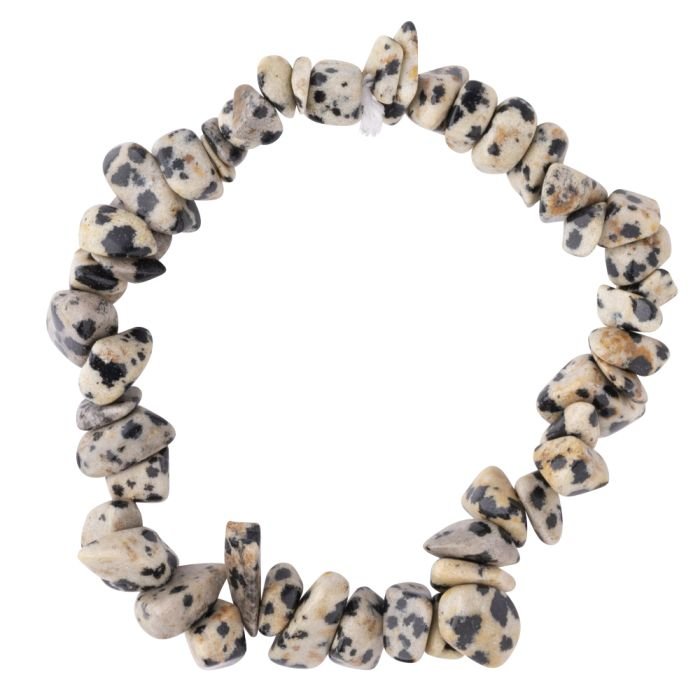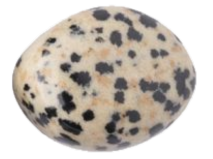
Dalmatian Jasper earns its name from its distinctive spotted pattern, which strikingly resembles the coat of a Dalmatian dog. Frequently sought after by collectors and holistic practitioners alike, this captivating stone is highly celebrated for its ability to infuse the auric field with positivity, light-heartedness, and childlike enthusiasm. Though traditionally referred to as a jasper in commercial gemstone markets, it possesses a completely unique geological classification that sets it apart from standard chalcedony varieties. This comprehensive guide explores the rich geological science, historical background, metaphysical attributes, and practical crystal healing frameworks of this magnificent grounding stone.
Alternate names
In the gemstone market and various spiritual communities, this unique mineral specimen is known by several alternate titles, including:
- Dalmatian Stone: The geologically precise trade name preferred by mineralogists, acknowledging that the material is not a true jasper.
- Stone of Joy: A popular metaphysical moniker highlighting its therapeutic ability to counteract emotional fatigue and promote playfulness.
- Dalmatinite: A localized petrological term occasionally utilized in geological surveys and mineral databases.
The stones Science and Composition
From a scientific perspective, Dalmatian Jasper is a misnomer. While true jaspers are microcrystalline varieties of quartz (chalcedony) formed via sedimentary or hydrothermal processes, Dalmatian Jasper is a peralkaline gneissoid igneous rock.
The stone is primarily composed of a fine-grained matrix of white, cream, or pale beige feldspar (mostly perthite) and quartz, interspersed with distinct, needle-like macro-crystalline aggregate clusters. The signature dark spots that populate the stone are not iron inclusions or jasper variants; rather, they consist of distinct, sub-calcic amphiboles, primarily arfvedsonite or riebeckite, and occasionally rich concentrations of black tourmaline (schorl). It forms through slow magmatic cooling, allowing the distinct mineral phases to segregate into its signature speckled appearance.
Key Physical Characteristics
Understanding the physical features of this stone helps collectors identify authentic raw and tumbled specimens:
- Mohs Hardness: Typically ranges from 5 to 7, varying depending on the localized concentration of quartz (hardness 7) versus feldspar (hardness 6).
- Color Profile: A dominant opaque background of pale beige, cream, or light grey, heavily punctuated by deep black, dark brown, or blue-black rounded spots.
- Luster: Vitrous to dull or earthy in raw formations, polishing beautifully into a sleek, glossy sheen.
- Streak: White.
- Fracture: Uneven to conchoidal.
Common Geologic Varieties
While the foundational mineral structure remains consistent, Dalmatian Jasper appears in a few distinct commercial presentations:
- Classic Dalmatian Jasper: The most recognizable variety, characterized by a clean, pale beige background contrasted sharply against bold, isolated black spots.
- Brown Dalmatian Jasper: An earthier variation displaying warmer, tan, or reddish-brown baseline matrix tones with more diffuse, subtle speckling.
- Polished Dalmatian Jasper: Specimens that have undergone commercial tumbling or lapidary carving, enhancing the natural color contrasts and bringing out the hidden iridescence of the feldspar grains.
- Dyed Dalmatian Jasper: Opaque varieties that have been artificially injected with industrial dyes (green, blue, purple, or red) to appeal to novelty jewelry markets, though these lose their natural visual authenticity.
Global Mining and Volcanic Sources
Dalmatian Jasper is highly localized compared to standard silicate minerals. The overwhelming majority of the world’s commercial supply is mined out of massive igneous rock formations located within Mexico, which yields the highest quality specimens featuring crisp, high-contrast spot formations.
Secondary, minor geological deposits and related igneous variations have been documented in parts of Brazil and specific remote volcanic regions within the Western United States. Because it requires highly specific peralkaline plutonic environments to cool and recrystallize, it remains a uniquely localised geographic treasure.
Crystal Pairings: What to Combine and Avoid
Optimal Crystal Pairings
- Black Tourmaline: Because the spots within Dalmatian Jasper frequently carry arfvedsonite or tourmaline signatures, pairing it with pure Black Tourmaline drastically amplifies its protective boundaries and grounding efficiency, making it an exceptional energetic shield against digital pollution and EMF radiation.
- Carnelian: Combining the stone with Carnelian creates a highly vibrant energy flow that stimulates the lower chakras, actively igniting creative drive, passion, physical stamina, and motivation.
- Clear Quartz: Known as the “Master Healer,” Clear Quartz acts as a natural amplifier. When placed next to Dalmatian Jasper, it elevates the stone’s playful, uplifting frequencies, projecting joy throughout an entire living space.
Crystal Pairings to Avoid
- Lepidolite: Lepidolite is dense with lithium and carries a deeply calming, sedative, and meditative frequency. Its ultra-soothing energy can actively counteract or dull the spontaneous, playful, and high-spirited vibrance of Dalmatian Jasper.
- Smoky Quartz: While grounding is highly beneficial, an overabundance of heavy, dense Smoky Quartz can anchor the energetic field so intensely that it overrides the light-hearted, inner-child qualities that Dalmatian Jasper is trying to bring to the surface.
Archaeology, Art and Ancient History
Because of its highly localised geographic origin in the Americas, Dalmatian Jasper does not possess the extensive Old World archaeological footprint seen with stones like Lapis Lazuli or Egyptian Jasper. However, pre-Columbian indigenous populations throughout Mesoamerica frequently collected and revered speckled and orbicular stones.
These cultures viewed unique multi-mineral rocks as sacred fragments of the earth’s primordial fire. They hand-carved speckled stones into small animal effigies, structural amulets, and protection talismans designed to safeguard warriors during travel and spiritual transitions.
Folklore, Legends and Sacred Tales
In historical folklore and shamanic traditions, the spotted appearance of Dalmatian Jasper was often thought to visually mirror the duality of life—blending the light of the cream feldspar with the dark shadows of the tourmaline/arfvedsonite inclusions.
Legends suggest that the stone serves as a spiritual mirror that wards off trickster spirits and illusions, instantly transmuting dark thoughts into lightheartedness. Tribal lore frequently associated the stone with animal communication, believing that its spotted pattern created a energetic bridge between humans and the domestic animal kingdom, helping domesticate wild spirits and soothe frightened beasts.
Metaphysical and Mystical Healing Properties
Metaphysically, Dalmatian Jasper operates as a profound emotional balancer and energetic pick-me-up. It is heavily utilised by crystal practitioners for inner-child healing work, helping individuals break through deep-seated emotional blockages, cynicism, and old behavioural ruts. By breaking down barriers of over-analytical thinking, it inspires a sense of curiosity, wonder, and unburdened joy. Furthermore, its unique composite nature allows it to simultaneously ground an individual’s physical body while lifting their energetic spirits, preventing emotional burnout and shielding the user from absorbing the negative projections of others.
Astrological Connections
Dalmatian Jasper exhibits a dynamic relationship with three key zodiac signs:
- Virgo: The ultra-practical, analytical Virgo benefits tremendously from the stone, as it actively reduces chronic overthinking, alleviates stress, and introduces a healthy dose of spontaneous fun into their disciplined daily routines.
- Gemini: Resonating perfectly with Gemini’s dual nature, it encourages free-spirited exploration, verbal wit, and creative experimentation while keeping their airy intellect safely anchored to the earth.
- Aries: It provides the fiery Aries with a stable foundation of confidence, balancing their raw, impulsive motivation with steady determination and situational awareness.
The Chakra System
Dalmatian Jasper works dynamically across the lower and upper energy centres:
- The Root Chakra (Mulaadhara): Due to its rich igneous base and dark mineral inclusions, it anchors deeply into the Root Chakra, stabilising erratic emotions, dispelling irrational fears, and providing a reassuring sense of physical safety.
- The Sacral Chakra (Svadhisthana): By clears blockages within the Sacral centre, it unlocks buried creative impulses, enhances a sense of emotional playfulness, and encourages joyful, uninhibited personal expression.
Interesting facts
- Amphibole Spots: The iconic dark spots are actually intricate mineral clusters of arfvedsonite or riebeckite, rather than typical iron stains or black obsidian.
- The Inner-Child Stone: It is one of the very few crystals in the metaphysical lexicon explicitly recommended for releasing long-held childhood conditional programming and healing adult cynicism.
- Petrological Truth: Geologically, it is classified as a porphyritic igneous rock rather than a chalcedony, making its trade name “jasper” completely inaccurate from a laboratory standpoint.
Modern Milestones: Birthstones and Anniversaries
While it is not featured on traditional or modern monthly birthstone charts, Dalmatian Jasper has emerged as a beloved alternative zodiac birthstone for those born under the signs of Virgo and Gemini.
In the realm of modern matrimonial milestones, it serves as an exceptional and highly meaningful choice for a 10th wedding anniversary. Reaching a decade of marriage requires a beautiful balance of grounding stability and light-hearted joy, two core properties that this unique composite stone perfectly represents.
Dalmatian Jasper Frequently Asked Questions
Q1: Is Dalmatian Jasper safe to submerge in water?
Yes, Dalmatian Jasper is safe for quick rinses under warm water to remove dust or physical dirt, as its components generally rank around 6 on the Mohs scale. However, because it is a composite rock featuring distinct boundaries between feldspar, quartz, and amphibole minerals, prolonged soaking or exposure to salt water can weaken these mineral interfaces over time, causing the stone to develop microscopic surface cracks or become brittle. Always dry it completely with a soft microfibre cloth.
Q2: How can I tell if my Dalmatian Jasper is real or artificially dyed?
Authentic Dalmatian Jasper will always display a natural baseline matrix of soft cream, ivory, pale beige, or light grey, accompanied by organic black or dark brown spots. If you see specimens that feature neon blues, hot pinks, vibrant purples, or synthetic greens, the stone has been chemically dyed. You can often spot dye concentrations pooling inside the tiny natural pits and crevices of the rock under a magnifying glass.
Q3: How do I energetically cleanse and recharge my Dalmatian Jasper?
Because it absorbs negative environmental stress and emotional blockages, it should be cleansed regularly. You can safely cleanse its field by passing it through the smoke of sacred herbs like sage or cedar wood, or by placing it overnight under the light of a full moon. To recharge its playful vibrance, let it rest directly on a Selenite charging plate or place it inside a potted plant to reconnect with the grounding element of the earth.
Q4: Can I leave Dalmatian Jasper out in direct, hot sunlight?
You should exercise caution when leaving this stone under intense, concentrated UV rays. While raw quartz and feldspar are structurally resilient, extended exposure to bright sunlight over months or years can slowly cause the rich dark arfvedsonite or tourmaline spots to dull or turn an ash-grey color. Furthermore, like all stones containing quartz elements, large polished spheres or shapes should never be left on a sunny window sill where they could act as a magnifying glass and focus solar rays into a fire hazard.
Q5: Why is Dalmatian Jasper called a stone of protection if it is focused on joy?
The unique magic of Dalmatian Jasper lies in its dual mineral composition. The white and cream feldspar matrix opens the user up to positive, high-vibrational feelings of joy and light-heartedness. Simultaneously, the dark spots of arfvedsonite or black tourmaline create an automatic energetic filter that actively deflects negative vibrations and psychic attacks. It protects your joy by ensuring outside negativity cannot penetrate your aura.
These are my personally selected and curated Dalmatian Jasper products