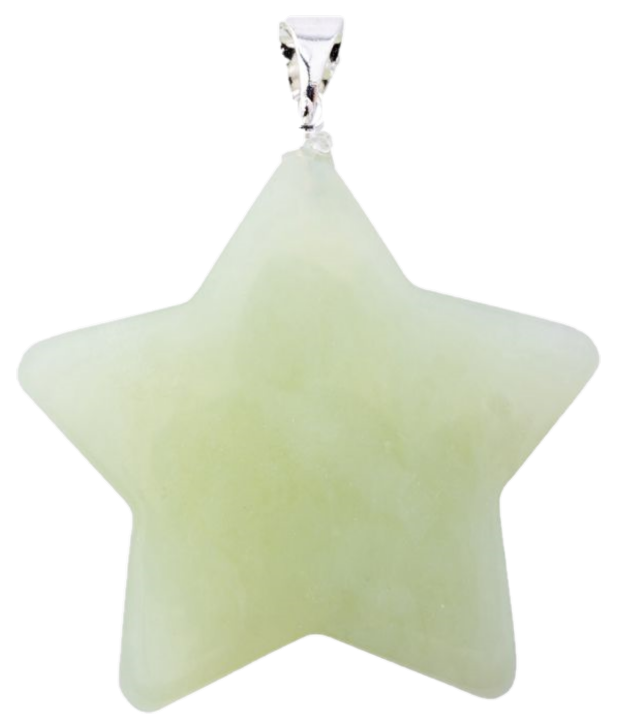
Jade is an enduring cultural and geological icon, celebrated globally for millennia. Though treated as a single gemstone historically, “jade” encompasses two distinct silicate minerals: nephrite and jadeite. Valued initially for an interlocking fibrous structure that produced nearly indestructible tools and ritual weaponry, it quickly ascended to the pinnacle of artistic and spiritual prestige. Revered in ancient China as the Imperial Gem and prized across Mesoamerica and Polynesia above precious metals, jade represents nobility, purity, and life-force energy. Today, it remains equally treasured among gemologists, fine jewellers, historians, and metaphysical practitioners for its soothing presence and timeless resilience.
Alternate names
- Piedra de Ijada: Spanish for “stone of the flank” or “loin stone,” referencing its early European reputation for alleviating kidney and loin disorders.
- Lapis Nephriticus: The Latinised equivalent derived from the Greek nephros (kidney), which directly gave rise to the modern mineral name nephrite.
- Yu (玉): The traditional Chinese term representing jade, historically applied as a descriptor for noble character, moral integrity, and royal beauty.
- Pounamu / Greenstone: The Māori term designating native New Zealand nephrite and related greenstones found on the South Island (Te Wai Pounamu).
- Chalchihuitl: The Nahuatl (Aztec) name for precious green stones, particularly emerald-green jadeite associated with water, nobility, and breath.
- Stone of Luck and Abundance: A widely recognised metaphysical title celebrating its enduring link to wealth, serendipity, and harmony.
The stones’ Science and Composition
While visually indistinguishable to the untrained eye, nephrite and jadeite belong to separate mineral groups defined by distinct crystallographic structures, chemical formulas, and formation environments.
| Property | Nephrite Jade | Jadeite Jade |
| Mineral Group | Amphibole (tremolite-actinolite series) | Pyroxene |
| Chemical Formula | $\text{Ca}_2(\text{Mg, Fe})_5\text{Si}_8\text{O}_{22}(\text{OH})_2$ | $\text{NaAlSi}_2\text{O}_6$ |
| Crystal System | Monoclinic (fibrous, interlocking felt) | Monoclinic (granular, interlocking crystals) |
| Mohs Hardness | 6.0 – 6.5 | 6.5 – 7.0 |
| Toughness | Exceptionally high (highest among gemstones) | Very high |
| Specific Gravity | 2.90 – 3.03 | 3.25 – 3.38 |
| Refractive Index | 1.600 – 1.627 | 1.654 – 1.667 |
| Diagnostic Lustre | Greasy to vitreous | Vitreous to sub-adamantine |
Key Physical Characteristics
- Exceptional Fracture Toughness: Due to the dense micro crystalline interlocking of its constituent fibres, nephrite is structurally the toughest natural mineral material known—surpassing diamond in its resistance to shattering under a hammer blow. Jadeite, while slightly harder, shares a similarly tightly bound crystalline weave.
- Acoustic Resonance: Due to its density and elasticity, thinly cut slabs of jade produce a pure, resonant musical chime when struck, a quality celebrated in ancient Chinese stone chimes (bianqing).
- Translucency & Texture: Fine jade ranges from opaque to semi-transparent. Highly valued specimens possess a smooth, gelatinous translucency often described by gemologists as having an “oily” or “water-like” optical depth.
- Colour Spectrum: Beyond characteristic greens, jade naturally occurs in pure white (“mutton fat” nephrite), lavender, ice colourless, jet black, russet orange, and honey yellow, driven by trace impurities of iron, chromium, manganese, or graphite.
Common Geologic Varieties
- Imperial Jadeite: An intensely saturated, translucent emerald-green jadeite coloured by trace chromium. It represents the pinnacle of market rarity and value.
- Mutton Fat Jade (Hetian Yu): A creamy white, highly translucent variety of nephrite sourced primarily from Xinjiang, China, prized historically above green stones by royal dynasties.
- Pounamu (Kahurangi, Inanga, Kawakawa): Native New Zealand nephrite classified by Māori carvers according to colour patterns, ranging from translucent pale-green to rich, spotted forest green.
- Lavender Jadeite: A soft lilac-to-purple pyroxene variety coloured by manganese and iron, exceptionally popular in fine jewellery.
- Black Jade: Found as both actinolite-rich nephrite and dense omphacite/jadeite, displaying an opaque, deep black tone with high surface polish.
- Russet/Skin Jade: Boulders naturally weathered in riverbeds that develop an oxidised reddish-brown or ochre exterior rind caused by secondary iron hydration.
Global Mining and Volcanic Sources
Neither mineral forms directly in volcanic magma; instead, both arise through intense regional and high-pressure metamorphism:
- Myanmar (Burma): Sourced primarily within the serpentine melanges of the Kachin State (Kachin/Hpakant district), this region remains the source of over 70% of the world’s commercial and gem-grade jadeite, formed under high-pressure, low-temperature metamorphic conditions associated with subduction zones.
- Guatemala (Motagua River Valley): A premier geologic source of historical and modern jadeite, producing distinct shades of blue-green, lilac, and opaque black jadeite along the North American and Caribbean tectonic boundary.
- China (Xinjiang & Liaoning): The Hetian (Khotan) riverbeds and the Kunlun Mountains host the historical epicentre of nephrite mining. Modern deposits also occur widely in Liaoning province (Xiuyan jade).
- Canada (British Columbia): Vast nephrite deposits exist within the Cassiar Mountains and Omineca Belt, positioning Canada as the largest industrial exporter of green nephrite for ornamental carving.
- New Zealand (South Island): The Arahura and Greenstone rivers produce alluvial pounamu nephrite, legally managed and protected by the indigenous Ngāi Tahu iwi.
- Russia (Siberian Sayan Mountains): Significant lode and alluvial deposits of vivid green nephrite featuring distinctive black speckling.
Archaeology, Art and Ancient History
Jade’s historical utility spans prehistoric tools to supreme imperial insignia:
- Neolithic Technology: In Europe, Mesoamerica, and Asia, Neolithic humans discovered that nephrite would not shatter along cleavage planes like flint. It was shaped by grinding with quartz sand into chisels, and adzes capable of felling trees and working hardwoods.
- Imperial China: During the Han Dynasty, elite royalty were buried in elaborate jade burial suits composed of thousands of polished plaques wired together with gold, silver, or bronze threads to ward off physical and spiritual decay. Bi discs (round jade plates with a central hole) represented Heaven, while square Cong cylinders represented Earth.
- Mesoamerican Civilisation: The Olmec, Maya, and Aztec cultures held jadeite (chalchihuitl) in higher esteem than gold. Used for funerary death masks—such as that of Mayan ruler K’inich Janaab’ Pakal of Palenque—and earflares, jade symbolised royalty, breath, and the renewal of crops.
- Māori Heritage: Carved into functional tools, heirloom war clubs (mere pounamu), and sacred ancestral neck pendants (hei-tiki), jade absorbed the spiritual prestige (mana) of each custodian and was passed through lineages to seal inter tribal pacts.
Folklore, Legends and Sacred Tales
- The Chinese Tears of Heaven: Ancient myth recounts that when the goddess Nüwa repaired the cracked vault of heaven, she collected stones of five colours from riverbeds and smelted them into liquid jade to heal the cosmos. Another tale records jade as the crystallised essence of heavenly dragons fallen to earth.
- Virtues of Confucius: Confucius ascribed eleven moral virtues to jade, asserting that its smooth surface represents benevolence, its interior durability represents wisdom, its clear ring when struck represents truth, and its unhidden flaws represent honesty.
- Mesoamerican Breath of Life: Mayan priests placed a polished jadeite bead inside the mouth of deceased nobles. It was believed to capture the departing soul’s final breath, serving as an entry passport into the spirit underworld.
- The Pounamu Fish (Poutini): In Māori mythology, the ocean guardian Poutini was a spiritual water-being who fell in love with an earthly woman named Waitaiki. Fleeing her vengeful husband, Poutini transformed Waitaiki into his own essence—solid nephrite greenstone—embedding her in the bed of the Arahura River.
Metaphysical and Mystical Healing Properties
- Emotional Harmonisation: Metaphysicians treat jade as an emotional stabiliser that dissolves irritability, purges subconscious negative self-talk, and encourages genuine self-acceptance.
- Prosperity & Resource Attraction: Long considered a premier stone of fortune, it is applied in manifestation work to align the carrier’s mindset with steady abundance and practical financial decision-making.
- Physical Vitality: Jade has been relied upon in folk traditions to filter bodily toxins, calm the adrenal glands, and support cellular physical regeneration—echoing its historical association with kidney balance.
- Dream Work: Placed beneath a pillow or on the brow, jade is thought to promote lucid dreaming, release repressed mental stress, and reveal intuitive solutions to waking problems.
Astrological Connections
- Taurus: As an earth sign governed by Venus, Taurus shares jade’s resonance with material stability, physical beauty, and patience. Jade tempers stubbornness while reinforcing the Taurean drive for organic prosperity.
- Libra: Also ruled by Venus, Libra benefits from jade’s historic association with diplomatic balance, emotional restoration, and the clear-minded resolution of interpersonal conflict.
- Pisces: Jade grounds watery Piscean intuition, helping preserve emotional boundaries and counterbalancing psychic fatigue with practical physical vitality.
The Chakra System
- Primary Association: Heart Chakra (Anahata): Green jade vibrates directly with the energy centre located at the sternum. It aids in releasing deep-seated grief, nurturing unconditional love, and balancing giving with receiving in interpersonal relationships.
- Secondary Association: Solar Plexus Chakra (Manipura): Honey, russet, and yellow-toned varieties of jade engage the solar plexus, assisting in personal sovereignty, deliberate decision-making, and goal manifestation.
- White & Lavender Jade (Crown and Third Eye): Lavender jade activates the crown and brow centres for serene meditation, whereas white mutton-fat nephrite is traditionally used for aura purification and spiritual clarity.
Crystal Pairings: What to Combine and Avoid
Optimal Crystal Pairings
- Rose Quartz: Marries jade’s grounding energetic stability with tender heart centred empathy, providing comprehensive emotional restoration.
- Citrine: Magnifies jade’s prosperity frequency, focusing intention on commercial success, ambition, and sustained good fortune.
- Black Tourmaline: Creates a solid protective barrier, shielding jade’s gentle, receptive harmony from invasive environmental stress.
- Clear Quartz: Acts as an amplifier for whatever specific intention is programmed into the jade specimen.
Crystal Pairings to Avoid
- Black Obsidian: The raw, cathartic, and confrontational shadow-work energy of volcanic obsidian can clash with jade’s slow, gradual harmonisation.
- Carnelian / Fire Agate: Highly fiery, impulsive gemstones can introduce energetic friction when paired with green jade’s deliberately serene, measured rhythm.
Modern Milestones: Birthstones and Anniversaries
- Alternative Birthstone: While emerald and peridot dominate traditional calendars, jade is recognised as a mystical alternative birthstone for March and an astrological birthstone for Taurus (April/May) and Libra (September/October).
- 12th Wedding Anniversary: Jade serves as the official gemstone for the 12th year of marriage, chosen to symbolise mutual endurance, deep-rooted harmony, and continuing financial prosperity.
- 35th Anniversary Alternative: In select contemporary gift guides, jade is also exchanged as an alternative to coral or emerald for thirty-five years of partnership.
Interesting facts
- Steel-Defying Durability: Nephrite’s intertwined amphibole fibres make it less brittle than steel; early miners discovered that dropping a large nephrite boulder often fractured the hammer rather than the stone.
- Musical Bells: The ancient Chinese musical instrument known as the bianqing utilised 16 to 24 shaped, suspended L-shaped jade slabs tuned to precise pitches that echoed sustained, bell-like tones.
- The “Treated” Market: The gemstone industry grades jadeite as Type A (completely untreated aside from surface wax), Type B (chemically bleached in acid to remove iron stains, then vacuum-infused with polymer resin), and Type C (artificially dyed).
- Heirloom Mana: In New Zealand tradition, taking or selling pounamu inappropriately was considered tapu (forbidden); historically, authentic pounamu gained sacred power only when carved and offered as a gift between individuals.
Jade Frequently Asked Questions
How do I tell the difference between nephrite and jadeite at home?
True distinction requires lab gemmology (refractive index testing or Raman spectroscopy). However, jadeite has a higher specific gravity (it feels noticeably heavier in the palm than nephrite of identical size) and yields a bright vitreous, glass-like lustre, whereas nephrite typically possesses an oily, waxy surface sheen.
Is all green stone sold as “jade” real jade?
No. The marketplace is saturated with common lookalikes sold under deceptive trade names. Serpentine is often marketed as “New Jade,” green aventurine quartz as “Indian Jade,” hydrogrossular garnet as “Transvaal Jade,” and dyed calcite or marble as “Mexican Jade.” None of these possess the mineral structure, toughness, or value of true nephrite or jadeite.
Why is Imperial Jadeite so extraordinarily expensive?
Imperial Jadeite combines exceptional vivid chromium coloration, near-complete transparency, and a fine micro crystalline structure. Mined almost exclusively in northern Myanmar, supply is diminishing rapidly against immense global demand, causing top-tier cabochons and bead necklaces to command millions of dollars at fine jewellery auctions.
Can real jade scratch glass?
Yes. Window glass ranks roughly 5.5 on the Mohs scale. Both nephrite (6.0–6.5) and jadeite (6.5–7.0) are hard enough to scratch standard glass easily without damaging their own surface. If a specimen is scratched by a common steel knife or piece of glass, it is likely serpentine, soapstone, or dyed marble.
How should jade jewellery be cleaned and maintained?
Clean genuine jade using lukewarm water, mild dish soap, and a soft-bristled brush. Never use steam cleaners, ultrasonic machines, or harsh household chemicals (like bleach or ammonia), as these can strip natural protective surface waxes or degrade internal fissures, particularly in treated Type B or Type C stones.
These are my personally selected and curated Jade products