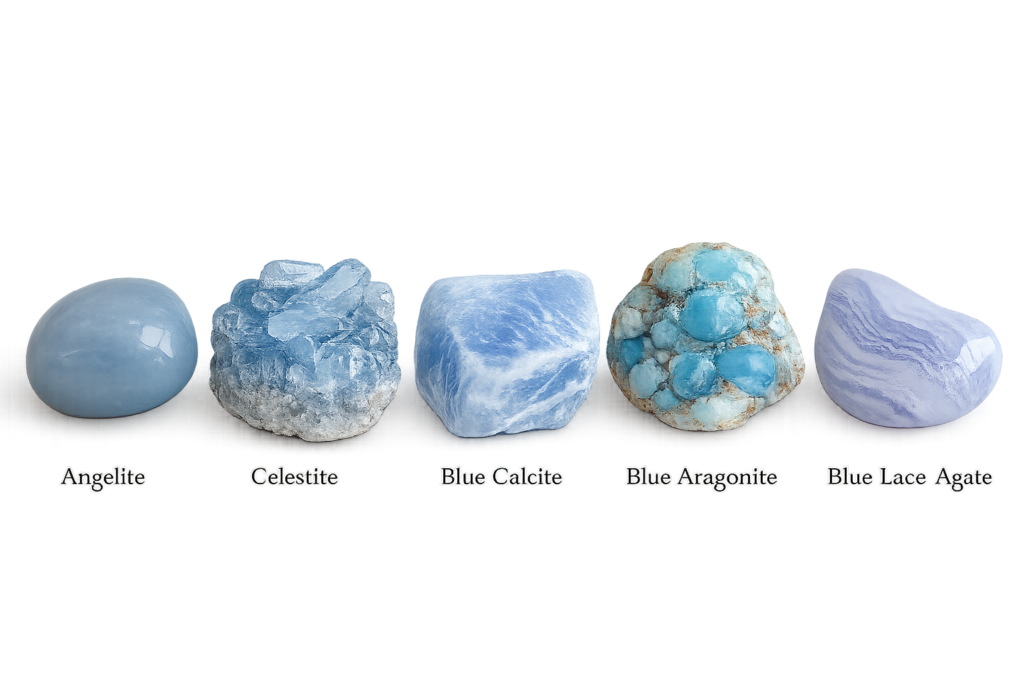
Distinguishing between these five popular blue crystals can be challenging because they all share a pastel, sky-to-ocean blue palette. However, they belong to completely different chemical classes and crystal systems, meaning they possess distinct physical properties—such as weight, texture, hardness, and visual patterns—that make them easy to tell apart once you know what to look for.
Here is a comprehensive guide and overview to help you differentiate Angelite, Celestite, Blue Calcite, Blue Aragonite, and Blue Lace Agate.
Key Diagnostic Features at a Glance
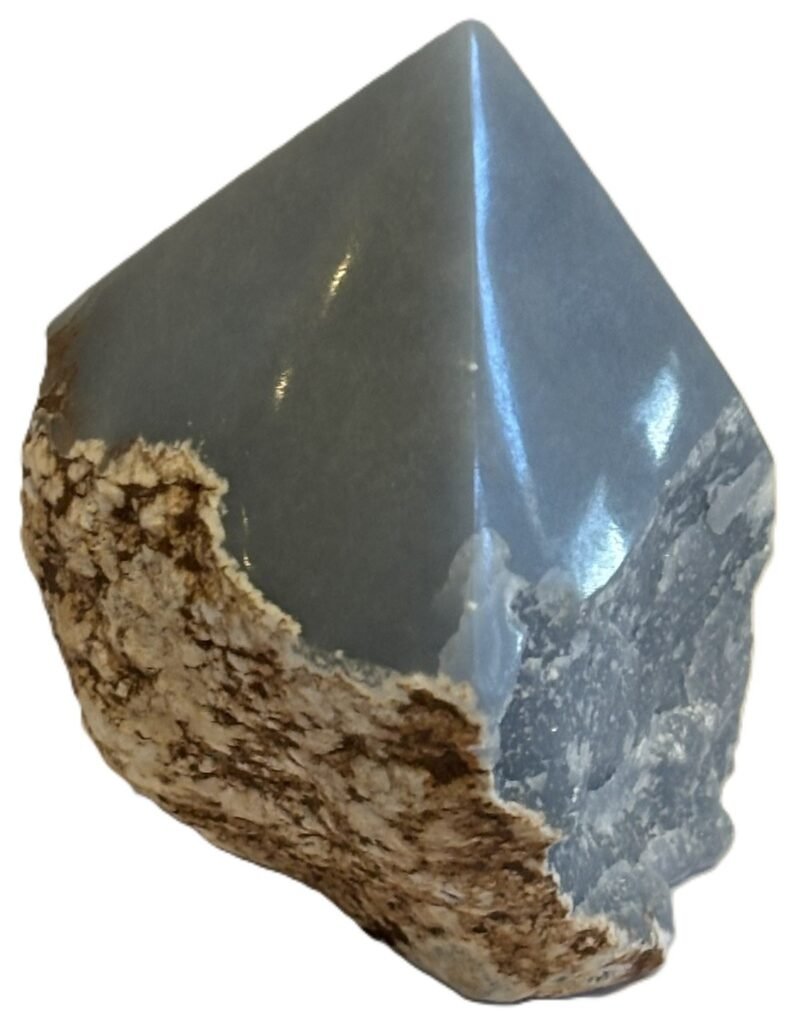
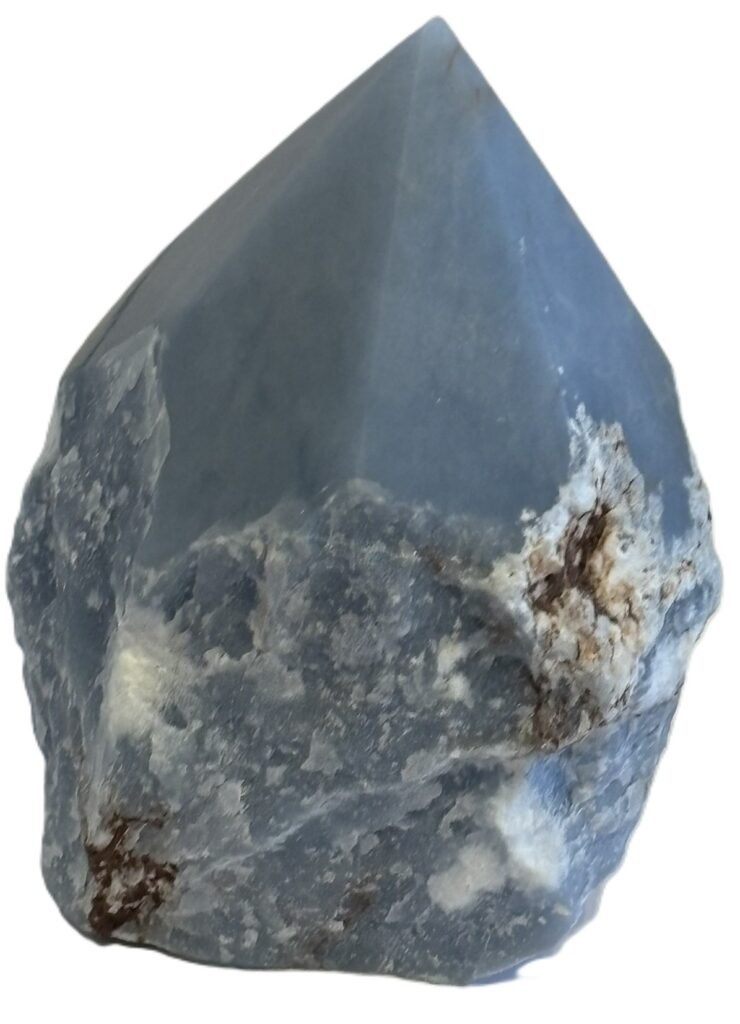
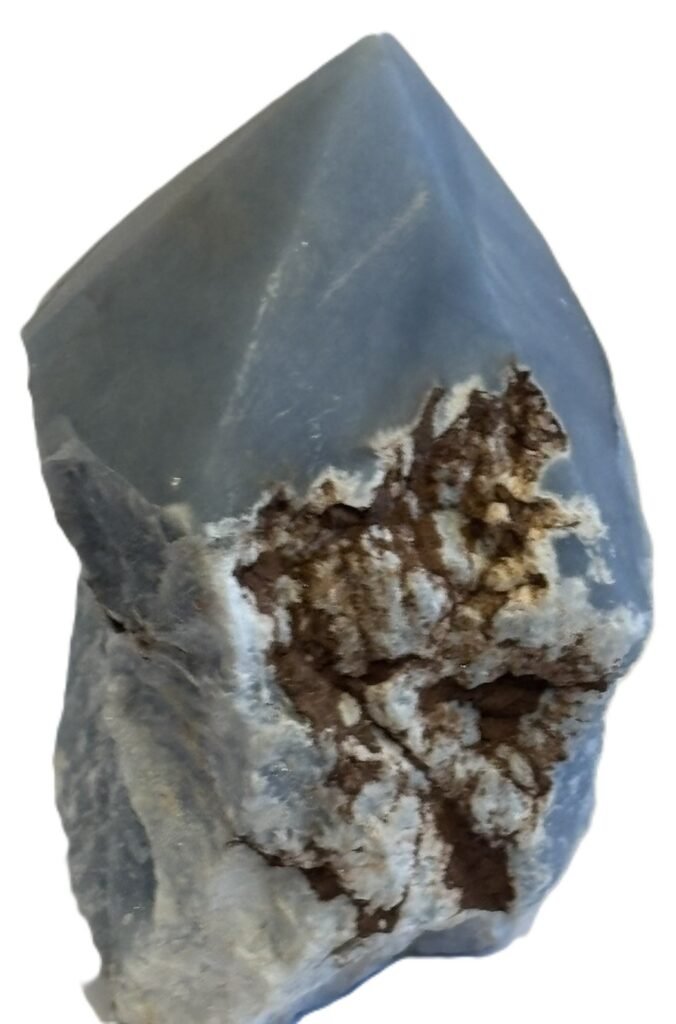
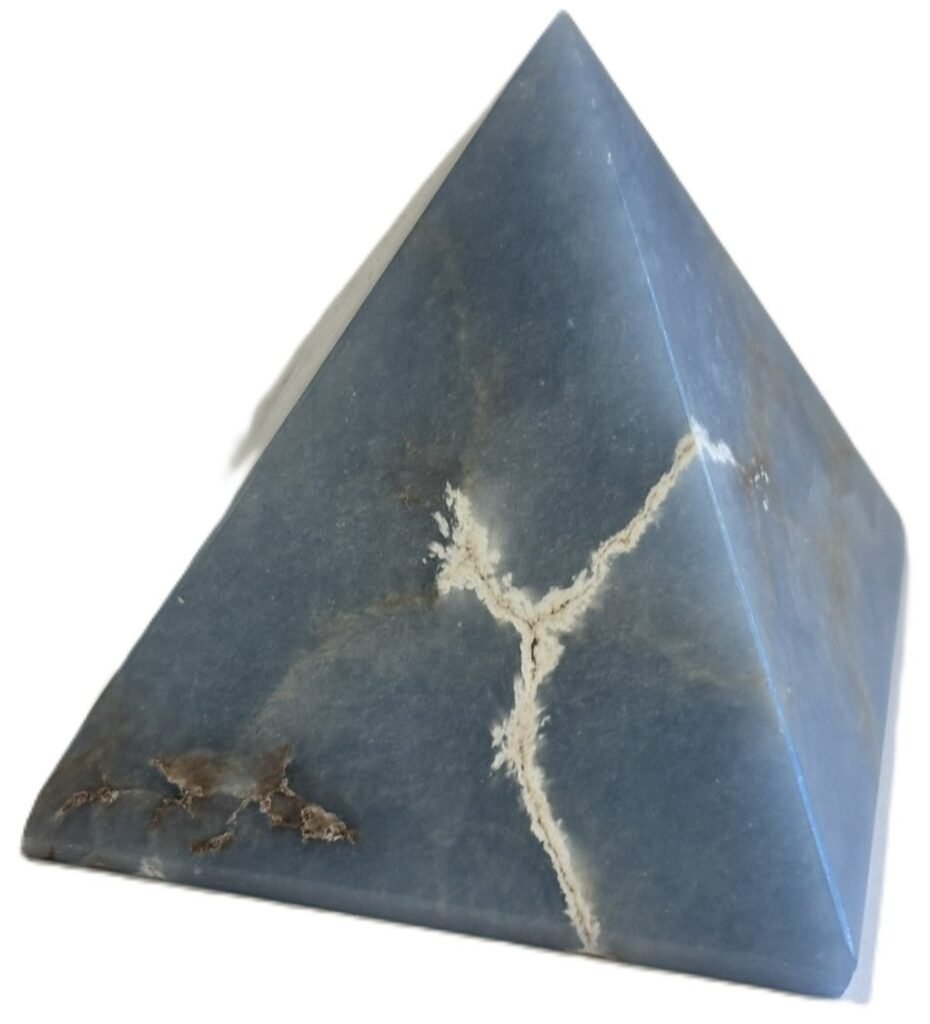
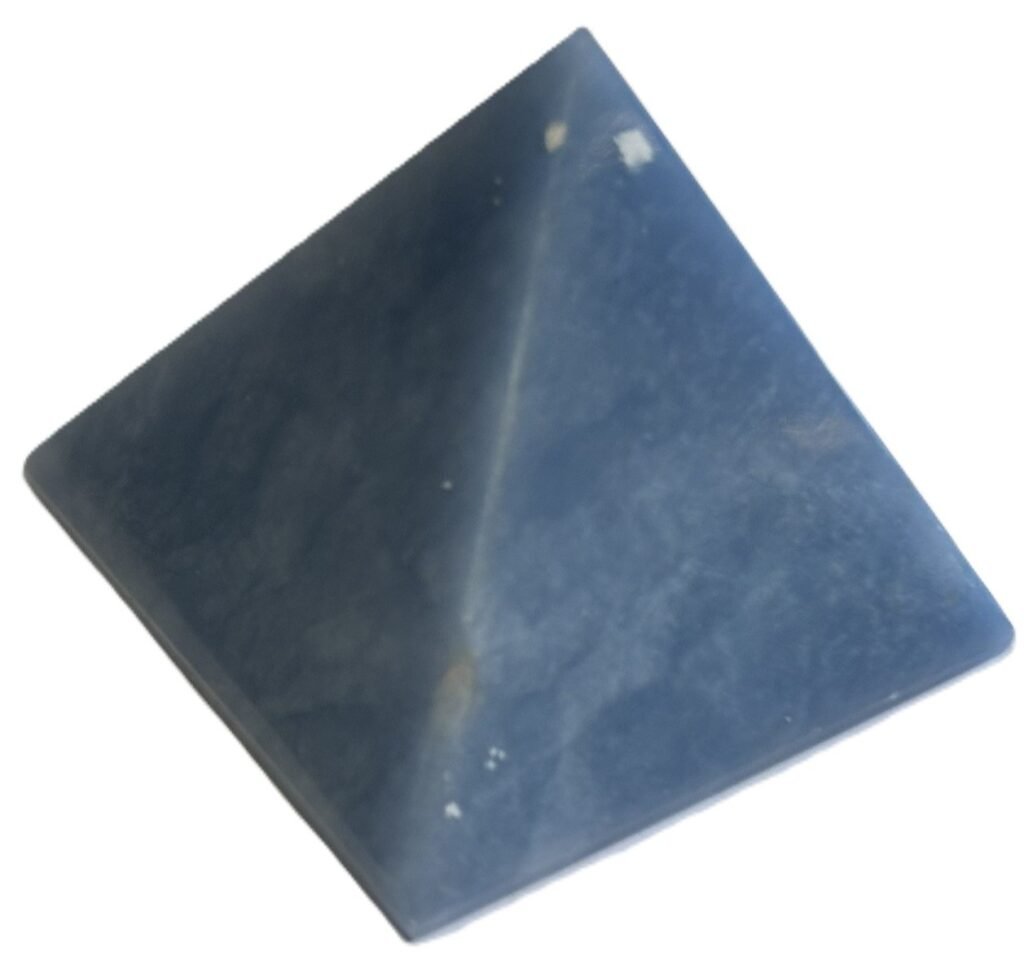
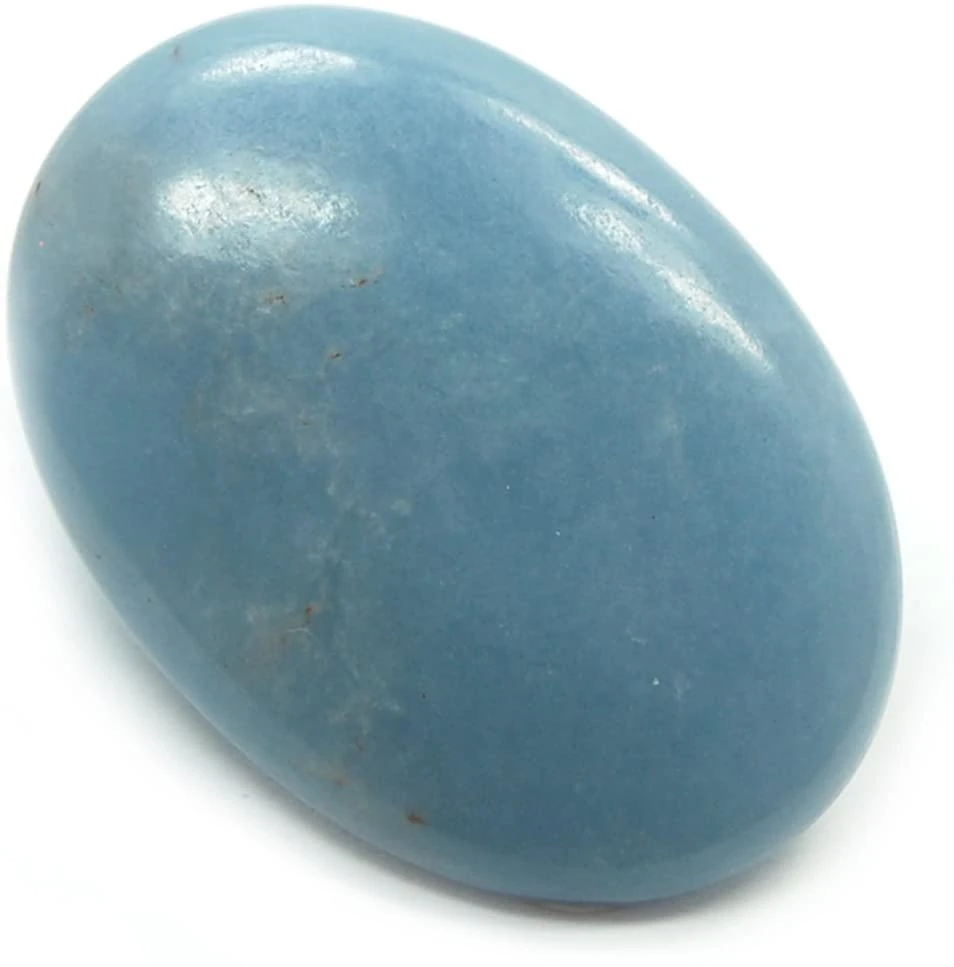
- Angelite (Anhydrite): Feels completely smooth, dry, and chalky. It has a uniform, opaque, powdery “baby blue” colour, often marked with tiny white flecks or small rusty-red haematite spots. It has no banding or visible crystals.
- Celestite (Celestine): Strikingly heavy for its size due to its strontium content. It is usually found as highly translucent, glassy, needle-like or tabular crystal clusters inside a heavy, greyish-white rock matrix (geode).
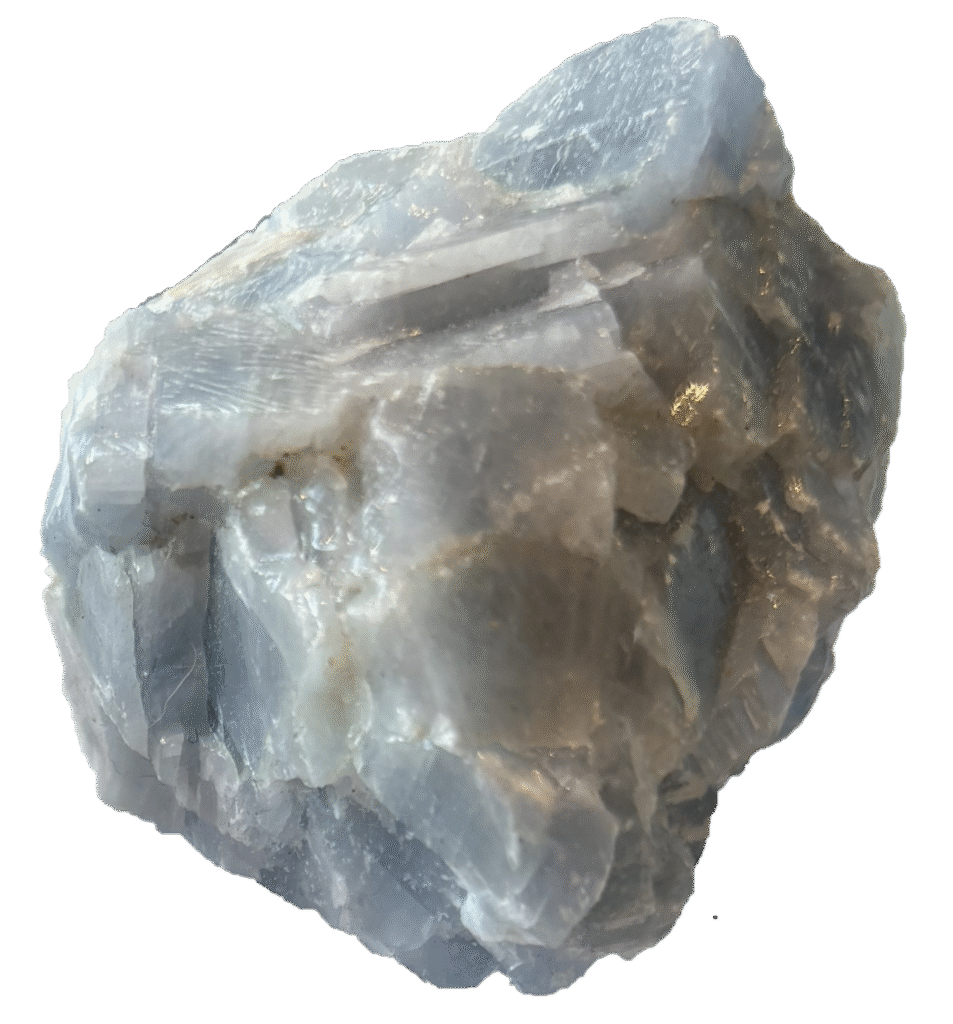
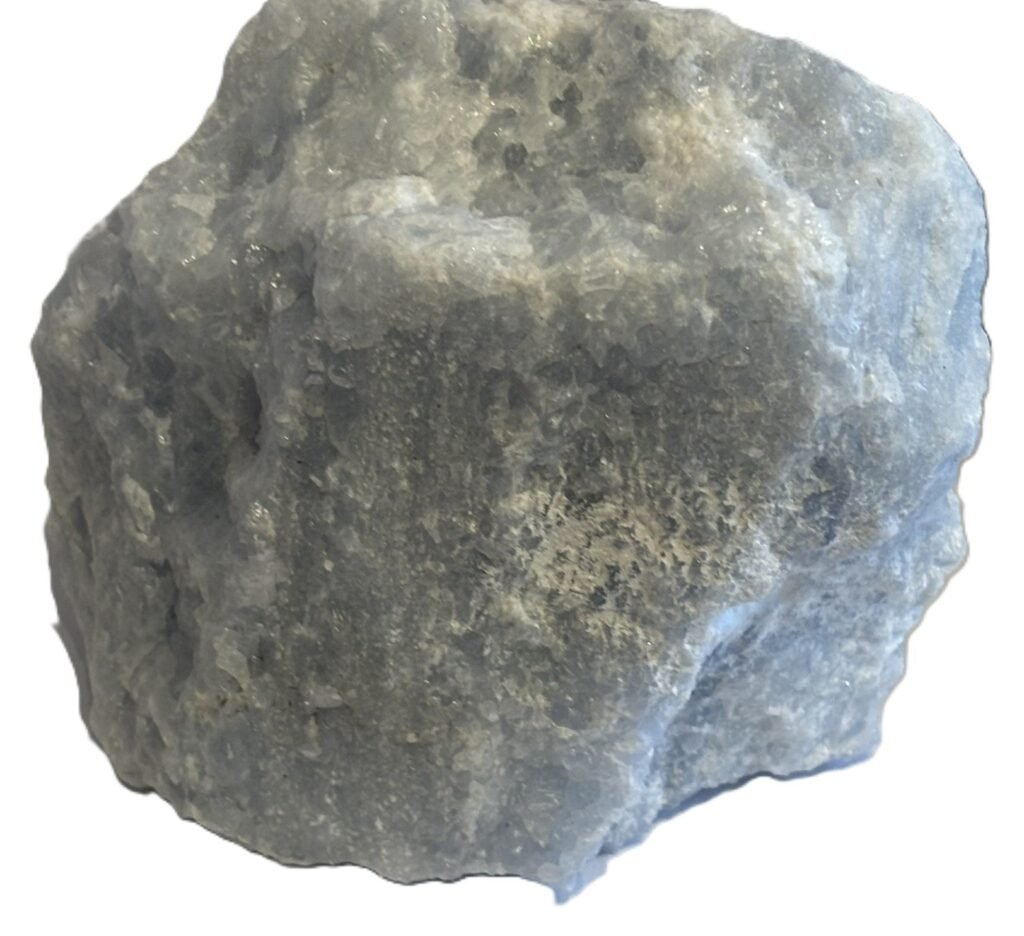
- Blue Calcite: Feels uniquely waxy, soapy, or greasy to the touch. It is translucent to opaque, often featuring pale white milky streaks or marble-like veins. It rarely shows distinct crystalline points in raw form; it usually appears as chunky, smooth blocks.
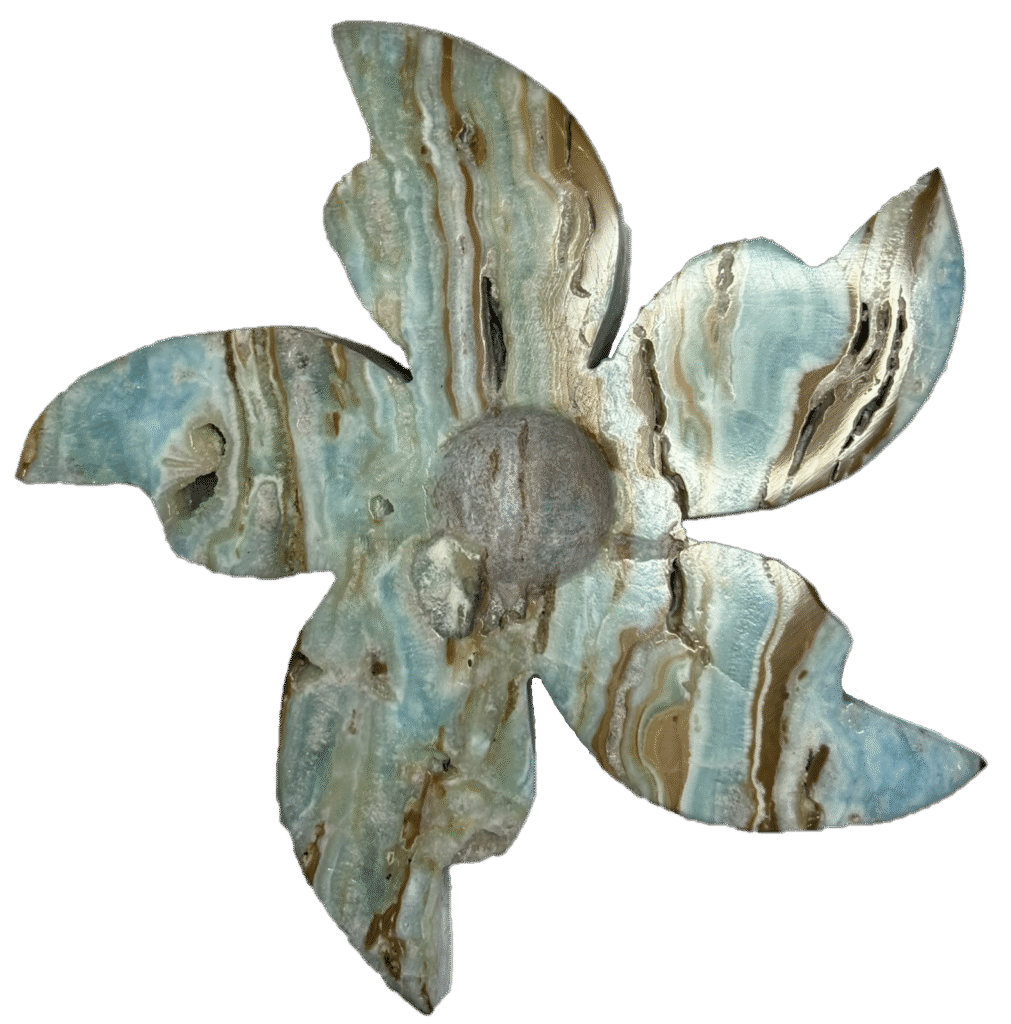
- Blue Aragonite: Most commonly found in botryoidal (bubble-like or coral-like) clusters or fibrous, radiating structures. It feels brittle, looks highly textured, and possesses an orthorhombic crystal structure rather than calcite’s blocky trigonal habit.
- Blue Lace Agate: Instantly identifiable by its intricate, sharply defined bands and ribbons of alternating light blue, lavender, and white. It is a variety of chalcedony (quartz), making it significantly harder and more durable than the other four minerals.
Comparative Physical Properties Overview
| Mineral | Chemical Formula | Crystal System | Mohs Hardness | Specific Gravity (Weight Feel) | Primary Visual Texture & Habits |
| Angelite | $\text{CaSO}_4$ (Calcium Sulphate) | Orthorhombic | 3.5 | 2.9 (Average) | Opaque, uniform pastel baby-blue; dry, chalky feel; white streaks or red flecks. |
| Celestite | $\text{SrSO}_4$ (Strontium Sulphate) | Orthorhombic | 3 – 3.5 | 3.9 – 4.0 (Very Heavy) | Translucent to transparent glassy crystals; commonly forms in geodes with a rock matrix. |
| Blue Calcite | $\text{CaCO}_3$ (Calcium Carbonate) | Trigonal | 3.0 | 2.7 (Light-Average) | Translucent to opaque; waxy/soapy feel; subtle white marbling; cleaves into rhombohedrons. |
| Blue Aragonite | $\text{CaCO}_3$ (Calcium Carbonate) | Orthorhombic | 3.5 – 4.0 | 2.9 (Average) | Botryoidal (bubble-like) clusters, fibrous layers, or radiating acicular spikes. |
| Blue Lace Agate | $\text{SiO}_2$ (Silicon Dioxide) | Trigonal (Microcrystalline) | 6.5 – 7.0 (Very Hard) | 2.6 (Light-Average) | Distinct, delicate concentric bands, laces, and waves of blue, white, and lavender. |
Step-by-Step Field Tests to Differentiate Them
If you are holding an unidentified blue gemstone, you can run through these quick physical assessments to identify it accurately:
1. The Touch and Texture Test
- If the stone feels waxy, soapy, or slightly greasy—almost like a hard bar of soap—it is Blue Calcite.
- If the stone feels completely dry, silky, or chalky/matte to the fingertips, it is Angelite.
- If the stone feels glassy, smooth, exceptionally cold, and hard, it is likely Blue Lace Agate.
2. The Weight (Specific Gravity) Test
- Pick up the specimen. If it feels surprisingly heavy and dense for its size (resembling the heft of a piece of lead or baryte), it is Celestite. Its strontium composition makes it nearly 1.5 times denser than quartz or calcite of the same size.
3. The Pattern and Growth Habit Test
- Look at the structure of the stone under a bright light:
- Sharp, wavy, lace-like ribbons or bands: Blue Lace Agate.
- Rounded, bubble-like clusters that look like sea coral: Blue Aragonite.
- Well-defined, glassy prismatic crystal points sitting inside a hollow rock cavity: Celestite.
- Chunky blocks with internal fractures or white marble veins: Blue Calcite.
4. The Hardness (Scratch) Test
- Because these minerals have vastly different hardness levels, a progressive scratch test using everyday items can isolate them:
- Try to scratch the stone gently with a copper coin (Mohs 3.5). If the coin easily leaves a permanent scratch, it is Blue Calcite (Hardness 3) or Celestite (Hardness 3–3.5).
- If a copper coin cannot scratch it, but a standard steel pocket knife blade or steel nail (Mohs 5.5) scratches it easily, it is Angelite or Blue Aragonite.
- If a steel blade completely fails to leave a mark and slides off harmlessly, the stone is Blue Lace Agate (Hardness 6.5–7).
5. The Acid (Vinegar) Test (For Raw/Rough Specimens)
- Blue Calcite and Blue Aragonite are calcium carbonates. If you apply a single drop of standard household white vinegar to a raw, unpolished area, it will react with the carbonate and begin to fizz and bubble gently.
- Angelite, Celestite, and Blue Lace Agate will not react or fizz when exposed to vinegar. (Note: Always wipe the stone clean immediately after testing to avoid dulling its natural finish).
These are my personally selected and curated Blue crystal selection of Angelite, Celestite, Blue Calcite, Blue Aragonite and Blue Lace Agate
Products by Category

Angelite Natural Rough & Polished Freeform Point 2
£22.00
Angelite Natural Rough & Polished Freeform Point 4
£28.00
Angelite Natural Rough & Polished Freeform Point3
£25.00
Angelite Polished Pyramid 1
£20.00Angelite Polished Pyramid 2 (at fault)
Original price was: £20.00.£15.00Current price is: £15.00.
Angelite tumble stone
£5.99
Blue aragonite star starfish 2
£40.00
Blue calcite Chunk
£4.50
Blue Calcite freeform 1
£50.00