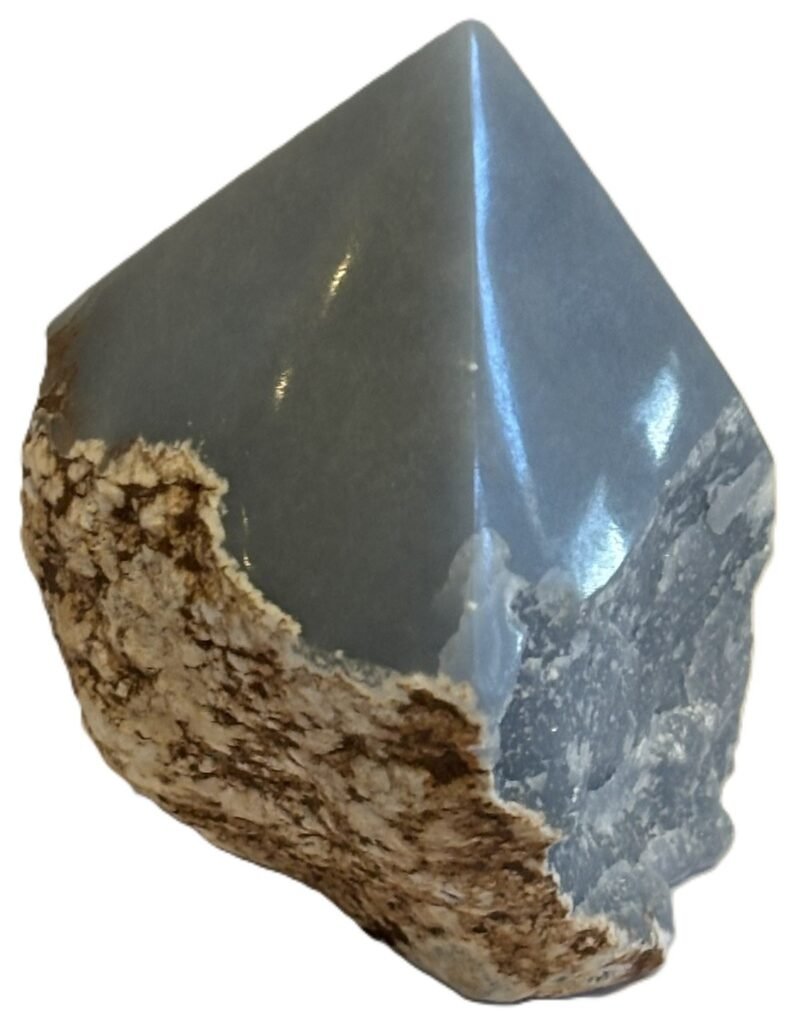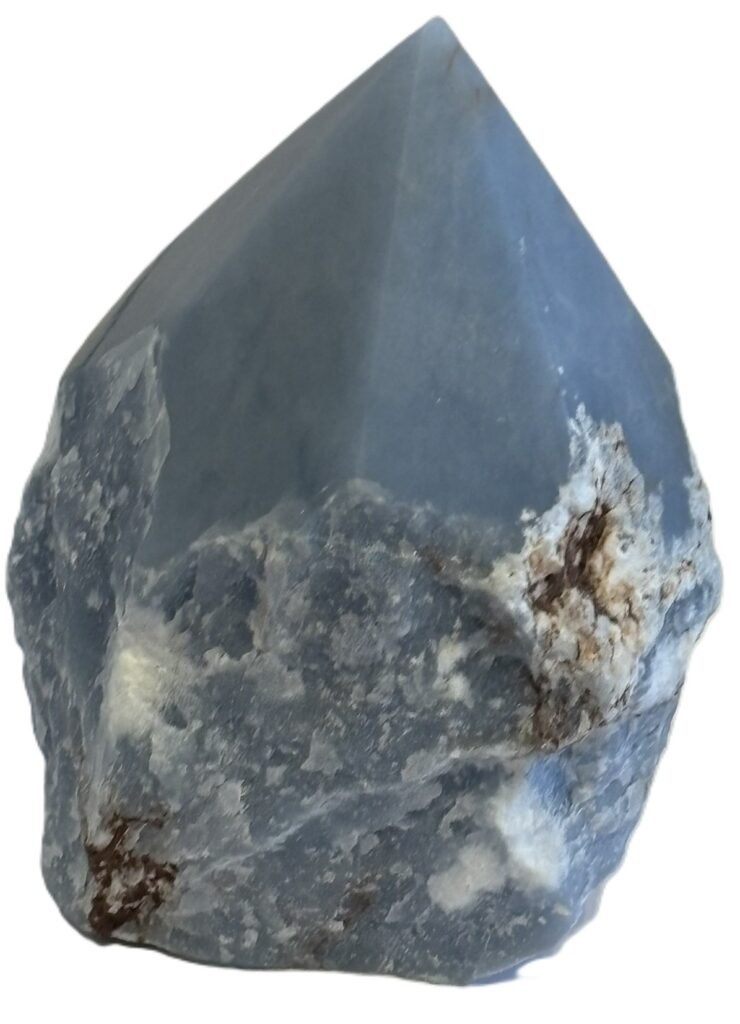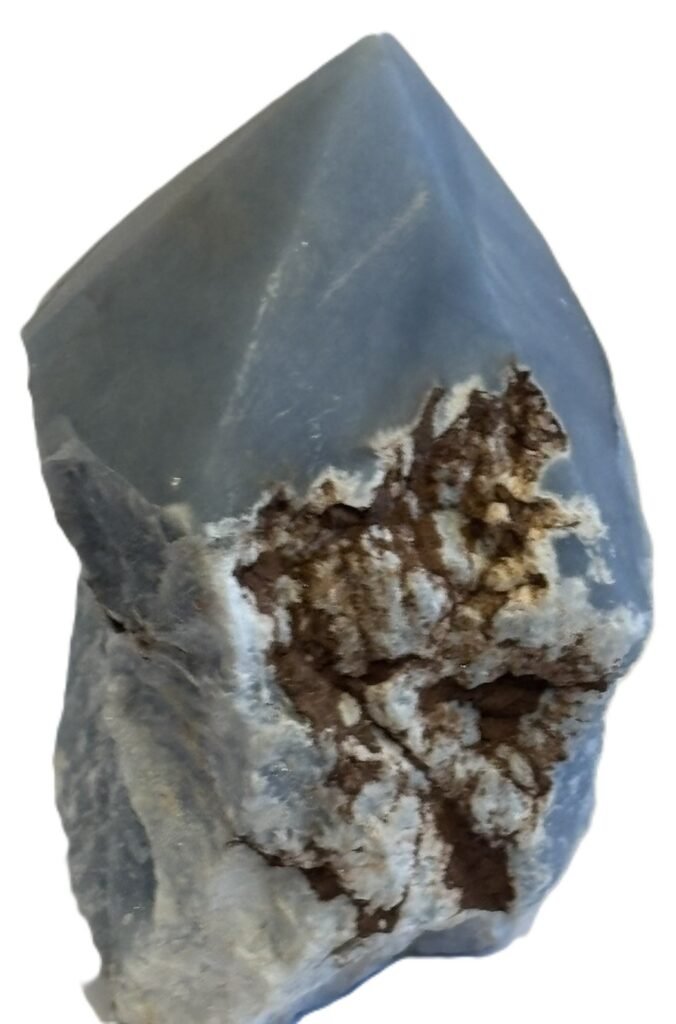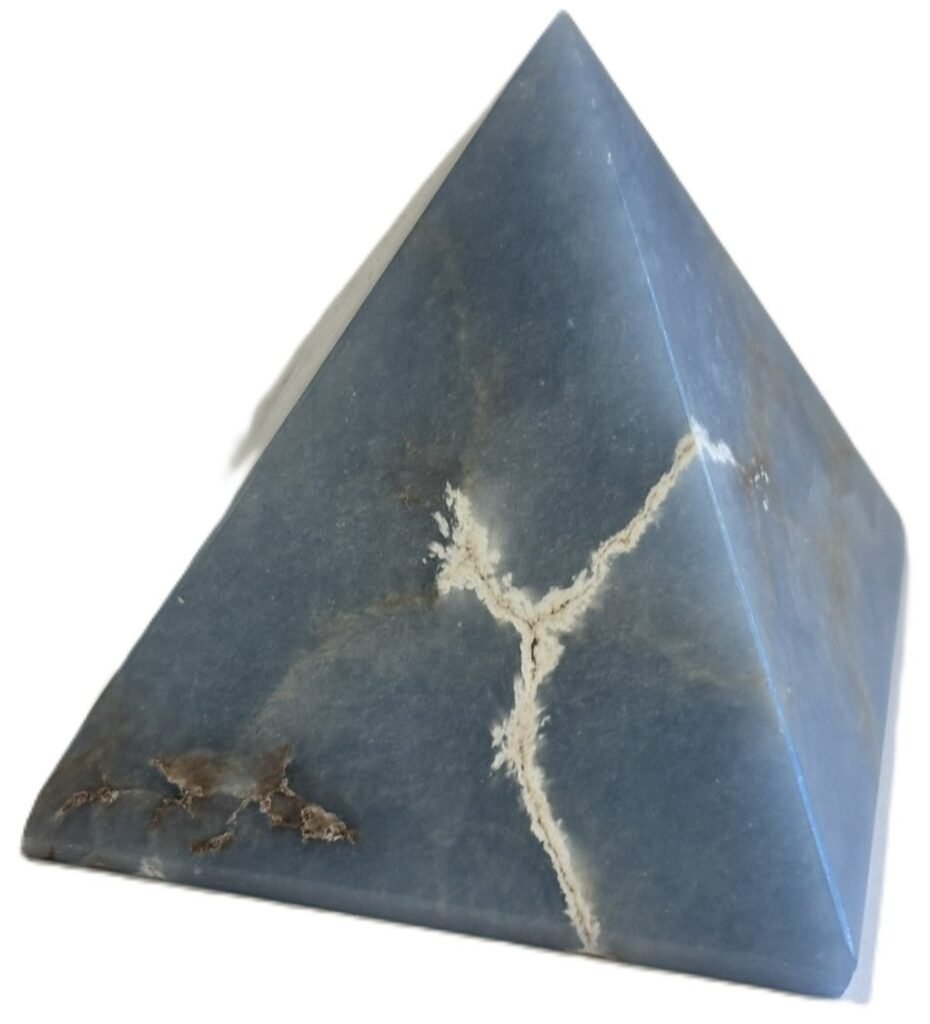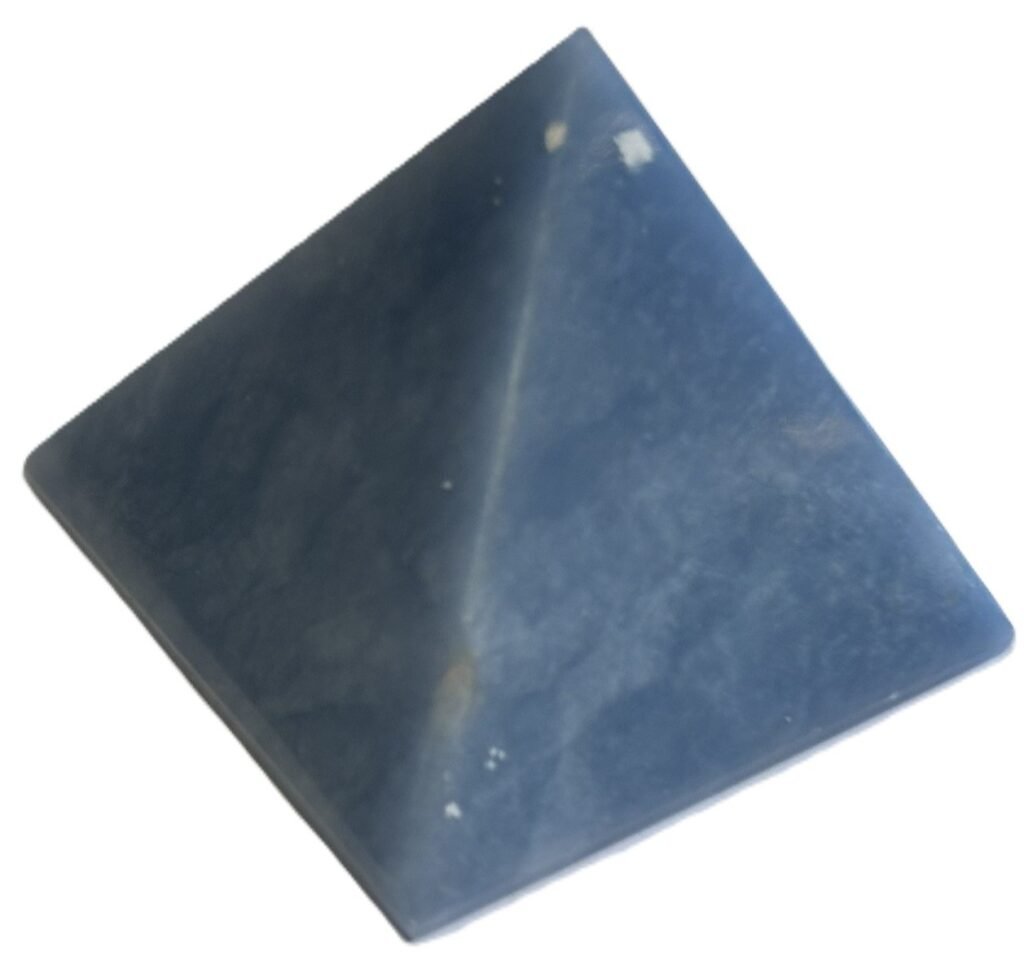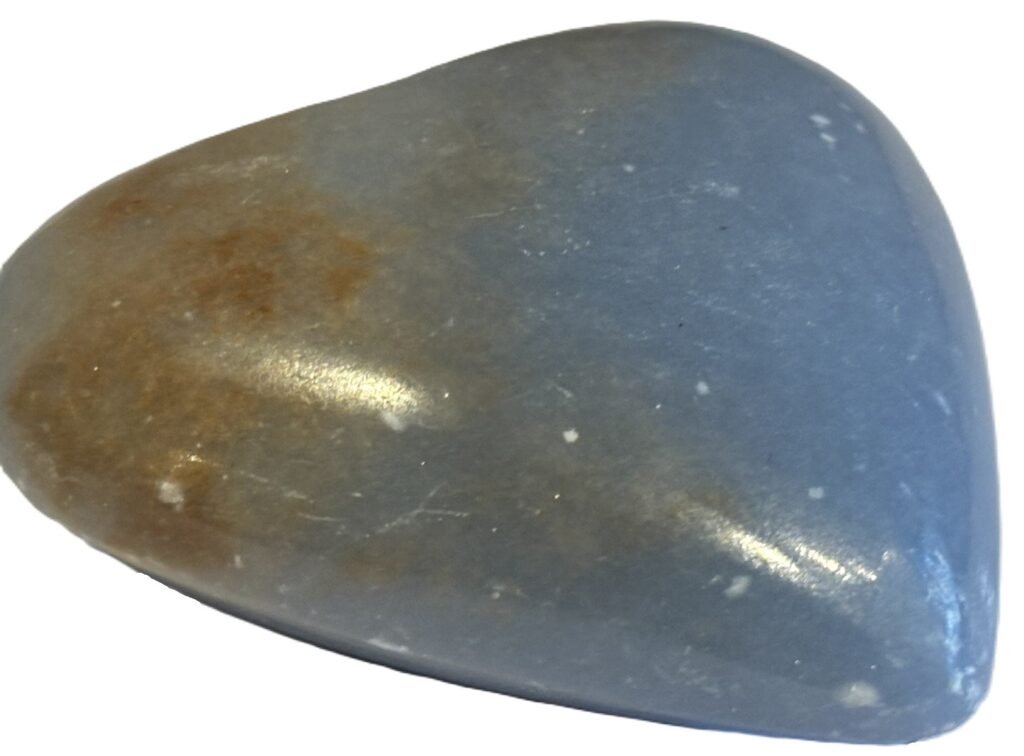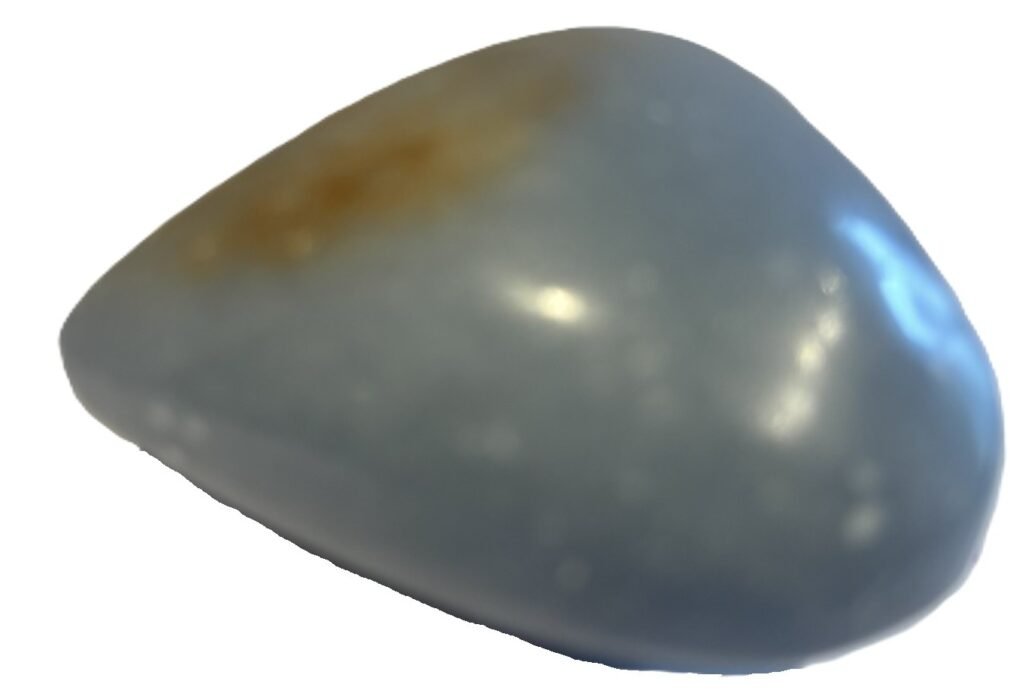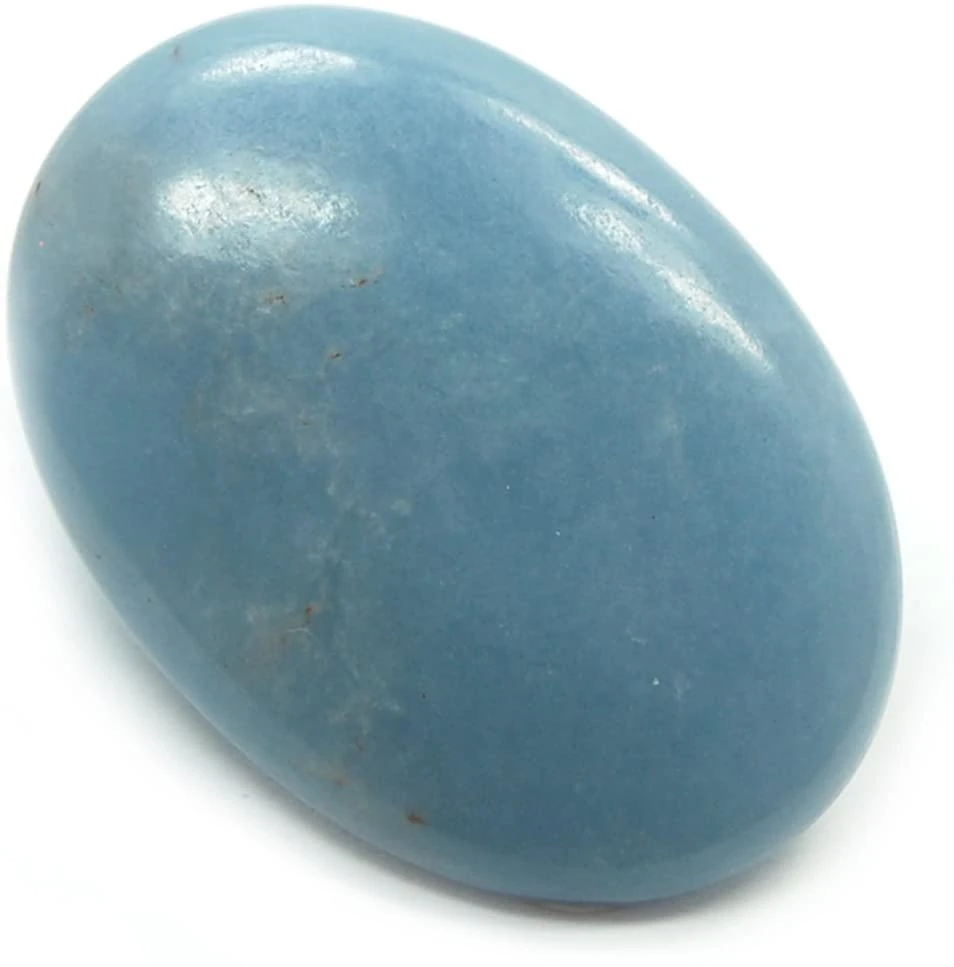
Angelite is the popular trade name for a striking, sky-blue variety of anhydrite—a unique mineral defined by its complete lack of water content. The evocative name “Angelite” stems from its widely celebrated spiritual properties, which practitioners frequently associate with angelic communication, inner peace, and higher consciousness.
Geologically, the parent mineral anhydrite derives its name from the Greek word anhydros, which translates directly to “without water”. Alternative names for this serene gemstone include Blue Anhydrite and Angel Stone.
Composition and Physical Characteristics
Angelite is a form of anhydrous calcium sulfate (CaSO4) and is closely related to gypsum. The defining chemical difference is that Angelite entirely lacks the water molecules found in gypsum. This unique dehydration process makes Angelite noticeably more compact and slightly harder than its hydrated counterpart.
Physical Properties Breakdown:
- Colour: Predominantly pale to deep sky blue, occasionally presenting with delicate white flecks, grey streaks, or subtle violet hues.
- Hardness: 3 to 3.5 on the Mohs scale, meaning it is a relatively soft stone that scratches easily.
- Lustre: Waxy to beautifully pearly.
- Transparency: Opaque to slightly translucent along thin edges.
- Cleavage: Perfect in three directions, causing it to fracture easily under impact.
- Formation: It forms over millennia in sedimentary basins where massive gypsum deposits have lost their structural water content due to intense geological heat and pressure.
Variations and Impurities
While highly prized for its powdery blue aesthetic, natural variations in mineral impurities can cause Angelite to exhibit soft shades of lavender, ash grey, or even distinct white nodules.
Global Locations: Where Is Angelite Found?
Because the geological conditions required to form high-quality blue anhydrite are highly specific, Angelite deposits are limited to a handful of locations worldwide:
- Peru: The premier global source, producing the highest-quality, deep sky-blue specimens.
- Mexico: Yields beautiful pale blue and distinctive greyish-blue crystal specimens.
- Germany: Famous for producing rare, lavender-tinged variations of anhydrite.
- Poland: Hosts minor deposits, predominantly used for geological study.
- Libya & Egypt: Occasionally yield deep blue anhydrite specimens from ancient desert evaporite basins.
Metaphysical Meaning, Chakras, and Zodiac Links
In modern crystal lore, Angelite is revered as a premier “Stone of Awareness”. It is deeply tied to emotional healing and spiritual expansion.
The Chakra System Connections
Angelite acts as a bridge between the physical and spiritual realms, vibrating strongly with three upper energy centres:
- Throat Chakra: Enhances honest communication, clear self-expression, and the articulation of inner truth.
- Third Eye Chakra: Sharpens psychic intuition, visualisation, and spiritual awareness.
- Crown Chakra: Aids in accessing higher consciousness, comforting dream work, and connecting with divine guiding energies.
Astrology and Zodiac Alignment
While it is not assigned as a traditional or modern birthstone, Angelite shares a profound elemental connection with specific zodiac signs:
- Aquarius: Mirrors the visionary, forward-thinking, and airy intellectual traits of the Water Bearer.
- Pisces: Complements the deep emotional intuition and spiritual fluidity of the Fish.
- Libra: Harmonises with Libra’s constant pursuit of balance, diplomacy, and diplomatic inner peace.
Essential Care and Maintenance: Protecting Your Stone
Because of its chemical composition, Angelite requires highly specific care to maintain its structural integrity and beautiful pale blue lustre.
⚠️ Critical Warning: Keep Angelite Dry Angelite is highly susceptible to water absorption. If submerged or exposed to water for extended periods, it will slowly absorb moisture and physically revert back into gypsum. This hydration process will ruin its silky polish, cause the vibrant blue colour to fade to a dull white, and eventually cause the stone to crack or dissolve entirely.
Cleaning Guidelines:
- Never clean your stone using water, steam, or harsh chemical jewellery cleaners.
- To remove dust or fingerprints, use a completely dry, ultra-soft microfibre cloth to gently buff the surface.
- Always remove Angelite rings or bracelets before washing your hands, showering, swimming, or doing heavy household cleaning.
- Store it in a soft cloth pouch away from harder gemstones like quartz or diamonds to prevent accidental scratches.
Angelite crystal pairings
Beneficial Crystal Pairings for Angelite
The best stones to pair with Angelite are those that complement its air element, enhance spiritual communication, or provide a gentle anchor so you do not feel completely detached from reality.
1. Celestite (The Angelic Realm Amplifier)
Celestite and Angelite are cut from the same spiritual cloth. Both possess a soft blue frequency that connects to guardian angels and spirit guides. When paired together, they create a profoundly peaceful atmosphere, ideal for deep meditation or placing on your bedside table for prophetic dreams.
- Best for: Channeling, dream recall, and soothing a hyperactive nervous system.
2. Selenite (The Spiritual Purifier)
Selenite is an ultra-high-vibration crystal that clears stagnant energy and opens up the crown chakra. Pairing it with Angelite acts as a clear channel, removing any mental “fuzziness” or static that might block you from receiving spiritual insights or intuitive downloads.
- Best for: Higher self-connection, cleansing the aura, and deep spiritual work.
3. Black Tourmaline or Smoky Quartz (The Safety Tether)
Working extensively with Angelite can sometimes make you feel lightheaded, spaced-out, or ungrounded because its energy is so focused on the upper chakras. Pairing it with a gentle grounding stone like Black Tourmaline ensures that your feet stay firmly planted on Earth while your mind explores higher frequencies.
- Best for: Keeping spiritual experiences safe, practical, and well-integrated.
4. Lapis Lazuli (Clear, Honest Communication)
While Angelite opens up the Throat Chakra to receive higher wisdom, Lapis Lazuli gives you the confidence and clarity to speak that truth in the physical world. It transforms Angelite’s quiet inner peace into authentic, articulate outward expression.
- Best for: Public speaking, difficult conversations, and creative writing.
Crystal Pairings to Avoid with Angelite
As a rule of thumb, avoid pairing Angelite with aggressively hot, grounding, or chaotic stones. Its soft, airy frequency will simply be crushed or neutralized.
| Crystal | Why It Clashes with Angelite |
|---|---|
| Carnelian | Carnelian is a fiery powerhouse of raw passion, physical energy, and creative fire. Its intense, fast-paced vibration will completely overwhelm Angelite’s gentle, restorative calm, leaving you feeling agitated. |
| Cinnabar or Realgar | Aside from their chemical toxicity, these deep red stones carry highly volatile, transformative, and intense grounding energies that directly conflict with Angelite’s pursuit of celestial peace. |
| Moldavite | Moldavite is a meteoric stone of rapid, often chaotic spiritual evolution and life upheaval. Combining it with Angelite is an energetic mismatch—like trying to listen to a soothing lullaby in the middle of a thunderstorm. |
| Sunstone | Sunstone is packed with radiant, joyous, and aggressive solar energy. Angelite thrives on cool, receptive, and quiet lunar/angelic energy. Putting them together creates a clash of elements that cancels out the benefits of both. |
Angelite Frequently Asked Questions (FAQ)
What are the main angelite crystal benefits?
Angelite is primarily used in aromatherapy and crystal healing to alleviate stress, dispel anger, and soothe emotional distress. Many individuals place it on their night stands to help quiet an overactive mind before sleep, alleviate insomnia, and encourage vivid, peaceful dreams.
How do you cleanse and recharge Angelite safely without water?
Because water will damage Angelite, you must use completely dry cleansing methods. To clear lingering negative energies, pass your stone through the smoke of burning sage or frankincense incense (smudging). Alternatively, place it overnight on a selenite charging plate or under the gentle light of a full moon.
Is Angelite the same as Blue Calcite?
No, they are entirely different minerals. While they look incredibly similar to the untrained eye and share calming metaphysical associations, Blue Calcite is a calcium carbonate (CaCO3) with a different crystal structure. Angelite (calcium sulfate) generally exhibits a deeper, more uniform sky-blue tint compared to the slightly cloudier, layered appearance of Blue Calcite.
Can Angelite go in the sun?
Angelite can tolerate brief periods of indirect sunlight. However, you should avoid leaving your specimen in intense, direct sunlight for extended hours. Prolonged exposure to solar heat and UV rays can cause the delicate blue and violet pigments to fade over time, leaving the stone looking bleached.
These are my personally selected and curated Angelite products
Angelite products to buy now

Angelite Natural Rough & Polished Freeform Point 2
£22.00
Angelite Natural Rough & Polished Freeform Point 4
£28.00
Angelite Natural Rough & Polished Freeform Point3
£25.00
Angelite Polished Pyramid 1
£20.00Angelite Polished Pyramid 2 (at fault)
Original price was: £20.00.£15.00Current price is: £15.00.
Angelite tumble stone
£5.99
Polished Angelite Carved Heart 1
£20.00
Polished Angelite Carved Heart 2
£20.00Polished Angelite Carved Heart 3
£20.00