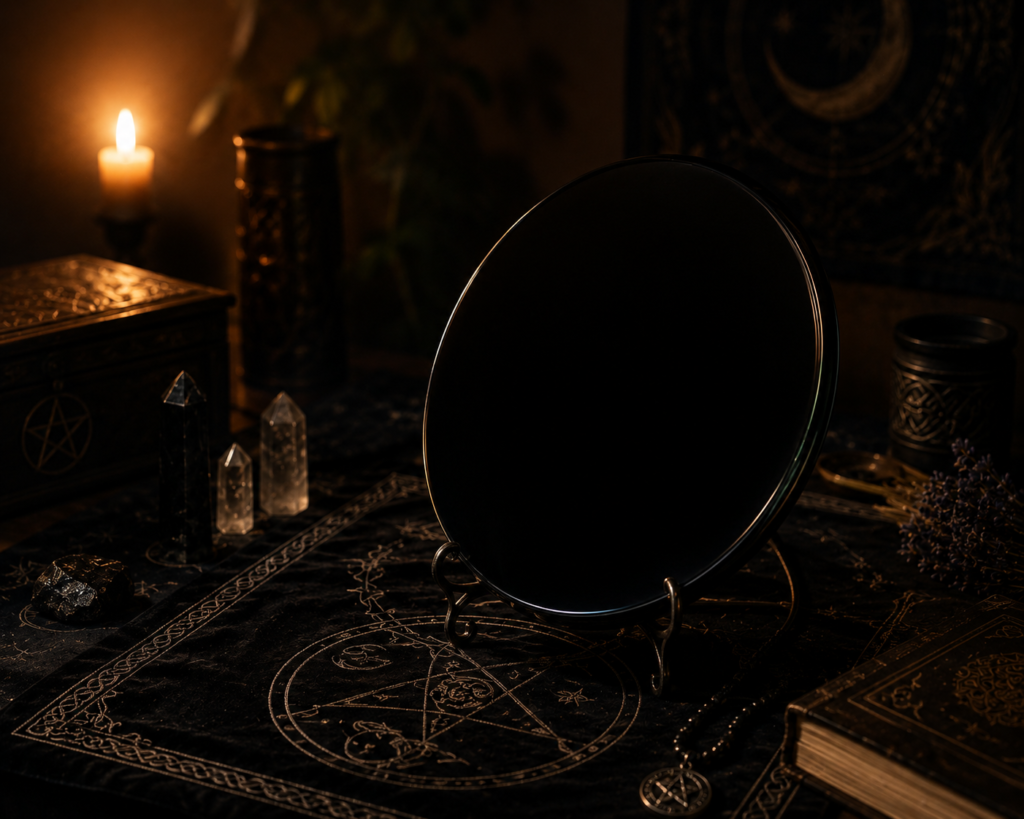
The use of a polished black obsidian mirror for scrying (gazing into a reflective surface to receive spiritual visions) and meditation spans thousands of years. The technique relies on specific environmental conditions and psychological shifts to alter the brain’s visual processing—moving from physical sight to subconscious projection.
Historically, this practice is rooted in two distinct eras: Aztec Mesoamerica (where the mirrors were carved as portals to the god Tezcatlipoca, the “Smoking Mirror”) and Elizabethan England, where royal polymath Dr John Dee famously used an imported Aztec obsidian mirror to commune with what he believed were angelic entities.
A grounded, historical breakdown explains how to use an obsidian mirror for scrying and meditation:
1. The Environmental Setup (Dim Light and Shadows)
Scrying is never performed in pitch darkness or under bright, direct light. The entire technique relies on unfocused, low-contrast lighting.
- The Candle Placement: Place a single candle (or low light source) either behind you or far off to the side. The flame must not reflect directly in the mirror. The goal is to illuminate the surrounding room dimly while keeping the face of the obsidian disk deep, dark, and shadow-filled.
- Angle of the Mirror: Propped up on a small stand or altar cloth, tilt the mirror slightly away from your face. When you look into it, you should see the dark, glossy void of the volcanic glass—not your own clear reflection.
2. The Visual Technique (The “Soft Gaze”)
The most critical part of historical scrying is transitioning from a physical gaze to an internal one. This is achieved through a technique known as the soft focus or peripheral gazing:
- Relaxing the Eyes: Sit comfortably, ground your breathing, and look into the depth of the black glass, rather than looking at its surface.
- Avoiding Blinking: Keep your eyes relaxed, almost half-closed. Do not strain or stare hard. Allow your eyelids to become heavy.
- The “Troxler Effect”: Scientifically, when you hold a soft, unmoving gaze on a dim, low-contrast black surface, your brain undergoes a phenomenon called sensory adaptation (or the Troxler Effect). The physical environment begins to fade out of your peripheral vision, and the brain—deprived of distinct visual inputs—starts to project subconscious images or patterns onto the dark surface.
3. The Psychological Shift (Passing “The Cloud Phase”)
Historically, seers from Dr John Dee’s assistant Edward Kelley to ancient Aztec priests described a specific sequence of events that occurs as the meditation deepens:
- The Milky Fog: After several minutes of a steady, soft gaze, the jet-black surface of the obsidian will appear to change texture. It often looks as though a cloudy, milky-white fog or grey smoke is rolling across the glass. This is the sign that the optical nerves have relaxed.
- The Opening of the Void: Once the “smoke” clears, the mirror will appear to open up like a deep, three-dimensional tunnel or a pool of dark water.
- The Emergence of Imagery: Visions rarely appear instantly as full-colour movies. Instead, they begin as sudden shapes, floating geometric patterns, light flashes, or symbolic shadows forming within the depth of the stone.
4. Meditation and Safe Closing
Because obsidian is an intense, root-chakra grounding stone, scrying can sometimes leave practitioners feeling spiritually cold, heavy, or spacey.
- The Mindset: During the meditation, do not try to analyse what you see immediately. Let the images or feelings pass through the glass like clouds. Analysing them forces your brain back into active logical thinking, which instantly breaks the relaxed scrying state.
- Closing the Session: When you are finished, intentionally close your eyes, take a deep breath, and look away from the mirror. To officially break the energetic connection and signal to your mind that the practice is over, it is a traditional rule to cover the obsidian mirror with a dark velvet or silk cloth when it is not in use. This protects its mirror surface from absorbing stagnant household energies.
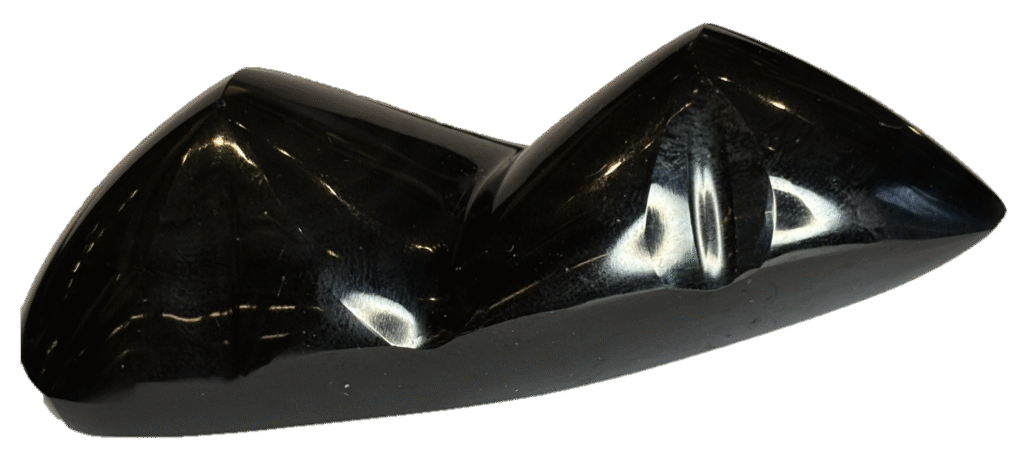
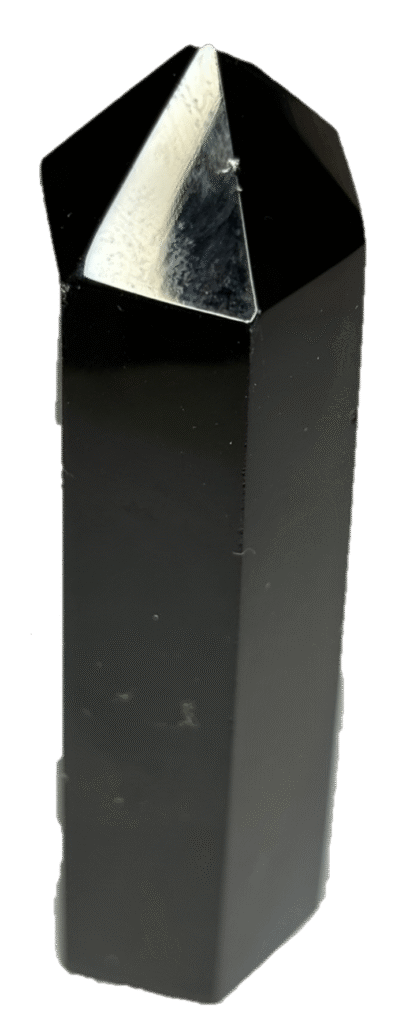
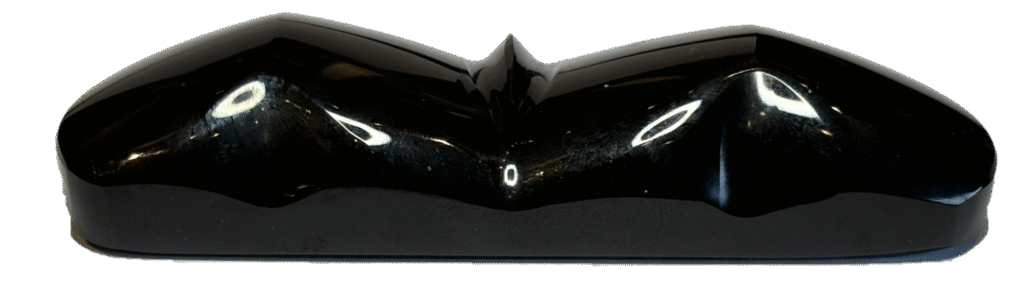
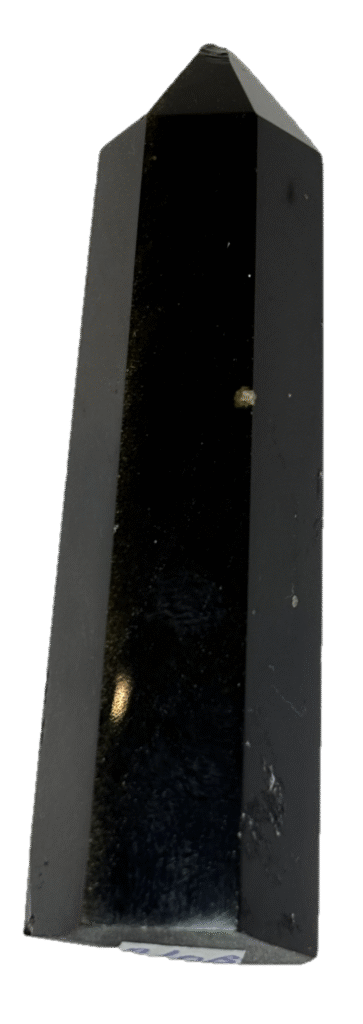
These are my personally selected and curated collection of Black Obsidian products
Products by Category

Black Obsidian BLOBSF
£25.00
Black Obsidian point blobs k
£22.00
Black Obsidian Point BLOBSG
£25.00
Black obsidian point BLOBSI
£18.00