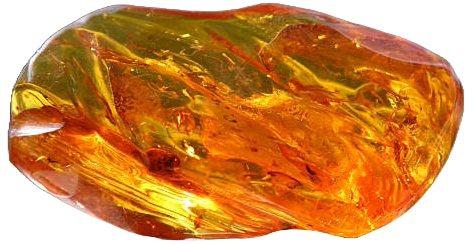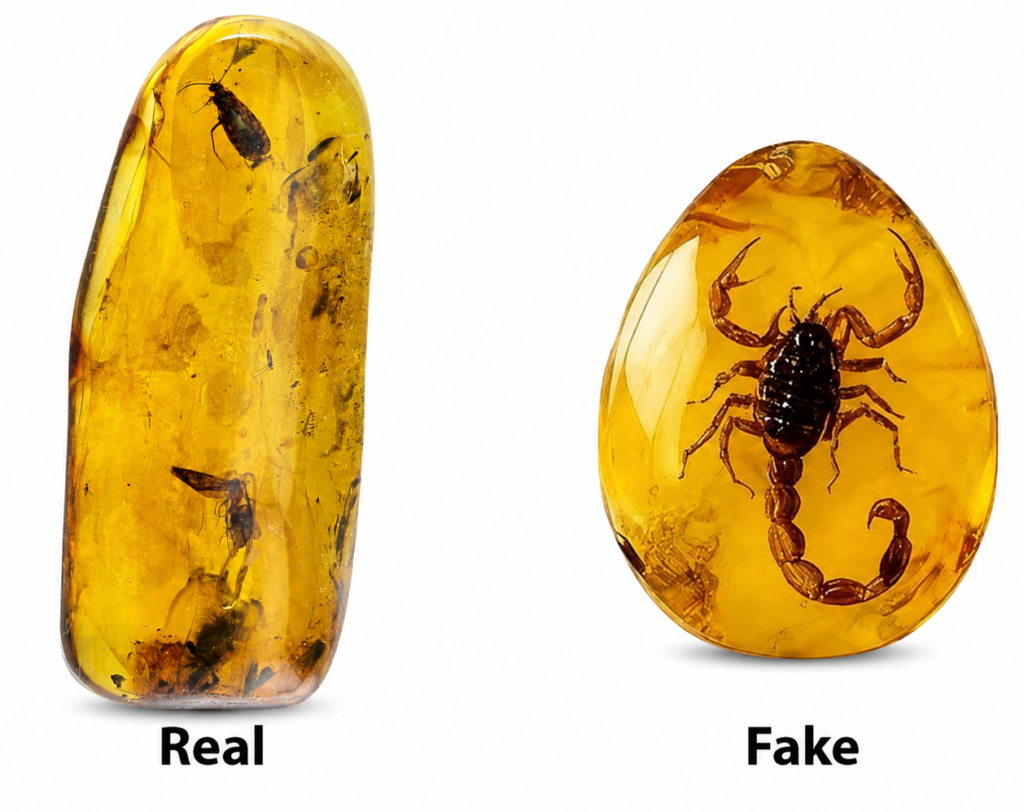
Insect inclusions have fascinated collectors for centuries, offering a rare glimpse into prehistoric life preserved within amber and other transparent materials. Unfortunately, their popularity has also led to an increase in convincing fakes, from modern insects embedded in resin to artificially altered gemstones and composite specimens. Knowing how to identify these imitations can help you avoid costly mistakes and build a collection of genuine natural treasures. In this guide, you’ll learn the most common signs of fake insect inclusions, the scientific methods used to examine them, and practical tips for distinguishing authentic specimens from modern reproductions with confidence.
1. The Presence of a “Verlumung” (White Decay Halo)
This is the single most reliable microscopic indicator of an ancient inclusion.
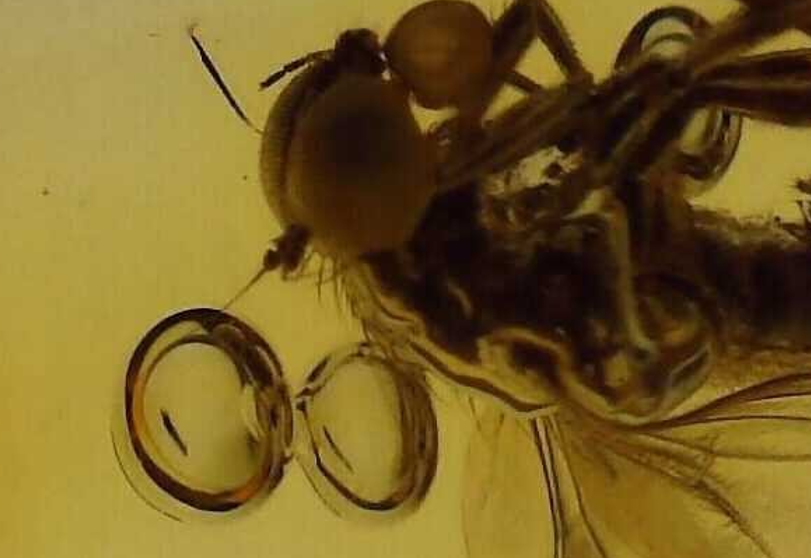
- The Science: When an insect was trapped in fresh tree resin millions of years ago, it didn’t die instantly. As the trapped organism slowly decayed, moisture and gases escaped its tissues. Because the surrounding resin was already thickening, these gases became trapped against the insect’s body, forming a microscopic, milky-white film or halo of tiny bubbles (called verlumung or a “ghost layer”).
- The Fake: Modern bugs placed in synthetic plastic or liquid resin are usually completely dried out or freshly killed. They lack this natural moisture release, resulting in perfectly clear, sharp boundaries with no cloudy decay halos.
2. Microscopic Stress Fractures (Flow Lines and Discs)
Ancient resin was not a stagnant pool; it flowed in successive, sticky waves down tree trunks over days or weeks.
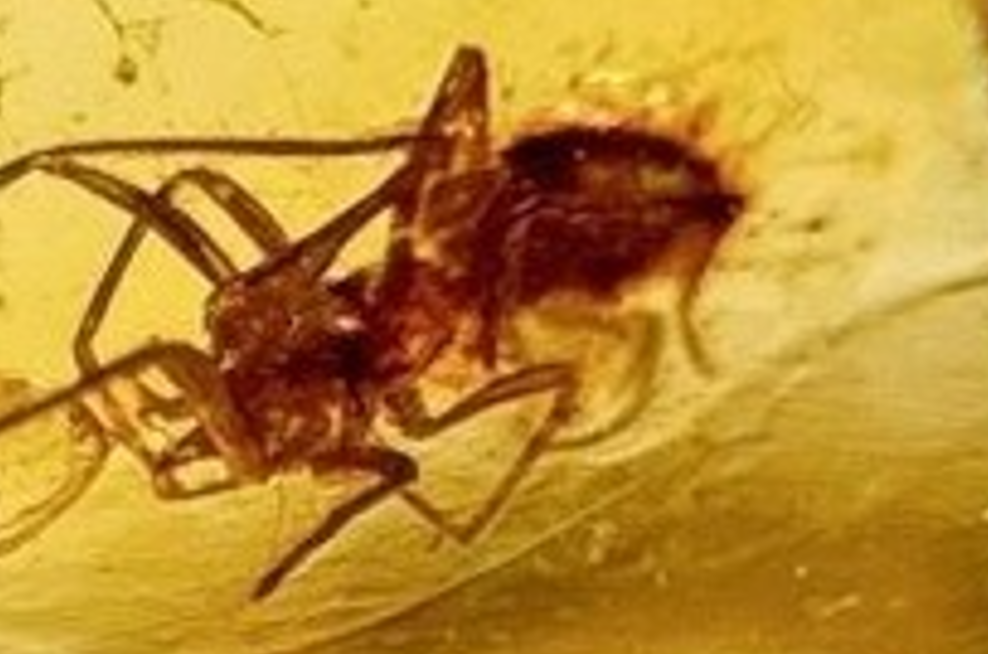
The Science: An insect struggling to escape created immense stress in the surrounding resin. Under a microscope, you will see curved flow lines mapping the layers of resin, and tiny, circular, mirror-like stress fractures (often called “sun spangles” or tension discs) radiating outward from the insect’s legs and wings where it fought to break free.
The Fake: Plastic imitations are typically poured into a mold all at once. The matrix will look perfectly uniform, completely devoid of natural flow lines or microscopic tension fractures around the joints of the insect.
3. Agonal Posture and Macro-Deformation
The Science: Prehistoric insects died a slow, agonising death. Under magnification, true amber inclusions exhibit an “agonal posture”: wings are twisted, bent, or torn; legs are extended awkwardly or broken at the joints; and the abdomen is frequently distended or completely retracted from stress. You will often see micro-bubbles trailing away from the insect’s spiracles (breathing pores), showing its final breaths.
The Fake: Counterfeiters usually drop already dead, perfectly preserved insects into plastic. The bugs appear pristine, symmetrically posed, with relaxed legs and flat wings, looking more like a pinned museum display than a victim of a prehistoric trap.
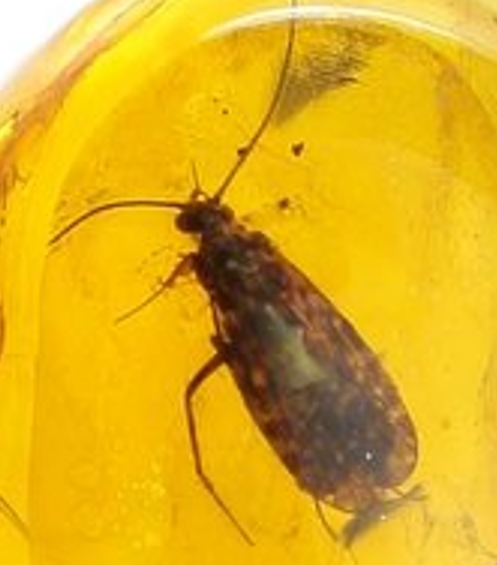
4. Anatomy and Taxonomic Discrepancies
- The Science: Genuine amber traps creatures that lived tens of millions of years ago. Many of these species are completely extinct, or their modern descendants have mutated significantly. A microscopic look at the wing venation, antenna segments, or ocular structures will match prehistoric families.
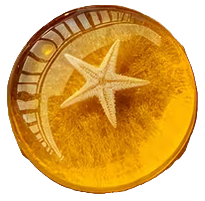
- The Fake: Forgery workshops use common, modern insects that are easy to catch—like modern houseflies, honeybees, small colourful beetles, or even tiny scorpions. If a microscope reveals an insect identical to a pest found in a modern backyard, the specimen is highly suspect.
Summary Checklist under Magnification
| Feature | Prehistoric Inclusion (True Amber) | Modern Fake (Plastic / Cast Resin) |
| Decay Boundary | Milky-white verlumung halo or gas froth | Crisp, perfectly clear perimeter |
| Surrounding Matrix | Distinct flow lines, debris, and tension discs | Perfectly homogeneous, static liquid look |
| Insect Posture | Distorted, torn wings, legs bent in struggle | Flat, perfectly arranged, symmetric body |
| Air Bubbles | Tiny bubbles trailing from breathing spiracles | Large, perfectly spherical air pockets from careless pouring |
These are my personally selected and curated Amber specimens