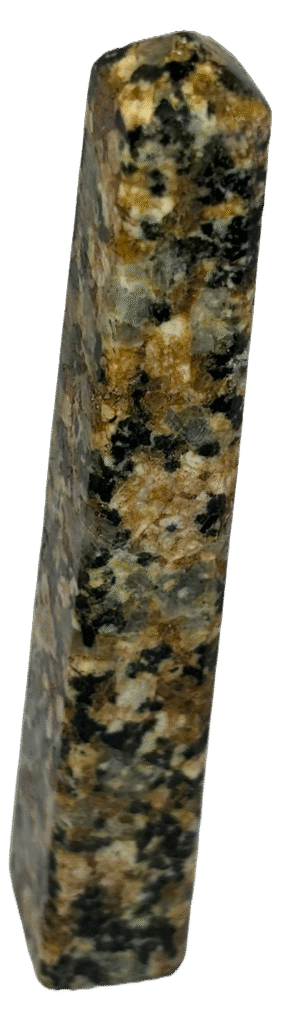
Calcite in tourmaline represents one of the most visually captivating and geologically fascinating dual-mineral formations in the mineral kingdom. Combining the soft, translucent radiance of calcite with the intense, structural complexity of tourmaline, this rare intergrowth forms a striking symbiotic relationship within the earth. For centuries, collectors, lapidaries, and metaphysical practitioners have been drawn to this specimen. It stands as a profound testament to the intricate geochemical conditions required to simultaneously nurture two entirely distinct mineral species within a single matrix.
Alternate names
While known scientifically as a calcite-and-tourmaline intergrowth, this material is frequently referred to by several descriptive trade and alternate names. These include embedded calcite, calcite-in-tourmaline, tourmalinated calcite, and occasionally matrix tourmaline. Depending on the specific variety of tourmaline present, specimens may also be labelled commercially as calcite in schorl (when embedded in black tourmaline) or rubellite-calcite matrix (when found alongside vibrant pink tourmaline varieties).
The stones Science and Composition
From a geological perspective, this formation brings together two minerals with vastly different chemical blueprints:
- Calcite: A primary calcium carbonate mineral with the chemical formula $\text{CaCO}_3$. It forms part of the trigonal crystal system and is highly sensitive to environmental factors, easily dissolving or reacting in the presence of acids.
- Tourmaline: A highly complex crystalline boron silicate mineral group. Its generalised chemical formula is expressed as $\text{XY}_3\text{Z}_6(\text{BO}_3)_3\text{Si}_6\text{O}_{18}(\text{OH}, \text{F})_4$, where X, Y, and Z represent variable exchangeable elements such as sodium, lithium, calcium, iron, aluminium, and manganese.
These two minerals typically crystallise within pegmatites—coarse-grained igneous rocks formed during the final, fluid-rich stages of magma cooling—or via deep hydrothermal vein systems where calcium-rich fluids intersect with boron-bearing silicate pathways.
Key Physical Characteristics
The physical juxtaposition of these two minerals creates a unique set of gemmological contrasts:
- Hardness: Calcite ranks at a delicate 3 on the Mohs hardness scale, making it highly susceptible to scratches. In stark contrast, tourmaline is exceptionally durable, ranking between 7 and 7.5.
- Lustre & Cleavage: Calcite possesses a vitreous to pearly lustre with perfect rhombohedral cleavage. Tourmaline displays a vitreous, resinous lustre with poor, indistinct cleavage, often breaking along irregular, conchoidal fractures.
- Optical Properties: Calcite is famous for its extreme birefringence (double refraction), which can cause text viewed through clear specimens to appear doubled. Tourmaline is strongly pleochroic, meaning it displays different colour intensities when viewed from different angles, and it exhibits pyroelectric properties, attracting dust when heated.
Common Geologic Varieties
The aesthetic appeal of this intergrowth depends heavily on the specific varieties of the minerals involved:
- Calcite in Schorl: The most common variety, featuring stark, milky white or pale cream calcite embedded within deep, jet-black schorl crystals.
- Calcite in Elbaite: A highly prized variety where pastel or clear calcite structures are interwoven with colourful elbaite tourmalines, such as green verdelite, pink rubellite, or rare blue indicolite.
- Acicular Tourmaline in Massive Calcite: A variation where fine, needle-like tourmaline inclusions run like dark threads through a solid matrix of massive crystalline calcite.
Global Mining and Volcanic Sources
Calcite in tourmaline is primarily sourced from regions globally renowned for exceptional pegmatite deposits. While these minerals form deep within the earth’s crust rather than via direct volcanic eruptions, volcanic and tectonic activities drive the intense heat and fluid migration necessary for their creation.
- Brazil: The state of Minas Gerais stands as the premier global source, yielding magnificent museum-quality specimens featuring vivid elbaite variations.
- Pakistan & Afghanistan: The rugged alpine pegmatites of Skardu (Pakistan) and the Nuristan province (Afghanistan) produce outstanding configurations of clear rhombohedral calcite nestled against elongated tourmaline prisms.
- Namibia: The Erongo region is famous for producing striking combinations of black schorl perfectly contrasted against stark white calcite matrices.
- United States: Historic gemstone pockets in San Diego County, California, and various pegmatite mines across Maine have historically produced notable intergrowth specimens.
Crystal Pairings: What to Combine and Avoid
When working with calcite in tourmaline energetically, the dual nature of the stone must be taken into careful consideration. The stone inherently blends the high-vibrational, amplifying qualities of calcite with the highly structured, protective, and directional energy flow of tourmaline. Choosing complementary stones can enhance these properties, while incorrect pairings can result in energetic stagnation.
Optimal Crystal Pairings
- Clear Quartz: As a master amplifier, Clear Quartz harmonises beautifully with the calcite component, magnifying the dual stone’s ability to clear stagnant energy while bringing out the structural clarity of the tourmaline.
- Lepidolite: Because Lepidolite is a lithium-rich mica that frequently forms alongside tourmaline in pegmatites, its calming, stress-relieving frequency perfectly complements the soothing nature of calcite and the grounding nature of tourmaline.
- Selenite / Satin Spar: Excellent for maintaining the energetic purity of the specimen, Selenite cleanses the softer calcite component without subjecting the delicate stone to physical duress or moisture.
- Smoky Quartz: Provides an exceptional grounding anchor, particularly when working with the Calcite in Schorl variety, helping to stabilise spiritual insights into physical reality.
Crystal Pairings to Avoid
- Moldavite: The chaotic, intensely rapid cosmic energy of this tektite can completely overwhelm the delicate, stabilising balance achieved between the calcite and tourmaline intergrowth.
- Carnelian: The aggressive, fiery, and action-oriented frequency of Carnelian can clash with the introspective, cleansing, and protective focus of the dual mineral, creating an uncomfortable energetic friction.
Archaeology, Art and Ancient History
Throughout antiquity, individual specimens of calcite and tourmaline held significant places in human material culture. Ancient Egyptians carved ornamental vessels out of massive calcite (often referred to historically as Egyptian alabaster), while ancient Mediterranean cultures utilised tourmaline for its mysterious ability to attract ash when placed near hot coals.
When ancient lapidaries and miners encountered composite intergrowth specimens, they frequently treated them as marvellous curiosities of nature. In the 19th and early 20th centuries, during the height of the Victorian mineral-collecting boom, these complex matrices became highly fashionable display items in European curiosity cabinets, celebrated as supreme examples of natural geological artistry.
Folklore, Legends and Sacred Tales
In various regional folklores, the intergrowth of two distinct crystals within a single stone carries deep symbolic meaning. It is frequently revered as a symbol of the “Sacred Marriage” or the harmonious union of absolute opposites—yin and yang, softness and strength, emotion and intellect.
One old miners’ tale suggests that finding a piece of calcite perfectly preserved inside a hard tourmaline crystal was a sign of divine protection, indicating that true inner purity could remain completely unharmed by the harsh pressures of the outside world. Other legends speak of the stone acting as a spiritual mirror, reflecting hidden inner truths to the wearer while dissolving deceptive illusions.
Metaphysical and Mystical Healing Properties
In contemporary crystal healing circles, calcite in tourmaline is viewed as a powerhouse of energetic synthesis. Calcite functions primarily as an energy cleanser and amplifier, clearing out negative or stagnant vibrations from the aura. Tourmaline acts as an energetic shield, grounding excessive spiritual energy and deflecting psychic attacks.
Together, they create an exceptional tool for emotional resilience. The stone helps individuals process deep-seated emotional trauma by providing a safe, grounded space (tourmaline) in which to gently release and transmute old wounds (calcite). It is also highly valued by meditators for its ability to clear mental clutter, replacing anxious thought loops with a profound sense of inner peace.
Astrological Connections
This dual stone bridges multiple signs across the zodiac due to its composite nature:
- Gemini & Aquarius: These air signs resonate strongly with tourmaline’s mental flexibility, intellectual curiosity, and highly structured energetic flow.
- Cancer & Pisces: These water signs align perfectly with the fluid, nurturing, and deeply introspective qualities of calcite, which aids in emotional processing and enhances natural intuition.
The stone is highly recommended for individuals who find themselves caught between intellectual overthinking and intense emotional sensitivity, acting as an energetic bridge that restores internal equilibrium.
The Chakra System
Calcite in tourmaline works holistically across the entire chakra column, depending largely on the colours present in the specimen:
- The Root Chakra: Driven by the presence of black schorl tourmaline, it anchors the physical body to the earth, eliminating fear and instilling a sense of absolute security.
- The Heart Chakra: Enhanced by green or pink tourmaline varieties, it opens the emotional body to unconditional self-love, compassion, and deep emotional healing.
- The Third Eye & Crown Chakras: Activated by clear, white, or golden calcite inclusions, it stimulates higher cognitive functions, unlocks intuitive insights, and opens pathways to spiritual guidance.
Interesting facts
- The Acid Test: Because calcite is a carbonate mineral, placing a single drop of household white vinegar on the calcite portion will cause it to gently fizz and release carbon dioxide bubbles, while the surrounding tourmaline will remain completely unaffected.
- Dust Magnet: Thanks to the pyroelectric properties of the tourmaline rods within the matrix, heating the stone slightly will cause it to generate an electrical charge, actively attracting dust particles from the room.
- Double Vision: If you find a specimen with a sufficiently clear section of calcite, looking through it will reveal distinct optical double refraction, splitting light rays so that everything underneath appears doubled.
Modern Milestones: Birthstones and Anniversaries
While calcite in tourmaline is not an official birthstone on the modern commercial calendar, tourmaline itself stands as the traditional birthstone for October, making this intergrowth a deeply meaningful, unique alternative gift for those born in that month.
Furthermore, tourmaline is the designated gemstone for celebrating the 8th wedding anniversary. Giving a gift of calcite embedded in tourmaline beautifully honours this milestone, visually representing two distinct lives that have spent years intertwining to create a single, unbreakable, and beautiful joint journey.
Calcite in Tourmaline FAQ
Can I cleanse my calcite in tourmaline specimen in water or salt
Absolutely not. While the tourmaline component is highly resilient, calcite is a soft carbonate mineral that can easily be dulled, eroded, or structurally compromised by prolonged exposure to water and salt. To safely cleanse its energy, pass the stone through the smoke of a natural incense (such as sandalwood) or place it on a solid Selenite charging plate.
Why does the calcite part of my stone look dull compared to the tourmaline
This is entirely natural due to the difference in their physical properties. Calcite is much softer (Mohs 3) and features a naturally vitreous-to-pearly lustre, whereas tourmaline is very hard (Mohs 7–7.5) and takes a exceptionally high glass-like polish. Take care to handle the specimen gently to avoid scratching the softer calcite sections.
How can I tell if my calcite in tourmaline specimen is genuine
A genuine specimen will feel notably cool to the touch when first picked up and will display natural, minor structural variations or internal fractures under magnification. You can also carefully test a raw, unpolished area with a single drop of vinegar; if the pale matrix area fizzes gently while the dark, ridged crystals remain unaffected, you are dealing with genuine calcite and tourmaline.
Can I wear this stone daily in a ring
It is generally not recommended for daily rings or bracelets unless set within a highly protective, bezel-style metal casing. Because calcite is a very soft mineral, the everyday knocks and friction associated with hand jewellery can quickly scratch, chip, or damage the embedded sections. It is far better suited for earrings, brooches, pendants, or as a display specimen.
Will leaving my specimen on a sunny windowsill cause it to fade?
Yes, caution is advised. While black tourmaline (schorl) is highly resistant to sunlight, certain vibrant elbaite varieties (like pink rubellite) and specific coloured calcites can gradually lose their brilliant colour saturation or turn brittle if subjected to prolonged, harsh UV rays. It is best to display your specimen away from direct, unfiltered sunlight.
These are my personally selected and curated Black Tourmaline in Calcite products