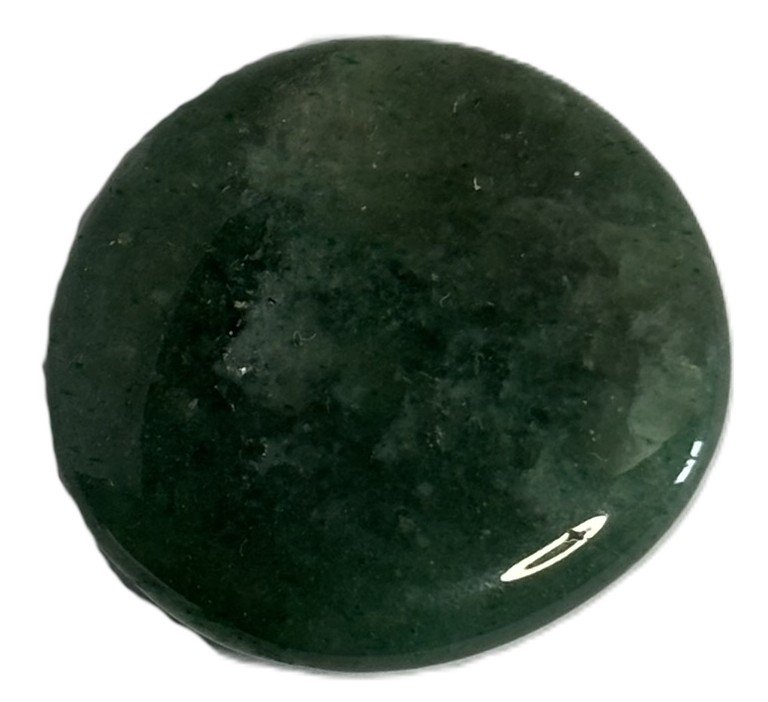
African Jade is a striking, emerald-to-olive green gemstone valued for its rich coloration, structural toughness, and deep ornamental heritage. Despite its ubiquitous trade moniker, the material is not a true pyroxene (jadeite) or amphibole (nephrite); rather, it primarily refers to massive green grossular garnet from South Africa or, in secondary market contexts, chromium-rich verdite and buddstone. Prized by master sculptors and lapidaries for its resilience and glossy lustre, African Jade bridges ancient African metamorphic geology with high-end modern lapidary work. It stands as a premier grounding stone symbolising prosperity, vitality, and renewal across global gem and metaphysical markets.
Alternate Names
In the gem trade, petrology, and esoteric retail spaces, African Jade appears under multiple identifying labels:
- Transvaal Jade: The primary historical gemological trade name, pinpointing its classic type-locality in the Bushveld Igneous Complex of the former Transvaal Province, South Africa.
- Green Grossularite / Hydrogrossular Garnet: The scientifically accurate mineralogical classification for the massive garnet variety.
- Verdite / South African Verdite: Often sold interchangeably under the umbrella term “African Jade,” though mineralogically it is a soft, chromium-rich fuchsite-muscovite rock.
- Buddstone: A regional silicified variety of verdite intergrown with quartz and chalcedony, yielding a mottled, hard green ornamental stone.
- Stone of Ancestral Wisdom: A popular metaphysical trade epithet honouring its longstanding use in traditional Shona, Zulu, and Swazi stone carvings.
The Stone’s Science and Composition
Geologically, material sold under the trade title “African Jade” splits into two distinct mineralogical regimes: massive grossular garnet (the true gemological “Transvaal Jade”) and fuchsite-based metamorphics (Verdite/Buddstone).
Primary Grossular Garnet Variety
True Transvaal Jade is an opaque to translucent massive aggregate of the grossular garnet series, frequently containing hydrous phases (hydrogrossular):
- Chemical Formula: $\text{Ca}_3\text{Al}_2(\text{SiO}_4)_{3-x}(\text{OH})_{4x}$ (Hydrogrossular) or pure Grossular endmember $\text{Ca}_3\text{Al}_2(\text{SiO}_4)_3$.
- Crystal System: Isometric (cubic), occurring as dense, cryptocrystalline to microgranular massive blocks without distinct individual crystal faces.
- Chromophores: The vibrant emerald and apple-green shades are caused by trivalent chromium ($\text{Cr}^{3+}$) substituting for aluminium in octahedral sites, frequently accompanied by minor iron ($\text{Fe}^{3+}$). Black or charcoal specks within the matrix represent secondary chromite ($\text{FeCr}_2\text{O}_4$) or magnetite grains.
Secondary Verdite / Buddstone Variety
When soft or banded green material is labelled as African Jade, it typically consists of metamorphic mica:
- Chemical Composition: Hydrous potassium aluminium silicate enriched with up to 2% to 4% chromium: $\text{K}(\text{Al},\text{Cr})_2(\text{AlSi}_3\text{O}_{10})(\text{OH})_2$. Buddstone represents verdite that underwent secondary epigenetic silicification, locking the soft mica into micro crystalline quartz matrices.
Key Physical Characteristics
The diagnostic physical properties below highlight massive grossular garnet (Transvaal Jade) alongside secondary verdite to assist in gemological differentiation:
| Characteristic | African Jade (Grossular Garnet) | Verdite / Buddstone Variant |
| Mohs Hardness | 7.0 to 7.5 | 3.0 to 4.0 (Verdite); 6.0 to 6.5 (Buddstone) |
| Specific Gravity | 3.40 – 3.73 (Hydrostatic diagnostic) | 2.80 – 3.00 (Verdite); ~2.65 (Buddstone) |
| Refractive Index | 1.720 – 1.744 (Isotropic spot reading) | 1.58 (Biaxial aggregate) |
| Lustre | Vitreous to greasy / waxy | Waxy, silky to dull |
| Tenacity | Very tough; highly resistant to chipping | Moderate to brittle; sectile in pure verdite |
| Cleavage | None; uneven to conchoidal fracture | Basal (masked by dense fine-grained aggregate) |
| Diagnostic Inclusions | Black chromite octahedra, white zoisite bands | Swirling green fuchsitic foliation, quartz veining |
Common Geologic Varieties
- Emerald Grossular (Transvaal Green): Saturated leaf-to-emerald green massive garnet, often displaying a dense, sugary aggregate texture under high magnification.
- Pink / White Hydrogrossular: Intergrown with the green varieties, manganese or iron deficiencies produce striking pink, blush, or porcelain-white banding.
- Banded Buddstone: Interlayered micro crystalline chalcedony and dark chrome-fuchsite yielding banded, agate-like emerald ribbons.
- Spotted Matrix Jade: A pale sea-green massive garnet studded with sharp, opaque black chromite grains.
Global Mining and Volcanic Sources
African Jade is a product of complex metamorphism and magmatic contact alteration within ancient cratonic basements:
- The Bushveld Igneous Complex (South Africa): The primary global locality for massive green grossular garnet. Located in the North West and Limpopo provinces, these deposits occur within the critical zone of layered ultramafic intrusions, where lime-rich calc-silicate xenoliths underwent contact metamorphism at temperatures exceeding 700°C.
- Barberton Greenstone Belt (South Africa & Eswatini): Ancient Archean greenstone terranes (~3.5 billion years old) that yield classic Verdite and Buddstone formations, formed via hydrothermal alteration of ultramafic komatiites.
- Zimbabwe: Extensive deposits along the Great Dyke produce dark, chromium-rich ornamental stones long used by the indigenous Shona sculpting communities.
Crystal Pairings: What to Combine and Avoid
Selecting crystals to combine with African Jade requires balancing mechanical resilience (avoiding differential abrasion) with sympathetic energetic frequencies.
Optimal Crystal Pairings
- Black Obsidian & Black Tourmaline: Pairs grounding, deep-earth protective frequencies with the expansive growth properties of African Jade. Both hold sufficient hardness (Mohs 5.5 to 7.5) to avoid excessive surface wear.
- Pyrite: Matches the gold and mineral-flecked aesthetic of natural matrix stones while amplifying prosperity, wealth consciousness, and solar-plexus vitality.
- Green Aventurine: Creates a targeted Heart Chakra alignment, reinforcing heart-centred emotional recovery, good fortune, and harmony.
- Clear Quartz: Acts as an energy amplifier without interfering with the stone’s dense, stabilising baseline resonance.
Crystal Pairings to Avoid
- Soft Calcium Carbonates (e.g., Selenite, Calcite, Fluorite): Selenite (Mohs 2) and Calcite (Mohs 3) will be severely scratched, chipped, or abraded if tumbled, pocket-carried, or strung on bracelets against hard grossular African Jade (Mohs 7.5).
- Unstable High-Frequency Tektites (e.g., Moldavite, Libyan Desert Glass): The erratic, extraterrestrial signature of tektites clashes with the slow, ancient, heavy-earth vibration of Archean and Proterozoic African metamorphic rocks, creating an unbalanced energetic focus.
Archaeology, Art and Ancient History
Ornamental green stones across Southern Africa hold deep cultural and utilitarian significance:
- Shona Stone Sculpting: For centuries, master artisans of the Shona culture in Zimbabwe and border regions have transformed indigenous dense green stones into expressive sculptures honouring spirits, ancestors, and wildlife.
- Ritual Amulets and Royal Regalia: Historically, dense green carvings were fashioned by indigenous Southern African tribes as symbols of rank, authority, and fertility, reflecting the lush green pastureland essential for cattle-rearing societies.
- Colonial Reclassification: In the early 20th century, European miners prospecting for platinum and chrome in South Africa discovered vast deposits of massive green garnet. Mistaking it for Burmese jadeite due to its colour, density, and polish, they coined the commercial trade moniker “Transvaal Jade.”
Folklore, Legends and Sacred Tales
- The Rain and Fertility Bringer: Pastoral folklore holds that green matrix stones absorb the spirit of the early spring rains (the greening of the bushveld). Tribal shamans immersed these stones in water basins during seasonal drought ceremonies to plead for soil fertility.
- Ancestral Spirit Anchors: In Shona and Swazi traditions, dense green stones carved with human or animal archetypes are believed to serve as physical anchors (vazimu) through which ancestral spirits can offer protection and guidance to a household.
- The Traveller’s Shield: Nomadic hunters carried smoothed green river stones across dry savannas to ward off predators, protect against snakebites, and ensure safe return across hostile territories.
Metaphysical and Mystical Healing Properties
African Jade is regarded in holistic energy circles as an earth-element powerhouse for physical and emotional resilience:
- Somatic Grounding & Physical Stamina: Encourages balanced physical vitality, restoring vitality after prolonged illness, physical burnout, or intense emotional distress.
- Emotional Calming: Diffuses irritability, tension, and irrational anxiety. Its vibration instils deep, quiet patience, allowing the wearer to remain poised amidst chaotic environments.
- Abundance and Wealth Realisation: By dissolving feelings of scarcity and self-doubt, African Jade fosters practical decision-making, discipline, and sustained commercial success.
Astrological Connections
- Taurus: Deeply aligned with this earth sign’s desire for tactile stability, financial growth, and practical longevity. It tempers Taurean stubbornness with adaptable emotional clarity.
- Virgo: Resonates with Virgo’s analytical mindset, mitigating self-critical tendencies and restoring mental calm during complex tasks.
- Libra: Enhances balance, inner peace, and diplomatic communication, mirroring Libra’s pursuit of systemic harmony.
The Chakra System
African Jade operates as a vertical harmonic bridge, anchoring high spiritual intention into grounded material reality:
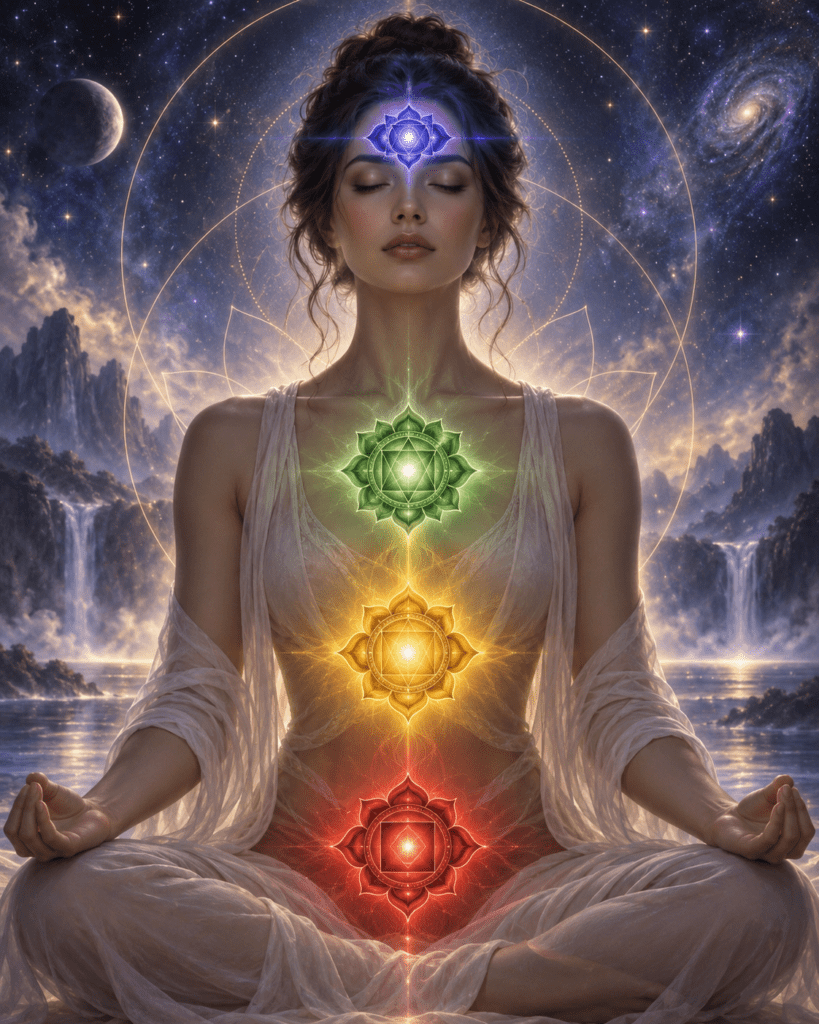
- Heart Chakra (Primary Centre): Clears stagnant blockages, encouraging emotional forgiveness, self-worth, and heart-centred relationships.
- Root Chakra (Secondary Anchor): Its dense specific gravity and rich trace minerals connect the user directly with the earth’s electromagnetic field, reinforcing security and survival instincts.
Interesting Facts
- Not Real Jade: Mineralogically, it has no relation to Jadeite or Nephrite. Gemological testing classifies true Transvaal Jade as an isotropic garnet ($\text{RI} \sim 1.73$), immediately separating it from birefringent jade.
- Extreme Density: African Jade has a specific gravity between 3.4 and 3.7—meaning it feels noticeably heavier in the palm than common quartz or nephrite of the exact same size.
- Ancient Rock Lineage: When sold as Verdite or Buddstone, the host rocks trace back to the Barberton Greenstone Belt—among the oldest exposed rock formations on Earth, dating back over 3.2 to 3.5 billion years.
- Industrial Association: Deposits of massive grossular African Jade frequently sit in direct contact with the Bushveld Complex’s world-famous Merensky Reef—the world’s richest reserve of platinum group metals and chromite.
Modern Milestones: Birthstones and Anniversaries
- Birthstone Status: While not on the traditional jeweller’s calendar, it serves as an alternative birthstone for January (celebrating its true mineral identity as a grossular garnet) and May (celebrating its emerald green jade-like aesthetic).
- Anniversaries: An ideal tribute for the 2nd wedding anniversary (traditionally represented by garnet) and the 35th anniversary (associated with green gemstones and jade), symbolising durability, unbreakable loyalty, and renewed affection.
African Jade Frequently Asked Questions
Is African Jade genuine jade?
No. In gemmology, genuine jade refers exclusively to two distinct mineral species: jadeite (a sodium-aluminium pyroxene) and nephrite (a calcium-magnesium-iron amphibole). “African Jade” is a commercial trade name for massive green grossular garnet (Transvaal Jade) or chromium-rich verdite/buddstone.
How can I tell African Jade from real jadeite or nephrite?
- Specific Gravity: Grossular African Jade is distinctly denser ($\text{SG} \sim 3.45–3.70$) than jadeite ($\text{SG} \sim 3.33$) and nephrite ($\text{SG} \sim 2.95$). It will feel noticeably heavier in the hand.
- Refractometer Reading: Grossular garnet shows an isotropic refractive index spot around $1.73$, whereas nephrite sits around $1.61$ and jadeite around $1.66$.
- Inclusions: Look for small, opaque black metallic specks of chromite or magnetite, which are characteristic of massive African grossular garnet.
Can African Jade go in water?
Yes. With a Mohs hardness of 7.0 to 7.5 and no open structural cleavage, massive grossular African Jade is completely safe in clean, running water. It can be washed with warm water and mild soap. However, if your stone is the softer verdite variety (Mohs 3.5), avoid prolonged soaking or ultrasonic cleaners to prevent dulling or surface pitting.zdxD
How should I cleanse and charge African Jade
- Earth Cleansing: Bury the stone in clean, dry soil or set it on a bed of dry river stones for 12 to 24 hours to recharge its grounding root connection.
- Smoke Cleansing: Pass the stone through smoke from dried cedar, white sage, or frankincense resin.
- Moonlight: Place it overnight under a waxing or full moon. Avoid extended exposure to intense direct sunlight if the piece contains heat-sensitive wax or polish treatments.
How do I polish and care for African Jade jewellery?
Clean with a soft microfiber cloth and mild, non-citrus soap solution. Avoid harsh acids, household bleach, or aggressive ultrasonic vibrations. Because grossular garnet has a hardness of 7.0–7.5, it resists common scratching and makes a durable choice for daily rings, beads, and pendants.