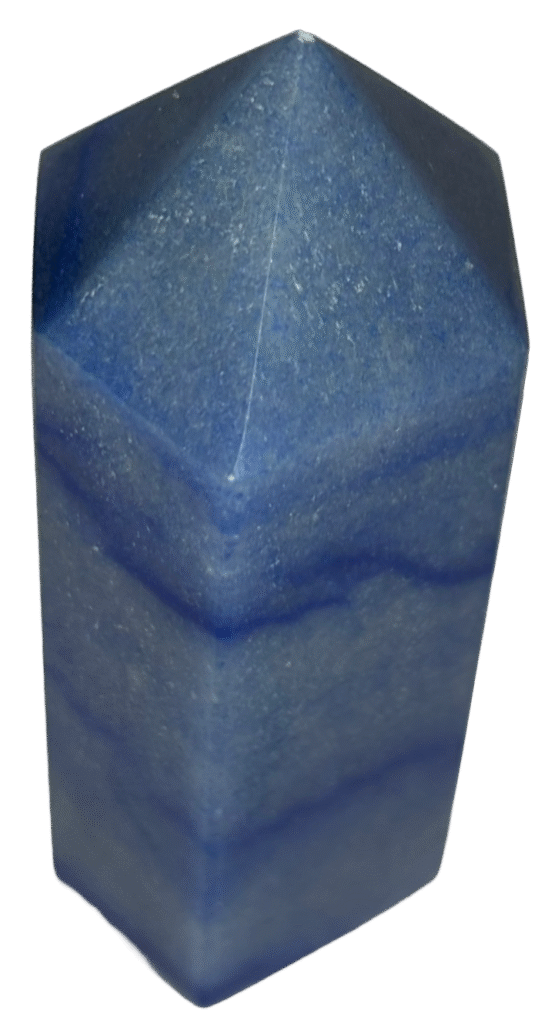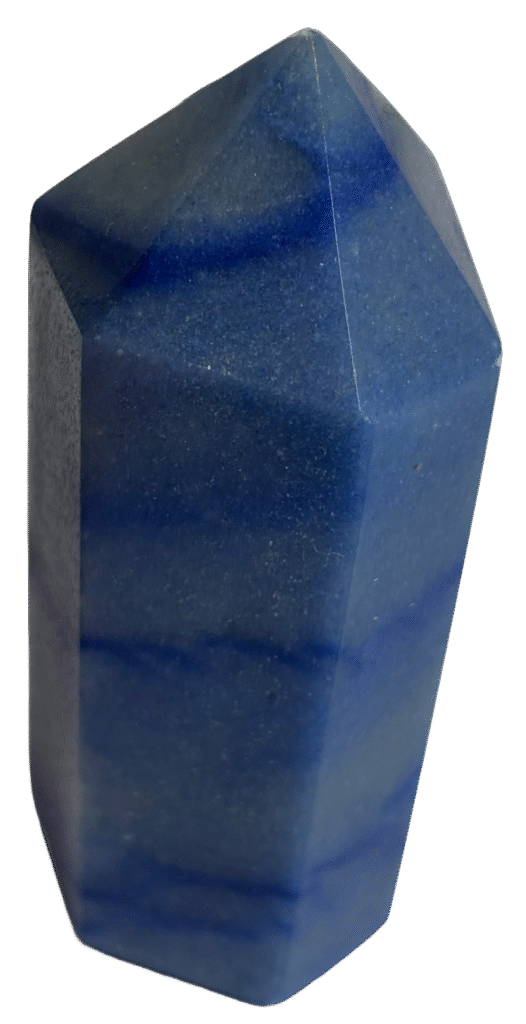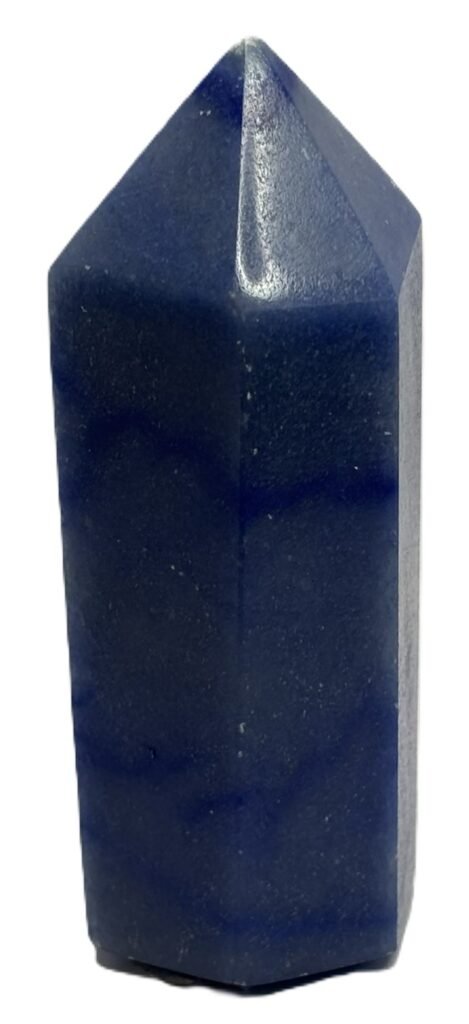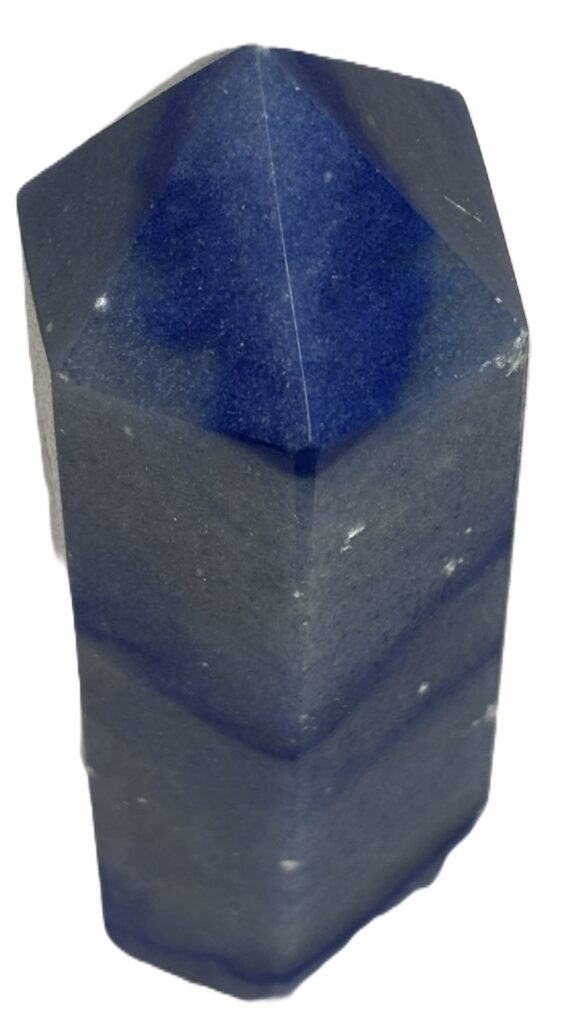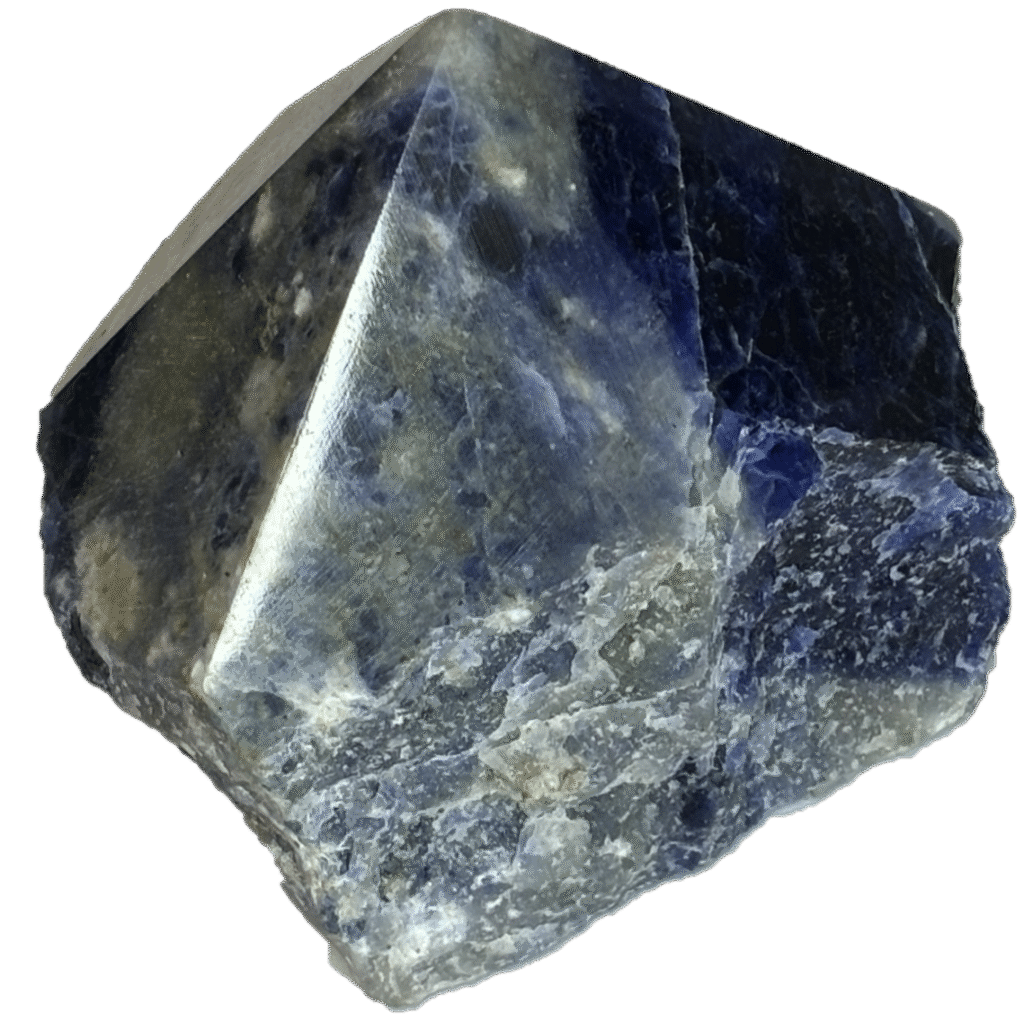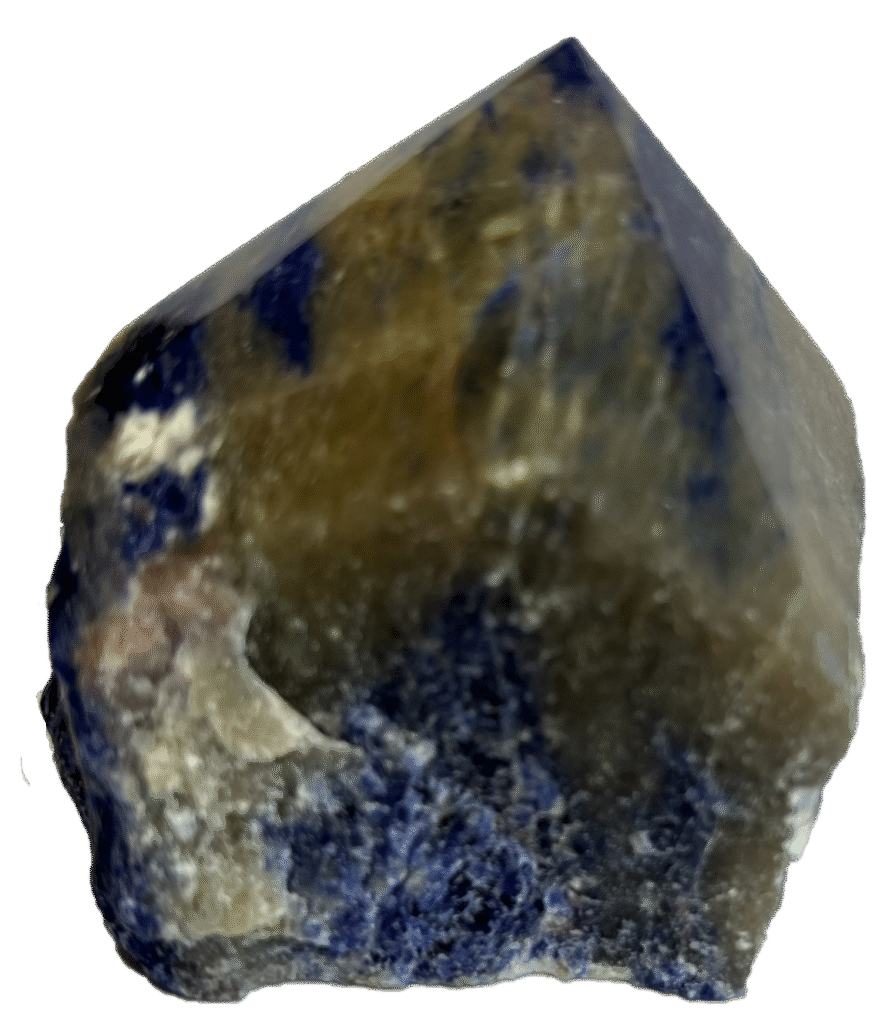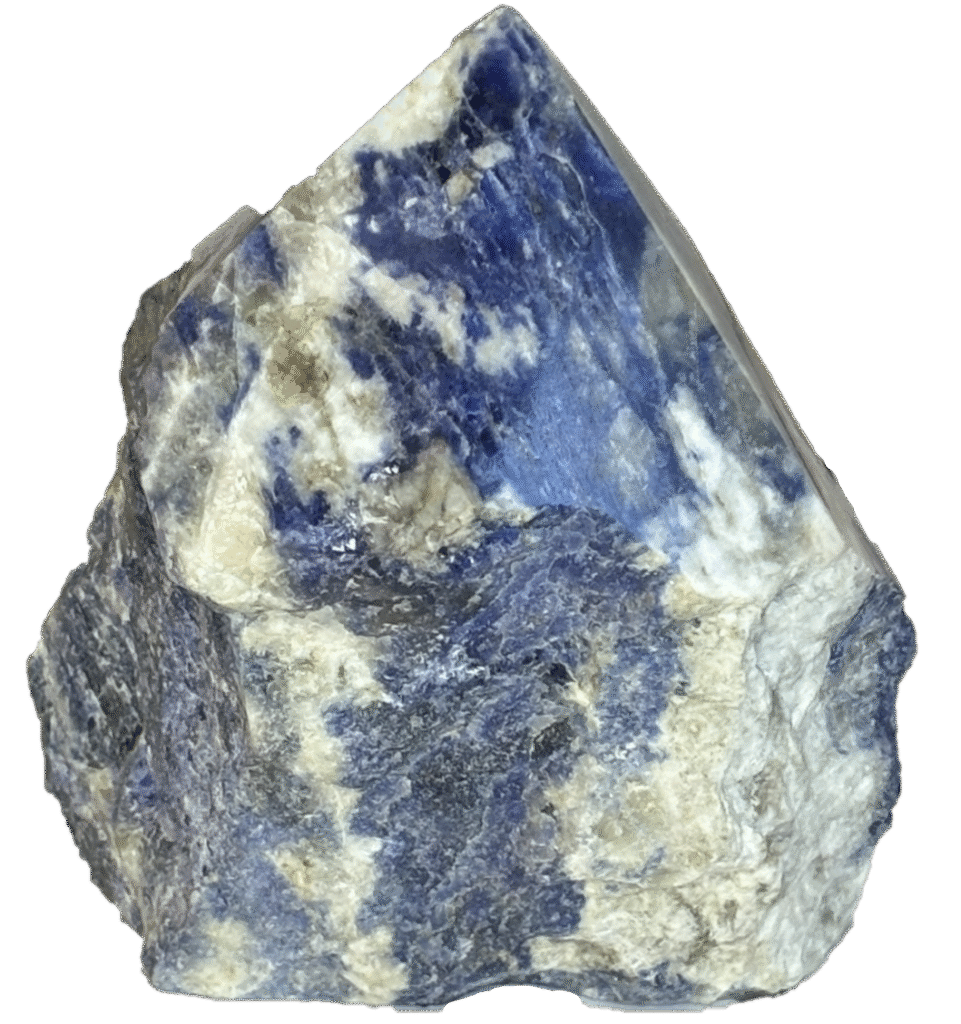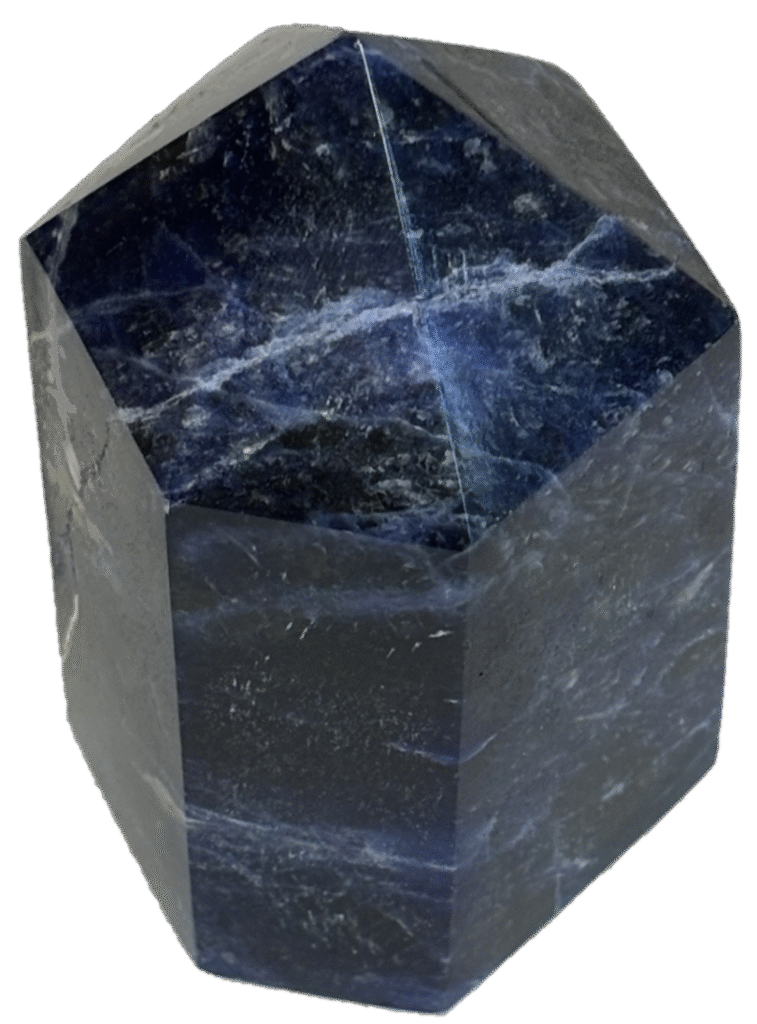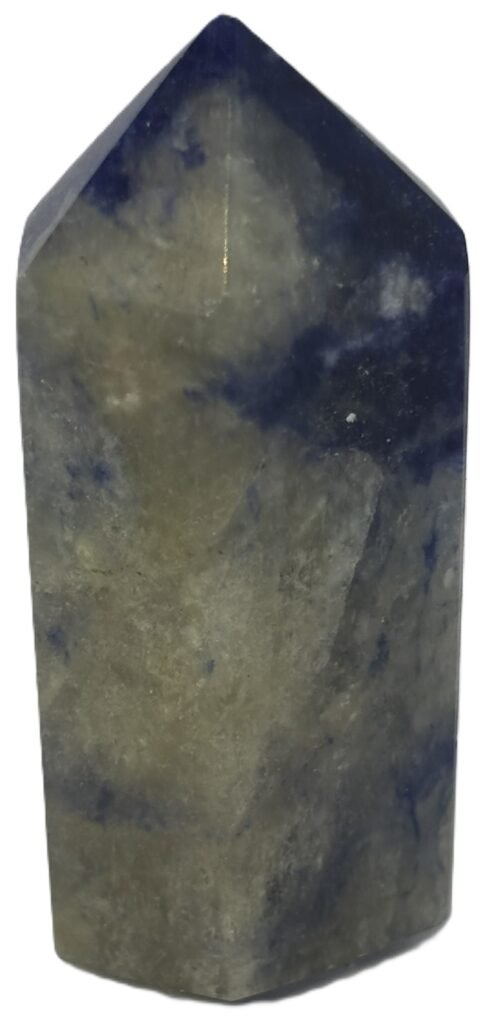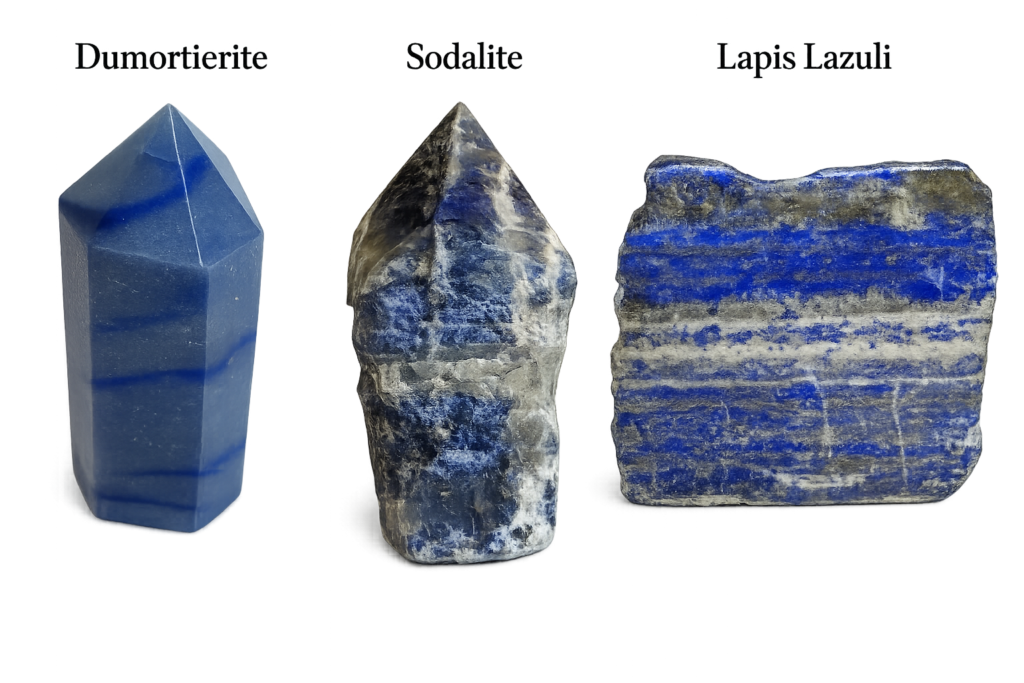
The world of blue gemstones is rich, historic, and often deeply confusing. For centuries, collectors, jewellers, and crystal enthusiasts have mixed up specimens because, at first glance, they share a similar captivating, midnight-to-royal-blue colour profile. Among the most common mix-ups are not being able to tell Dumortierite, Sodalite & Lapis apart. While they might look identical in a dimly lit room or via low-resolution photos online, they possess entirely different geological origins, structural compositions, physical strengths, and subtle visual markers.
This comprehensive guide breaks down the core science, key visual tell-tales, and simple tests you can perform at home to identify these three stunning blue stones with absolute confidence.
1. Science and Composition: Rock vs. Mineral
The most fundamental difference between these three stones begins at the atomic and geological level. They are born from completely different environments, which shapes how they look and react.
- Lapis Lazuli (The Rock): Lapis Lazuli is not a mineral; it is a complex, opaque metamorphic rock. It is a geological mixture made up of several different minerals combined. Its signature royal blue comes from lazurite (a member of the sodalite mineral group). This matrix is naturally shot through with white veins of calcite and shimmering, metallic gold flecks of pyrite (“fool’s gold”).
- Sodalite (The Mineral): Unlike lapis, Sodalite is a pure, single mineral species with its own distinct chemical formula ($Na_4Al_3Si_3O_{12}Cl$). It is a sodium-rich chloric aluminosilicate belonging to the feldspathoid group, typically forming in silica-poor, alkaline igneous rocks. While it often serves as a component mineral inside lapis lazuli rock, standalone gem-grade sodalite is its own entity.
- Dumortierite (The Borosilicate): Dumortierite is a distinct aluminium borosilicate mineral ($Al_7BO_3(SiO_4)_3O_3$). It is completely unrelated chemically to the sodalite/lapis group and typically grows in fibrous or massive crystal aggregates within iron- and boron-rich metamorphic or granitic environments.
2. Key Physical Characteristics & Hardness
If you cannot identify a stone by colour alone, its physical density and structural resistance to scratching provide definitive, empirical answers.
| Feature | Dumortierite | Sodalite | Lapis Lazuli |
| Geological Type | Mineral | Mineral | Metamorphic Rock |
| Mohs Hardness | 7.0 to 8.5 (Highly durable) | 5.5 to 6.0 (Medium softness) | 5.0 to 5.5 (Softest of the three) |
| Transparency | Opaque to slightly translucent | Opaque to translucent | Strictly Opaque |
| Texture/Habit | Fibrous, dense mass or inside quartz | Massive, blocky chunks with glassy lustre | Granular, mixed speckled matrix |
The Scratch Test (Mohs Scale)
Because Dumortierite boasts a Mohs hardness of 7.0 (reaching up to 8.5 in dense aggregate forms), it is highly resilient. A raw piece of Dumortierite can easily scratch a pocket knife blade, a copper coin, or a piece of glass without getting damaged.
Conversely, Sodalite (5.5–6.0) and Lapis Lazuli (5.0–5.5) are much softer. A steel knife blade or a professional hardness pick will easily scratch Lapis and Sodalite, whereas it will slide harmlessly off the surface of Dumortierite.
3. Visual Tell-Tale Signs: What to Look For
With a close look—ideally under direct natural light or with a basic jeweller’s loupe—you can spot key inclusion signatures unique to each stone.
Look for the Golden Glitter (Lapis Lazuli)
The absolute easiest visual test involves hunting for pyrite. Lapis Lazuli is famous for its bright, metallic, gold-coloured sparkles scattered across the deep blue background. If your stone features genuine golden metallic flecks that look like stars in a night sky, it is Lapis Lazuli. Sodalite and Dumortierite almost universally lack pyrite inclusions.
Inspect the Veining (Sodalite vs. Lapis)
While both Lapis and Sodalite feature white lines or patches caused by calcite, they express them differently:
- Sodalite features stark, bright white, course veining or large creamy patches that cut aggressively through a somewhat mottled or blotchy royal blue background. The blue itself often has a slight violet or lilac undertone.
- Lapis Lazuli features white calcite that is typically more fine-grained, subtly blended, or clouds the ultra-rich ultramarine blue matrix uniformly rather than standing out as stand alone heavy cracks.
Search for a “Denim” or Matte Uniformity (Dumortierite)
Dumortierite lacks both the golden sparkle of pyrite and the aggressive white lines of calcite. Instead, it displays a deep denim, navy, or indigo blue color profile that is far more uniform, dark, and muted. Up close, it reveals a fine, fibrous, or interlocking grain texture rather than a grainy rock appearance. It also frequently grows directly inside clear quartz crystals, creating stunning deep blue, needle-like inclusions known as Dumortierite Quartz.
4. The Ultimate Secret Weapon: Ultraviolet (UV) Light Testing
If visual inspection and hardness tests leave you uncertain, a shortwave or long wave Ultraviolet (UV) torch offers a nearly foolproof method to differentiate Sodalite from its lookalikes.
- Sodalite Fluoresces Brilliant Orange: When exposed to a UV light in a dark room, sodalite reacts dynamically. Due to its internal chlorine atoms within the crystal lattice, sodalite glows with an intense, unmistakable bright orange or fire-yellow fluorescence.
- Lapis Lazuli Reacts Mutedly: Under UV light, the blue lazurite in Lapis remains dark and inactive. At most, any white calcite veins running through the rock might glow a dull pink or off-white, but it will never burst into the bright neon orange seen in sodalite.
- Dumortierite Stays Inert: Dumortierite absorbs UV radiation completely, remaining inert, dark, and revealing zero fluorescence.
Quick Identification Cheat Sheet
When holding your mystery blue stone, run through this quick mental checklist:
- Does it have metallic golden flecks? * Yes: It is Lapis Lazuli.
- Does it turn bright neon orange under a UV torch ? * Yes: It is Sodalite.
- Is it impossible to scratch with a steel file or pocket knife? * Yes: It is Dumortierite.
- Are there prominent white veins without any gold flakes or UV glow? * Likely: A lower-grade Sodalite or a unique Dumortierite matrix. Check hardness to finalise.
Extensive FAQ Section
Is Sodalite just a cheaper, lower-grade form of Lapis Lazuli?
No. This is a common misconception because lazurite (found in lapis) and sodalite are mineral cousins belonging to the same mineralogical group. However, sodalite is its own independent mineral species formed in distinct alkaline environments. Lapis lazuli is a metamorphic rock that commands higher premium prices primarily due to its historic scarcity and rich cultural pedigree.
Can Lapis Lazuli ever lack gold pyrite flecks?
Yes, high-grade or specific cuts of Lapis Lazuli can occasionally feature highly uniform ultramarine fields with zero visible pyrite. In these rare scenarios, check the stone’s opacity and weight—lapis has a higher density (specific gravity) than sodalite and will feel noticeably heavier in the hand than a sodalite piece of identical volume.
What is “Yooperlite” and how does it relate to these stones?
“Yooperlite” is a commercial trade name for syenite rocks rich in fluorescent Sodalite found along the shores of Lake Superior in Michigan. When hit with a UV light, the embedded sodalite granules glow like glowing molten lava, utilising the exact same chemical fluorescence principles that help identify standard blue sodalite stones.
Which of these stones is safe to use in jewellery or daily wear?
Dumortierite is by far the safest choice for everyday jewellery like rings or bracelets due to its excellent 7.0+ hardness rating, meaning it resists abrasions and household dust scratches effortlessly. Sodalite and Lapis Lazuli are relatively soft and can dull, scratch, or chip over time if subjected to harsh daily impacts, acidic cleaning chemicals, or ultrasonic jewellery cleaners.
These are my personally selected and curated Dumortierite, Sodalite and Lapis Lazuli products
Products by Category

Dumortierite Polished Point A
£25.00
Dumortierite Polished Point B
£20.00
Dumortierite Polished Point f
£15.00
Dumortierite Polished Point G
£20.00
Sodalite point SA
£15.00
Sodalite point SB
£15.00
Sodalite point SD
£18.00
Sodalite point SG
£28.00
Sodalite point SW
£15.00