A geode’s cavernous interior makes it a striking centrepiece for any collection, but its porous, multi-faceted crystal chamber also acts as a natural magnet for dust, soot, and environmental grime. Over time, accumulated debris dulls the glass-like ;lustre of quartz points, obscures the delicate hues of amethyst and celestite, and degrades the natural beauty of the specimen. Restoring these natural treasures requires a tailored approach, as geodes are composed of diverse mineral suites with vastly different physical and chemical properties. While a tough quartz or agate geode can handle mild soap and water, washing soft or water-sensitive minerals like calcite, celestite, or halite with water can permanently dissolve crystal faces or cause severe cleavage fractures. This ultimate guide to cleaning geodes and crystals breaks down essential dry dusting techniques, wet washing protocols, mineral-specific chemical safety rules, and long-term display maintenance to ensure your entire collection remains in pristine condition.
1. Know Your Mineral Before You Clean
Before applying water, soaps, or brushes to any specimen, you must identify its internal mineral composition and check its physical vulnerability.
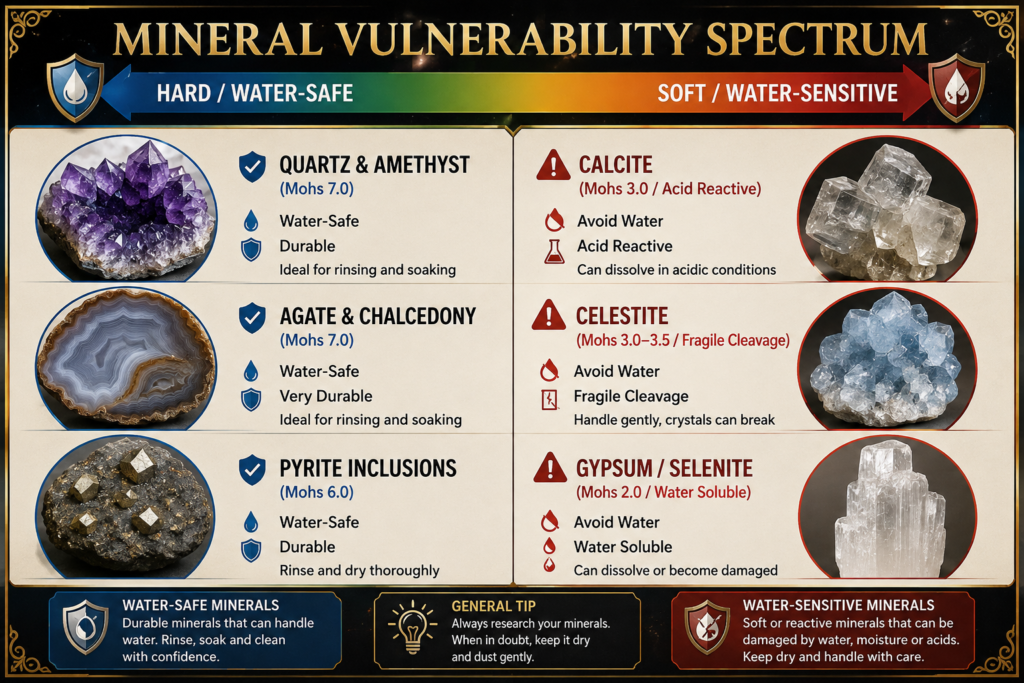
| Mineral Type | Mohs Hardness | Water Safety | Acid Sensitivity | Recommended Cleaning Method |
| Quartz & Amethyst | 7.0 | Safe | Impervious to mild acids | Dry dusting or lukewarm soapy water rinse |
| Agate & Chalcedony | 7.0 | Safe | Impervious | Dry dusting or damp microfiber cloth wipe |
| Calcite | 3.0 | Limited | EXTREMELY HIGH (Dissolves in acids/vinegar) | Dry brush only; brief cold water rinse if necessary |
| Celestite | 3.0 – 3.5 | Limited | Low (Very soft/cleavable) | Dry makeup brush or canned compressed air ONLY |
| Selenite / Gypsum | 2.0 | UNSAFE (Water Soluble) | Moderate | Dry brush or air duster ONLY (No liquid contact) |
2. Method 1: Dry Dusting (First-Line Maintenance)
For routine maintenance and delicate or water-sensitive minerals (celestite, calcite, selenite), dry cleaning should always be your first choice.
1.Select a Soft-Bristle Brush:Use a clean, ultra-soft blush brush or natural-bristle painter’s brush.
Never use stiff plastic or wire-bristle brushes, which can scratch mineral faces. A soft, dense makeup brush easily glides between narrow crystal points without exerting mechanical pressure.
2.Gently Sweep the Cavity:Work from top to bottom, brushing dust outward.
Angle the geode slightly downward. Use short, gentle strokes to sweep dust out from deep crevices between crystal points.
3.Use Compressed Air for Crevices:Hold the nozzle at least 6–8 inches away from fragile points.
Use a can of compressed air (or a hand-pump camera lens duster) to blow out stubborn particles trapped in deep pockets. Apply short, quick bursts rather than a continuous freeze-burst.
4.Wipe the Outer Rock Shell:Do not use dry clothes on sharp internal crystal tips.
Wipe the rough exterior basalt or limestone shell with a slightly damp microfiber cloth to remove surface grime from the outer rind.
3. Method 2: Wet Washing (For Quartz & Agate Geodes)
When quartz, amethyst, or agate geodes accumulate oily residue, smoke film, or heavy grime, a gentle wet wash restores their natural shine.
1.Prepare a Lukewarm Soap Bath:Never use hot or freezing water.
Fill a basin with lukewarm water and add 2–3 drops of mild, pH-neutral liquid dish soap. Extreme temperature jumps cause thermal shock, which can crack internal crystal cleavage lines.
2.Gently Agitate the Cavity:Avoid harsh scrubbing on sharp terminations.
Submerge the geode briefly or use a soft-bristle toothbrush dipped in the soapy water to gently scrub built-up grime inside the cavity.
3.Rinse with Distilled Water:Ensure all soap residue is completely removed.
Rinse the specimen thoroughly under a gentle stream of lukewarm tap water or distilled water. Distilled water is ideal because it prevents hard mineral water spots from forming on clear crystal faces upon drying.
4.Dry Thoroughly:Allow 24 hours of drying time before placing on wooden surfaces.
Blot the outer shell with a clean towel. Place the geode face-down on a soft drying rack or towel in a well-ventilated room to allow all trapped water to drain out completely.
4. Chemical Hazards to Avoid
Well-meaning collectors often ruin valuable geodes by using improper household cleaning chemicals. Avoid these three common mistakes:
- Vinegar and Acidic Cleaners: Acids react aggressively with calcium carbonate. Cleaning a calcite-lined geode with vinegar or acidic bath cleaners will cause the crystals to fizz and dissolve, leaving behind a dull, chalky mess.
- Bleach and Harsh Solvents: Heavy chemical solvents penetrate porous chalcedony linings and discolour secondary iron inclusions (like goethite or haematite), leaving behind chemical film stains.
- Ultrasonic jewellery Cleaners: High-frequency sound waves in ultrasonic baths will propagate through internal micro-fractures, shattering delicate crystal points or cleaving soft specimens apart.
5. Long-Term Display and Environmental Protection
Proper display environment prevents the need for frequent, risky cleaning sessions:
- Use Glass Display Cabinets: Housing high-value, delicate, or soft specimens (such as celestite or golden calcite) inside enclosed glass cabinets shields them from ambient dust, humidity, and pet hair.
- Keep Away from Sunny Windows: Ultraviolet (UV) rays from direct sunlight slowly fade colour saturation in amethyst, celestite, and smoky quartz geodes over time. Display them away from direct sunlight.
- Avoid High-Humidity Areas: Porous outer limestone shells absorb atmospheric moisture in humid rooms (like bathrooms), which can degrade soft minerals or corrode iron inclusions like pyrite.
Summary Care Checklist
- For Soft / Soluble Minerals (Celestite, Calcite, Selenite): Dry dust only using a soft makeup brush and compressed air. Keep liquids away.
- For Hard Minerals (Quartz, Amethyst, Agate): Wash with lukewarm distilled water and mild dish soap; air-dry completely face-down.
- Golden Rule: Never use acidic cleaners, hot water, or ultrasonic baths on any geode specimen!
Know Your Mineral Before You Clean
Before applying water, soaps, or brushes to any specimen, you must identify its internal mineral composition and check its physical vulnerability. A mineral vulnerability guide highlights which minerals are water-safe and which are water-sensitive, guiding the appropriate cleaning method.
How do I perform dry dusting for geodes?
For routine maintenance and delicate or water-sensitive minerals, use a soft-bristle brush such as a clean ultra-soft blush brush or a natural-bristle painter’s brush. Gently sweep the cavity from top to bottom, angling the geode slightly downward and using short, light strokes to sweep dust outward. If dust persists in crevices, use compressed air held at least 6–8 inches away to dislodge it.
When should I use wet washing and how is it done?
Wet washing is appropriate for quartz, amethyst, or agate geodes when they have oily residue or heavy grime. Prepare a lukewarm soap bath with 2–3 drops of mild, pH-neutral dish soap. Submerge the geode briefly or use a soft-bristle toothbrush to scrub gently, then rinse thoroughly with lukewarm water or distilled water and ensure all soap is removed. Dry thoroughly by blotting and allowing the geode to air-dry face-down for 24 hours.
What chemical hazards should I avoid when cleaning geodes?
Avoid vinegar and acidic cleaners which dissolve calcite; avoid bleach and harsh solvents which can discolour or damage various linings; and avoid ultrasonic jewellery cleaners which can fracture internal crystal points. Use safe, gentle methods appropriate to the mineral type.
How can I protect geodes in the long term and maintain display quality?
Use glass display cabinets to shield high-value or soft specimens from dust and humidity, keep geodes away from direct sunlight to prevent UV fading, and avoid humid areas that can degrade soft minerals or affect iron inclusions. Follow the summary care checklist: dry dust only for soft minerals, wash hard minerals with lukewarm distilled water and mild soap, and never use acidic cleaners, hot water, or ultrasonic baths.