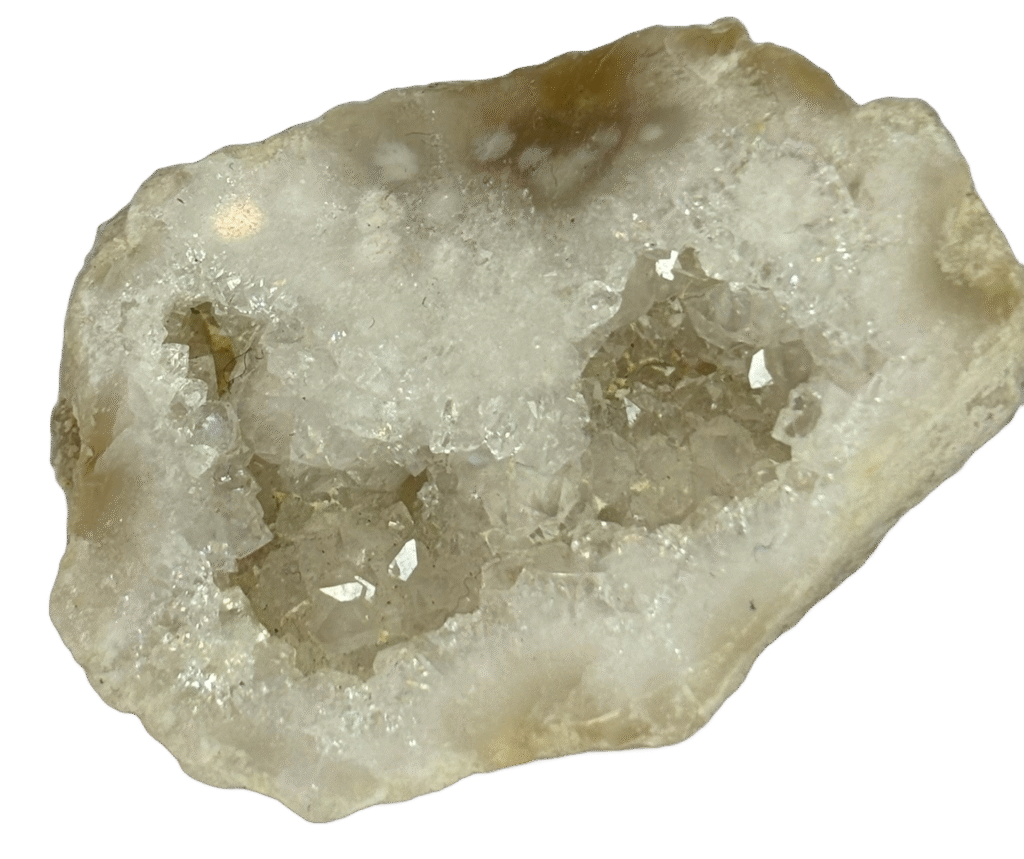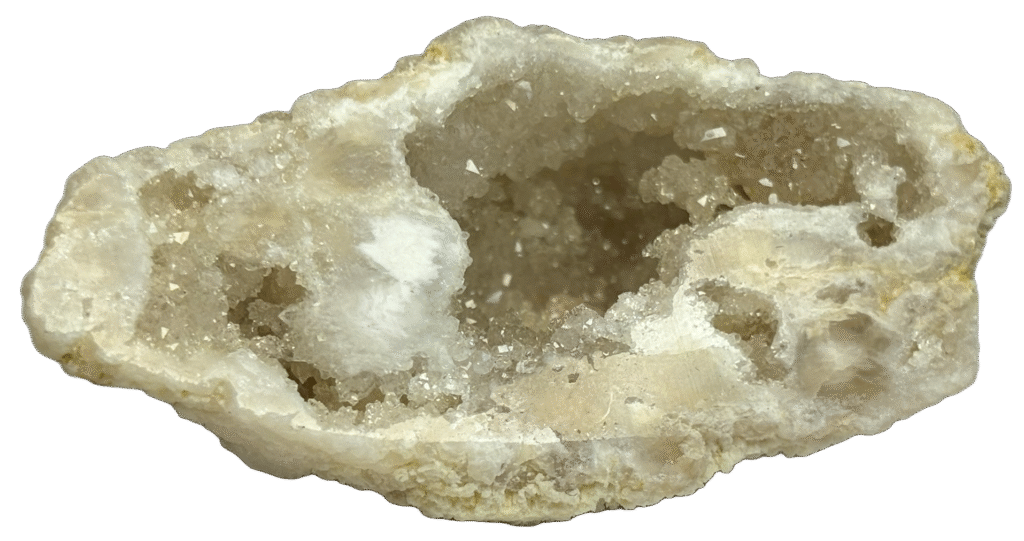
When most people picture the Geode of Pulpi, they imagine a rock size of a coconut or a basketball. However, Earth’s geological processes can scale up to breathtaking proportions, creating vaults large enough for humans to step inside. At the pinnacle of these phenomena stands the Pulpis Great Geode in Almería, Spain which draws visitors from around the world.
Measuring nearly 26 feet long, it is lined with transparent selenite gypsum crystals. This article explores the discovery, geological formation, and preservation of the Great Geode of Pulpi. Additionally, it examines other world-record geode and crystal cavity discoveries across the globe.
1. Discovery and History of Pulpis Great Geode
The Great Geode of Pulpí lies inside the abandoned Mina Rica, an old silver, lead, and iron extraction site on Mina del Pilar hill near the coastal municipality of Pulpí in Almería, Andalusia, Spain.
The December 1999 Breakthrough
During the late 19th and 20th centuries, miners in Mina Rica carved out miles of underground galleries searching for iron and galena (lead ore). They were completely unaware that they were tunnelling within feet of an incredible natural wonder, the Geode of Pulpi.
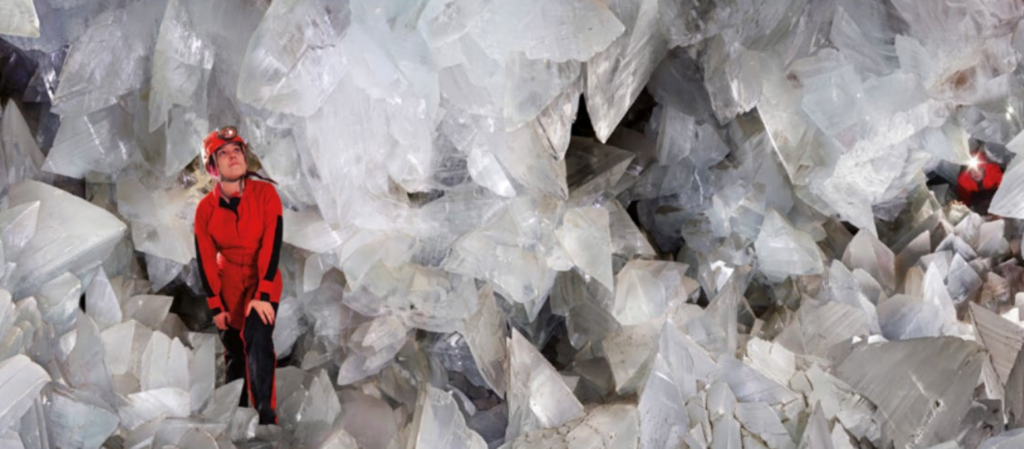
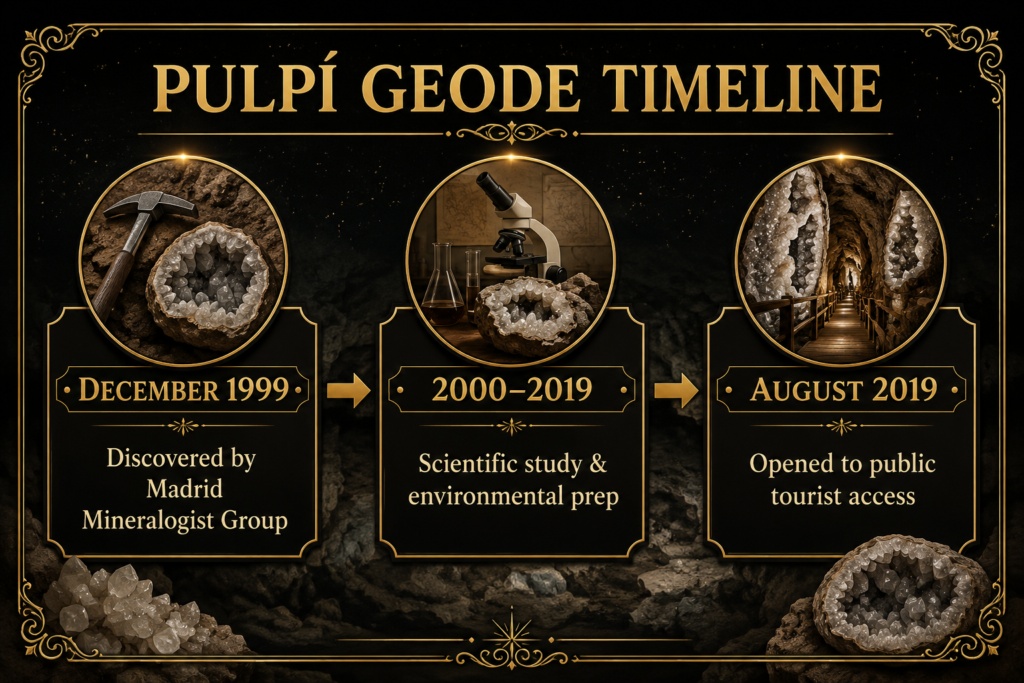
In December 1999, members of the Grupo Mineralogista de Madrid (Madrid Mineralogist Group) led by geologist Ángel Romero explored the abandoned lower levels of Mina Rica, roughly 160 feet (50 metres) below the surface. They noticed an inconspicuous opening behind a fractured rock face. Crawling through the narrow gap, they entered an oval-shaped subterranean cavern whose walls, floor and ceiling were covered in massive, water-clear, sword-like selenite crystals.
2. Geological Formation: How Pulpí Formed
The Great Geode of Pulpí measures approximately 8 meters (26.2 feet) long, 1.8 meters (5.9 feet) wide, and 1.7 meters (5.6 feet) high, with an estimated internal volume of 10.7 cubic meters.
The Great Geode of Pulpí measures approximately 8 meters (26.2 feet) long, 1.8 meters (5.9 feet) wide, and 1.7 meters (5.6 feet) high, with an estimated internal volume of 10.7 cubic meters.
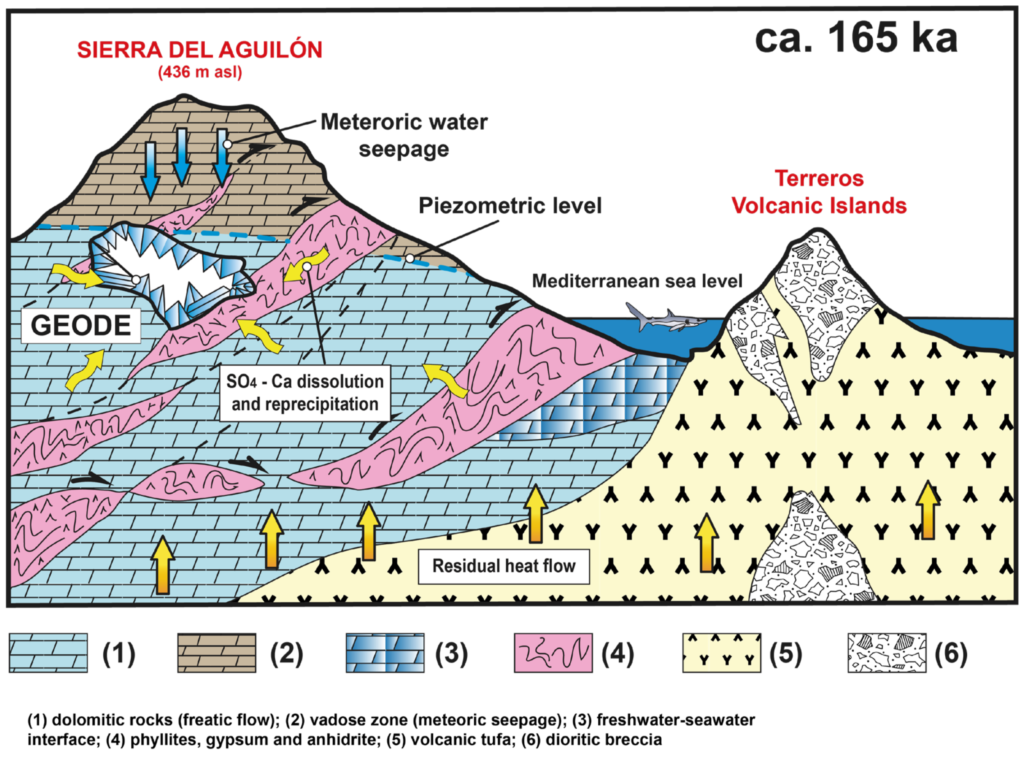
Unlike standard silica-based quartz or amethyst geodes, Pulpí is a gypsum geode (CaSO4·2H2O). Its creation required a precise, multi-stage geological recipe spanning millions of years.
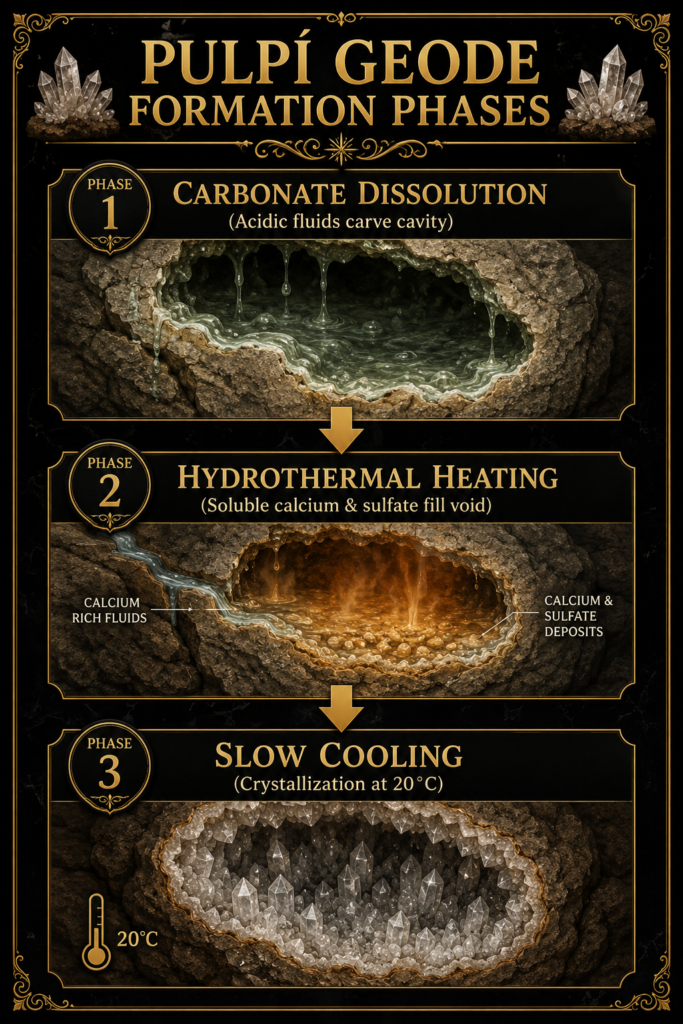
- Cavity Dissolution (Karstification): Around 5 to 6 million years ago, during the Messinian salinity crisis when the Mediterranean Sea dried up, tectonic faulting fractured the local dolomite limestone. Acidic groundwater seeped through the fissures, dissolving the rock to carve out an egg-shaped underground void.
- Sulphate Saturation: Geothermal fluids rich in dissolved calcium and sulphate (derived from surrounding anhydrite beds) filled the submerged cavity.
- Ultra-Slow Temperature Drop: As geothermal activity subsided, the mineral-saturated water inside the sealed cavern cooled extremely slowly to a constant temperature of approximately 20°C (68°F).
Giant Selenite Point Growth: Over tens of thousands to hundreds of thousands of years, this stable temperature allowed gypsum molecules to precipitate gradually without chaotic nucleation. Rather than forming millions of tiny, cloudy crystals, the mineral deposited into enormous, pristine, transparent selenite crystals measuring up to 2 metres long.
3. Structural Traits and Environmental Preservation
The selenite crystals inside the Pulpí geode display unprecedented transparency. They are often described by geologists as optically pure or ice-like. A person standing at one end of a 6-foot crystal can easily read printed text at the opposite end.
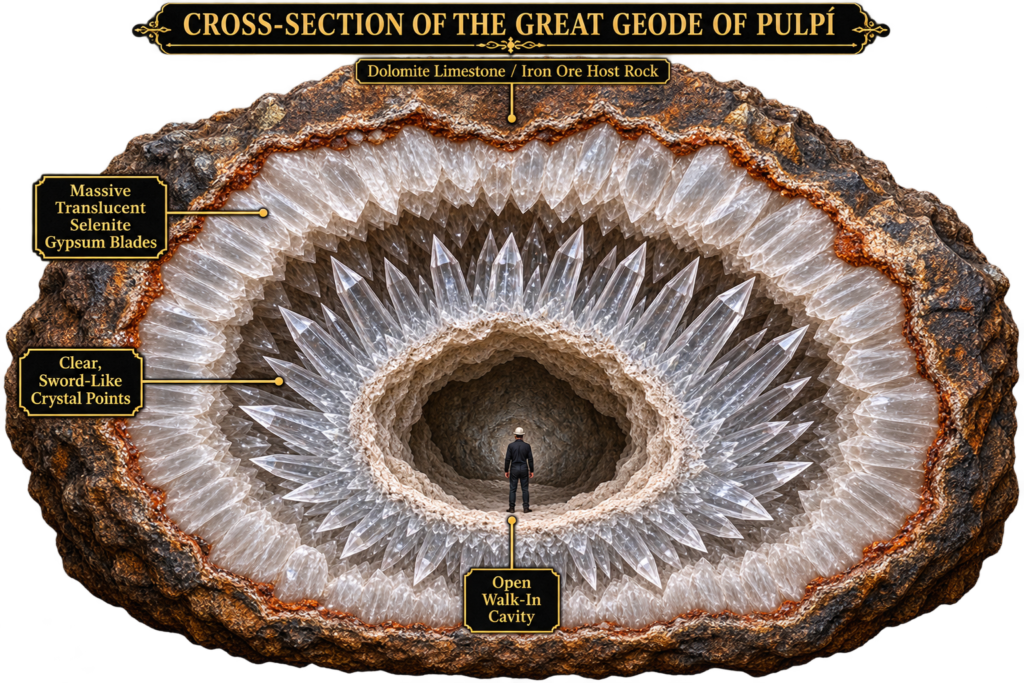
The selenite crystals inside the Pulpí geode display unprecedented transparency. Geologists describe this as optically pure or ice-like. A person standing at one end of a 6-foot crystal can easily read printed text at the opposite end.
The Challenge of Public Access
Because selenite gypsum is exceptionally soft (Mohs hardness of 2.0—easily scratched by a fingernail) and sensitive to humidity, opening the Geode of Pulpi to visitors posed immense conservation challenges.
- Microclimate Sensitivity: Body heat, moisture from human breath, and CO₂ buildup can cause condensation that permanently dulls and corrodes the glossy surfaces of transparent selenite blades.
- Environmental Controls: In August 2019, local authorities officially opened Mina Rica to the public after installing climate-control systems, ambient sensors, and glass protective barriers. Visitors view the geode’s interior from an adjacent access chamber in small, strictly regulated groups to preserve its internal microclimate.
4. World-Record Specimen Discoveries Compared
While Pulpí holds the record for the largest visitable geode, other monumental crystal cavities and giant geodes exist around the globe:
| Specimen / Site | Location | Dominant Mineral | Primary Metric / Distinction |
|---|---|---|---|
| The Great Geode of Pulpí | Almería, Spain | Selenite Gypsum (CaSO4⋅2H2O) | 26.2 ft long; world’s largest accessible hollow geode. |
| The Empress of Uruguay | Artigas, Uruguay | Amethyst Quartz (SiO2) | 11 ft tall, 2.5 tons; world’s largest standing amethyst cathedral geode. |
| Cave of the Crystals (Naica) | Chihuahua, Mexico | Selenite Gypsum (CaSO4⋅2H2O) | Giant subterranean crystal cave with selenite beams up to 37 ft long (unvisitable due to extreme heat of 58°C/136°F). |
| Crystal Cave (Put-in-Bay) | Ohio, United States | Celestite (SrSO4) | World’s largest celestite geode cavity (35 ft wide, wall-lined with sky-blue celestite crystals). |
| Chihuahuan “Coconut” Geodes | Chihuahua, Mexico | Quartz / Agate | World’s largest commercial source of symmetrical, hollow nodular geodes (“Las Choyas”). |
5. What Giant Geodes Teach Us About Geological Time
World-record geodes like Pulpí, the Empress of Uruguay, and the celestite caves of Ohio offer valuable scientific insight into planetary history.
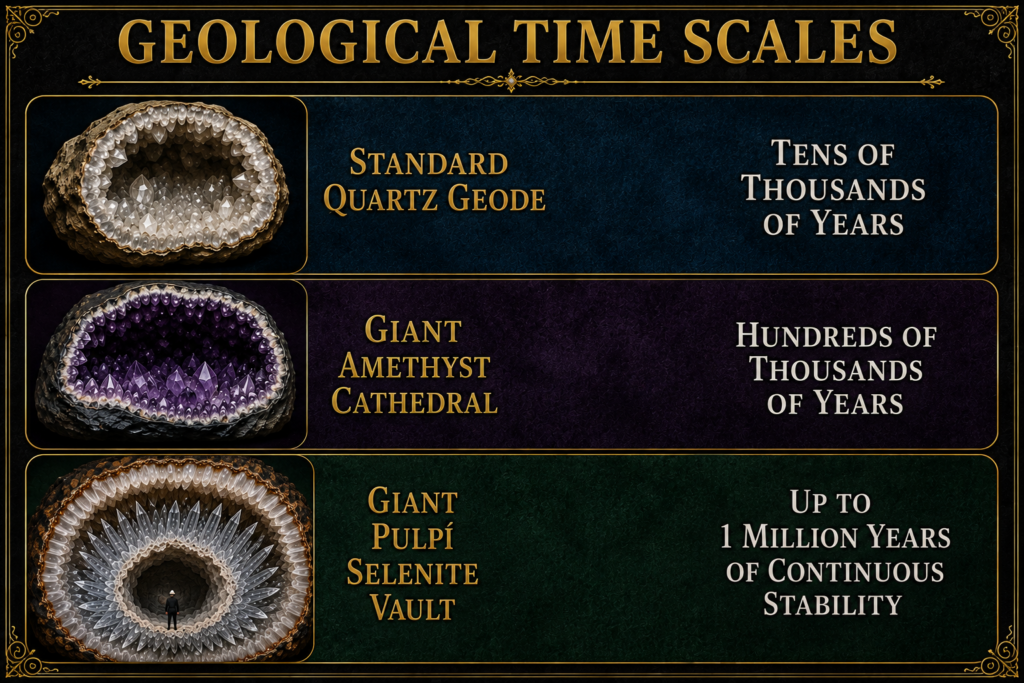
- Thermal Stability: To grow crystals measuring several feet long without structural flaws, an underground environment must maintain near-perfect thermal, chemical, and pressure stability over hundreds of thousands of years.
- Hydrothermal System Lifespans: Massive geodes serve as “fossilised flow meters,” showing geologists how mineral-rich geothermal fluids migrated through Earth’s crust millions of years ago.
Summary Checklist
- The Pulpí Geode: Located in Almería, Spain; measures 26.2 ft long; lined with transparent, sword-like selenite gypsum crystals.
- Visitable Status: Opened to controlled public tours in 2019 inside Mina Rica with strict environmental controls.
- Mineral Profile: Gypsum/Selenite (Mohs hardness 2.0); formed via low-temperature hydrothermal dissolution and slow cooling at ~20°C.
Frequently Asked Questions
What is the Great Geode of Pulpí and why is it notable?
The 8-metre-long gypsum geode is in Mina Rica near Pulpí, Almería, Spain. It is a striking natural feature within the site’s geology. Its display is carefully managed to balance visitor access with preservation. The formation attracts researchers and curious visitors alike.
This is the largest visitable geode on Earth, lined with wall-to-wall transparent selenite crystals. The Geode of Pulpi opened to the public in 2019 under controlled environmental conditions to protect its interior microclimate. Guided tours ensure safety while protecting delicate crystals.
Where is the Pulpí geode located and how was its discovery made?
The geode lies inside the abandoned Mina Rica, an old mining site on the Mina del Pilar hill near Pulpí in Andalusia, Spain. It was discovered in December 1999 when the Madrid Mineralogist Group, led by Ángel Romero, explored lower, previously unexamined galleries and found an oval cavern filled with massive, water-clear selenite crystals.
How did the Pulpí geode form geologically?
Over millions of years, dissolution of surrounding rock created a cavity (karstification) during the Messinian salinity crisis.
Next, the cavity was filled by sulphate- and calcium-rich geothermal fluids.
Finally, ultra-slow cooling to about 20°C allowed gypsum to precipitate as enormous, transparent selenite crystals up to 2 metres long.
What challenges and measures are involved in keeping the geode accessible yet preserved for visitors?
The Geode of Pulpi is very soft and humidity-sensitive. Opening it to visitors could cause condensation and surface damage. To preserve it, climate-control systems, ambient sensors, and protective glass barriers were installed. Additionally, visitors view the interior from a separate access chamber in small, regulated groups to maintain the local microclimate.
What do giant geodes like Pulpí contribute to our understanding of geological time and processes?
Giant geodes illustrate the need for long-term thermal, chemical, and pressure stability.
However, they often span hundreds of thousands of years to grow feet-long crystals without flaws.
Additionally, they act as fossilised records of hydrothermal systems.
They show how mineral-rich fluids migrated through Earth’s crust and how slow cooling shaped the formation of large crystal bodies.
There are my personally selected and curated baby Pulpis (Geodes)