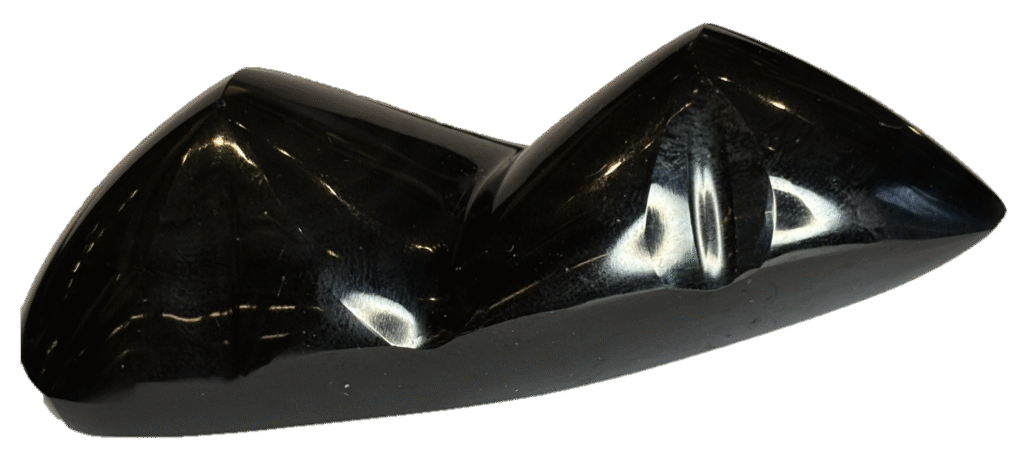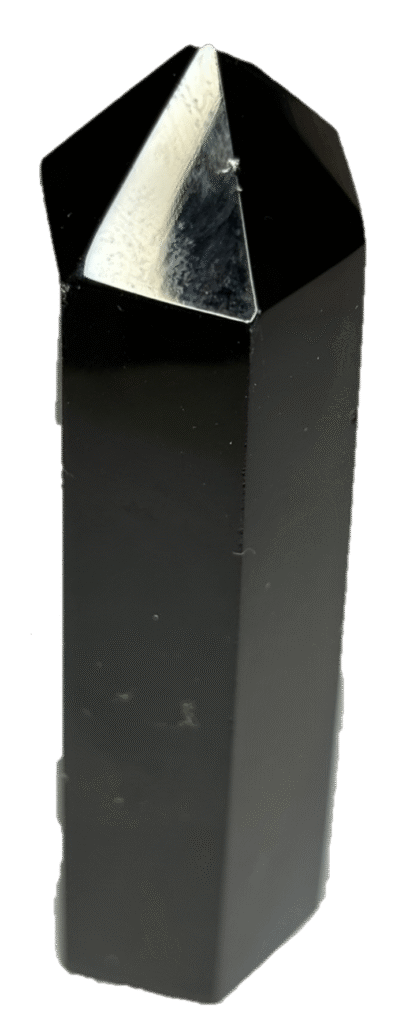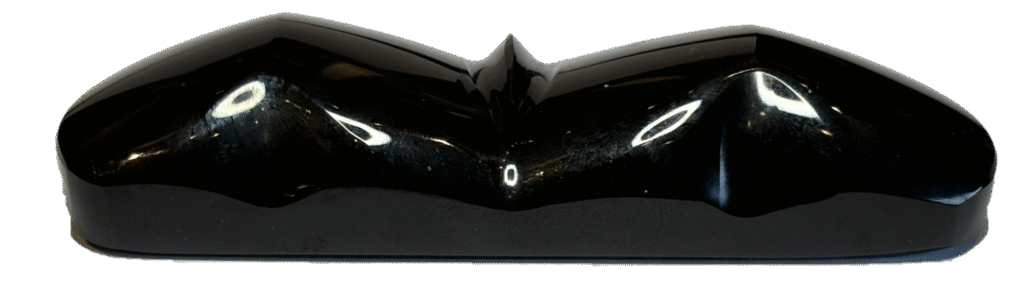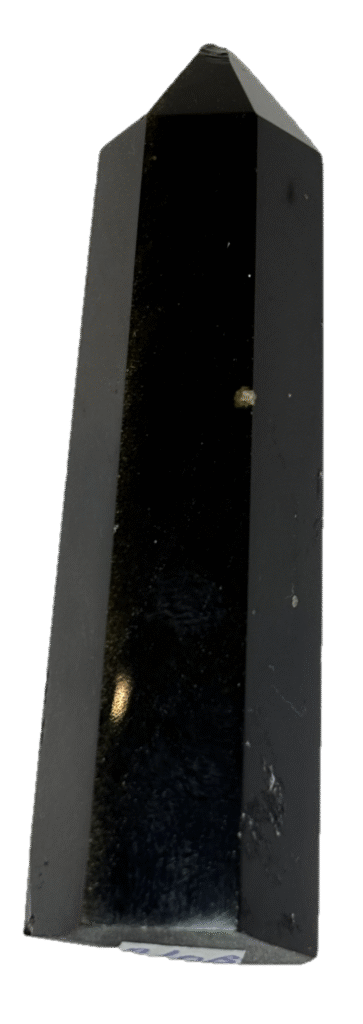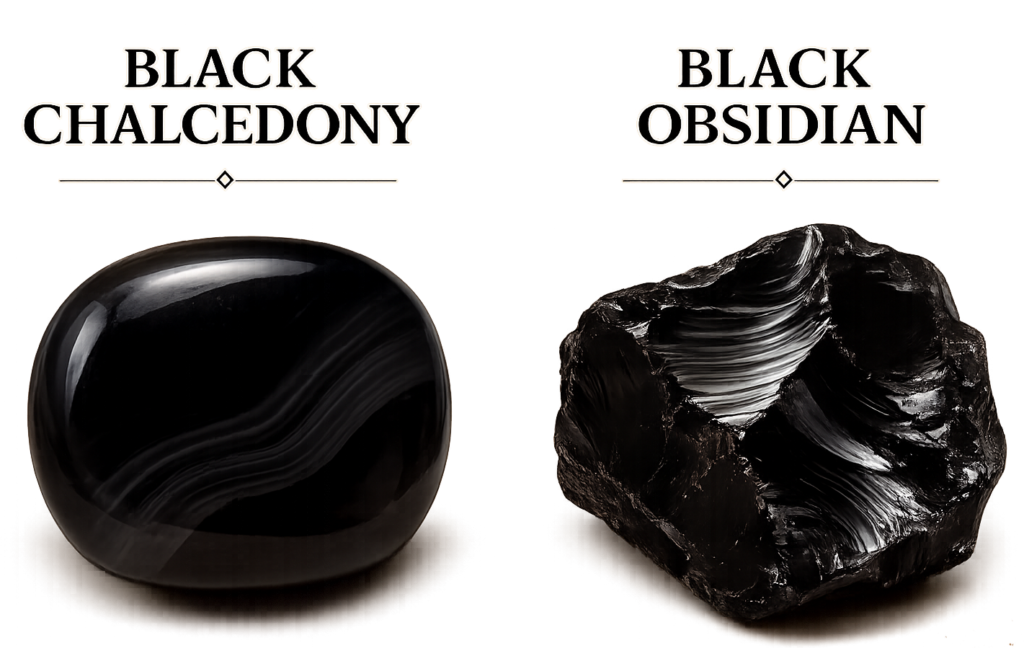
While black chalcedony and black obsidian look almost identical to the untrained eye—both appearing as smooth, glossy, midnight-black gemstones—they are completely different in how they form geologically and how they behave energetically.
Understanding these differences is essential for both mineral collectors and crystal healers.
1. The Geological Difference: Crystalline vs Glass
The primary difference between these two stones comes down to their internal atomic structure, which dictates how they look, feel, and fracture.
| Feature | Black Chalcedony | Black Obsidian |
| Classification | Cryptocrystalline Mineral (Quartz family) | Volcanic Glass (Amorphous Igneous Rock) |
| How it Forms | Slow deposition of silica-rich water inside rock cavities over millions of years. | Micro-instantaneous cooling of high-silica lava above ground. |
| Internal Structure | Billions of microscopic, fibrous quartz crystals. | No crystalline structure at all; completely chaotic atoms. |
| Mohs Hardness | 6.5 – 7 (Very tough, scratch-resistant) | 5 – 5.5 (Relatively soft, easily scratched) |
| Fracture Style | Uneven or splintery. | Conchoidal (breaks into razor-sharp, curved shell-like shards). |
2. How to Tell Them Apart Visually and Physically
If you are holding a black pocket stone and aren’t sure which one it is, use these three quick tests:
The Weight Test
Black chalcedony is noticeably denser than obsidian. Because chalcedony is a tightly packed quartz mineral, it will feel much heavier in your palm than a piece of obsidian of the exact same size.
The Light Translucency Test
Hold the edge of the stone directly against the flashlight of your mobile phone:
- Black Obsidian is volcanic glass, meaning even the darkest pieces will show a smoky, translucent brown or greyish-yellow tint around the sharp edges when backlit.
- Black Chalcedony is incredibly dense and opaque; light will struggle to penetrate it at all, or it will show a faint, milkier grey-white glow around the rim.
The Scratch Test
Because chalcedony sits at a 7 on the Mohs scale, a standard steel pocket knife or a steel file cannot scratch it. Obsidian, being soft volcanic glass (around 5), is easily scratched by steel.
3. Metaphysical Differences: The Sponge vs The Mirror
In spiritual and energy work, these two stones handle negative energy in completely opposite ways.
Black Chalcedony: The Gentle Sponge
Black chalcedony is a slow, steady, and absorbing stone. It acts like a protective sponge or a cosmic exhaust fan, quietly taking in ambient negative energy, stress, and anxiety from your environment and neutralising it. It brings a calm, steady sense of emotional stability without making a fuss, making it ideal for daily, long-term wear.
Black Obsidian: The Truth Mirror
Obsidian works with immense speed and volcanic intensity. It doesn’t gently absorb negative energy; instead, it acts like a stark mirror, forcefully exposing the root causes of your trauma, shadow self, and buried flaws. It strips away illusions instantly. While incredibly powerful for deep psychic protection and shadow work, its energy can be jarring and exhausting for daily wear, often requiring you to take breaks from it.
These are my personally selected and curated Black Chalcedony and Black Obsidian crystaks
Products by Category

Black Obsidian BLOBSF
£25.00
Black Obsidian point blobs k
£22.00
Black Obsidian Point BLOBSG
£25.00
Black obsidian point BLOBSI
£18.00