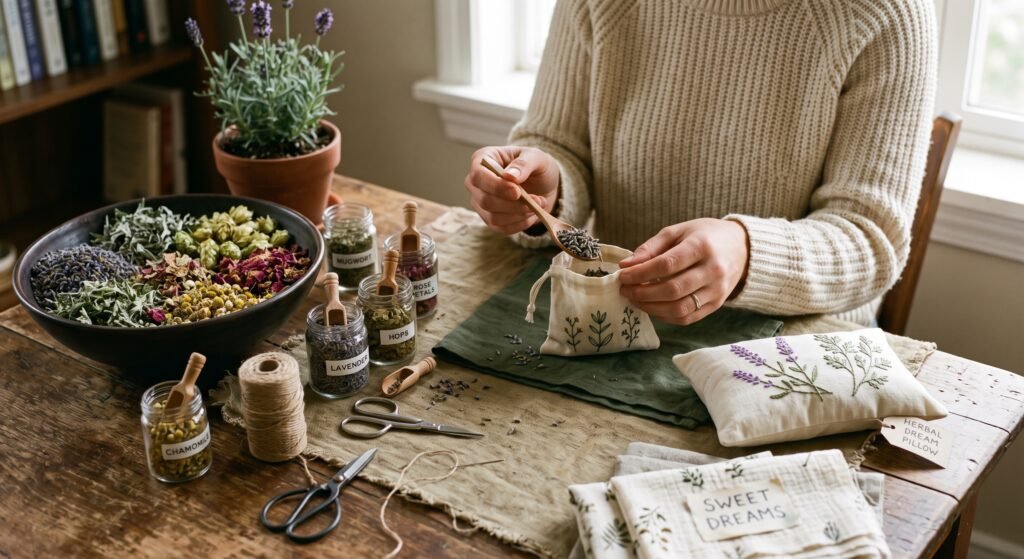
A herbal dream pillow is a small, fabric pouch filled with dried aromatic herbs and flowers designed to promote relaxation, improve sleep quality, and influence dreams. A small pouch is placed inside a persons pillowcase or placed right next to the bed.: As the person moves and breathe at night, body heat and pressure release the gentle essential oils from the dried plants.
Crafting a herbal dream pillow combines traditional botanical oneirogens (dream-enhancing herbs) with soothing aromatics to support vivid dreaming, dream recall, or restful sleep.
Origins and History
Ancient and Global Roots: The practice of using infused bedding, aromatic sachets, and medicinal filling for headrests spans thousands of years across Europe, Asia and the Americas.
Ancient China: Archaeological finds have traced herbal pillows back as early as the Western Han Dynasty (202 BC – 9 AD). Tombs like Mawangdui contained brocade and silk pillows packed with therapeutic plants and herbs (Herba upatorii and chrysanthemums) These are designed to circulate blood, clear the head, and prevent illness.
European Folk Tradition and the Middle Ages: In European folklore and traditional herbalism, small cloth sachets were tucked beneath heads to alter consciousness during sleep. Plants like mugwort (Artemisia) were burned or slipped under pillows to induce vivid, lucid, or prophetic dreaming. Dill (Old Norse root dilla means “to lull”) were used to calm restless children and plunge adults into deep sleep.
Protective Magic: Historically, dream pillows served a protective role. Herbs like rosemary, thyme, and mullein were used for their scent and as a magical wards against evil spirits, witches and nocturnal terrors
Materials & Botanical Ingredients
Fabric & Supplies
- Pouch Fabric: Natural, breathable weave such as unbleached cotton, linen, or raw silk (approx. 15 cm × 20 cm / 6″ × 8″).
- Needle & Thread (or sewing machine), ribbon, or drawstring.
- Small Mixing Bowl and wooden spoon.
- Fluff / Base (Optional): Clean raw wool, unspun cotton, or dried hops to add soft bulk and prevent herb crunching.
Recommended Herb Formulation
The blend uses dried herbs; ensure they are completely moisture-free to prevent mould.
| Botanical Component | Proportion | Primary Action |
| Dried Mugwort (Artemisia vulgaris) | 2 parts | Core oneirogen; enhances dream vividness, lucidity, and recall. |
| Dried Lavender Flowers (Lavandula angustifolia) | 1 part | Calms nervous tension, softens mugwort’s pungent herbaceous aroma. |
| Dried Chamomile Flowers (Matricaria chamomilla) | 1 part | Eases physical restlessness and promotes smooth transition into deep sleep. |
| Dried Rose Petals (Rosa damascena) | ½ part | Sweetens the blend; traditionally associated with comforting, gentle dreams. |
| Dried Peppermint or Rosemary | ½ part | Sharpens mental clarity and aids morning memory retention. |
Preparation
1. Select and Blend the Botanicals:
Measure the dried herbs into a clean glass or ceramic bowl. Gently crush whole flower heads (like chamomile and rose) between your fingers to release their volatile essential oils, but avoid grinding them into a fine dust, which can sift through the fabric weave.
2. Cut and Prepare the Fabric Casing:
Cut two equal rectangles of breathable, natural fabric (approx. 15 cm × 20 cm / 6″ × 8″). Natural fibres are essential to allow the plant aromas to diffuse freely without trapping heat or synthetic odours.
3. Stitch the Pouch Perimeter
Place the two fabric pieces with their right sides facing together. Stitch along three sides using a simple straight stitch with a 1 cm seam allowance. Turn the fabric right-side out through the open section and press the edges flat. Leave a 4–5 cm opening on one edge.
4. Fill the Sachet
Funnel your blended herbs into the pouch until it is gently filled—about two-thirds full. If using raw wool or dried hops for cushioning, layer the fluffy fibre evenly around the herbal core to keep the pillow soft and pliable against the head.
Do not overpack the casing.
5 .Seal the Pouch:
Fold the raw edges of the opening inward by 1 cm. Close the gap using a hand-sewn blind ladder stitch (slip stitch) for a permanent seal, or secure the top with a tightly tied cotton ribbon if you prefer a refillable pouch.
Other specially selected dream blends
Deep Relaxation & Sleep Blend
- Ingredients: 1 tbsp dried hop flowers, 1 tbsp dried lemon balm leaves, ½ tbsp dried lavender, and ½ tbsp dried chamomile.
- Effect: Relieves stress, calms the nervous system, and promotes deep slumber.
Anti-Nightmare & Protection Blend
- Ingredients: ¼ cup dried rose petals, ¼ cup dried rosemary, ¼ cup dried lavender flowers, and ¼ cup dried hops.
- Effect: Comforts an anxious mind and guards against restless or frightening dreams.
Lucid & Vivid Dreaming Blend
- Ingredients: 4 tbsp mugwort leaves, 1 tbsp hops flowers, 1 tbsp lavender blossoms, and 1 tsp peppermint leaves (mixed with 1–2 cups of flax seeds for body/weight).
- Effect: Enhances dream vividness, clarity, and dream recall (Caution: Mugwort can make dreams very intense)
Stress Reduction Blend (Large mix)
- Ingredients: 1/2 cup hops (Humulus lupulus), 1/2 cup mugwort (Artemisia vulgaris) and 1/3 cup sweet marjoram (Origanum majorana)
- Effect: Reduces stress and induces dreamy sleep
Usage & Maintenance
Placement: Tuck the finished sachet directly inside your main pillowcase on the underside of your pillow, or place it right beside your head on the mattress.
Reactivating Aromas: Every few nights, give the sachet a gentle squeeze and knead to rupture fresh botanical oil glands within the dried leaves and blossoms.
Lifespan: The aromatics remain active for roughly 4 to 6 months. When the scent fades, open the seam, compost the spent herbs, and refill with a fresh batch.
Sensitivity Note: If dreams become overly intense, hyper-vivid, or disruptive, remove the pillow for several nights or decrease the proportion of mugwort in favour of lavender and chamomile.