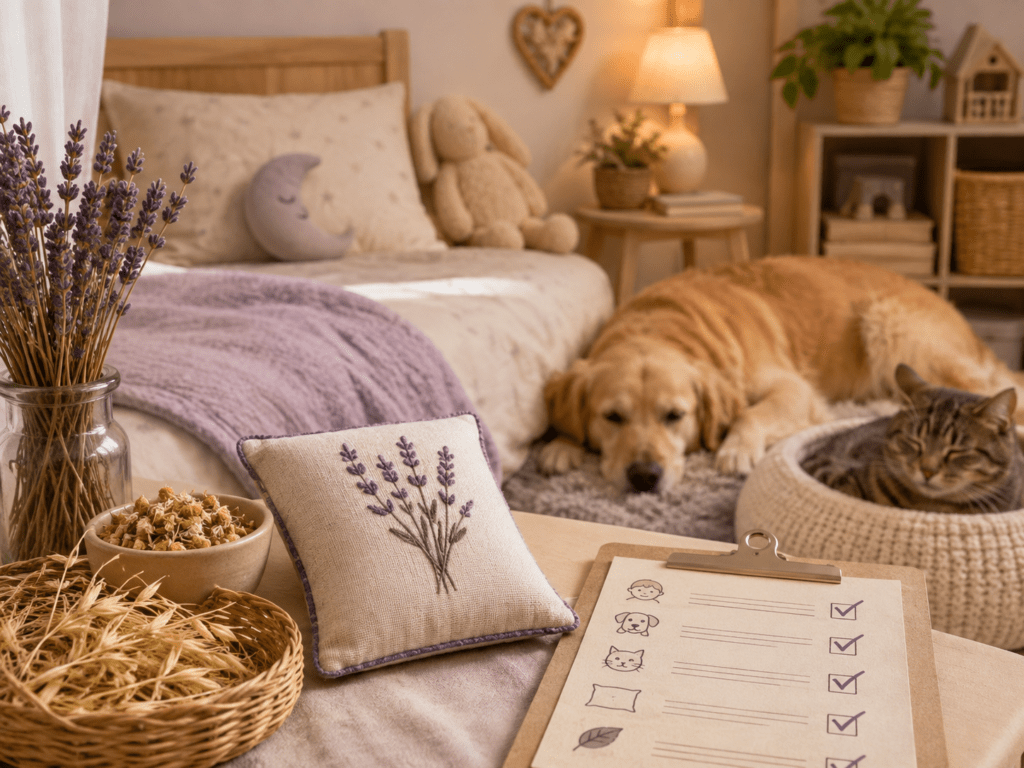
When formulating dream pillows for households with young children or free-roaming pets, standard oneirogens and sedatives cannot be used interchangeably. What provides restorative sedation or lucid dreaming for an adult can present serious physiological hazards to developing respiratory systems and smaller companion animals. While traditional herbalism frequently relies on aromatic richness to anchor sleep rituals, multi-species homes require an intentional, cross-disciplinary approach that accounts for biological vulnerabilities across species lines.
Designing a truly safe dream pillow is an exercise in restraint. It requires moving away from heavy aromatics, essential oils, and potent oneirogenic roots (such as Artemisia species or valerian), shifting instead toward mild, low-toxicity botanicals housed in secure, pet- and tamper-resistant textiles. The following checklist details the botanical contraindications, species-specific toxicities, and structural design rules needed to keep bedrooms serene for every sleeper in the house.
Species-by-Species Botanical Contraindications
Feline (Cats) Considerations
Feline physiology presents the most critical pharmacological bottleneck. Cats are obligate carnivores with a well-documented metabolic deficit: they are deficient in key hepatic glucuronidation enzymes—specifically phenol UDP-glucuronosyltransferase (UGT1A6 and UGT1A9). Consequently, their livers cannot efficiently metabolise and clear volatile terpenes, polyphenols, and phenolic compounds found abundantly in traditional aromatics like tea tree, pennyroyal, eucalyptus, and high-camphor mints. In cats, chronic exposure—whether through sustained inhalation in enclosed bedrooms or secondary dermal contact from brushing against a herb-stuffed sachet—can result in cumulative toxicity, respiratory distress, and central nervous system depression.
| Status | Botanical / Common Name | Scientific Name | Clinical Concern / Mechanism |
| Strictly Contraindicated | Pennyroyal | Mentha pulegium | Pulegone causes acute centrilobular hepatic necrosis. |
| Strictly Contraindicated | Eucalyptus | Eucalyptus globulus | High 1,8-cineole; induces salivation, vomiting, ataxia, and seizures. |
| Strictly Contraindicated | Tea Tree / Melaleuca | Melaleuca alternifolia | Terpinen-4-ol causes profound central nervous system (CNS) depression and hypothermia. |
| Strictly Contraindicated | Lavender (Concentrated / Oils) | Lavandula angustifolia | Linalool and linalyl acetate place heavy hepatic burdens on feline metabolism. |
| Strictly Contraindicated | Mints (Peppermint, Spearmint) | Mentha piperita / spicata | Concentrated menthol/monoterpenes cause gastrointestinal and hepatic distress. |
| Cautious / Safe (Low Doses) | Catnip / Cat mint | Nepeta cataria | Nepetalactone acts on feline olfactory receptors; mildly stimulating initially, followed by sedation. |
| Cautious / Safe (Low Doses) | Valerian Root | Valeriana officinalis | Actinidine stimulates mild euphoria followed by sleepiness; strong odour may encourage aggressive biting/tearing of the pillow. |
| Safe (Dry, Whole Herb) | German Chamomile | Matricaria chamomilla | Mild calming; non-toxic in small, un-extracted quantities. |
| Safe (Dry, Whole Herb) | Lemon Balm | Melissa officinalis | Mild nervine; safe in gentle aromatic quantities. |
Canine (Dogs) Considerations
Canine biology presents distinct risks. While dogs possess standard metabolic clearance pathways, their olfactory acuity is orders of magnitude sharper than human perception, turning heavily scented adult blends overwhelming or distressing. Furthermore, dogs are prone to exploratory chewing. Fibrous dream pillows containing plants with cardiac or neurological effects—such as hops (Humulus lupulus), which can trigger life-threatening malignant hyperthermia in canines, or essential-oil-concentrated aromatics—pose severe ingestion risks if a sachet is torn open in the dark.
Canine olfactory epithelium (the nasal cavity that detects and processes the sense of smell) contains up to 300 million receptors, compared to roughly 6 million in humans. Beyond extreme olfactory sensitivity, the primary clinical threat in dogs is oral ingestion driven by exploratory scent-marking or scavenging.
| Status | Botanical / Common Name | Scientific Name | Clinical Concern / Mechanism |
| Lethal Emergency | Hops | Humulus lupulus | Triggers malignant hyperthermia (severe body temperature spikes, seizures, tachycardia, and death). Common in adult sleep blends; strictly banned around dogs. |
| Contraindicated | Mugwort / Wormwood | Artemisia vulgaris / absinthium | Thujone is a potent GABA antagonist; lowers seizure threshold and causes neurotoxicity if ingested. |
| Contraindicated | Nutmeg | Myristica fragrans | Myristicin causes hallucinations, prolonged tachycardia, tremors, and seizures. |
| Contraindicated | Sweet Birch / Wintergreen | Betula lenta / Gaultheria procumbens | Methyl salicylate mimics aspirin overdose; causes metabolic acidosis and gastric ulceration. |
| Safe (Dry Herb) | German Chamomile | Matricaria chamomilla | Gentle anti-inflammatory and mild sedative. |
| Safe (Dry Herb) | Lavender Buds | Lavandula angustifolia | Low-dose, natural dried flowers provide gentle calming without systemic toxicity. |
| Safe (Dry Herb) | Lemon Verbena | Aloysia citrodora | Safe mild aromatic; gentle citrus profile. |
| Safe (Dry Herb) | Linden Flower | Tilia cordata | Mild relaxant with a high safety profile. |
Paediatric Considerations (Infants & Children Under 6)
Young children and toddlers introduce a parallel set of safety boundaries. Developing pulmonary tracts are hyper-reactive to volatile organic compounds (VOCs); high-menthol or high-cineole herbs (such as peppermint or rosemary) can provoke reflex laryngospasms or bronchospasms in children under three. Beyond respiratory mechanics, toddlers explore their sleep environments orally, making physical pillow construction, seam durability, and the total exclusion of choking hazards (such as whole resin tears or hard dried berries) as vital as botanical selection itself.
| Status | Botanical / Common Name | Scientific Name | Clinical Concern / Mechanism |
| Contraindicated (< 6 years) | Peppermint / Cornmint | Mentha piperita / arvensis | Menthol stimulates TRPM8 cold receptors; in young airways, this can trigger acute laryngospasms, reflex apnea, and respiratory arrest. |
| Contraindicated (< 3 years) | Eucalyptus / Rosemary | Eucalyptus spp. / Salvia rosmarinus | 1,8-cineole causes rapid reflex bronchoconstriction and bronchial spasms in small airways. |
| Contraindicated | Strong Oneirogens (Calea, Mugwort) | Calea zacatechichi / Artemisia spp. | Heavy bitter sesquiterpene lactones; risk of allergic contact dermatitis and intense night terrors or vivid agitation. |
| Contraindicated | Whole Resins / Berries | Frankincense tears, Juniper berries | High choking hazard if pillow is breached; rock-hard materials can lodge in paediatric airways. |
| Safe (Toddlers 2+) | German Chamomile Flos | Matricaria chamomilla | Extremely gentle nervine; mild apple-like aroma. |
| Safe (Toddlers 2+) | Calendula Petals | Calendula officinalis | Low scent, hypoallergenic, soft texture. |
| Safe (Toddlers 2+) | Rose Petals | Rosa damascena / centifolia | Subtle, comforting floral note with very low allergenicity. |
| Safe (Toddlers 2+) | Marshmallow Root / Leaf | Althaea officinalis | Bland, neutral bulk herb to soften pillow texture without volatile scent load. |
2. Universal Household Formulation Rules
- Strictly Forbid Liquid Essential Oils: Never apply drops of concentrated essential oils to dream pillows used in shared homes. Essential oils concentrate volatile terpenes by hundreds of times compared to whole plant material, creating high risks of dermal transfer, grooming ingestion, and respiratory irritation. Use whole dried herbs only.
- Dilute the Volatile Profile: An effective multi-species pillow should contain no more than 15–20% active aromatic herbs (such as chamomile or lavender). The remaining 80–85% should consist of inert, hypoallergenic botanical bulk, such as:
- Clean, dust-sifted oat tops / oat straw (Avena sativa)
- Unscented organic flaxseed (smooth, heavy drape)
- Certified organic raw cotton or wool batting
- Avoid Scent Clashing: Strong pungent smells (e.g., valerian or hops) attract dogs and cats to bite or dig into the textile, breaking through seams.
3. Physical Design & Structural Safety Checklist
The physical casing of a dream pillow is the first line of defence against choking, mechanical obstruction, and accidental herb ingestion.
Construction & Enclosure Rules
- Double-Enclosure Architecture: Herbs must be sealed within an inner core sachet, which is then housed inside a durable, washable outer sleeve.
- [No Zips, Buttons, or Drawstrings: External fasteners present immediate choking and intestinal foreign-body hazards for toddlers and chewing dogs. Use a deep envelope-fold closure or a securely stitched seam.
- Internal Seam Reinforcement:
- Stitch the inner bag using tightly woven, chemical-free fabrics (such as unbleached organic cotton muslin or linen).
- Use high-tensile thread with French seams or a close double-stitch (straight stitch paired with a serged/overcast edge) to prevent herb dust and fragments from migrating out.
- Sifting for Fines: Before filling, sift all dried botanicals through a mesh kitchen strainer to remove fine, powder-like plant dust that could trigger sneezing or allergic coughing fits.
Placement & Nighttime Protocol
- Infant Prohibition (< 12 months): Never place dream pillows, sachets, or loose textiles into a crib with an infant under 12 months due to Sudden Infant Death Syndrome (SIDS) and suffocation risks.
- Toddler Placement (Ages 1–3): Place the dream pillow underneath the fitted cot mattress sheet or tuck it deeply inside an adult pillowcase out of immediate oral reach.
- Pet-Accessible Beds: If cats or dogs share the bed, do not leave dream pillows loose on top of duvets unattended during the day. Store them in a closed drawer or high shelf when not in supervised use.
Safety Guidelines by Group
1. For Children’s Bedrooms
- Safe Choices: German Chamomile, Sweet Rose Petals, Lemon Balm, and Wood Betony.
- Keep Out: High-terpene or thujone heavy herbs (Mugwort, Wormwood, Clary Sage), strong menthols/eucalyptol (Peppermint, Rosemary, Eucalyptus), and deep hormonal/sedative modulators (Hops, Passionflower).
- Construction: Always double-stitch inner pouches so children cannot tear seams open to swallow loose dried matter.
2. For Cat Households
- The Glucuronidation Vulnerability: Feline livers cannot effectively filter phenols, terpene hydrocarbons, or ketones.
- Safe Choices: Rose petals, Lemon balm, and gentle Catnip/Cat mint (Nepeta cataria—though this will stimulate rather than calm them).
- Strictly Prohibited: Lavender, Mugwort, Mint species, and any essential oil drops added to the herbs.
3. For Dog Households
- The Hops Danger: Even spent, dried brewing or herbal hops strobiles can trigger fatal malignant hyperthermia in canines within hours of ingestion.
- Safe Choices: Chamomile, Wood Betony, Lemon Balm, and Rose.
- Storage Protocol: If you use potent adult dream blends (containing Mugwort, Hops, or Star Anise), keep your pillow enclosed in an allergen/zippered protective pillow cover and store daytime pillows inside closed cupboards or high shelves out of reach.
The “Nursery & Hearth” Universal Sleep Sachet
(Safe for households with toddlers aged 2+, dogs, and free-roaming cats)
This formulation avoids high-terpene aromatics, menthol, 1,8-cineole, essential oils, and all canine- or feline-toxic plants (such as hops, mugwort, and pennyroyal). It relies on a high ratio of neutral, hypoallergenic botanical bulk accented by a whisper of mild, soothing florals.
Botanical Formula (By Volume)
| Botanical Component | Ratio / Measure | Function & Safety Rationale |
| Dried Oat straw (Avena sativa) | 4 Parts (e.g., 1 cup) | Hypoallergenic Bulk: Soft, sweet, meadow-like base. Dust-free structural volume with zero volatile stress on feline livers or infant lungs. |
| Organic Flaxseed (Linum usitatissimum) | 2 Parts (e.g., ½ cup) | Drape & Texture: Adds comforting weight and a smooth, fluid hand-feel. Completely inert and non-toxic if sampled. |
| German Chamomile Flos (Matricaria chamomilla) | 1 Part (e.g., ¼ cup) | Gentle Nervine: Soft, apple-like aroma rich in mild apigenin. Soothes young nervous systems without triggering feline UGT1A6 pathway overload. |
| Calendula Florets (Calendula officinalis) | 1 Part (e.g., ¼ cup) | Neutral Softener: Virtually odourless, hypoallergenic, and non-toxic across all three species. Adds gentle, pillowy softness to the mix. |
| Pink Rose Petals (Rosa damascena or centifolia) | ½ Part (e.g., 2 tbsp) | Subtle Heart Note: Delicate, familiar floral tone that relaxes without the intense cineole/camphor bite of culinary herbs. |
Volatile Load Ratio: ~80% inert filler / neutral botanicals to ~20% mild aromatic florals. Zero drops of essential oils.
Materials & Hardware
- Inner Core: 100% unbleached, high-thread-count organic cotton muslin or close-weave linen (approx. 15 cm × 20 cm / 6″ × 8″).
- Outer Washable Cover: Heavyweight organic cotton flannel, denim, or linen canvas with a deep envelope-back closure (no buttons, zips, snaps, or drawstrings).
- Thread: 100% gutermann cotton or heavy-duty polyester thread.
- Prep Tool: A standard fine-mesh kitchen sieve.
1. Sift the Botanical Blend:Mandatory to eliminate respiratory irritants.
Measure the oat straw, chamomile, calendula, and rose petals into a clean bowl. Gently toss with clean, dry hands.
Pour the blend through a fine-mesh kitchen sieve, shaking gently over a bin to discard all powdered plant dust and microscopic fines. Retain only the clean, whole floret and leaf material.
2. Integrate the Weight Base:
Fold the whole flaxseed into the sifted botanical blend. The smooth seeds disperse evenly through the fibrous oatstraw, giving the pillow a fluid, bean-bag drape that contours comfortably under bedding.
3. Double-Stitch the Inner Core:
Fill the inner muslin casing to roughly 75% capacity—leaving enough slack so the sachet remains malleable and flat rather than packed firm like a ball.
Turn the open raw edges inward by 1.5 cm. Run a primary straight stitch along the edge, then run a secondary reinforcing stitch (or tight zigzag stitch) 3 mm inside the first seam to create a sealed, burst-proof edge.
4. Enclose in the Washable Sleeve:
Slide the sealed herbal core into the outer envelope-back sleeve. Ensure the inner fold overlaps by at least 5 to 7 cm so a curious toddler or pawing pet cannot hook into the inner sachet.
Safe Placement Protocols
- For Toddlers (Ages 2–4): Tuck the sachet entirely underneath the fitted mattress sheet near the head of the cot or toddler bed, or place it inside the child’s regular pillowcase between the outer fabric and the pillow protector. This allows the subtle aroma to diffuse without providing direct mouth access.
- For Shared Adult/Family Beds with Pets: Keep the pillow placed beneath the top sheet during the night. When making the bed in the morning, stow the sachet inside a bedside drawer or high linen press so pets do not use it as a chew toy or nesting pad during the day.
- Maintenance & Rotation: Because no synthetic preservatives or heavy essential oils are used, refresh the dried blend every 3 to 4 months. Wash the outer envelope cover regularly in fragrance-free detergent.
The “Linen & Nursery” Wardrobe & Drawer Sachet
(A passive aromatic blend safe around curious pets, toddler clothing, and nursery bedding)
Wardrobe and drawer sachets traditionally rely on sharp, insect-repelling botanicals like cedar chips, camphor, or camphoraceous lavandin (Lavandula x intermedia). In a shared home, however, these pungent aromas can saturate cot sheets, swaddles, and clothing with volatile terpenes that trigger respiratory reflexes in toddlers or accumulate in feline metabolic systems.
This passive variation introduces gentle, whole-plant aromatics with natural preservation qualities—such as orris root and lemon verbena—while remaining strictly within feline, canine, and paediatric safety parameters. It subtly perfumes nursery fabrics with a clean, sun-dried herbal scent while keeping textiles fresh.
Botanical Formula (By Volume)
| Botanical Component | Ratio / Measure | Function & Safety Rationale |
|---|---|---|
| Dried Oat straw / Cut Meadow Hay (Avena sativa) | 3 Parts (e.g., ¾ cup) | Neutral Volumetric Base: Keeps the sachet airy and prevents compaction in closed drawers. Absorbs background ambient moisture without scent clashes. |
| Cut & Sifted Lemon Verbena (Aloysia citrodora) | 2 Parts (e.g., ½ cup) | Fresh Aromatic Core: Gentle, sweet, clean lemon scent. Unlike citrus peels (which contain feline-toxic limonene and psoralens) or synthetic lemon fragrances, whole dried verbena leaf yields a mild, pet-safe aromatic profile. |
| German Chamomile Flos (Matricaria chamomilla) | 2 Parts (e.g., ½ cup) | Soft Floral Under-note: Imparts a familiar, clean, honey-apple note into stored cotton sheets and sleepsuits. High safety margin across all species. |
| Cut Marshmallow Root (Althaea officinalis) | 1 Part (e.g., ¼ cup) | Bland Absorbent: Clean, diced dried root that acts as an unfragranced, fibrous anchor. Adds slight substance to prevent the dried leaves from crushing into fine dust. |
| Coarse Cut Orris Root (Iris germanica / pallida) | ½ Part (e.g., 2 tbsp) | Natural Botanical Fixative: Soft, violet-like root that physically binds and slowly releases the natural aromatic oils of the verbena and chamomile, extending shelf life for months without essential oils. (Ensure coarse cut, never fine powder). |
Formulation Check: Zero essential oils. Free of high-camphor mints, cedarwood, pine needles, wormwood, and hops.
Textile & Hardware Requirements
Because drawer sachets are stored among laundry and accessible to climbing cats or exploring toddlers opening low drawers:
- Sachet Pouch: Tightly woven unbleached cotton calico, drill, or heavy linen. Avoid sheer organza or loose cheesecloth, which allow plant dust to drift onto stored baby clothes.
- Hanger Loop (Optional for Closets): A short, securely cross-stitched cotton webbing or twill tape loop (keep under 10 cm / 4 in to eliminate strangulation or entanglement hazards).
- Closure: Machine-stitched shut on all four edges. Never use drawstring cords, ribbons, pins, or snap buttons.
1. Sift the Dried Leaf Material
Combine the oat straw, lemon verbena, and chamomile florets in a large mixing bowl.
Pass the blend through a standard wire kitchen sieve to shake out any fine leaf particles and pollen dust. Discard the dust so only whole, clean plant pieces enter the sachet.
Prevents plant debris from clinging to clothing
2. Fold in Roots and Fixatives:
Stir the cut marshmallow root and coarse orris root into the sifted leaf blend using a wooden spoon or clean hands. Let the mixture rest in a sealed glass jar for 24 to 48 hours prior to sewing, allowing the orris root to marry with the subtle aromatics of the verbena and chamomile.
3. Construct a Burst-Proof Flat Pouch
Cut two 12 cm × 12 cm (approx. 5″ × 5″) squares of tightly woven cotton or linen.
Stitch three sides closed using a 1 cm seam allowance and a tight straight stitch, followed by a serged edge or tight zigzag stitch over the seam allowance.
Essential for pet and toddler homes.
4. Fill, Seat, and Seal:
Fill the fabric envelope loosely (roughly two-thirds full) so it lies flat between folded garments rather than creating an awkward mound.
Fold the raw top edges inward by 1.5 cm and top-stitch completely closed with a double straight seam. If adding a hanger loop for a closet rail, tuck the ends of the short twill tape inside the seam before running the final stitches.
Passive Placement Guidelines
- Low Nursery Drawers (Toddler-Accessible): Slide the sachet to the very back or bottom of the drawer, underneath a folded stack of cot sheets or heavy blankets. Even if a toddler pulls open the drawer, the sachet remains hidden beneath the textiles.
- Wardrobes & Closets: Hang the sachet directly on the main closet rail between garments using the reinforced short loop, well out of reach of both jumping dogs and floor-exploring toddlers.
- Linen Chests: Place 1 to 2 sachets between spare duvets and pillow protectors. The botanicals will gently season the cotton with a quiet, soothing aroma that releases once the bedding is put onto the cot or bed.
- Longevity: Because whole roots act as a natural fixative, this sachet will passively scent fabrics for 6 to 9 months. Simply give the pouch a gentle knead every few weeks to crush internal herbs and renew scent diffusion.
Frequently Asked Questions
Why can’t standard oneirogens and sedatives be used in households with young children or free-roaming pets?
Because what provides restorative sedation or lucid dreaming for an adult can present serious physiological hazards to developing respiratory systems and smaller companion animals; in cats, chronic exposure to volatile terpenes and phenolic compounds can cause toxicity, and in dogs and infants, strong aromas and ingestion risks can provoke respiratory distress or other severe reactions.
What are the core safety design principles for a truly safe dream pillow in a multi-species home?
Move away from heavy aromatics, essential oils, and potent oneirogenic roots; use mild, low-toxicity botanicals housed in secure, pet- and tamper-resistant textiles; implement a double-enclosure construction with a sealed inner core and an outer washable sleeve; ensure high-seam integrity and remove fine dust through sifting.
Which botanicals are strictly contraindicated for feline (cat) households?
Pennyroyal, Eucalyptus, Tea Tree (Melaleuca alternifolia), Lavender (concentrated oils), and mints (Mentha piperita / mentha spicata) are strictly contraindicated due to feline metabolism and toxicity concerns.
What are the placement and nighttime protocols to reduce risks for children and pets?
Never place dream pillows loose in areas accessible to toddlers or pets; for children under 12 months avoid pillow exposure in cribs; for toddlers 1–3, place the pillow underneath the fitted sheet or inside a pillowcase away from mouth reach; for pets, store pillows in a closed drawer or high shelf when not supervised and keep them away from pet-accessible beds.
What is the “Nursery & Hearth” Universal Sleep Sachet formulation and its safety rationale?
The Nursery & Hearth sachet uses a high ratio of inert bulk (oat straw, flaxseed) with mild floral notes from German chamomile, Calendula, and pink rose petals, totaling about 80% inert filler to 20% mild aromatics; zero essential oils are used to avoid high volatility and species-specific risks, providing a safe, passive aroma for households with toddlers and pets.