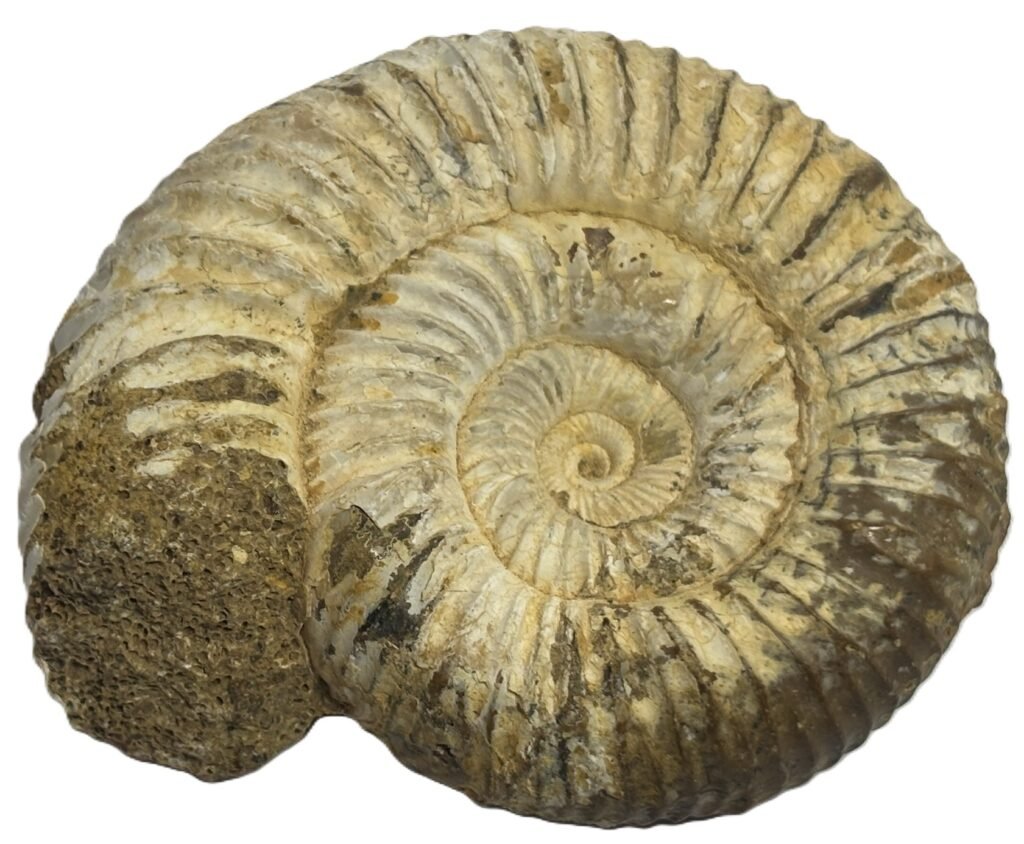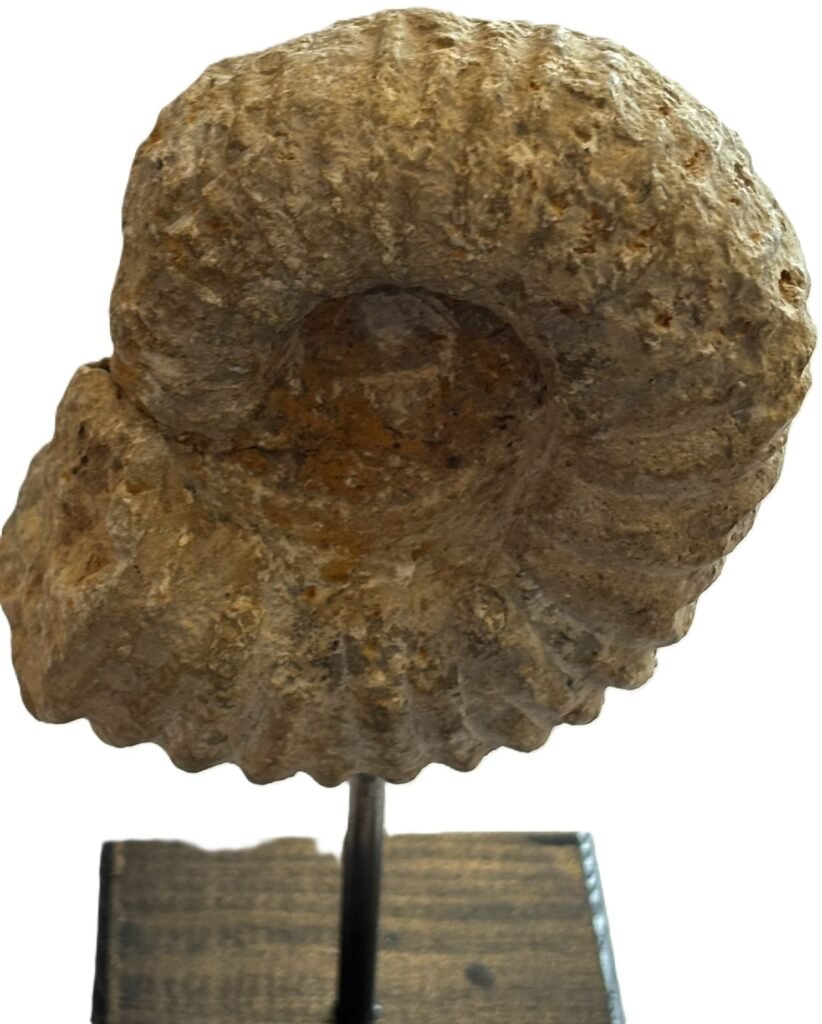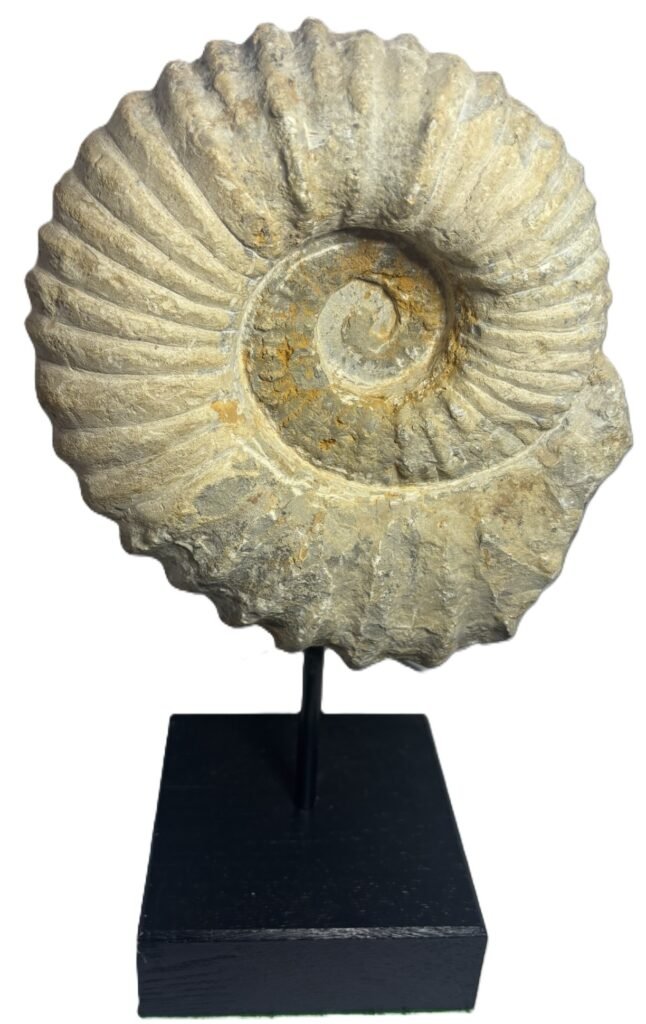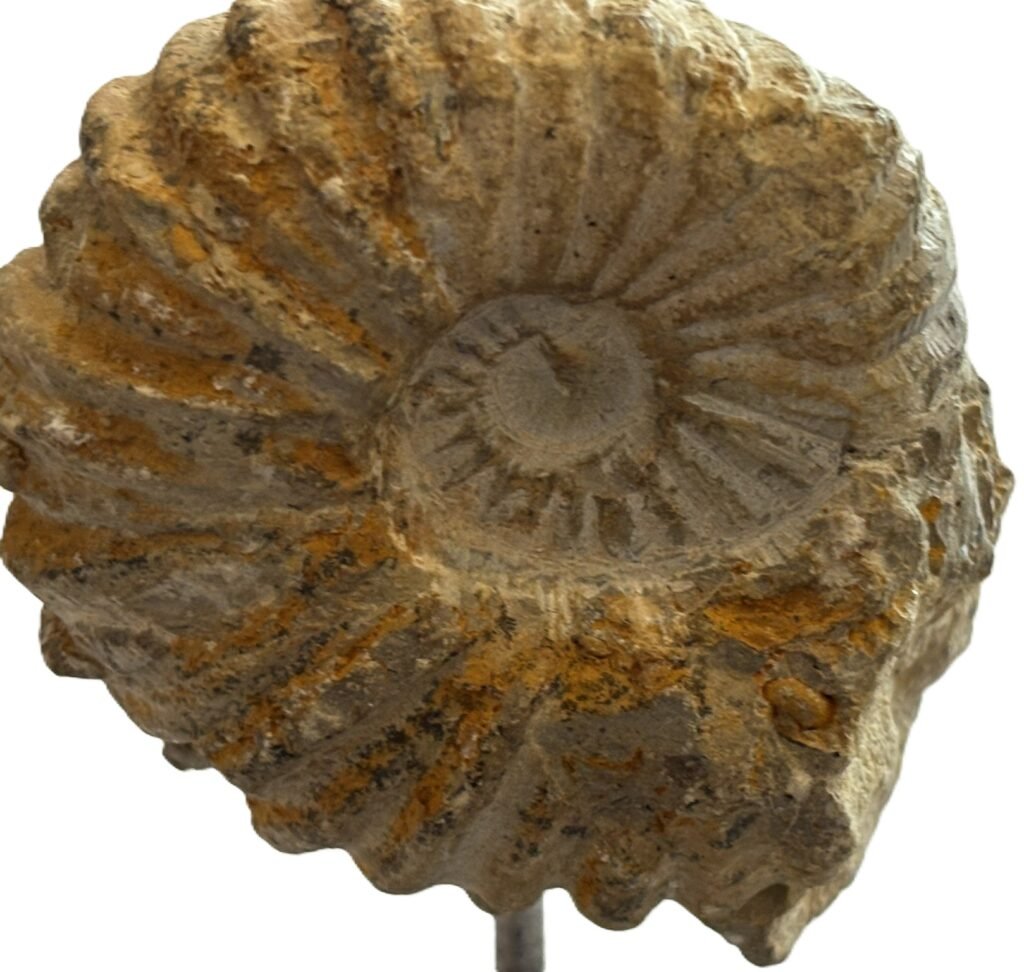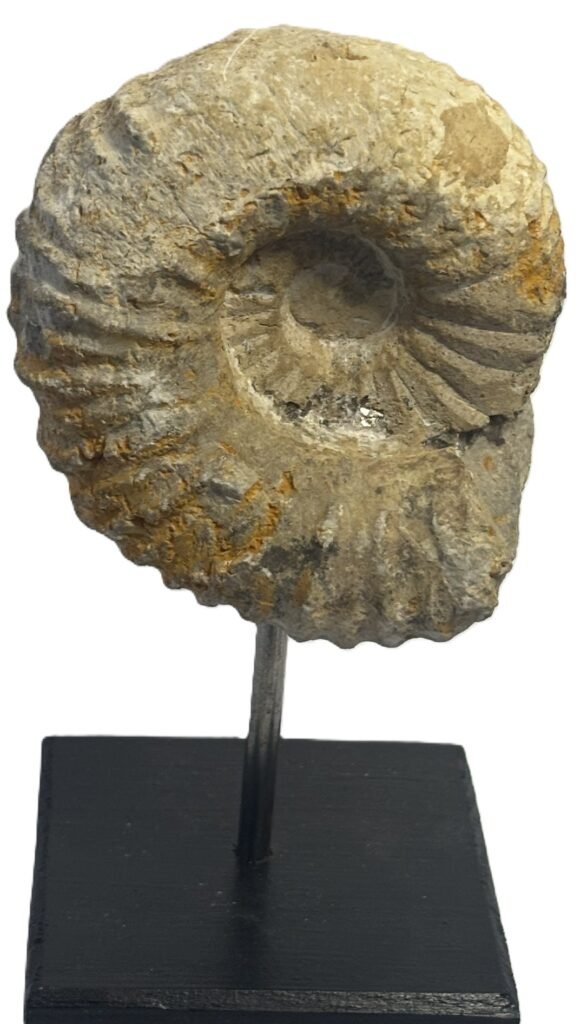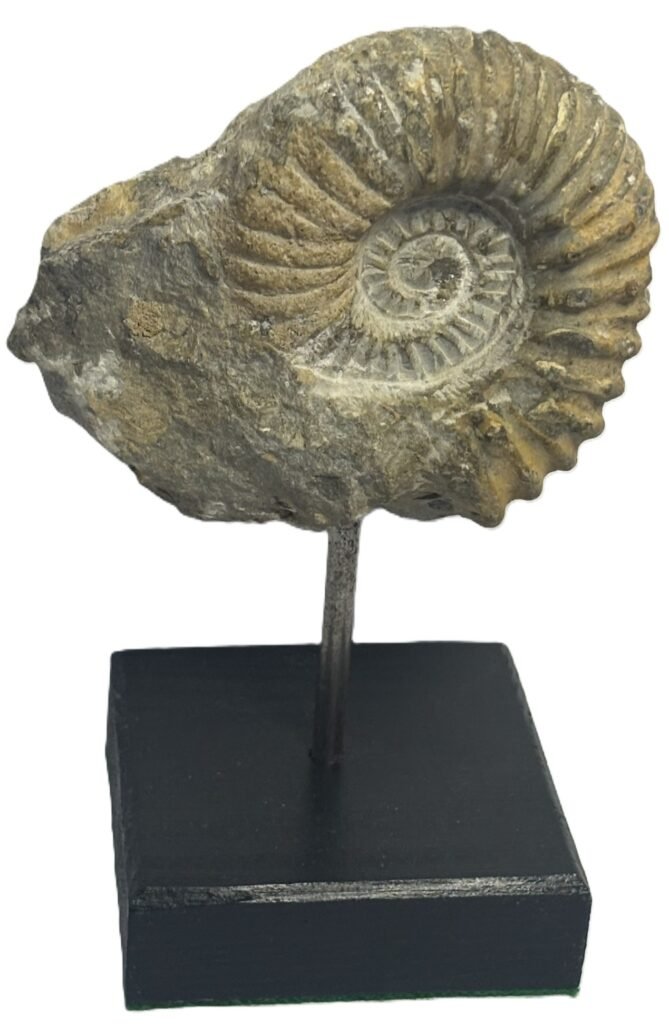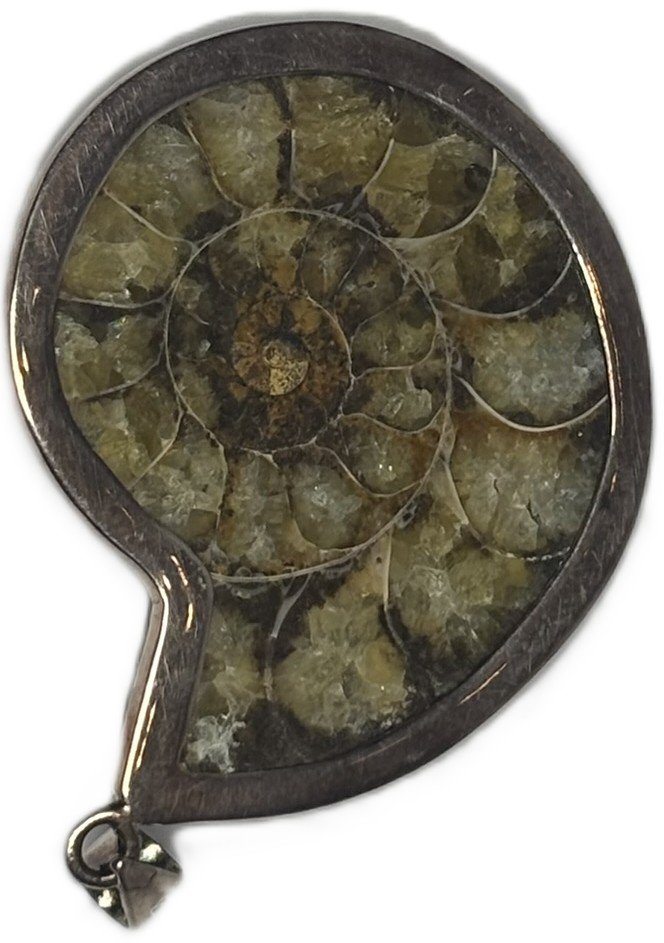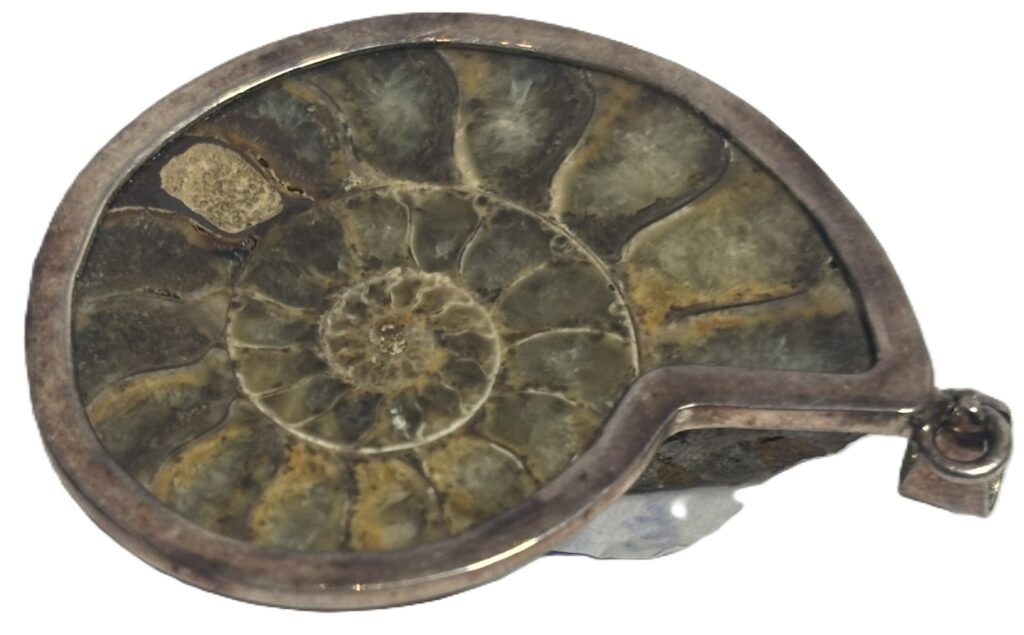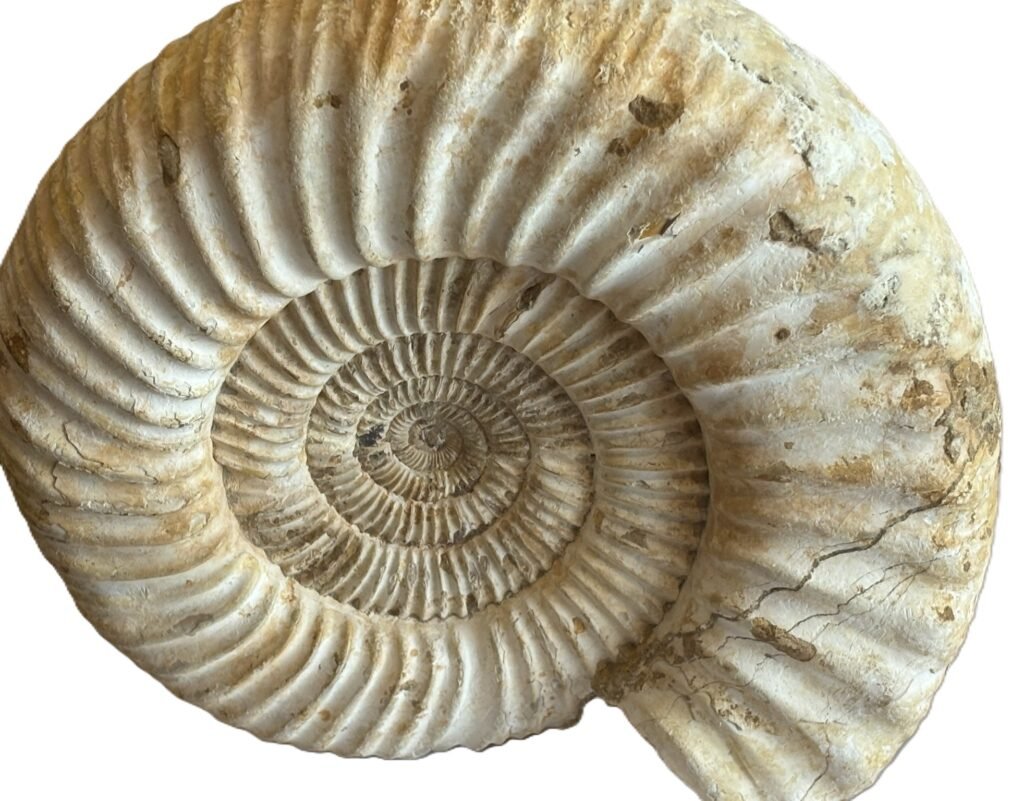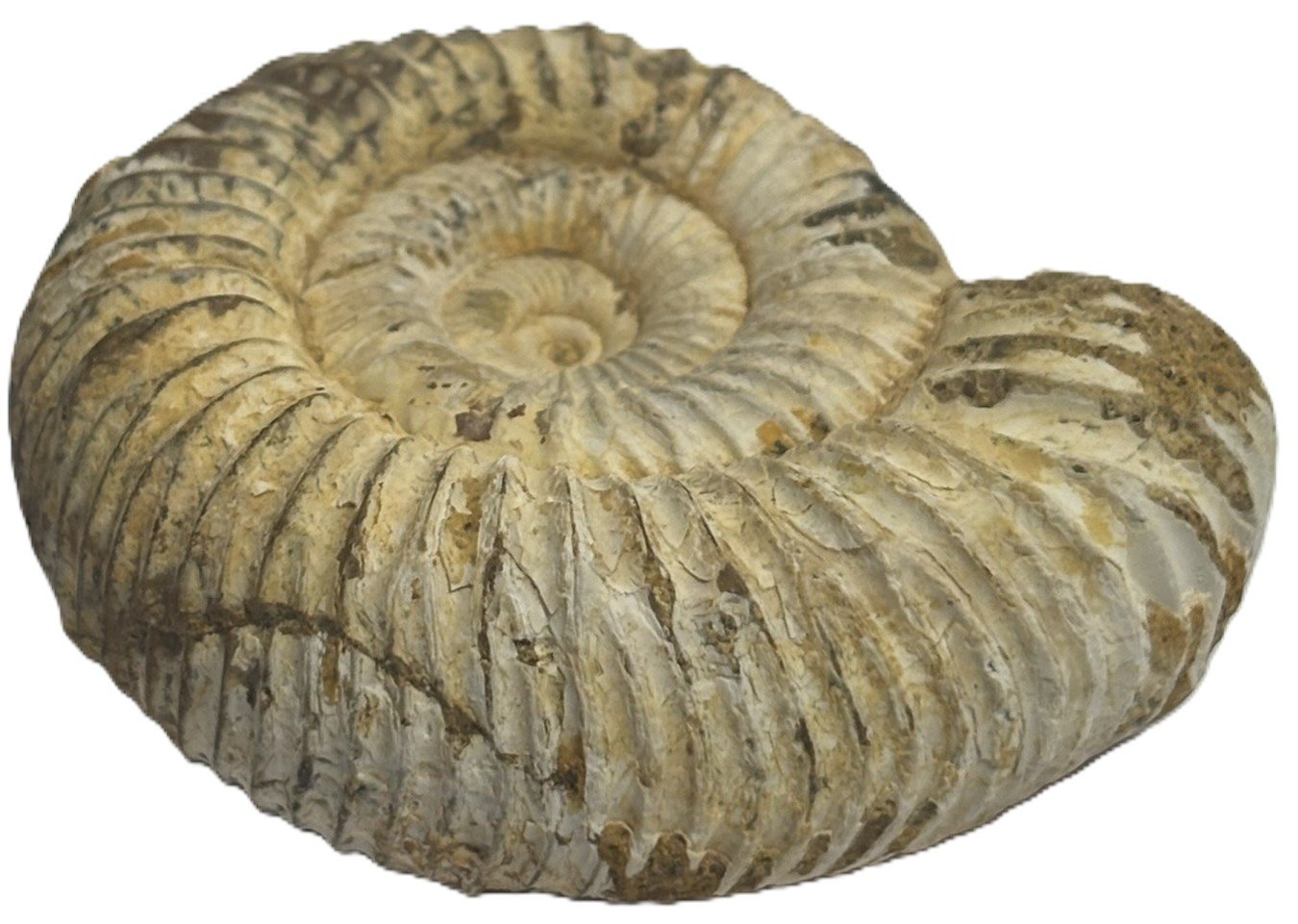
Step back millions of years, long before humans walked the Earth, to a time when vast, primordial oceans covered the globe. Swimming through these ancient waters was one of nature’s most successful and visually captivating creatures: the Ammonite. Today, ammonites are among the most recognisable and sought-after fossils in the world. Their iconic spiral shells serve as a stunning link to Earth’s ancient past, making them favourites for fossil collectors, interior designers, and jewellery makers alike.
What Was an Ammonite?
Ammonites were marine molluscs that belonged to the class Cephalopoda. This means they are ancient relatives of today’s octopuses, squids, and cuttlefish.
Unlike most modern cephalopods, ammonites lived inside a hard, coiled shell. They first appeared in the fossil record around 416 million years ago and thrived across the globe until they were wiped out by the same catastrophic mass extinction event that claimed the dinosaurs, approximately 66 million years ago.
The Magic of the Shell: Form and Colour
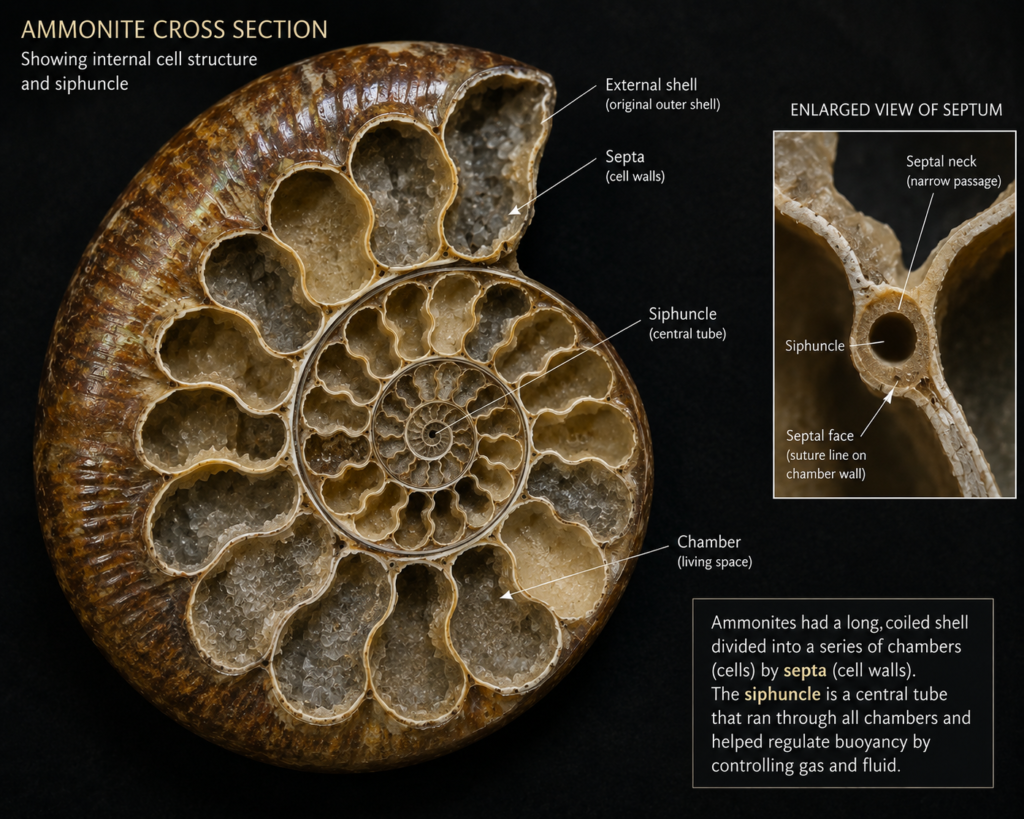
The ammonite shell is a masterpiece of natural engineering. As the creature grew, it lived only in the outermost, largest chamber of its shell, sealing off the older, smaller chambers behind it.
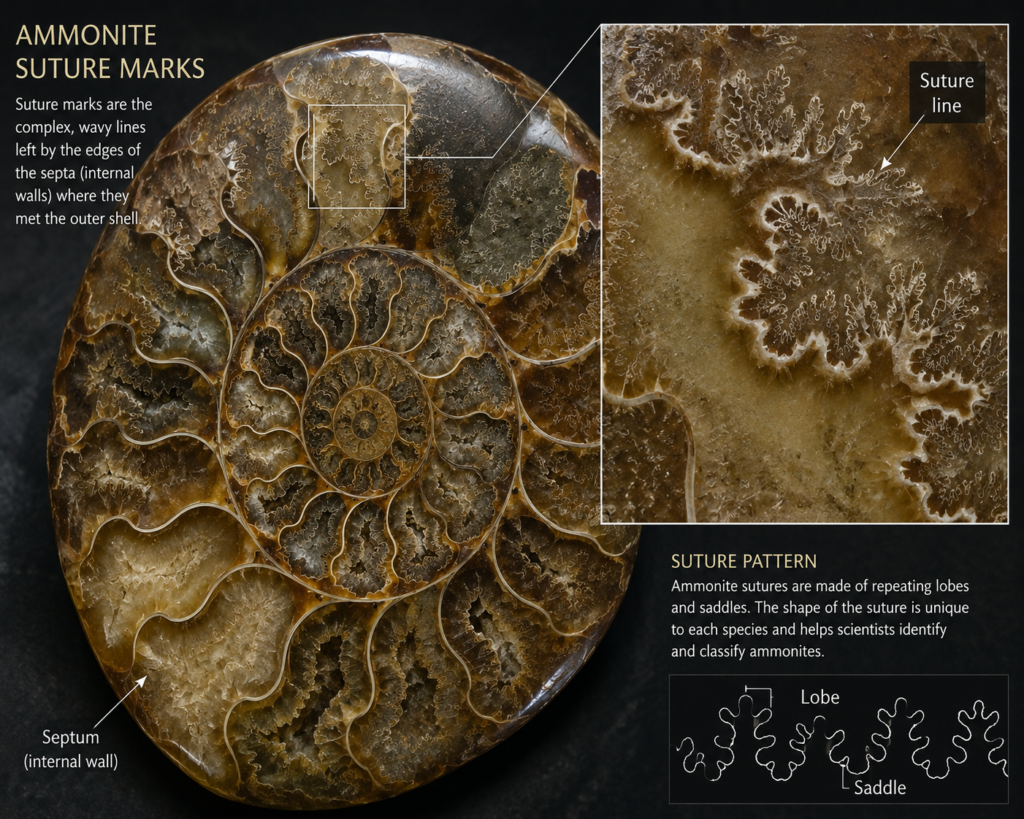
Suture Patterns
The walls separating these inner chambers met the outer shell in complex, wavy lines known as sutures. As ammonite species evolved over millions of years, these suture patterns became incredibly intricate, looking almost like delicate, frozen fern leaves under the surface of the polished stone.
Iridescence & Ammonite
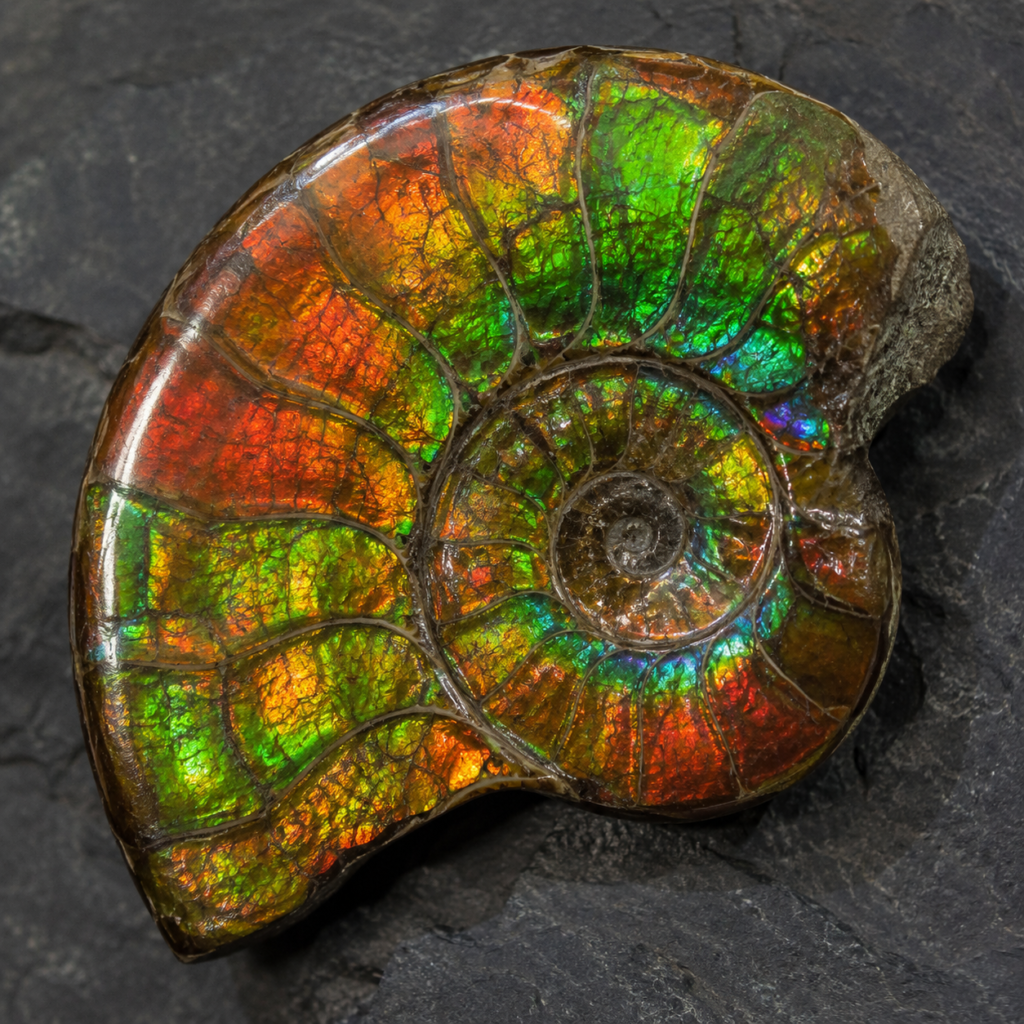
While many ammonites fossilise into a beautifully detailed, stone-like grey or brown finish, a rare few undergo a breathtaking transformation. Under unique geological conditions, the original nacre (mother-of-pearl) of the shell is preserved, mineralising into an iridescent, fiery gemstone quality. In North America, this rare, colourful material is known commercially as Ammolite, displaying brilliant flashes of green, red, orange, and blue.
Ammonites were not always curved they were small, straight shelled creature, known as Bacrites. They quickly evolved into a variety of shapes and sizes including some shaped like hairpins or paper clips. Ammonites quickly assumed a strong protective outer shell to shield their soft interior from damage and predators. Some genera of ammonites had shells that were coiled in more bizarre ways than the usual spiral. These are known as heteromorphs, from the Greek heteros meaning ‘different’ and morphe meaning ‘form or shape’. One of the most unusual is the Nipponites mirabilis which is U shaped like a “slinky”.
Ammonite Facts At A Glance
| Feature | Details |
|---|---|
| Geological Era | Devonian period to the Cretaceous period (~416 to 66 million years ago) |
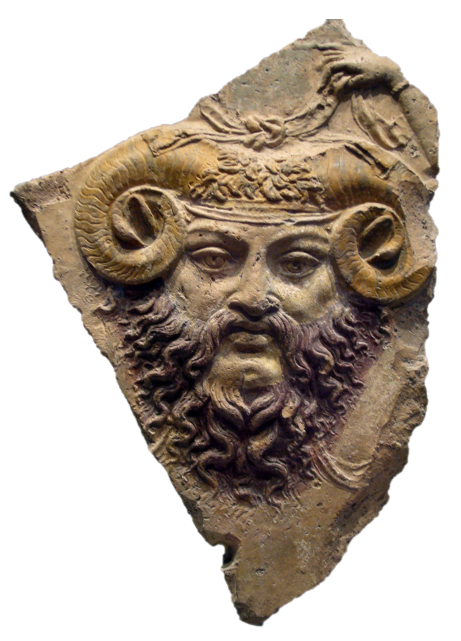
| Name Origin | Named after the Egyptian god Ammon, who was depicted with coiled ram’s horns |
| Size Range | From less than 2 centimetres to over 2 metres in diameter |
| Famous UK Hotspot | The Jurassic Coast (Dorset and East Devon) |
| Key Identification | Coiled, chambered shell |
Modern Descendants
The closest living lookalike to the ammonite is the Nautilus. Both have a similar structure with a solid shell comprised of many chambers in a spial. The body of the ammonite was contained within the large final, open-ended section called the living or head chamber. As they grew, they built new chambers onto it. They would move their entire body into a new chamber and seal off their old and too small living space with walls known as septa.
Growth
ew chambers were added at a rate of one every four weeks, roughly 13 each year. Using this as a guide we can tell approximately how old an ammonite is by looking inside its shell. A shell containing 26 chambers could be assumed to have housed the creature for two years. Ammonites kept their original shell for all their life.
The chambered interior of the shell is referred to as the phragmocone. This contained gasses which enabled the ammonite to regulate its buoyancy allowing it to rise and fall in the sea much like a submarine.
Each complete 360° coil is called a whorl. Except for the innermost whorl, the shell is made up of three layers. The thin innermost and outermost layers are composed of prisms of aragonite (a form of calcium carbonate). The thicker middle layer is nacreous (mother-of-pearl), formed of tiny tabular crystals of aragonite
Some ammonite fossils bear intricate patterned details on their outer surface called Sutures. These patterns mark where the walls of the chambers, Septum, meet the outer wall of the ammonite shell. Suture patterns are extremely useful for distinguishing distinct species of ammonite. It is estimated that over 10,000 to 20,000 species of ammonite have been discovered.
Ammonites vary enormously in size the Nannocardioceras is small with complete adults rarely more than 20 mm in diameter. However, a part fossil of a Parapuzosia seppenradensis (Late Cretaceous) was discovered which has a diameter of 1.95 m in. If complete, it would have had a diameter of about 2.55 m. .Evidence suggests that they rapidly gained in size, especially females which grew 400% bigger than the males.
Diet
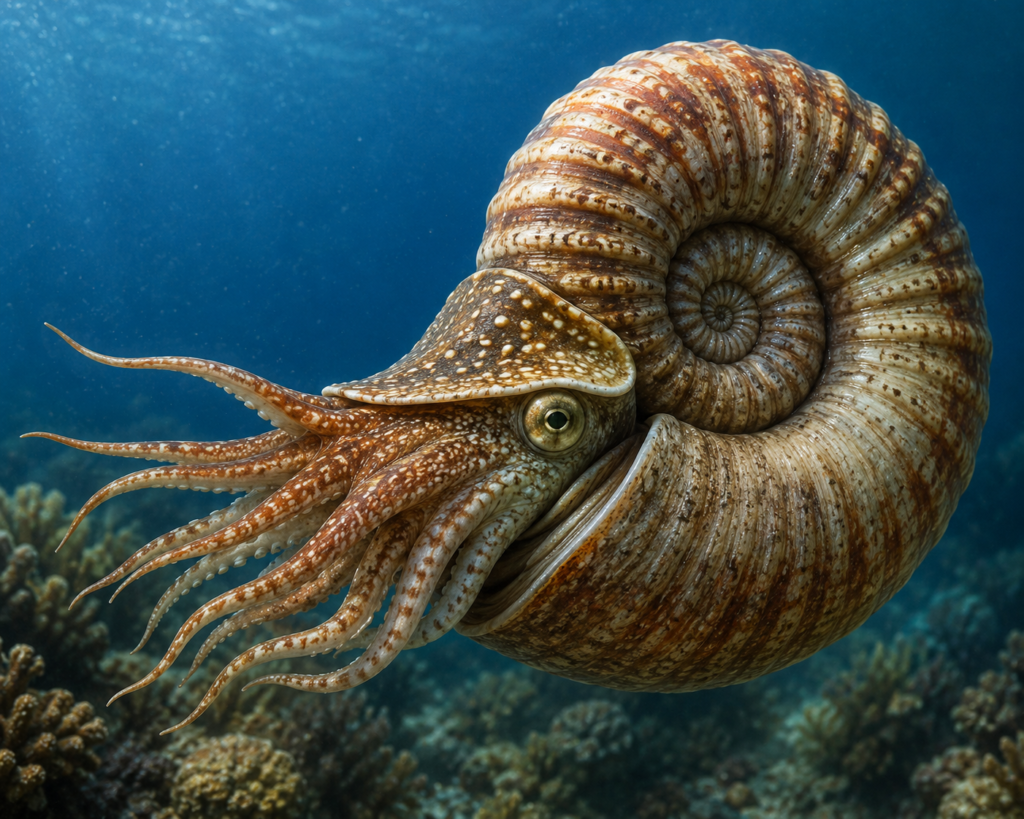
Whilst they look quite harmless, ammonites were predators feeding eating molluscs, fish and even other cephalopods. They stalked their prey, then once close enough rapidly extending their eight arms to grasp their prey. Ammonites have powerful jaws located at the base of the tentacles between the eyes these could crack other creature’s shells before eating the meat inside. Thety may have supplemented their diet with small plankton or vegetation growing on the sea floor. Ammonites were also prey, there is evidence of mosasaurs and ichthyosaurs having eaten them.
Folklore
Early historians and naturalists compared the coiled shape of the ammonite to that of a snake and ammonites became widely known as snakestones. To cash in on the legend, many collectors and dealers in fossils frequently carved heads on ammonites. The coat-of-arms of Whitby in North Yorkshire, includes three ‘snakestones.’
Ammonites were thought to be a protection against serpents and a cure for baldness and infertility.
Ammonites Frequently Asked Questions (FAQs)
Where can you find ammonite fossils in the UK?
The UK is home to some of the world’s finest fossil-hunting locations. The most famous is the Jurassic Coast in Dorset and East Devon—specifically around Lyme Regis and Charmouth. You can also find excellent specimens along the Yorkshire coast, around Whitby and Robin Hood’s Bay.
How old are ammonite fossils?
Because ammonites existed for hundreds of millions of years, their age varies depending on the rock layer they are found in. Generally, any ammonite fossil you find or purchase will be between 66 million and 400 million years old. Because they evolved rapidly and distinct species appeared in specific timeframes, geologists use them as “index fossils” to determine the exact age of surrounding rock layers.
What did ammonites eat, and how did they move?
Ammonites were active predators. They used tentacles extending from their shells to catch prey like small fish, crustaceans, and other molluscs, crushing them with a sharp, beak-like jaw. To move, they used a form of jet propulsion, expelling water out of a siphon tube to push themselves backwards through the sea.
Is ammonite jewellery durable enough for daily wear?
Natural fossilised ammonite sits at around a 3.5 to 4 on the Mohs hardness scale, making it relatively soft. While it is perfect for pendants, brooches, and earrings, you should take extra care if wearing it as a ring. Gem-quality iridescent ammolite jewellery is often capped with a clear layer of quartz or spinel to protect it from scratches.
Why do some ammonites look cut in half?
You will often see ammonite fossils cleanly sliced down the middle and polished. This is done deliberately to reveal the beautiful inner architecture of the stone. Cutting them open exposes the internal chambers, which are frequently filled with glittering calcite crystals, rich brown sediment, or intricate suture patterns that wouldn’t be visible from the outside.
These are my personally selected and curated Ammonite products
Ammonites to buy now

Ammonite fossil 11
£15.00
Ammonite fossil on stand 2
£40.00
Ammonite fossil on stand 2
£350.00
Ammonite fossil on stand 3
£40.00
Ammonite fossil on stand 4
£40.00
Ammonite fossil on stand 5
£40.00
Ammonite fossil Pendant A
£30.00
Ammonite fossil Pendant B
£20.00
Ammonite Specimen 1
£300.00