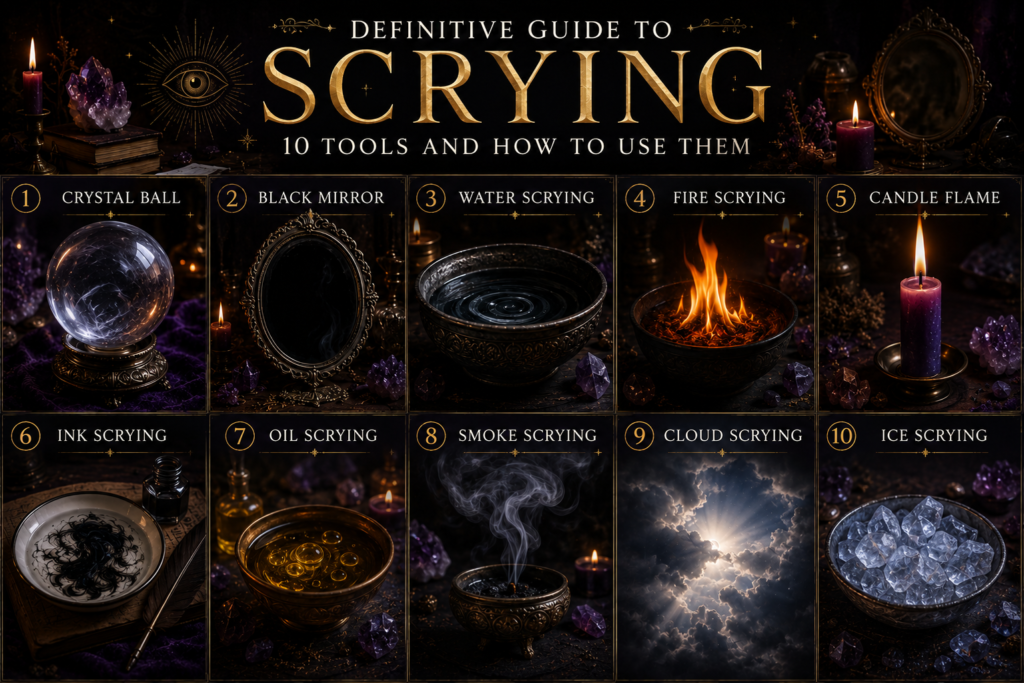
Popular culture often portrays scrying as a mysterious fortune-teller bent over a glowing glass orb. However, serious practitioners utilise a wide variety of elemental mediums. From static reflective surfaces like obsidian mirrors to fluid, dancing flames or shifting clouds. Each scrying tool carries a distinct energetic resonance which is explored in this definitive guide to scrying.
Scrying is one of humanity’s oldest forms of divination, dating back thousands of years across ancient Egypt, Mesopotamia, Greece, and medieval Europe. The name is derived from the Old English word descry, meaning “to perceive” or “to reveal”. Scrying is the practice of gazing into a reflective, translucent or focal point to enter a light trance state. In this altered state of awareness, the analytical mind quiets, allowing intuitive insights, symbolic imagery, and subconscious messages to surface.
Whether you are seeking spiritual clarity, creative inspiration or deeper self-reflection, understanding the different types of scrying tools helps you choose the tool best aligned with your intuitive strengths.
1. Crystal Ball Scrying (Crystallomancy)
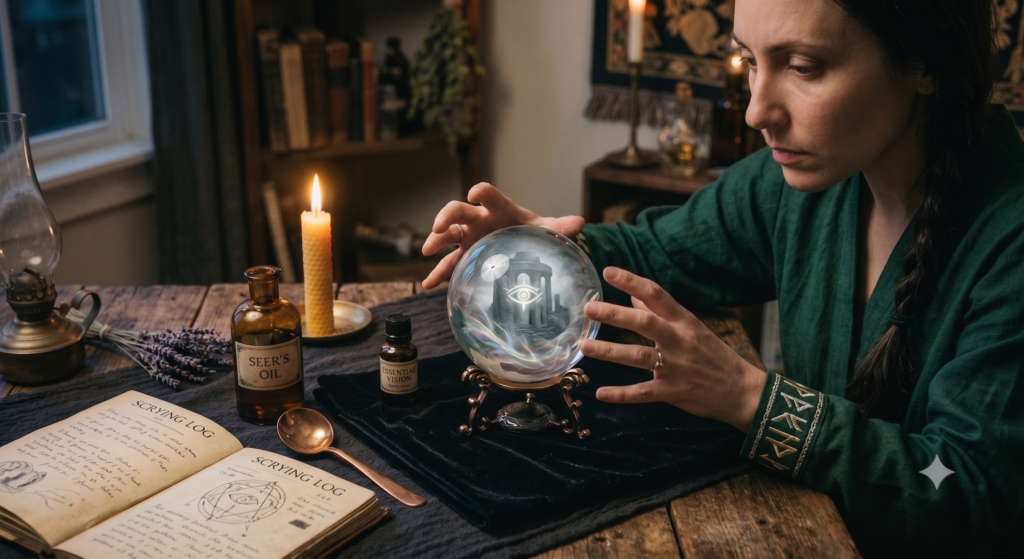
The process of scrying often involves the use of crystals, especially crystal balls, in an attempt to predict the future or otherwise divine hidden information. Crystal ball scrying is commonly used to seek supernatural guidance while making difficult decisions in one’s life (e.g., matters of love or finances).
When the technique of scrying is used with crystals (clear quartz, Amethyst) or any transparent body, it is known as crystallomancy or crystal gazing. Typically, the smooth, polished sphere acts as a visual lens, allowing light and internal inclusions to catch your focus. These act as a visual lens allowing light and internal inclusions to catch your focus. Clear quartz amplifies mental clarity, while dark stones like obsidian offer grounding during deep intuitive work.
How to Use
Place the sphere on a dark stand or velvet cloth in a dim room illuminated by gentle candlelight. Soften your gaze, looking slightly into the center of the orb rather than at its surface. Allow your vision to blur naturally until a fine mist or milky haze appears within the stone before images emerge.
Benefits
Excellent for long-term concentration, structured symbolic visions, and honing deep meditative focus.
2. Black Mirror Scrying (Catoptromancy)
Historically associated with John Dee in the 16th century who famously utilised a polished obsidian mirror to channel alleged angelic messages. This was a polished disc made of natural black obsidian or glass painted matte black on the reverse side. Unlike traditional silver mirrors, black mirrors absorb light rather than reflecting sharp, distracting images.

How to Use
Prop the mirror up on an altar or table. Set a candle behind or to the side of the mirror so the flame isn’t directly visible in the reflection. Stare into the dark void of the surface, keeping your focus soft until your own reflection appears to fade, revealing shifting shadows or symbolic forms.
Benefits
Exceptional for shadow work, revealing hidden subconscious truths, and accessing deep spiritual insights without light reflections distracting the eye.
3. Water Scrying (Hydromancy)
Water scrying (or hydromancy) is an ancient divination practice where a person gazes into a pool, natural body of water, or a filled bowl to enter a quiet, trance-like state and receive intuitive visions, symbols, or mental messages
Hydromancy was practised in ancient Egypt, Greece, Rome and the Celtic world using sacred springs, fountains, The 16th-century astrologer Nostradamus famous for his predictions of future events, reportedly used a bowl of water to induce his visions.
How to Use
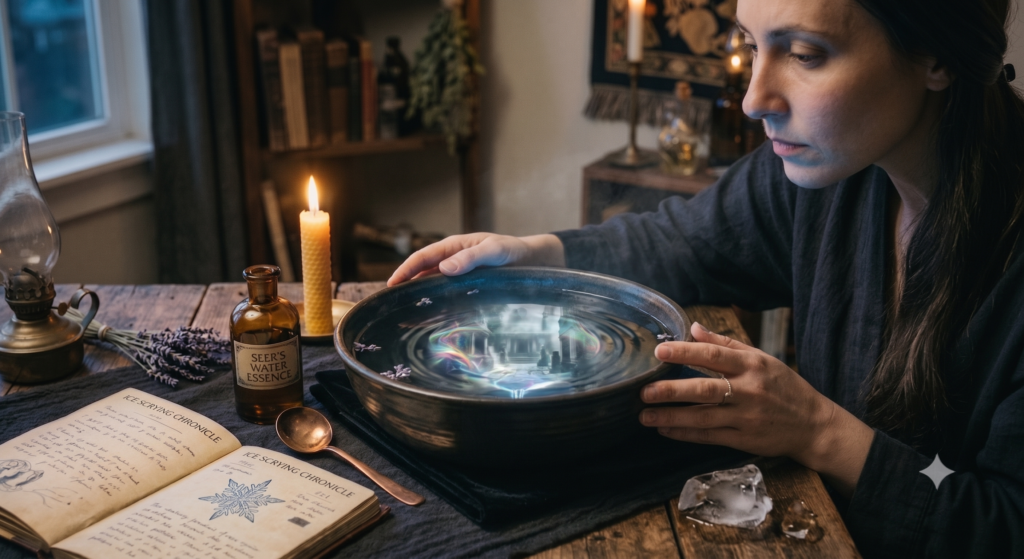
Fill he bowl and allow the water to settle completely until the surface becomes as still as glass. Place a single candle near the rim to catch subtle ripples. The practitioner relaxes, centres their energy, and maintains a soft, unfocused gaze across or slightly above the water’s surface rather than staring hard.
Some practitioners drop small stones or herbs into the water to create gentle ripple patterns. : Rather than physical movies playing in the water, visions often arrive as spontaneous thoughts, symbolic shapes, or impressions in the mind’s eye
Benefits
Gentle and highly accessible for beginners. The natural association between water and the intuitive realm makes this medium ideal for emotional clarity and dream analysis.
4. Fire Scrying (Pyromancy)
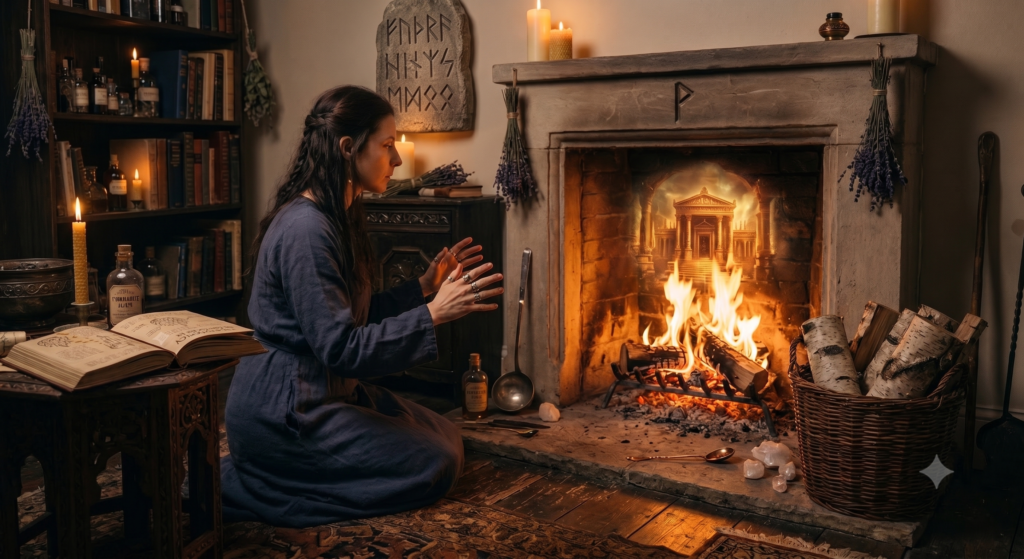
Fire scrying is a form of pyromancy,. an ancient divination practice involving gazing into flames, smoke, or embers, It relies on the raw, primal energy of open fire to stimulate dramatic intuitive visual impressions.
How to Use
Sit at a safe distance from a steady, burning fire in a dark setting. Fix your eyes on the burning coals or the dancing heart of the flames. Let the flickering rhythm lower your brainwaves into a trance while interpreting the shapes, sparks, and flame shifts.
Benefits
Highly energetic and transformative. Excellent for burning away mental blockages, seeking quick answers, or engaging in active, dynamic divination.
5. Candle Flame Scrying (Ceromancy & Pyromancy)
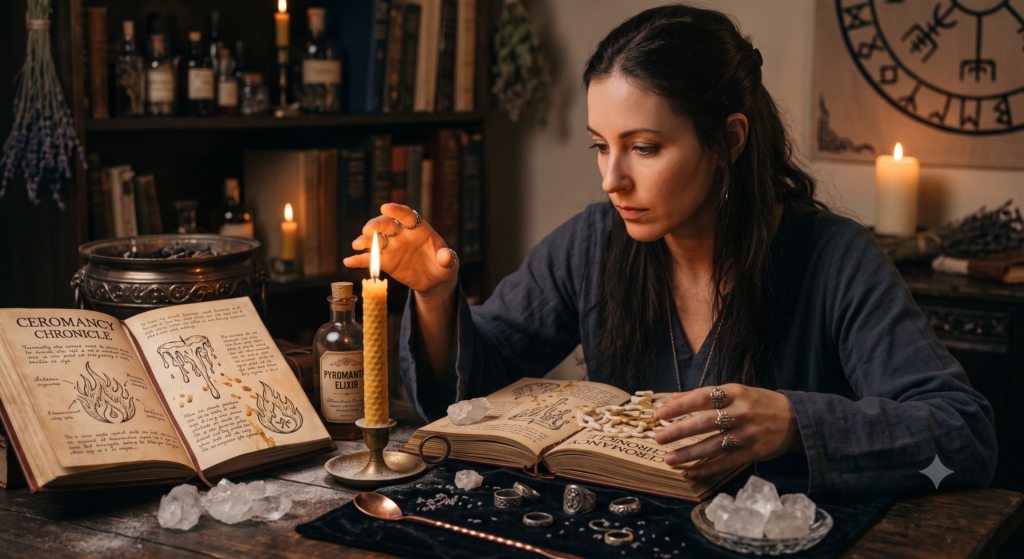
Candle scrying is an ancient divination practice that involves gazing into a flickering candle flame to clear the mind, enter a light trance, and receive intuitive visions or spiritual messages. Practitioners stare gently at the flame without straining or blinking excessively, allowing the eyes to defocus. The steady flicker helps quiet our normal, busy thoughts and opens an inner doorway to the subconscious or spiritual realms.
Utilising a candle is often a more appropriate and convenient variant of fire scrying. Candle scrying is ideal for those without access to an open fire and is an easy, portable way to work with the fire element indoors. Especially as it only requires a single tall candle, traditionally white or black, positioned at eye level in a draft-free room.
How to Use
Light the wick and sit comfortably a few feet away. Focus entirely on the tip of the flame or the glowing pool of melted wax beneath it. Observe changes in flame height, dancing movements, or flickering patterns without over-analysing them in the moment.
Benefits
Simple, low-cost, and requires minimal setup. Great for brief daily meditations or quick clarity checks.
6. Ink Scrying
Ink scrying is an ancient form of divination where a practitioner gazes into a dark, reflective pool of ink, oil or black paste to see visions, receive prophecies, or communicate with spirits.
Originating from Mesopotamia and ancient Egypt, Seers used dark liquids, ink-filled vessels, or oil mixed with soot smeared on a person’s hand or thumbnail (referred to historically in Babylonian texts like the “Princess of the Hand” or “Princess of the Thumb”) to conjure visions. This was practised during temple initiations, healing, and locating lost items or hidden truths by inducing a trance-like state through soft focus and dim candlelight.
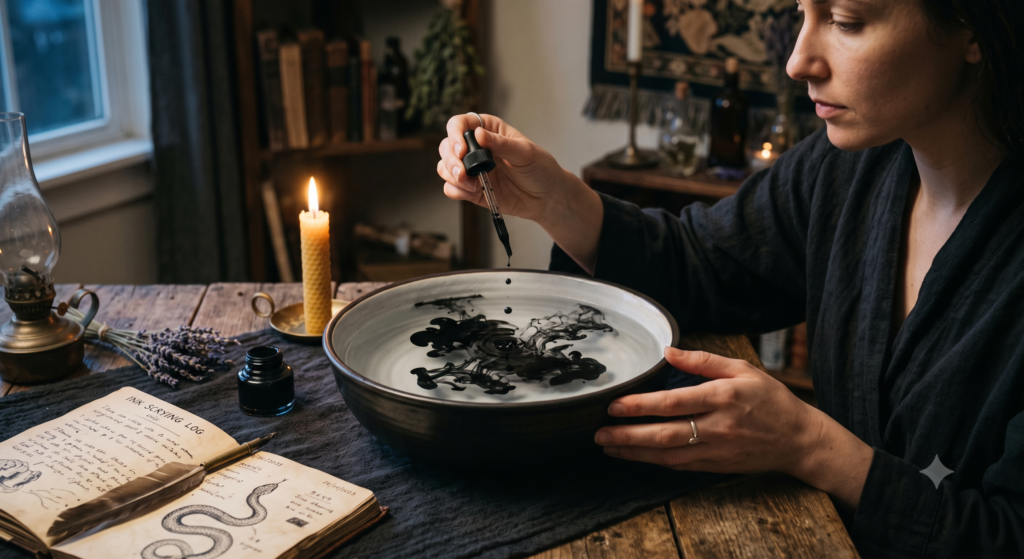
Today the practice is mainly performed by using a bowl of water combined with dark calligraphic ink, India ink or natural fluid dropped directly onto the surface.
How to Use
Begin with a bowl of clear water. Gently drop 3–5 drops of dark ink into the centre. Watch the ink blossom, bloom, and disperse across the surface. Interpret the swirling clouds and silhouettes formed as the pigment moves through the liquid medium.
Benefits
Outstanding for abstract thinkers, artistic minds, and psychological association similar to an interactive, fluid Rorschach test.
7. Oil Scrying (Lecanomancy)
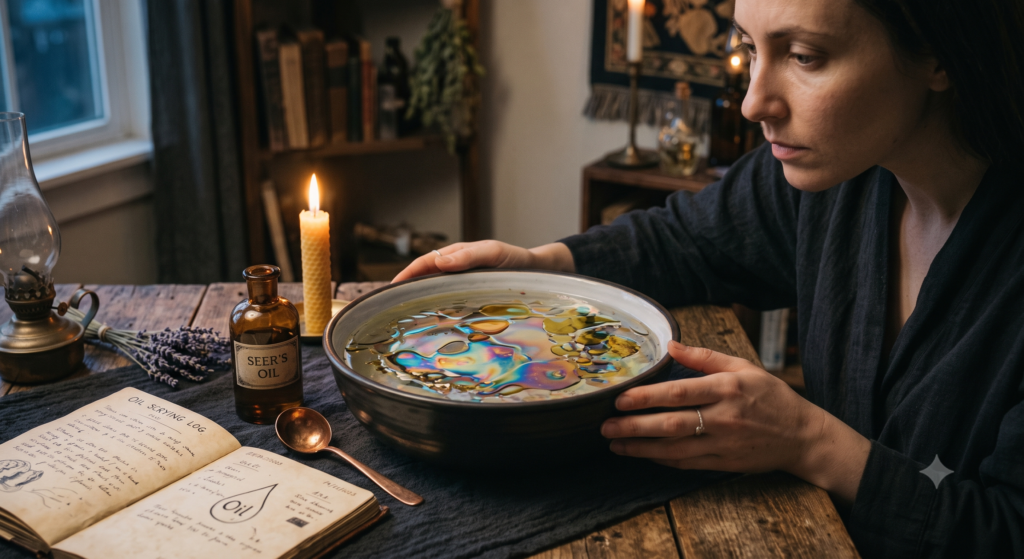
Oil scrying (also known as elaomancy or lecanomancy) is an ancient form of divination where a person gazes into oil to see visions, find answers, or read spiritual messages. Practitioners typically use methods like floating shimmering oil drops on water, coating the inside of a dark bowl or cup with oil, or anointing a reflective surface to watch how the light, shapes, and movements shift
How to Use:
Fill a dark bowl with water and carefully drop small amounts of oil onto the surface. Angle a soft light or candle to reflect off the iridescent film created by the oil slicks. Focus on the swirling patterns, rainbow glimmers, and shapes formed as the oil moves.
Benefits
Enhances visual contrast and provides shimmering, dynamic textures that easily hook the subconscious mind.
8. Smoke Scrying (Capnomancy)
Smoke scrying, known historically as capnomancy or libanomancy, is an ancient divination practice dating back to ancient Babylonia around 2000 BCE. It involves reading patterns, shapes and the direction of rising smoke from burning materials like cedar, herbs, or incense to predict future events or interpret divine will.
Priests performed early ritualistic readings using burning cedar branches or shavings to forecast weather and military outcomes. In Ancient Greece, Oracles and priests observed smoke during sacred ceremonies, sometimes combining it with pyromancy (fire divination) or burning animal sacrifices to read the resulting plumes.
In the Celtic world, Druids practised forms of nature based divination, utilising sacred woods like oak and mistletoe to watch how vapours drifted upward into the open air.
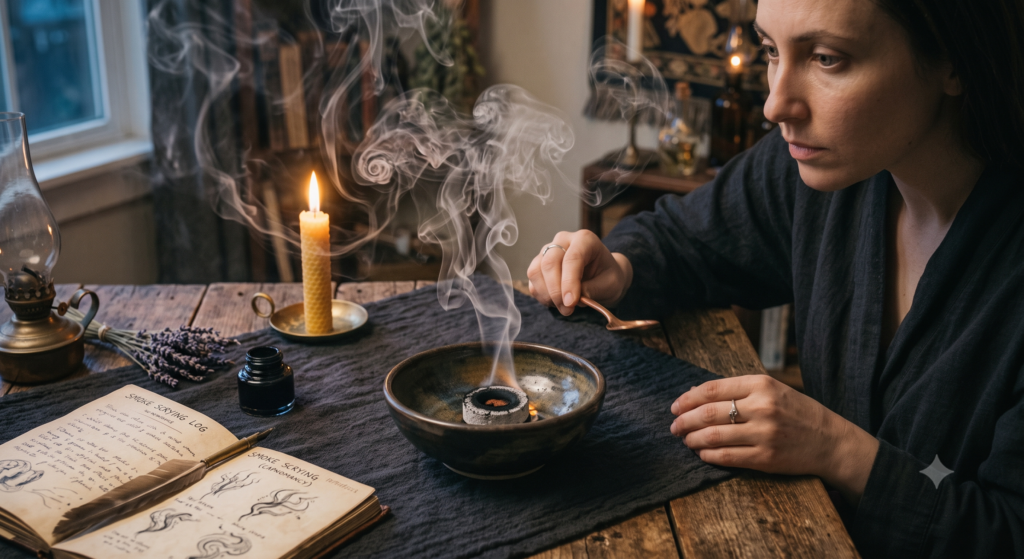
Today’s practitioners have a wide selection of products to choose between natural incense resins (frankincense, copal), dried herbs (sage, mugwort) or wood bundle sticks.
How to Use
Light your chosen herb or incense in a completely wind-still room. Watch the smoke rise against a dark backdrop or dark wall. Allow your eyes to follow the curling plumes, noting where the smoke thickens, splits, or forms recognisable silhouettes.
Benefits
Deeply atmospheric and aromatic. Combines herbal aromatherapy with visual trance work, helping ground the body while elevating the mind.
9. Cloud Scrying (Aeromancy)
Cloud scrying, known formally as nephomancy or a branch of aeromancy is an ancient divination practice that involves reading shapes, patterns and movements in the sky to divine the future, interpret omens, or seek spiritual insight.
There are two specific types of cloud scrying
- Aeromantia: The broad ancient Greek term for divining through the air and atmospheric phenomena, practised by specialists called aeromantis.
- Nephomancy: Specifically divination using cloud shapes, named after the cloud nymph Nephele from Greek mythology.
- Néladóracht: A term sometimes linked in modern lore to medieval Irish traditions of cloud interpretation, though textual evidence places its appearance around the 12th century.
Historical Omens and Beliefs
Medieval church figures viewed cloud scrying with suspicion and scholars like Johannes Hartlieb described it as one of the seven “forbidden arts”. However, chroniclers across the centuries have recorded political or religious signs seen in the sky e.g. Emperor Constantine’s reported vision of a cross in the light of the clouds before battle in 312 CE.
Over time, the practice has moved from being a literal method of foretelling events or predicting weather, to a meditative tool for intuition, personal reflection and creative thought.
How to Use:
Lie comfortably outdoors on a blanket with a clear view of the sky. Recline your posture, relax your jaw, and watch the clouds shift across the blue backdrop. Notice recurring shapes, animals, or symbols that catch your attention first.
Benefits
Perfect for outdoor practice and daylight sessions. Requires no specialised tools and connects your practice directly with nature.
10. Ice Scrying (Cryomancy)
Ice scrying is a rare, localised form of scrying where the practitioner reads patterns, frost formations, trapped light in ice, snow or frozen water. While general water scrying (hydromancy) dates back thousands of years to ancient Egypt, Greece and Celtic traditions, gazing specifically into ice belongs to northern European and modern esoteric folklore where winter elements dictate alternate divination methods.
in these cold climates, Indigenous and folk lore traditions utilised natural frost, frozen puddles and icicles as winter equivalents. These cold surfaces were believed to lock images in place, helping seers freeze time, perceive hidden truths or interpret seasonal omens regarding the coming thaw or harvest.
How to Use
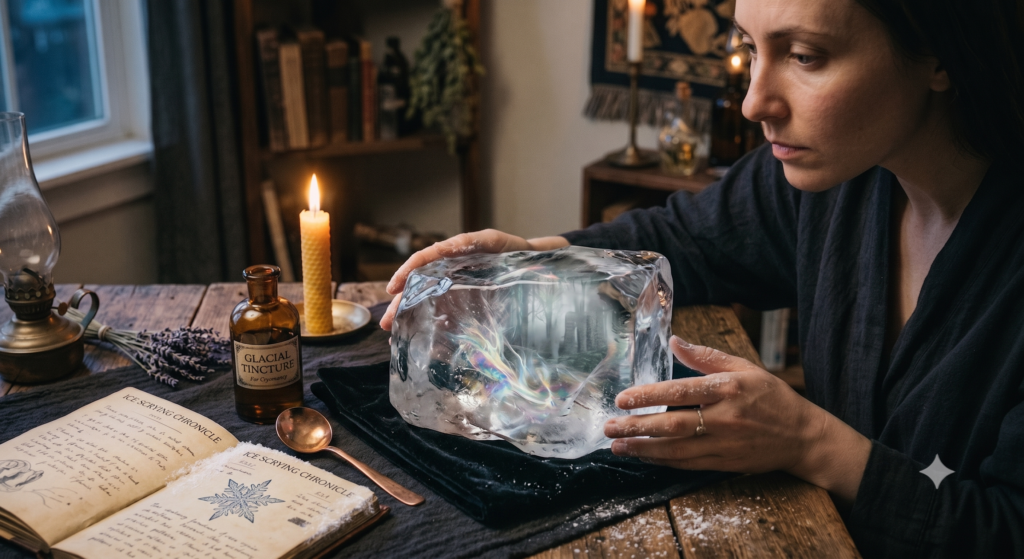
Place a dark cloth beneath a clear block or sheet of ice. Shine a dim candle or soft light through the side of the ice. Focus on the internal fractures, trapped air bubbles, and frost webs trapped within the frozen structure.
Benefits
Offers a crisp, grounding energy. The intricate internal fractures catch light beautifully, providing rich detail for symbolic interpretation.
Cryomancy uses the frozen crystalline patterns of ice to capture light and reveal complex visual structures.Quick Tool Comparison
| Scrying Tool | Element | Skill Level | Best Environment |
| Crystal Ball | Earth / Light | Intermediate | Dark room with single candle |
| Black Mirror | Earth / Void | Intermediate to Advanced | Low light, draft-free room |
| Water | Water | Beginner | Quiet room or calm outdoors |
| Fire | Fire | Intermediate | Outdoor fire pit or fireplace |
| Candle Flame | Fire | Beginner | Draft-free indoors |
| Ink | Water / Earth | Beginner | Well-lit desk or altar |
| Oil | Water / Fire | Intermediate | Angled warm candlelight |
| Smoke | Air / Fire | Beginner to Intermediate | Dark background, no wind |
| Cloud | Air | Absolute Beginner | Outdoors on a partly cloudy day |
| Ice | Water / Earth | Intermediate | Cold or winter environment |
Frequently Asked Questions
What is the easiest scrying tool for beginners?
Water scrying and candle flame scrying are widely considered the best starting points for beginners. Both utilise easily accessible household items, require minimal physical preparation, and offer clean, relaxing visual focal points.
Do I need special psychic abilities to scry?
No. Scrying is a natural skill that relies on pareidolia—the brain’s tendency to find meaningful patterns in visual noise—and deep focus. Like meditation or muscle building, anyone can develop their scrying ability through regular practice, quiet reflection, and patience.
How long should a typical scrying session last?
For beginners, sessions should ideally last between 10 to 15 minutes. Extended scrying can strain the eyes or lead to mental fatigue. As you become more comfortable entering a trance state, you can extend your sessions to 20 or 30 minutes.
Should I scry in total darkness or light?
Dim, ambient lighting is best. Complete darkness prevents your eyes from catching subtle variations in tone, while bright light creates harsh reflections and glare. A single candle placed just outside your direct line of sight typically provides the ideal balance.
Is scrying considered fortune telling?
Not necessarily. While some practitioners use scrying to seek guidance about future possibilities, many view it as a method of self-reflection, meditation and spiritual development. Most modern practitioners believe scrying reveals potential outcomes rather than fixed destinies.
Does scrying really work?
Whether scrying works depends largely on your beliefs and expectations. Many people report receiving meaningful symbols, intuitive insights and personal clarity. From a psychological perspective, the relaxed, meditative state may help the subconscious mind communicate through imagery and symbolism.
Is there any scientific evidence for scrying?
There is no scientific evidence demonstrating that scrying predicts future events or communicates with supernatural entities. Researchers generally explain the experiences through psychological phenomena such as pattern recognition (pareidolia), imagination, focused attention and altered states of consciousness.
What is the easiest type of scrying for beginners?
beginners find these methods easiest:
- Crystal ball scrying
- Black mirror scrying
- Candle flame scrying
- Water scrying
These methods require very little equipment and naturally encourage relaxed focus.
Which scrying method is considered the most effective?
There is no universally accepted “best” method. Different people respond to different mediums.
Some practitioners find:
- Crystal balls produce vivid imagery.
- Black mirrors encourage deep introspection.
- Water creates fluid symbolic visions.
- Fire inspires powerful emotional insights.
- Smoke encourages abstract interpretation.
Personal preference usually matter
What should I look for while scrying?
- Colours
- Faces
- Animals
- Landscapes
- Symbols
- Geometric patterns
- Moving images
- Emotional sensations
- Memories
- Sudden intuitive thoughts
- Words or phrases
- Changes in light or shadow
- Not every session produces dramatic visions.
Why don’t I see anything?
This is completely normal. Many beginners simply experience relaxation during their first few attempts.
Common reasons include:
- Trying too hard
- Poor concentration
- Bright lighting
- Mental distractions
- Fatigue
- Unrealistic expectations
Like meditation, scrying usually improves with regular practice.
Should I stare directly at the object?
No. Instead, soften your gaze and allow your eyes to relax. Most practitioners recommend looking “through” the object rather than focusing sharply on its surface.
What equipment do I need to begin?
Basic equipment includes
- A quiet room
- Dim lighting
- One scrying medium
- Comfortable seating
- A notebook or journal
- Optional candles or incense
No expensive equipment is required.
What crystals are commonly used for scrying?
Popular crystals include:
Clear Quartz
Obsidian
Labradorite
Moonstone
Amethyst
Selenite
Smoky Quartz
Fluorite
Lapis Lazuli
These are chosen according to spiritual traditions rather than scientific evidence.
Can I use an ordinary mirror?
Yes. Many beginners start with a normal mirror in low lighting before investing in a dedicated black mirror.
What is the best time to practise scrying?
Many practitioners prefer: :Early morning meditation, Sunset, Midnight, During a full moon, During a new moon. However, the best time is whenever you can practise without interruptions.
Should the room be completely dark?
Not completely. Soft, low lighting usually works best. Excessive darkness may cause unnecessary eye strain.
Can I listen to music while scrying?
practitioners use: Ambient music, Nature sounds, Singing bowls, Gentle instrumental music, White noise. Others prefer complete silence.
Can I scry outdoors?
Absolutely. Natural settings are ideal for:: Water scrying,Cloud scrying, Fire scrying, Ice scrying. Choose a quiet and safe location where you will not be disturbed.
Should I record my experiences?
Yes Keeping a journal helps identify recurring: Symbols, Themes, Colours, Emotions, Dreams, Intuitive impressions. Patterns often become clearer over time.
How often should I practise?
Many practitioners recommend practising once or twice each week. Regular sessions are generally more beneficial than occasional long sessions.
Can children practise scrying?
Simple gazing exercises can be approached as mindfulness activities, but scrying has spiritual and symbolic aspects. Parents or guardians should decide what is appropriate based on the child’s age, maturity and family beliefs.
Is scrying dangerous?
There is no evidence that scrying is inherently dangerous. However, prolonged gazing can cause eye fatigue, and intense meditation may not be suitable for everyone. It should not replace professional medical, psychological or mental health support. If a session becomes distressing, stop, take a break and ground yourself.
Why do different people interpret the same vision differently?
Scrying relies heavily on personal symbolism, memories and intuition. The same image may hold completely different meanings for different individuals depending on their life experiences and spiritual framework.
Can scrying improve intuition?
Many practitioners believe regular scrying helps develop intuition by encouraging observation, mindfulness and reflection. While this is a common belief within spiritual traditions, it has not been scientifically established.
Is scrying the same as meditation?
No, but the two practices share similarities. Meditation focuses on calming the mind, whereas scrying uses that calm state as a foundation for observing symbolic impressions and intuitive insights.
Can I combine different scrying methods?
Yes. Some practitioners alternate between crystal balls, black mirrors, water or smoke depending on the question they are exploring. Experimenting with different tools can help you discover which medium feels most natural for your practice.
What is the most important advice for beginners?
Be patient and avoid expecting dramatic visions. Relax, keep an open mind, record your experiences and allow your skills to develop gradually over time. Consistent practice and thoughtful reflection are far more valuable than trying to force immediate results.