Garnet is celebrated for its impressive physical durability. Ranking between 6.5 and 7.5 on the Mohs hardness scale, this gemstone family easily resists scratches from everyday ambient dust and wears exceptionally well in daily jewellery. However, high scratch resistance does not mean garnet is indestructible. However improper cleaning methods to clean Garnet jewellery such as exposure to sudden temperature shifts, aggressive chemical cleaners, or ultrasonic vibrations, can permanently damage, fracture, or dull a prized garnet specimen. Whether caring for a vintage Bohemian Pyrope ring, an antique Anglo-Saxon style brooch, or a modern green Tsavorite pendant, following correct care procedures protects both your financial and sentimental investment.
This practical utility guide breaks down safe cleaning methods, critical mistakes to avoid, thermal vulnerabilities, and long-term storage practices for all garnet jewellery.
The Golden Rule: Safe Step-by-Step Soap-and-Water Cleaning
The safest, most effective method for restoring brilliance to dusty or oil-filmed garnet jewellery requires no specialised equipment or harsh chemicals. Simple household items and warm water yield professional-level results without risking the gem’s structural integrity.
Step 1: Prepare the Cleaning Solution
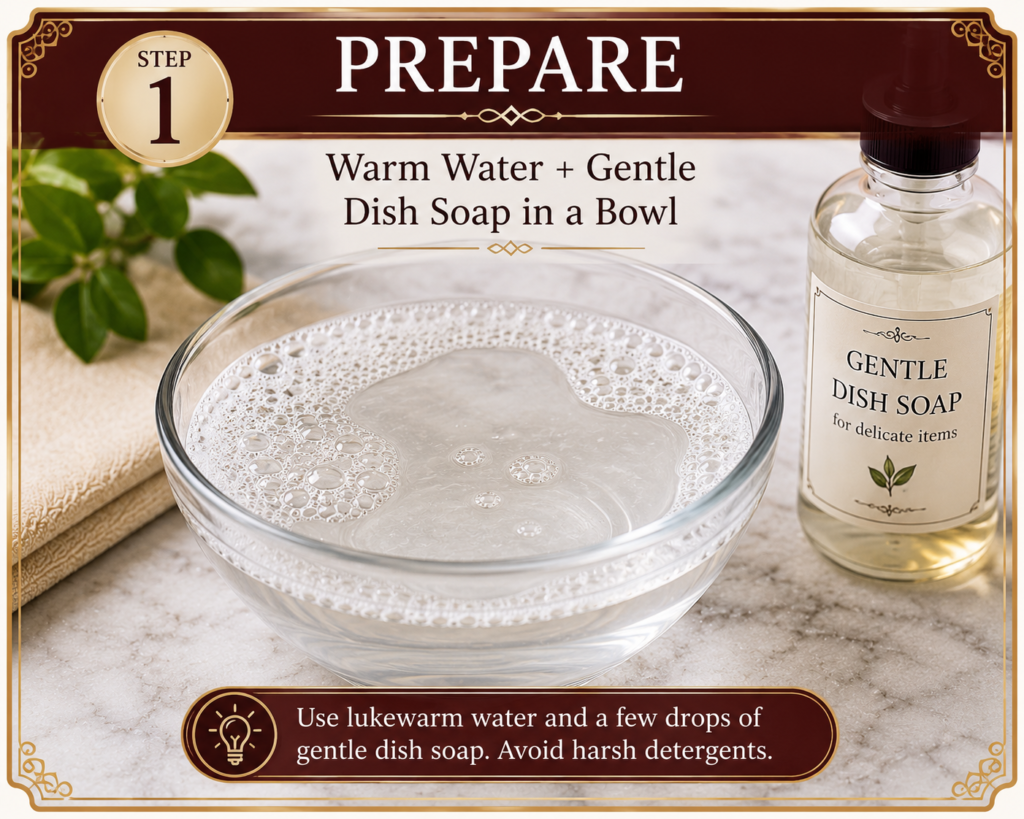
Fill a small bowl with lukewarm water ($25^\circ\text{C}$ to $30^\circ\text{C}$). Add one or two drops of a mild, pH-neutral liquid dish soap. Avoid harsh detergents, bleach, or lemon-scented cleansers containing acidic additives.
Step 2: Soak the Jewellery
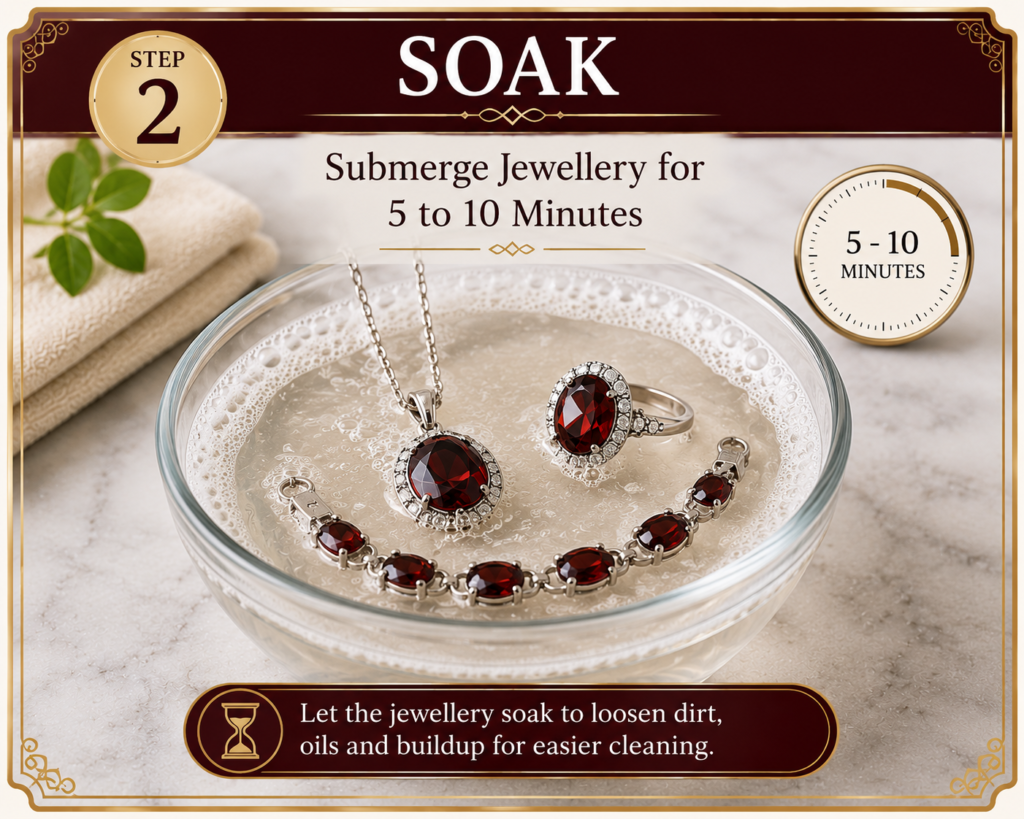
Submerge your garnet jewellery in the soapy bath for 5 to 10 minutes. This gentle soak softens accumulated body oils, lotion residue, and dust trapped behind the setting or around metal prongs.
Step 3: Gently Scrub the Gem and Setting
Use an ultra-soft or child’s toothbrush with micro-bristles. Gently brush around the underside of the setting, where skin contact causes oil build-up that blocks light from entering the pavilion facets. Apply minimal pressure to avoid scratching precious metals like sterling silver or gold.
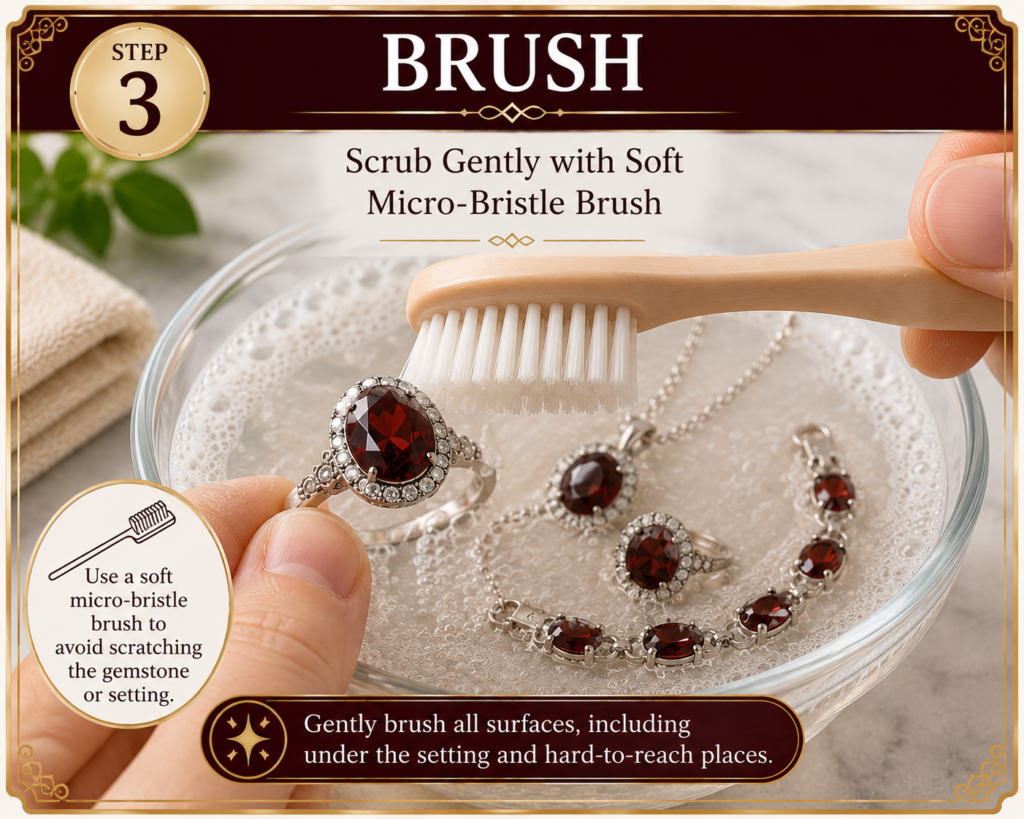
Use an ultra-soft or child’s toothbrush with micro bristles. Gently brush around the underside of the setting, where skin contact causes oil build-up that blocks light from entering the pavilion facets. Apply minimal pressure to avoid scratching precious metals like sterling silver or gold.
Step 4: Thoroughly Rinse
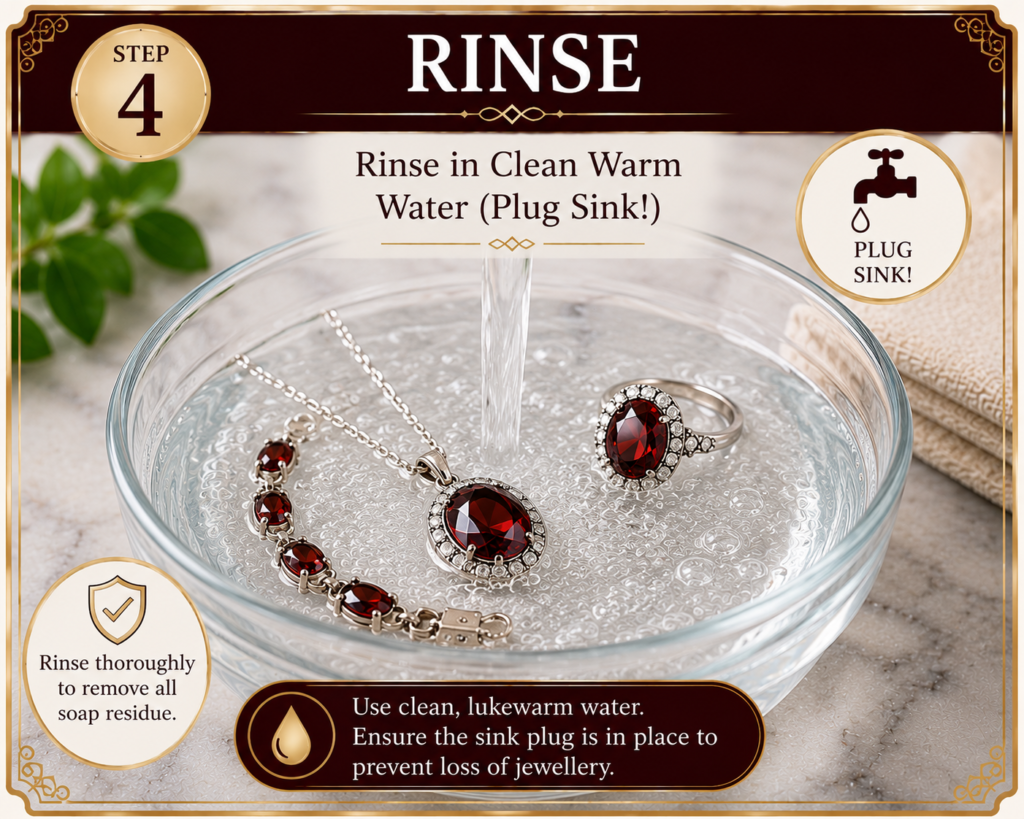
Rinse the piece under running lukewarm tap water. Crucial Safety Precaution: Always plug the sink drain or place a fine-mesh strainer beneath the faucet before rinsing to prevent loose stones or slipping jewellery from falling down the drain.
Step 5: Dry and Polish
Pat the jewellery dry using a clean, lint-free microfibre cloth. Allow the piece to air-dry completely on a soft towel before placing it back into storage or wearing it.
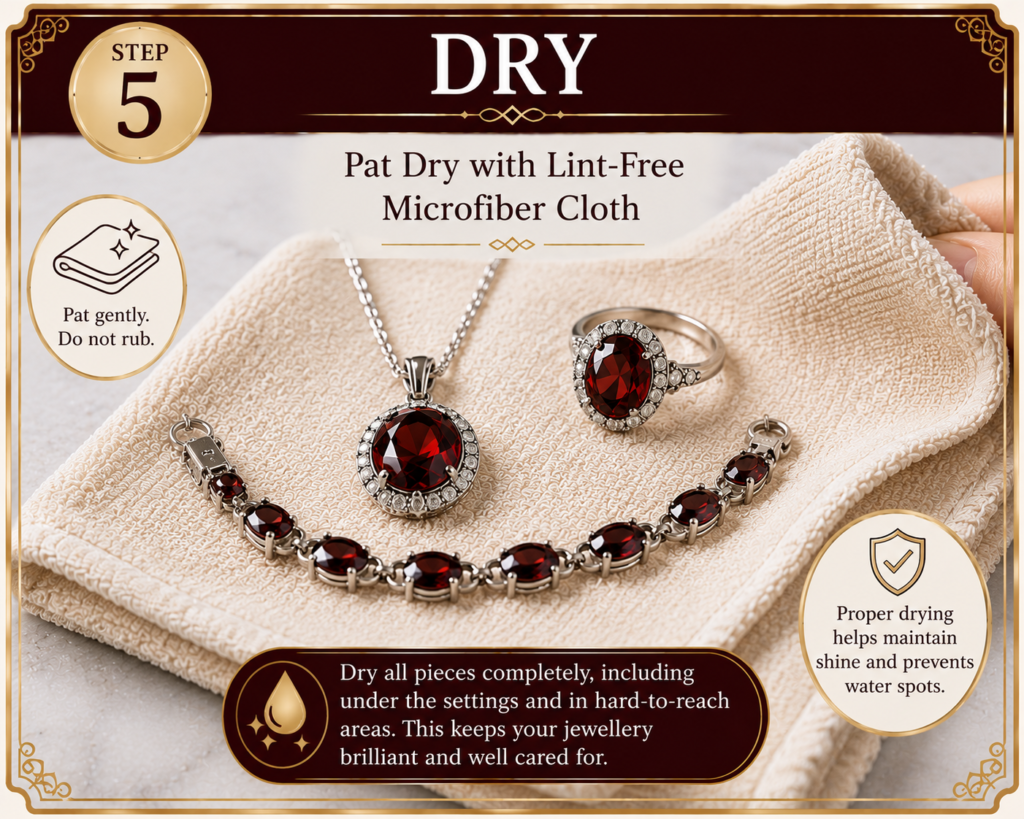
Pat the jewellery dry using a clean, lint-free microfibre cloth. Allow the piece to air-dry completely on a soft towel before placing it back into storage or wearing it.
Major Mistakes That Can Ruin Garnet Jewellery
While garnets require minimal maintenance, specific routine habits and aggressive cleaning technologies pose severe hazards.
1. Thermal Shock (Sudden Temperature Extreme Shifts)
Garnets possess a low tolerance for rapid temperature fluctuations, a vulnerability known as thermal shock. Submerging a cold garnet ring directly into boiling water—or using steam cleaners—causes rapid thermal expansion within the crystal lattice. This expansion triggers internal fracturing, turning a clear gemstone cloudy or causing it to split along internal stress points.

Garnets possess a low tolerance for rapid temperature fluctuations, a vulnerability known as thermal shock. Submerging a cold garnet ring directly into boiling water—or using steam cleaners—causes rapid thermal expansion within the crystal lattice. This expansion triggers internal fracturing, turning a clear gemstone cloudy or causing it to split along internal stress points.
- Rule: Never use steam cleaning wands on garnet jewellery, and always ensure wash water is comfortably lukewarm.
2. The Risks of Ultrasonic Cleaners on Included Gems
Ultrasonic cleaning machines use high-frequency sound waves transmitted through liquid to dislodge dirt. While raw, completely eye-clean Almandine garnets can occasionally tolerate ultrasonic waves, ultrasonic cleaners should generally be avoided for the following reasons:
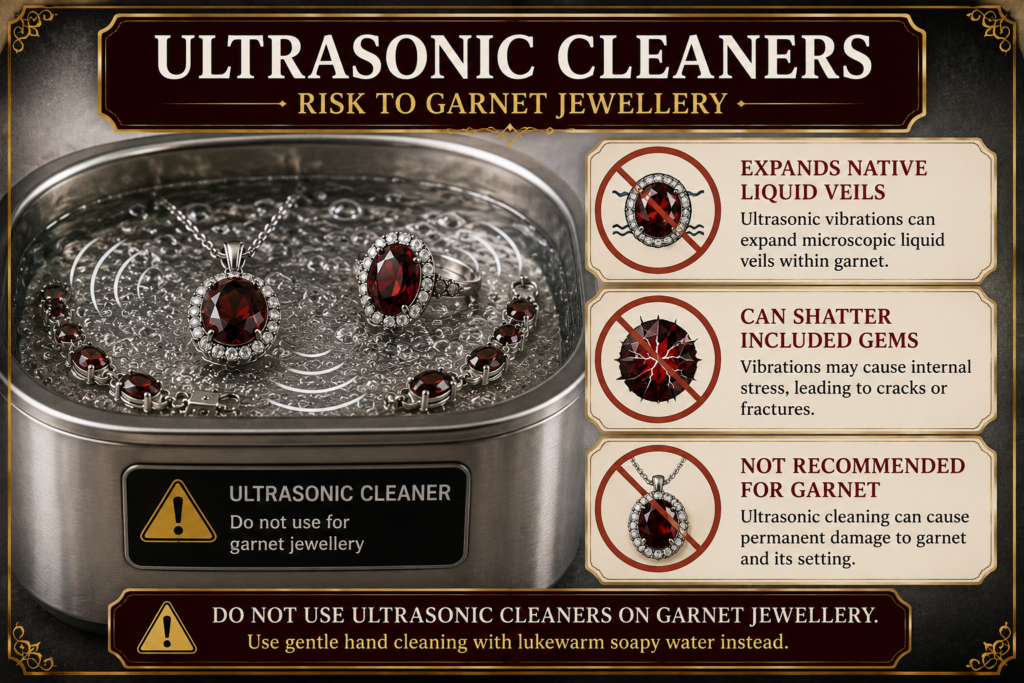
- Fracture Expansion: Many garnets—particularly rare varieties like Demantoid or Tsavorite—contain microscopic liquid veils, negative crystals, or fibrous inclusions (such as chrysotile horsetails). High-frequency sound vibrations force these microscopic internal boundaries to expand, shattering the gem from the inside out.
- Clarity Fillers: Rare garnets with surface-reaching fractures are occasionally treated with fracture-sealing resins or oils. Ultrasonic agitation sweeps out these clarity enhancers, leaving the stone dull and riddled with visible white cracks.
3. Acidic and Harsh Chemical Solvents
Avoid exposing garnets to household chemicals, including chlorine bleach, ammonia, paint thinners, and acetone. While the silicate structure of garnet resists mild acids, strong chemicals can corrode solder joints, weaken metal prongs, and damage secondary mounting materials.
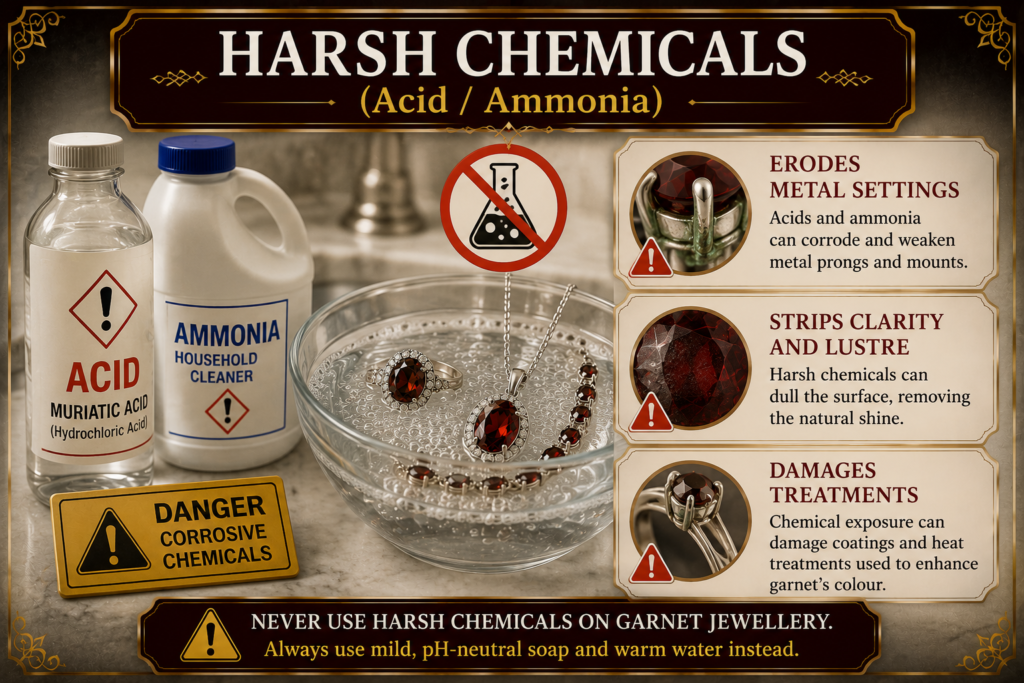
The Makeup Rule: Always apply hairspray, perfumes, lotions, and cosmetics before putting on your garnet jewellery. Chemicals in cosmetics create a stubborn film over gem facets and can slowly discolour precious metal mountings.
Physical Setting Considerations and Daily Wear
A garnet’s longevity depends heavily on how the stone is mounted and worn.
| Jewellery Type | Daily Hazard Level | Recommended Setting Style | Preventive Care Tip |
| Rings | High (Counter top impacts, door frames) | Protective Bezel or Low-Profile Prongs | Remove during heavy lifting, gardening, or housework. |
| Bracelets | High (Bumping against desks and keyboards) | Channel Settings or Solid Links | Avoid wearing alongside hard steel watches or diamond bangles. |
| Pendants | Low (Minimal physical impact) | Prong, Bezel, or Wire-Wrap | Clean the back facet regularly to maintain chest-level brilliance. |
| Earrings | Very Low (Protected position) | Open Prong Settings | Remove before swimming in chlorinated pools or ocean saltwater. |
Safe Long-Term Storage Practices
Proper storage prevents accidental surface abrasions and preserves the lustre of both the gemstone and its metal mounting:
- Separate Pouching: Garnet’s Mohs hardness of 6.5 to 7.5 means it can easily scratch softer gems like Pearls (2.5), Opal (5.5), and Turquoise (5–6). Conversely, harder gems like Diamond (10), Sapphire (9), and Ruby (9) will scratch garnet. Store each piece in individual soft velvet pouches or padded compartments.
- Avoid Direct Sunlight and Heat: Store jewellery boxes away from sunny window sills and radiators. Continuous UV exposure and concentrated heat build-up dry out mounting adhesives and create ambient thermal stress.
- Anti-Tarnish Strips: Place anti-tarnish paper strips inside your jewellery box to protect sterling silver or low carat gold mountings from oxidation caused by ambient air moisture.
Frequently Asked Questions (FAQ)
Q1: Can I wear my garnet ring in the shower or swimming pool?
It is best to remove your garnet ring before showering or swimming. Soap scum from body washes forms a dull film over the gem’s underside facets, reducing brilliance. Chlorinated pool water and saltwater can also degrade metal mountings, weaken solder joints, and damage fracture-filled stones.
Q2: Is garnet safe to clean in an ultrasonic cleaner?
You should exercise caution. While untreated, flawless garnets may survive ultrasonic cleaning, stones with internal inclusions, liquid veils, or surface-reaching fractures can shatter under high-frequency sound waves. Safe manual soap-and-water washing is always the preferred method.
Q3: Can steam cleaners be used on garnet gemstones?
No. Steam cleaners expose gemstones to extreme heat followed by rapid cooling. This rapid temperature shift induces thermal shock, which can cause garnets to crack, split, or develop permanent internal fractures.
Q4: Why has my red garnet ring lost its shine and turned dull?
A dull appearance is almost always caused by an accumulation of skin oils, hand lotions, and soap residue trapped underneath the gemstone setting. Cleaning the back of the gem with lukewarm soapy water and a soft toothbrush usually restores its original depth and shine immediately.
Q5: How often should I have my garnet jewellery inspected by a professional?
If you wear your garnet ring or bracelet daily, have a professional jeweller inspect the setting at least once a year. The jeweller will check for worn metal prongs, hairline stone fractures, and loose mountings to ensure your gemstone remains securely held in place.
To explore the complete geological science, historical lore, and chakra alignments of the entire garnet mineral family, return to our master guide: [Garnet Stone: Science, Lore & Metaphysical Healing Guide].