
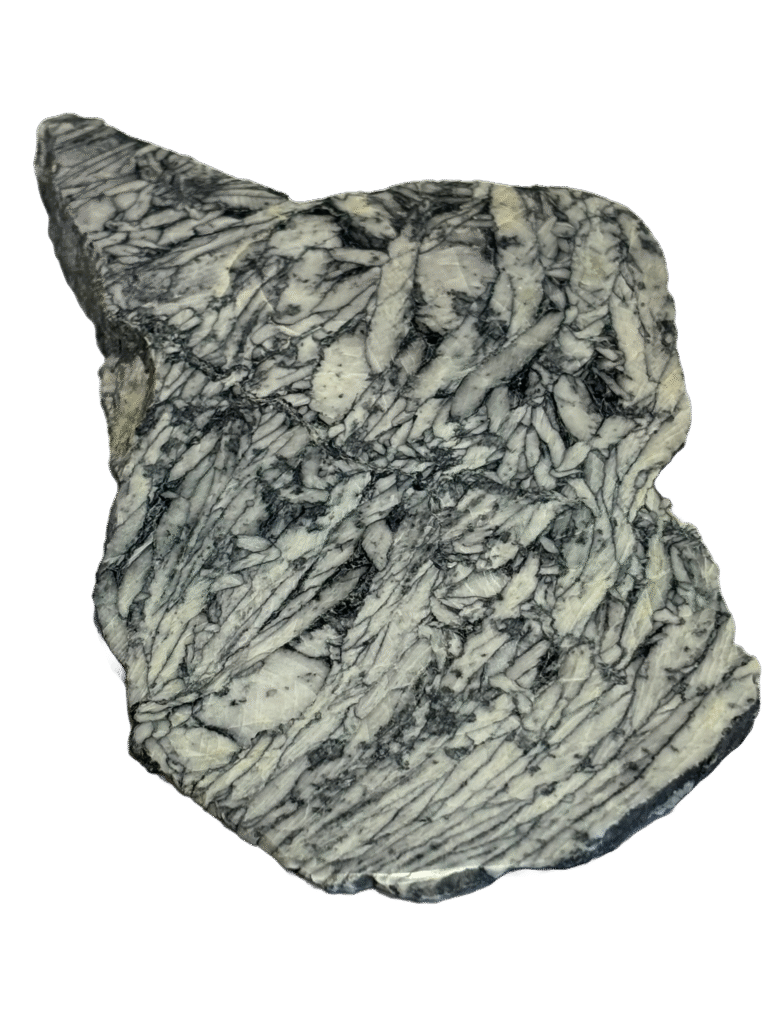
The name Pinolite (sometimes spelled Pinolith or Pinolithstein) comes from the Spanish word piña, meaning “pine cone.” This is due to the stone’s unique appearance — white to greyish ovoid patterns that resemble pine nuts or pine cone scales embedded in a dark matrix. It was first described in 1788 in Austria.
Alternate names include Pinolith Magnesium Marble, Magnesite-Graphite-Dolomite Rock, and sometimes Austrian Pinolith, referencing its country of origin.
Composition and Physical Characteristics
Pinolite is a metamorphic rock composed mainly of magnesite (MgCO₃), graphite, and dolomite. It forms through the metasomatic alteration of magnesium-rich limestone under heat and pressure. The striking contrast between its white magnesite inclusions and dark grey to black dolomite matrix gives it its signature marbled look.
Key characteristics:
- Chemical composition: Primarily magnesium carbonate
- Hardness: 3.5–4.5 on the Mohs scale
- Lustre: Dull to silky
- Transparency: Opaque
- Colours: White, grey, and black; sometimes silver or smoky patterns
- Texture: Smooth when polished, fine-grained matrix with pine nut-shaped inclusions
Its distinctive patterning makes it a visually arresting stone for jewellery and decorative carvings, while its gentle energy contributes to its reputation as a calming and grounding crystal.
Varieties
Though visually consistent, Pinolite varies slightly depending on mineral ratio:
- High-Magnesite Pinolite: Dominantly white, with softer patterns and less contrast.
- Graphite-Rich Pinolite: Darker background with vivid white inclusions.
- Dolomite-Pinolite Blend: A creamier appearance with brownish undertones.
All varieties share the same tranquil, harmonising energetic frequency.
Geographical Locations
Pinolite is extremely rare and found primarily in Austria, specifically in the Styrian Alps near Hohentauern, where it was first discovered. Smaller deposits have also been reported in:
- Canada (British Columbia)
- Spain
- Norway
- Pakistan
However, Austrian Pinolite remains the most prized variety due to its clarity, purity, and distinct pine-nut pattern.
Archaeological and Significant Finds
Pinolite has no recorded use in ancient civilisations, as its deposits were identified relatively recently in geological terms. However, it quickly gained attention among mineralogists and collectors for its rarity and aesthetic appeal. Its intricate natural patterns have made it popular in lapidary arts, sculpture, and spiritual healing practices in modern times.
Historical and Current Usage
Since its discovery, Pinolite has been used mainly as a decorative stone and gem material. Jewel cutters and artisans polish it into beads, cabochons, and spheres. Its monochrome palette complements both silver and darker metal settings.
In modern metaphysical practice, it is known as the “Stone of Serenity”, symbolising peace, focus, and emotional balance. It is a popular choice for meditation tools, energy grids, and home décor, as its gentle energy brings a soothing presence to any environment.
Interesting Facts
- The unique pattern of Pinolite is entirely natural — no two stones are alike.
- It is sometimes mistaken for Snowflake Obsidian or Howlite, though its feel and mineral composition are entirely different.
- Austrian Pinolite is so distinctive that it has become the national gemstone of Styria, Austria.
- When cut and polished, its pine-nut shapes appear three-dimensional, creating a striking illusion of depth.
Folklore, Superstition, Legends, and Tales
In modern crystal folklore, Pinolite is often called a “peace stone”. Some believe it contains the calming energy of pine forests, connecting the user with nature’s tranquility. Its marbled appearance is said to represent balance between light and dark, symbolising unity and duality.
In spiritual legend, Pinolite is considered a “monk’s stone”, used to aid deep meditation and introspection. It is said to help those seeking spiritual stillness, clarity, and acceptance. Its energy evokes the peaceful silence of snow-covered mountains, reminding one to find calm amidst chaos.
Mystical Healing Properties
Pinolite’s energy is gentle, grounding, and soothing. It is regarded as a stone of emotional balance, focus, and inner peace.
Emotional Healing:
- Reduces stress, anxiety, and emotional overactivity.
- Promotes patience, focus, and self-control.
- Encourages forgiveness and compassion.
Spiritual Healing:
- Deepens meditation and spiritual awareness.
- Connects one with Earth’s calming energies and higher states of consciousness.
- Aids in spiritual grounding after intense energy work.
Physical Healing (Metaphysical):
- Associated with easing muscle tension and supporting magnesium absorption.
- Said to relieve headaches caused by mental strain.
- Believed to aid in balancing the nervous system and improving sleep quality.
Astrology and the Zodiac
Pinolite is most closely aligned with Virgo, Capricorn, and Taurus, the earth signs, as it enhances calm thinking, order, and discipline. For fire or air signs, it brings grounding and stability. Its cooling energy balances excessive emotional or mental energy, making it suitable for meditation and stress relief across all zodiac types.
The Chakra System
Pinolite aligns primarily with the Root Chakra (Muladhara), providing grounding, stability, and security. It also resonates gently with the Third Eye Chakra (Ajna), encouraging mental clarity and mindful awareness. When used during meditation, it balances energy flow between the mind and body, harmonising thought with action.
Use as a Birthstone and for a Wedding Anniversary
While not an official birthstone, Pinolite is often considered a modern alternative stone for April due to its balancing, purifying qualities that mirror spring renewal.
It also makes a meaningful 35th wedding anniversary gift, symbolising enduring peace, emotional harmony, and steadfast love developed over time.
Crystal Combinations: What Works Well and What to Avoid
Crystals that Work Well with Pinolite:
- Howlite: Amplifies calmness and emotional clarity.
- Sodalite: Enhances rational thinking and focus.
- Lepidolite: Supports emotional balance and tranquillity.
- Black Tourmaline: Strengthens grounding and protective energy.
Crystals to Avoid Combining with Pinolite:
- Carnelian: Its fiery nature may counteract Pinolite’s calm frequency.
- Citrine: Overly energising and may disrupt Pinolite’s grounding influence.
- Moldavite: Too intense for the stone’s subtle, stabilising vibration.
Meta Description (SEO, 160 characters)
Discover Pinolite — a rare marble-like stone from Austria known for peace, focus, and grounding. Learn its origins, healing powers, and spiritual meaning.

Pinolite
Pinolite is a rare marble-like stone from Austria known for peace, focus, and grounding. Learn its origins, healing powers and spiritual meaning.
