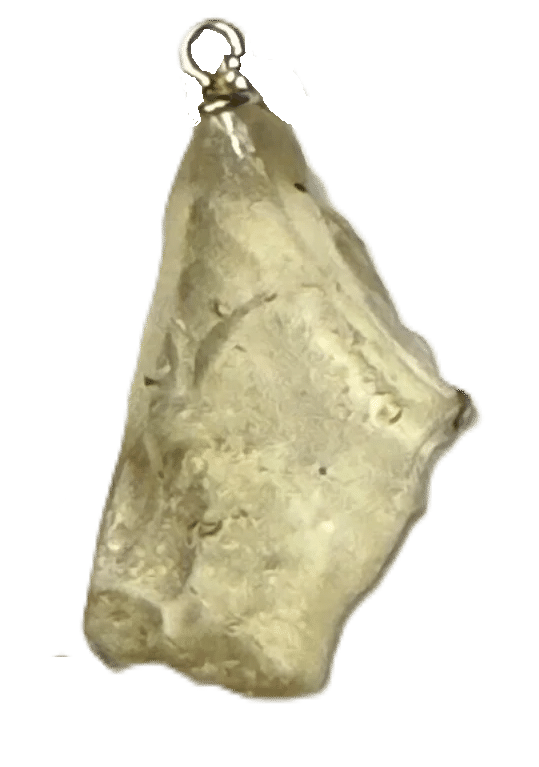
Practising proper Libyan Desert Glass Jewellery Care is essential for preserving both the physical lustre and the vibrant solar energy of this extraordinary natural impactite. Formed roughly 29 million years ago by a hypervelocity meteorite impact in the Great Sand Sea, Libyan Desert Glass is composed of nearly 98% pure silica and sits between 5.5 and 6.5 on the Mohs hardness scale. Because it is noticeably softer than everyday gemstones like quartz, sapphire, or diamond, rings, pendants, and bracelets set with this translucent golden glass require mindful handling to avoid micro-scratches, chipping, and thermal shock.
Beyond routine physical maintenance, many wearers also look for safe ways to clear stagnant energy and restore their piece’s natural Solar Plexus resonance without risking damage to delicate bezels, silver settings, or natural surface textures. Harsh ultrasonic cleaners, abrasive polishes, and prolonged immersion in salt water can dull its natural sheen or corrode surrounding metalwork.
In this practical guide, you will learn everything you need to know about Libyan Desert Glass Jewellery Care—covering gentle physical cleaning routines, safe smoke and sound cleansing methods, sunlight charging guidelines, and smart storage habits to keep your piece radiant for decades.
Safe Physical Cleaning (Lukewarm Water vs. Ultrasonic Danger)
Because Libyan Desert Glass is non-porous and water-insoluble, routine cleaning is straightforward—provided you avoid mechanical vibration and harsh abrasives.
Step-by-Step Safe Cleaning Method
- Use Lukewarm Water & Mild Soap: Fill a small bowl with lukewarm water and add a single drop of mild, pH-neutral washing-up liquid. Never use hot or ice-cold water.
- Soak Briefly (2–3 Minutes): Submerge the jewellery or raw specimen for a couple of minutes to loosen skin oils, dust, and surface grime trapped in natural ventifact pits.
- Brush Gently with Soft Bristles: Use an ultra-soft baby toothbrush or soft sable artist’s brush to lift debris from crevices and behind settings. Avoid stiff nylon brushes or abrasive polishing cloths impregnated with jeweller’s rouge, which can dull the natural frosted patina on raw specimens.
- Rinse & Pat Dry: Rinse thoroughly in lukewarm clean water and dry immediately with a lint-free microfibre cloth.
Cleaning Methods to Strictly Avoid
- Ultrasonic Cleaners: Never place Libyan Desert Glass in an ultrasonic jewellery bath. High-frequency cavitation waves can propagate microscopic stress fractures along internal lechatelierite flow lines or shatter brittle edges.
- Steam Cleaners: Direct jets of pressurised steam subject the glass to rapid localised heating, risking immediate cracking.
- Household Chemicals & Salt Scrubs: Avoid bleach, ammonia-based glass cleaners, and coarse sea-salt rubs (halite crystals can abrade softer glass surfaces and corrode sterling silver mounts).
Thermal Shock & Environmental Safety Risks
Unlike crystalline quartz, natural impact glasses contain internal cooling strain bands formed when molten silica quenched rapidly 29 million years ago.
- Preventing Thermal Shock: Sudden temperature swings cause glass to expand or contract unevenly, triggering internal fractures. Never rinse LDG in hot water after wearing it outdoors in winter, leave it on a hot radiator, or expose it to direct flame.
- Sunlight Stability: Good news for collectors—unlike Amethyst, Rose Quartz, or Kunzite, which fade under ultraviolet radiation, Libyan Desert Glass is completely colour-stable in sunlight. However, avoid leaving a transparent faceted or cabochon piece sitting on a sunny windowsill near flammable curtains or paper, as curved glass can focus sunlight like a magnifying lens.
- Safety Note for Raw Specimens: Unpolished fragments often feature razor-sharp conchoidal edges from ancient wind erosion or fracturing. Inspect raw pendants before wearing them directly against delicate fabrics or skin, and store out of reach of young children and pets.
Choosing Protective Jewellery Settings: Bezel vs. Prong
Because everyday household dust contains microscopic quartz particles (Mohs 7)—which are harder than Libyan Desert Glass (Mohs 5.5–6.5)—how your stone is mounted determines how well it survives daily wear.
| Setting Feature | Full or Half Bezel Setting (Recommended) | Claw / Prong Setting (Use with Caution) |
| Edge Protection | Superior: A continuous rim of silver or gold wraps around the stone’s girdle, shielding fragile glass edges from knocks. | Minimal: Leaves corners and thin edges exposed to accidental impacts against tables, doorframes, or stone surfaces. |
| Best Jewellery Types | Rings, bracelets, everyday pendants, and cuffs. Essential for faceted gems and cabochons worn on the hands. | Earrings and occasional-wear pendants where physical impact risk is minimal. |
| Setting Pressure Risk | Low when burnished carefully by an experienced lapidary jeweller using soft fine silver or 18ct gold. | Higher risk of edge chipping if a jeweller tightens hard prongs too aggressively against brittle silica glass. |
| Light Transmission | Open-back bezels allow natural light to pass through from behind, showcasing honey-gold translucency and internal inclusions. | Maximum side-light entry, though at the cost of physical vulnerability. |
Practical Buying Tip: If purchasing a Libyan Desert Glass ring, always choose an open-back bezel setting (a solid metal rim around the perimeter with a window cut into the backplate). This protects the vulnerable glass girdle while allowing light to illuminate the stone’s natural golden glow.
Energetic Cleansing & Charging Methods
Disclaimer: Metaphysical cleansing practices reflect traditional holistic folklore rather than scientific properties.
In crystal healing traditions, Libyan Desert Glass is regarded as largely self-clearing because its outward-projecting solar frequency rarely absorbs stagnant ambient energy. Still, periodic energetic refreshing is popular after intense meditation or travel:
- Botanical Smoke Cleansing: Pass the stone briefly through the smoke of dried rosemary, cedar, lavender, or frankincense resin in a well-ventilated room (keeping smoke protocols pet-safe and away from sensitive airways).
- Sound Vibration: Place your jewellery beside a singing bowl, tuning fork, or chime for 30–60 seconds—an ideal, zero-contact method that avoids any physical abrasion.
- Morning Sunlight or Full Moonlight: Rest the piece in gentle early-morning sunlight for 15–30 minutes to refresh its solar vitality, or leave it overnight in moonlight for a subtle, cooling reset.
- Selenite Charging Plates: Resting LDG jewellery on a smooth satin spar (Selenite, Mohs 2) slab is completely scratch-safe because Selenite is far softer than natural silica glass.
Safe Storage Between Wears
When you take off your Libyan Desert Glass jewellery at the end of the day, store it in an individual padded pouch or lined compartment separated from harder gemstones such as Quartz, Topaz, Sapphire, or Diamond (Mohs 7–10). Keeping each piece isolated prevents micro-scratches and preserves both polished facets and natural desert-worn patinas for generations.