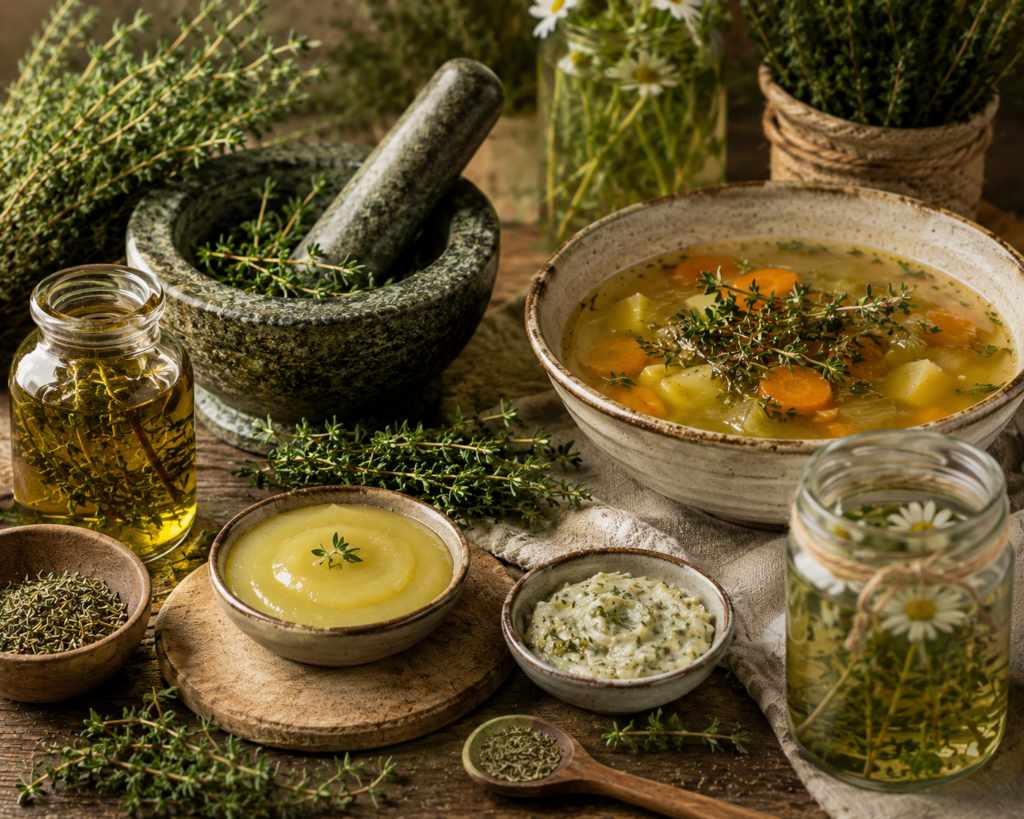
Traditional herbal preparations harness thyme’s volatile oils (thymol and carvacrol) and water-soluble constituents for both medicine and the larder. Three foundational recipes—a soothing botanical cough syrup, an acid-sweet oxymel, and a stable culinary infused oil—utilise classic apothecary and kitchen methods.
Honey & Thyme Apothecary Cough Syrup
This traditional demulcent preparation combines the antimicrobial and antispasmodic properties of thyme leaf with raw honey, which coats the throat and calms irritated bronchial tissue.
- Prep time: 20 minutes (plus steeping)
- Yield: Approx. 250 ml
Ingredients
- 30 g dried thyme (or 60 g fresh thyme sprigs, gently bruised)
- 300 ml filtered water
- 150 ml raw, unheated honey
Instructions
- Prepare the strong decoction: Place the thyme and filtered water into a small, non-reactive saucepan. Bring to a gentle boil, then immediately reduce heat to low. Cover with a tight-fitting lid and simmer gently for 15 to 20 minutes to extract the active constituents into the water.
- Strain and measure: Remove from heat and let it cool slightly. Strain the liquid through a fine-mesh sieve or muslin cloth, pressing the herbs to release every drop. You should have roughly 150 ml to 200 ml of concentrated herbal tea. Allow it to cool until it is warm to the touch (below 40°C) so you do not destroy the beneficial enzymes in the raw honey.
- Blend with honey: Stir the raw honey into the warm thyme decoction until completely dissolved and integrated.
- Bottle and store: Pour the syrup into a sterilised amber glass bottle. Store in the refrigerator for up to 4 weeks.
- Dosage: Take 1 teaspoon (5 ml) 3 to 4 times daily at the onset of a chesty cough or throat irritation. (Note: Do not give raw honey to infants under one year of age.)
Thyme & Rosemary Oxymel
An oxymel (from the Latin oxymeli, meaning “acid and honey”) is an ancient vinegar-and-honey preparation. The vinegar extracts minerals and resins, the honey softens the sharp bite, and the resulting syrup acts as a warming, lung-clearing expectorant.
- Prep time: 15 minutes (plus 2 weeks maceration)
- Yield: Approx. 350 ml
Ingredients
- 1 packed cup fresh thyme sprigs (leaves and stems)
- 3 sprigs of fresh rosemary
- 150 ml raw apple cider vinegar (with the “mother”)
- 200 ml raw honey
Instructions
- Pack the jar: Clean and dry a 500 ml glass mason jar. Chop or bruise the thyme and rosemary slightly to rupture the cellular walls and release the volatile oils, then pack them loosely into the jar.
- Combine liquid base: In a jug, whisk together the apple cider vinegar and raw honey until smooth, then pour the mixture over the herbs, ensuring they are entirely submerged.
- Seal and macerate: Place a piece of parchment paper or plastic wrap over the jar mouth before screwing on the metal lid (vinegar corrodes metal caps over time). Store the jar in a cool, dark cupboard for 2 weeks, shaking it gently every couple of days.
- Strain: After 14 days, strain the liquid through a fine mesh strainer into a clean glass bottle.
- Usage: Take 1 tablespoon daily as a general immune tonic during winter months, or dilute a teaspoon in a small glass of warm water to soothe sluggish digestion.
Artisanal Thyme & Garlic Culinary Infused Oil
Thyme oil makes an exceptional finishing and cooking oil. Because fresh garlic and fresh herbs contain water and carry a slight risk of Clostridium botulinum if stored improperly at room temperature, this cold-infusion method uses dried ingredients and is stored safely.
- Prep time: 10 minutes (plus 1 week resting)
- Yield: 250 ml
Ingredients
- 25 g dried thyme leaves
- 2 dried bay leaves (crushed)
- 1 teaspoon whole black peppercorns
- 250 ml high-quality extra virgin olive oil (or cold-pressed sunflower oil)
Instructions
- Sterilise equipment: Ensure your glass bottle or cruet is impeccably clean and completely dry. Any residual water will spoil the oil.
- Combine dry aromatics: Place the dried thyme, crushed bay leaves, and peppercorns into the bottle.
- Pour oil: Pour the olive oil over the herbs until they are entirely covered and submerged.
- Steep: Cap the bottle tightly and store it in a cool, dark pantry for 7 to 10 days to allow the volatile compounds of the thyme to infuse into the lipid matrix of the oil.
- Strain (Optional): You can strain out the dried herbs after 10 days for a clear green oil, or leave them in for a rustic presentation provided the herbs remain completely submerged beneath the oil line. Use within 1 month.
This is one of my collection of Thyme and Herbal products. If you found this article interesting see how to Make a Thyme based Soothing Salve