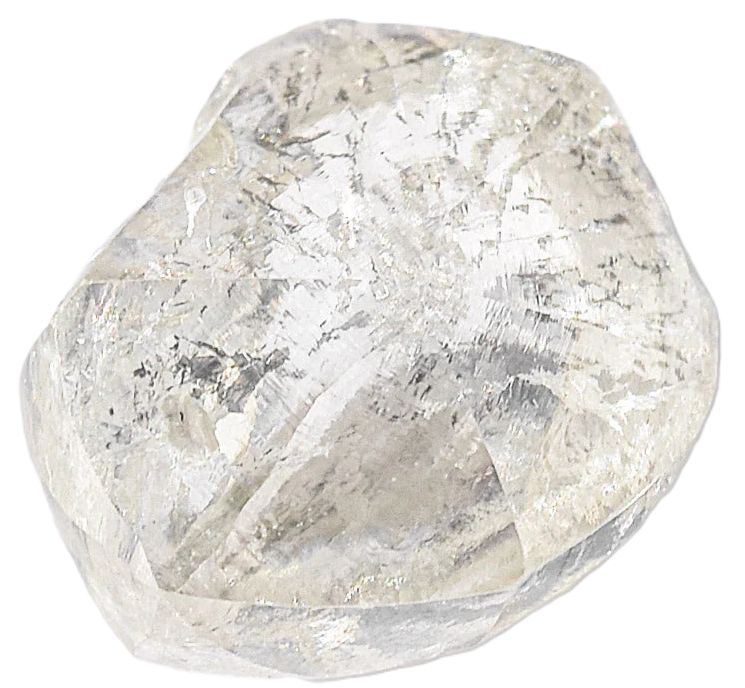
The diamond stands as the ultimate symbol of endurance, brilliance, and timeless elegance. Forged over billions of years deep within the Earth’s mantle, this extraordinary gemstone has captivated humanity for millennia. From its unmatched physical hardness to its legendary role in royal treasuries and modern romance, the diamond transcends mere ornamentation. This comprehensive guide explores the fascinating world of diamonds, balancing scientific facts with rich historical lore, geological insights, and holistic crystal practices. Whether you are looking to invest in a stone, understand its geological journey, or harness its metaphysical energy, discover what makes this remarkable mineral the undisputed “King of Gems.”
Alternate names
Throughout history, across diverse cultures and languages, the diamond has earned several poetic, protective, and powerful titles:
- The Stone of Invincibility: A historical moniker reflecting its reputation for protecting warriors and rendering the wearer unbeatable.
- King of Gems: A title earned due to its supreme hardness, brilliance, and value among precious minerals.
- Vajra: The ancient Sanskrit term meaning “thunderbolt” or “lightning,” symbolising indestructible spiritual power and divine weapons.
- Adámas: The original Greek term meaning “unconquerable” or “untameable,” from which the modern word “diamond” evolves.
- Tears of the Gods: A poetic designation given by ancient civilisations who believed the stones held celestial origins.
The stones Science and Composition
From a pure geochemical standpoint, the diamond is an elemental wonder. It is the only gemstone comprised of a single element: it is 99.95% pure carbon.
The extraordinary properties of a diamond come from its internal crystalline structure. Under the extreme temperatures (around 1,050°C to 1,300°C) and immense pressures (up to 60,000 atmospheres) found deep within the Earth, carbon atoms bond tightly with four adjacent carbon atoms. This forms a highly rigid, three-dimensional spatial network known as a isometric cubic crystal system. It is this tight, isotropic arrangement of covalent bonds that gives the gemstone its legendary structural integrity.
Key Physical Characteristics
To identify, grade, and evaluate diamonds, mineralogists and gemologists analyse several defining physical parameters:
- Hardness: It rates a definitive 10 on the Mohs Hardness Scale. It is the hardest known naturally occurring substance on Earth, meaning a diamond can only be scratched by another diamond.
- Refractive Index (RI): Possesses an exceptionally high refractive index of 2.417. This high RI causes light entering the stone to slow down and bend sharply, creating its signature optical brilliance.
- Dispersion (Fire): It has a dispersion rating of 0.044. This is the stone’s ability to split white light into its component spectral colours, resulting in the vibrant flashes of rainbow colours known as “fire.”
- Cleavage: Despite its extreme hardness, it has perfect octahedral cleavage in four directions. This means a sharp, well-directed blow can split the stone cleanly along its structural planes.
- Lustre: Exhibits a brilliant adamantine Lustre, the highest non-metallic Lustre possible for a mineral, giving polished facets a mirror-like shine.
Common Geologic Varieties
While pure carbon diamonds are entirely colourless, the vast majority contain microscopic trace elements or structural distortions that alter their appearance. These variations create a stunning palette of “fancy colour diamonds”:
| Diamond Colour Variety | Primary Geological Cause |
|---|---|
| Yellow & Orange | Presence of nitrogen atoms in the crystal lattice |
| Blue | Incorporation of boron during formation |
| Green | Exposure to natural underground radiation |
| Pink, Red & Brown | Plastic deformation (structural distortion) |
| Black (Carbonado) | High inclusions of graphite and amorphous carbon |
Global Mining and Volcanic Sources
Diamonds do not form in the Earth’s crust; they are created in the upper mantle at depths of 150 to 200 kilometres. They are brought to the surface via explosive, deep-seated volcanic eruptions that form narrow, carrot-shaped pipes made of unique igneous rocks called kimberlite and lamproite.
- Historical Origins: For centuries, the primary global source was India, specifically the legendary Golconda mines. These alluvial deposits produced the world’s most famous historic gems.
- African Powerhouses: In the late 19th century, the discovery of kimberlite pipes in South Africa triggered the modern diamond rush. Today, Botswana and Namibia are premier producers of exceptionally high-quality, gem-grade stones.
- Northern and Subarctic Reserves: Russia holds some of the world’s largest reserves by volume, primarily in the Siberian region of Yakutia. Canada (Northwest Territories) has emerged as a crucial producer of highly ethical, high-quality stones mined from subarctic kimberlite pipes.
- Oceania: Australia was historically famous for the Argyle mine, which served as the world’s primary source of ultra-rare pink and red diamonds before its closure.
Crystal Pairings: What to Combine and Avoid
Because of their perfect, highly organised crystalline structure, diamonds act as natural energetic magnifiers. In holistic crystal work, they behave like cosmic loudspeakers, intensifying the properties of any mineral placed alongside them.
Optimal Crystal Pairings
- Clear Quartz (For Supreme Clarity): Combining these two stones creates an unmatched energetic purification field. Clear quartz focuses the mind, while the diamond elevates that focus into absolute spiritual clarity.
- Rose Quartz (For Unconditional Love): When paired with rose quartz, it amplifies the gentle, compassionate frequencies of the heart, anchoring commitment, emotional healing, and deep relational harmony.
- Blue Sapphire (For Divine Wisdom): This classic combination pairs the analytical, protective, and orderly nature of sapphire with the illuminating power of diamond, making it ideal for leadership and clear communication.
Crystal Pairings to Avoid
- Black Obsidian or Shungite (Metaphysical Overload): Obsidian is a rapid, intense shadow-work stone designed to draw out hidden traumas. Grounding stones like haematite also carry heavy, dense protective energies. Because a diamond magnifies everything without discrimination, pairing it with these intense stones can amplify chaotic emotions, leading to feelings of anxiety, psychological unrest, or energetic exhaustion.
Archaeology, Art and Ancient History
The human relationship with diamonds spans over three millennia. The earliest recorded historical mentions come from Sanskrit texts in ancient India dating back to the 4th century BCE. These early stones were collected from riverbeds and prized not for their sparkle—as advanced faceting techniques did not exist—but for their raw hardness, ability to scratch iron, and exceptional light refraction.
They travelled along the Silk Road to the Mediterranean, where they found a place in the Roman Empire. Roman naturalist Pliny the Elder wrote about the stone in his Natural History, declaring it the most valuable of all human possessions. In the ancient world, they were rarely cut; instead, they were kept in their natural octahedral states and set into religious icons, protective amulets, or the ceremonial armour of kings.
Famous historical diamonds carry rich narratives:
- The Koh-i-Noor: Mined in India, this legendary 105-carat stone passed through the hands of Mughal emperors, Persian shahs, and Punjabi maharajas before becoming part of the British Crown Jewels.
- The Cullinan: Discovered in South Africa in 1905, it remains the largest gem-quality rough diamond ever found, weighing an astonishing 3,106 carats. It was cut into multiple major gems, including the Sovereign’s Sceptre with Cross.
- The Hope Diamond: A rare blue diamond originating from India, celebrated for its unique structural beauty and its dramatic history of ownership.
Folklore, Legends and Sacred Tales
Before the dawn of modern gemology, ancient cultures created vivid mythologies to explain the diamond’s properties:
- Celestial Fragments: The ancient Greeks and Romans believed that diamonds were shards of stars that had fallen to Earth, or the frozen tears of weeping deities.
- Cupid’s Arrows: Roman myth held that the tips of Cupid’s arrows were capped with diamonds, explaining the stone’s enduring connection to romantic love and irresistible attraction.
- The Valley of Diamonds: A famous medieval tale, popularized in the Arabian Nights voyages of Sinbad the Sailor, described a deep, inaccessible canyon carpeted with diamonds that was guarded by deadly serpents.
- The Curse of the Blue Hope: Folklore dictates that the Hope Diamond was plucked from the eye of a sacred Hindu idol, invoking a protective curse that brought financial ruin, tragedy, or mysterious demises to anyone who wore it.
Metaphysical and Mystical Healing Properties
In alternative healing practices, the diamond is regarded as a master stone of light, purity, and manifestation. Its high vibrational frequency is believed to clear energetic blocks and realign personal power.
- Amplification of Intent: It functions as a metaphysical amplifier. Whatever thoughts, emotions, or intentions you hold while working with the stone will be cast outward with increased intensity.
- Aura Purification: Practitioners use the stone to cleanse the human auric field of negative energetic attachments, emotional debris, and toxic thought patterns.
- Mental Clarity and Fortitude: Known to bestow inner strength, resilience, and unshakeable courage, making it an excellent ally during times of profound life transitions or identity crises.
- Fostering Fidelity: By aligning the energies of two individuals, it is believed to encourage transparency, trust, and absolute honesty within long-term relationships.
Astrological Connections
The diamond holds a potent place in both Western and Vedic astrology:
- The Venusian Link: It is primarily ruled by the planet Venus, the celestial body governing love, beauty, wealth, art, and devotion. It helps the wearer channel charisma, artistic expression, and luxury into their lives.
- Zodiac Affiliations:
- Taurus & Libra: As signs ruled by Venus, Taureans and Librans benefit from enhanced emotional balance, refined aesthetics, and romantic harmony when working with this stone.
- Aries & Leo: The fire signs draw heavily upon the stone’s historical attributes of raw courage, unshakeable willpower, and clarity of vision to fuel their natural leadership qualities.
The Chakra System
The diamond aligns closely with the Crown Chakra (Sahasrara), located at the top of the head. This chakra serves as the gateway to the higher self, universal consciousness, and divine enlightenment.
When placed on or near the Crown Chakra during meditation, it acts as a spiritual antenna. It opens channels for divine inspiration, dissolves energetic boundaries, and infuses the entire chakra system with pure, unadulterated white light. It aligns the physical ego with the higher spiritual soul.
Interesting facts
- Deep Time Travellers: Most natural diamonds formed between 1 billion and 3.5 billion years ago, a time when Earth was still developing its early atmosphere and continents.
- Industrial Muscle: Roughly 80% of all mined diamonds are completely unsuitable for jewellery. Instead, they are channelled into heavy industry for industrial drilling, cutting, laser manufacturing, and micro-chip polishing.
- Cosmic Diamonds: Scientists have discovered that out in deep space, certain dying stars (white dwarfs) have crystalline carbon cores. A notable example is the white dwarf star “Lucy” (BPM 37093), which contains a diamond core weighing an estimated 10 billion trillion trillion carats.
- Atmospheric Pressure Forging: Advanced modern engineering can now replicate the mantle’s conditions in a matter of weeks using Lab-Grown techniques like Chemical Vapour Deposition (CVD), creating stones that are chemically, physically, and optically identical to mined diamonds.
Modern Milestones: Birthstones and Anniversaries
In the modern world, the diamond remains anchored to our most celebrated life milestones:
- The April Birthstone: Serves as the official modern birthstone for the month of April. It symbolises purity, new beginnings, and everlasting strength for those born in mid-spring.
- The 60th Wedding Anniversary: Represents the Diamond Jubilee. Gifting a diamond to mark 60 years of marriage celebrates a relationship that, like the gemstone itself, has withstood decades of pressure and time to emerge beautiful, unyielding, and indestructible.
Extensive FAQ Section
Are lab-grown diamonds real diamonds?
Yes. Lab-grown diamonds are chemically, physically, and optically identical to natural mined diamonds. They are composed of pure carbon arranged in the same cubic crystal lattice. The only difference is that they are created in a controlled laboratory environment over a period of weeks rather than over billions of years in the Earth’s mantle.
How can I tell if a diamond is real at home?
While professional gemological testing is the only way to be 100% certain, you can perform the fog test. Breathe warm air onto the stone. Because diamonds are highly efficient thermal conductors, the fog should disperse instantly. If the fog stays on the stone for a few seconds, it is likely a simulant like cubic zirconia or glass.
What are the “4 Cs” of diamond grading?
Established by the Gemological Institute of America (GIA), the 4 Cs are:
- Carat: The physical weight of the stone (1 carat = 200 milligrams).
- Cut: How well the stone’s facets interact with light, determining its brilliance and fire.
- Colour: The evaluation of colourlessness (ranging from D for colourless to Z for light yellow or brown).
- Clarity: The assessment of internal characteristics called inclusions and surface flaws called blemishes.
How should I energetically cleanse and charge a diamond?
Because of its hardness, a diamond can tolerate almost any physical cleansing method. You can wash it safely under running natural spring water or submerge it in a sea salt bath. To charge its metaphysical properties, place it under the light of a full moon or set it on a large clear quartz cluster overnight.
Why are red diamonds so expensive compared to white ones?
Red diamonds are the rarest mineral variety on Earth. Unlike yellow or blue diamonds, which get their colours from trace chemicals, red diamonds get their colour from a rare structural anomaly that deforms the crystal lattice. Only a handful of true red diamonds exist globally, making them highly sought-after collector’s items.
These are my personally selected and curated diamond products