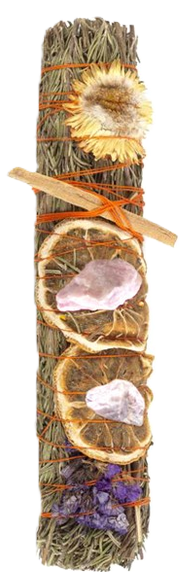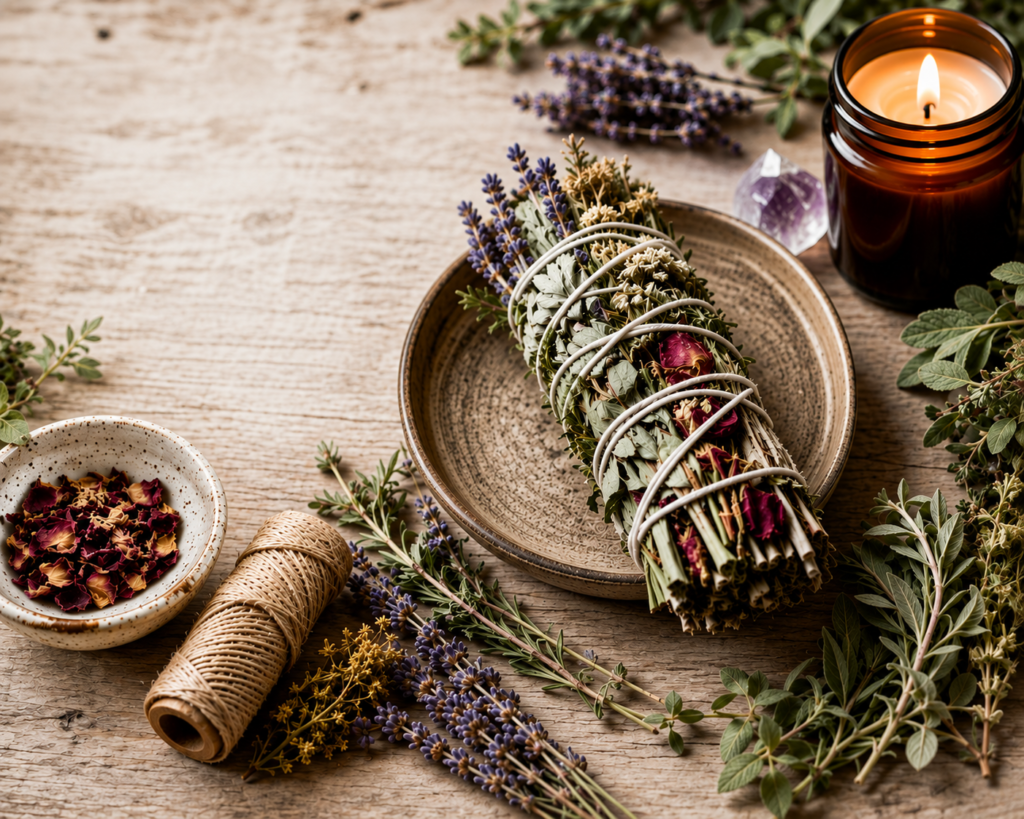
Harnessing the aromatic and purifying power of plants is an ancient ritual. Additionally, it spans cultures and rituals. If you want to clear stale energy from a space, this practice helps. Craft your Own smudge to add a deeply personal intention to the ritual. Making them by hand connects you directly to the botanical properties and supports mindful, sustainable sourcing.
This comprehensive guide explains how to select safe and fragrant botanicals. It also covers binding fresh herbs with natural twine. You will learn to prepare cleansing sticks for a clean, aromatic burn. It also suggests safe handling and storage considerations.
Finally, follow the curing steps to ensure a steady, pleasant burn. Craft your Own smudge in a way that suits your space, rituals, and preferences. Keep the sticks dry and store them in a cool, dark place. With patience, your blends will perform reliably.
Required Materials & Tools
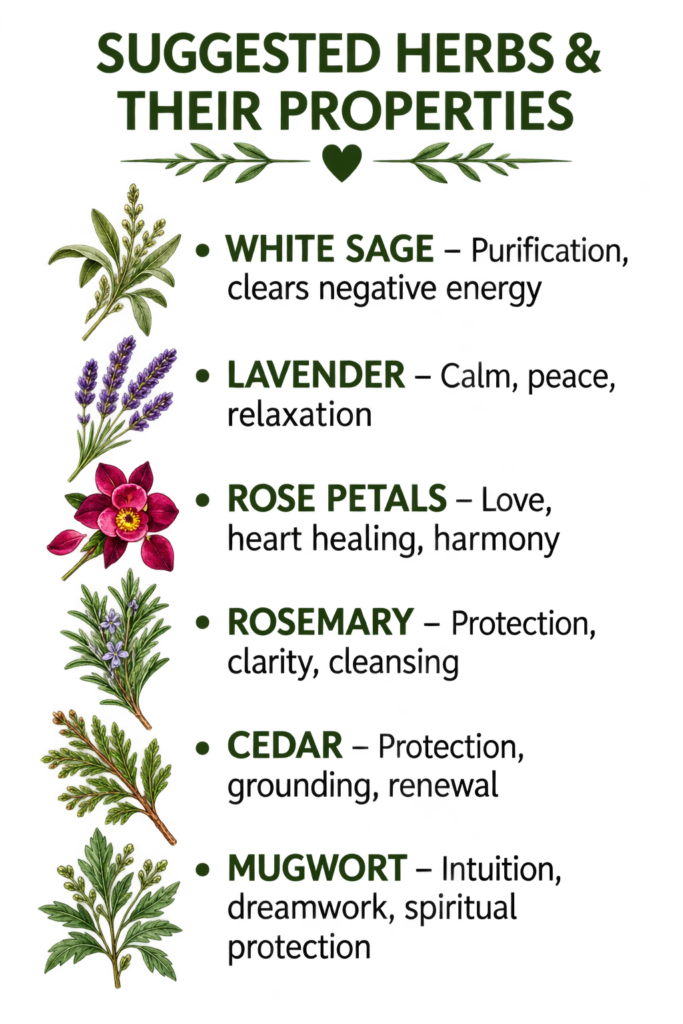
Base Herbs (6–8 inch sprigs): Rosemary, garden sage, thyme, or lavender (stiff stems provide structural support).
Best Companion Garden Herbs for Rose & Rosemary Sticks
| Botanical | Structural Role | Scent Profile | Burn Characteristic |
| Rosemary | Rigid core / spine | Pine-like, invigorating | Slow, steady smoulder |
| Rose Petals | Outer layer / floral accent | Sweet, delicate, soothing | Needs dry packing to stay lit |
| Garden Sage | Mid-layer binder | Earthy, herbaceous | High smoke volume, reliable ember |
| Lavender | Spine & fragrance | Floral, camphoraceous | Gentle crackle, calming aroma |
| Thyme | Filler / density builder | Warm, spicy, grounding | Fast-burning, highly aromatic |
- Binding String: 100% natural cotton twine, unbleached hemp, or baker’s twine. (Never use synthetic fibres, polyester, or dyed threads, as they release toxic plastic fumes when burned).
- Accent Botanicals: Fresh or semi-wilted pesticide-free rose petals, chamomile heads, or bay leaves.
- Scissors & Pruners: Sharp garden shears.
Method
1. Preparation
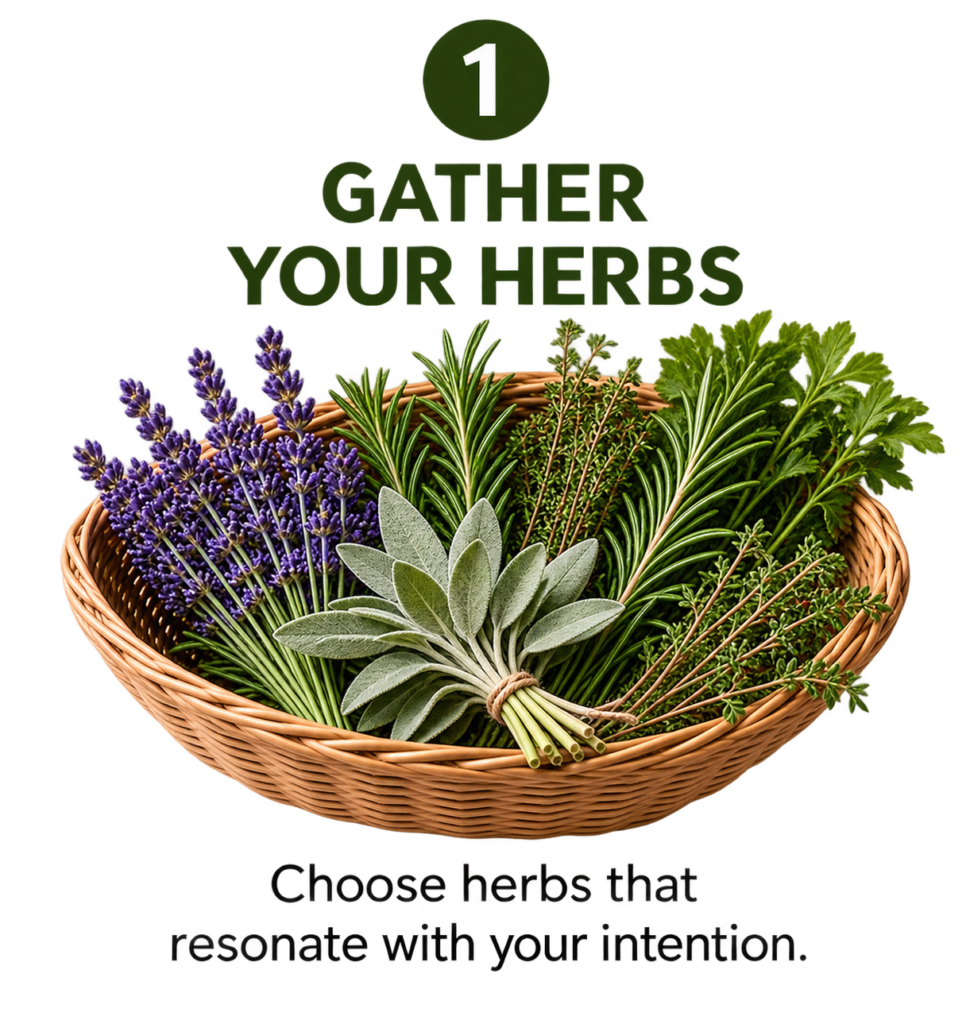
Cut herbal branches 6 to 8 inches (15–20 cm) in length. Harvest in late morning once the morning dew has completely evaporated but before peak midday heat dissipates the plant’s volatile oils. Select firm, vibrant stems with zero pest damage or mildew.
2 Wilt Botanicals (Pre-Drying Phase)
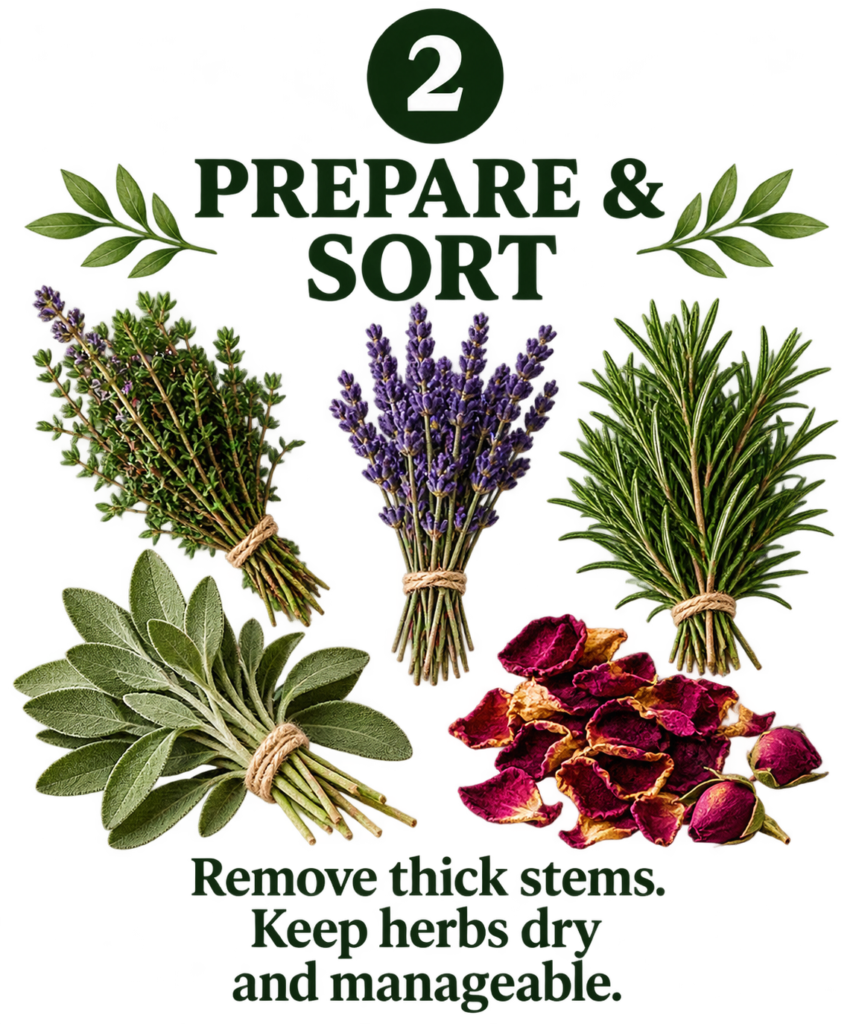
Spread harvested stems and fresh rose petals flat on a clean cloth or mesh tray for 12 to 24 hours.
Why this matters: Binding fully fresh, crisp herbs traps excess moisture in the core, causing internal rot and mould. Letting them wilt slightly makes the stems pliable and easy to compress without snapping.
3 Layer and Assemble the Bundle Core
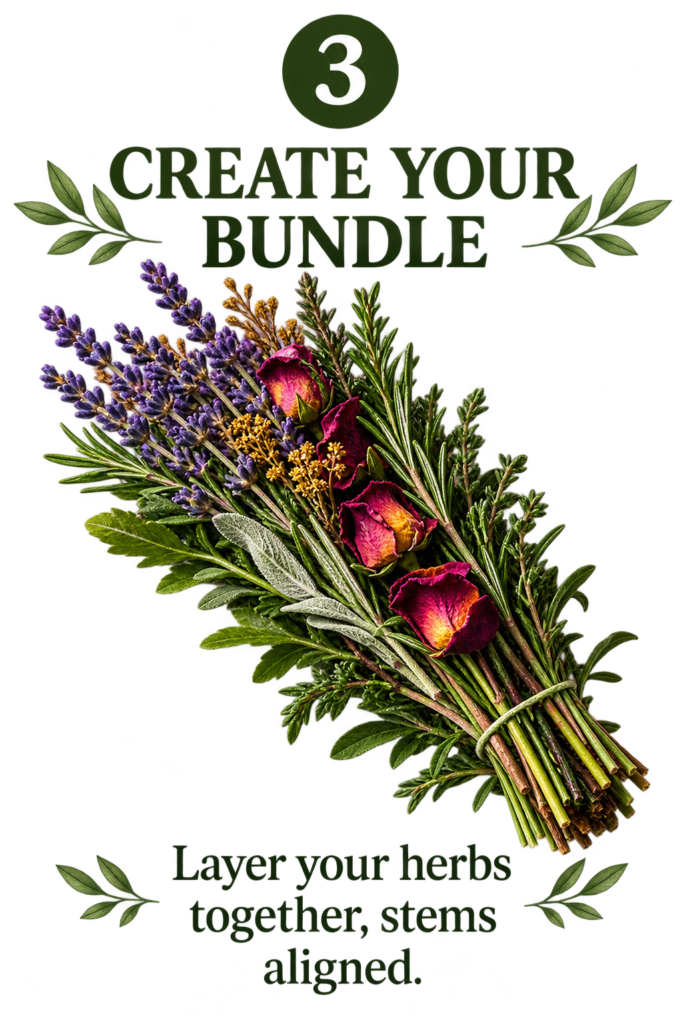
- Place your stiffest, woody stems (such as rosemary or lavender stalks) at the back to form a sturdy “spine.”
- Layer broader leaves (garden sage, bay) in the centre to catch falling embers during future burns.
- Place fresh rose petals and fragile floral accents on the outer, visible side.
- Trim the base stems evenly so they sit flush at the bottom.
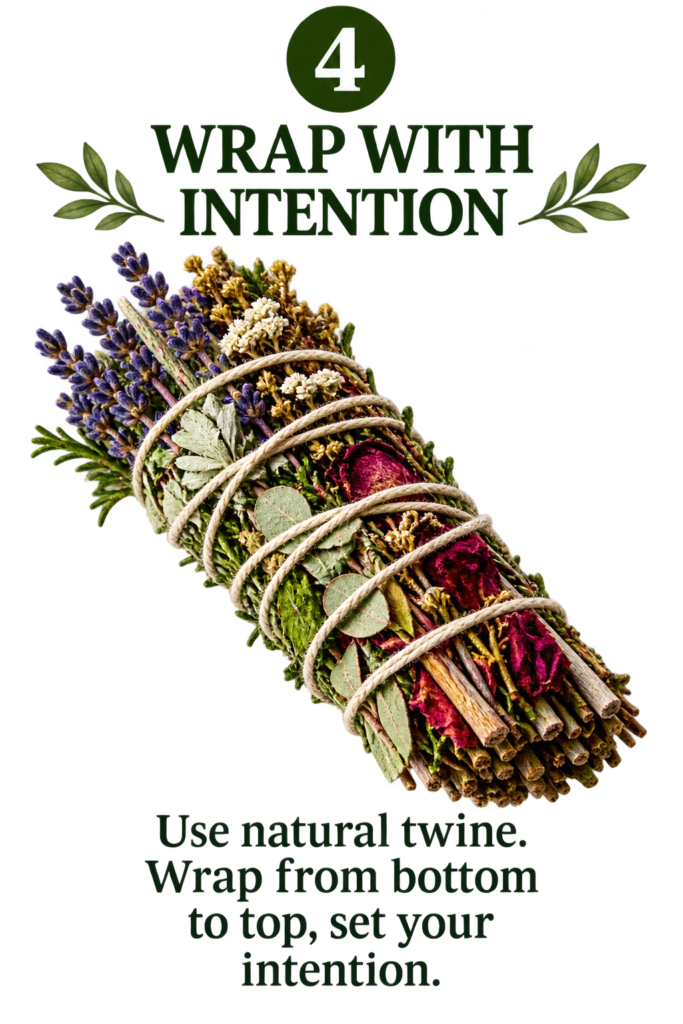
Cut a piece of natural cotton twine roughly 4 to 5 times the length of your bundle (approx. 3–4 feet / 1 meter).
- Anchor the Base: Knot the twine firmly around the bottom stem cut-ends, leaving a 2-inch tail.
- Spiral Upward: Wrap the twine upward at a 45-degree angle toward the tip, pulling firmly to compress the foliage. Fold any loose leaves inward as you wrap.
- Bind the Tip: Wrap tightly 2–3 times around the top tip to secure loose petals.
- Crisis-cross Downward: Wrap back down the bundle in the opposite diagonal direction, creating a cross-hatch (diamond) pattern.
- Tie Off: Tie the active string to your original base tail with a secure double knot. Trim excess string.
Note: Herbs shrink by roughly 30–50% as water evaporates. If you do not bind tightly, the dried bundle will fall apart.
5 Cure and Dry the Bundles
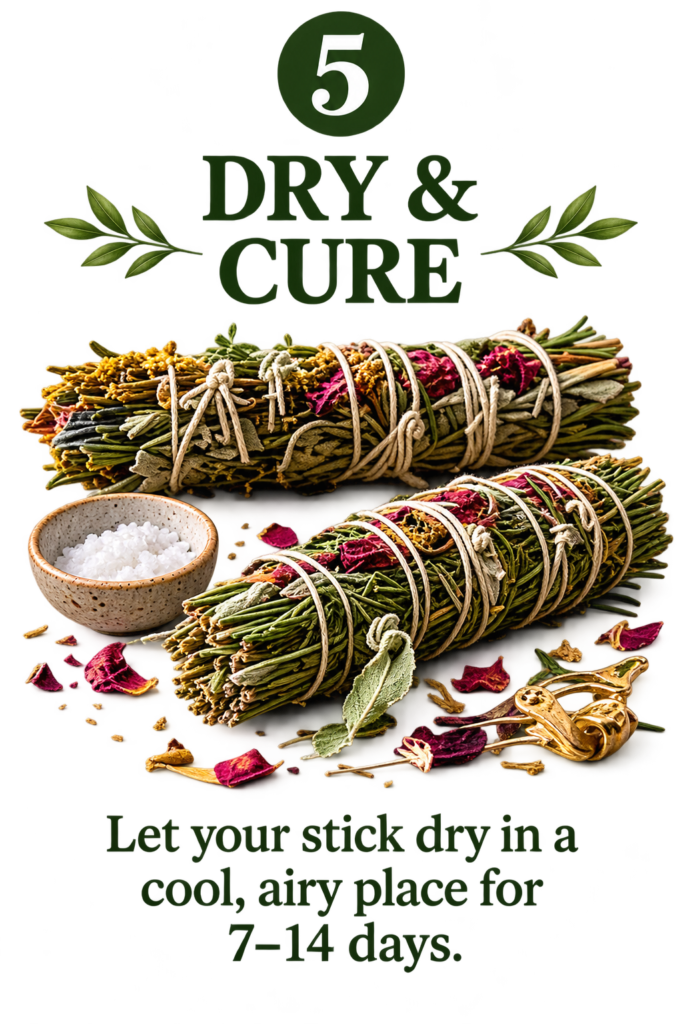
Hang the bundles upside down in a warm, dry, dark, and well-ventilated area (such as a pantry, closet, or attic) using pegs or hanging twine.
- Avoid direct sunlight: UV light bleaches vibrant rose petals and degrades aromatic monoterpenes.
- Curing duration: Allow 14 to 21 days to fully dry. The stick is ready when a bent stem snaps crisply rather than bending.
Best Companion Garden Herbs for Rose & Rosemary Sticks
How do I tighten or re-wrap smoke sticks if they become too loose ?
Because garden botanicals shrink by 30% to 50% as water evaporates, loosely bound sticks will drop brittle leaves and unravel during burning.
How to Tell If the Tension Is Right
| Check | Under-Bound (Too Loose) | Correctly Bound | Over-Bound (Too Tight) |
| Feel | Feels spongy; leaves rattle or fall out when tapped | Firm, dense cylinder with slight give when pressed | Hard as a wooden dowel; leaves are crushed into dust |
| Burn Result | Flared open flame; burns down in seconds | Steady, slow smoulder with thick aromatic smoke | Embers choke out immediately due to zero airflow |
Option 1: The “Cinch-and-Re-Tie” Method (Fastest)
Use this method if the original twine is intact and the leaves haven’t fallen out of alignment.
- Locate the bottom knot: Untie or carefully snip the bottom knot without unravelling the whole strand.
- Work from the tip down: Gently hold the bundle in one hand. With your other hand, pull the twine tighter section-by-section, working from the top down to the base to compress the dried leaves back into a firm cylinder.
- Re-knot at the base: Pull the remaining slack taut and double-knot it securely around the woody stem ends. Trim any excess cord.
Option 2: The “Secondary Over wrap” (Recommended for Brittle Herbs)
If your bundle contains delicate items like rose petals, unrolling the original string will cause the fragile, crispy leaves to crumble. Adding a second layer of twine over the existing wrap holds everything securely without disturbing the dry core.
- Keep the original twine in place: Do not remove the loose string; it acts as a cage keeping the dried shape intact.
- Cut a fresh piece of 100% natural cotton or unbleached hemp twine (about 3 feet / 1 meter).
- Anchor at the base: Tie the new twine tightly around the base stems with a secure double knot, leaving a short tail.
- Crisis-cross tightly over the gaps:
- Spiral upward at a steep diagonal, pulling firmly so the dry bundle compresses.
- Cross over the loose sections where the old string has slackened.
- Wrap twice around the top tip, then spiral back down in the opposite direction to form a dense crisis-cross/diamond pattern.
- Tie off at the base: Knot the new twine to your starting tail and trim the ends flush.
Option 3: The “Mist and Re-Roll” (For Severely Warped or Broken Bundles)
If the stick has lost its shape completely or flattened out:
- Lightly mist with distilled water: Place the bundle on a clean surface and give it 1–2 fine mists from a spray bottle.
- Wait 10–15 minutes: The dried plant matter will absorb just enough ambient humidity to become pliable without getting wet.
- Unwrap and re-roll: Remove the old string, re-align the sprigs tightly, and bind firmly with fresh cotton twine.
- Dry for 48–72 hours: Hang upside down in a warm, dry spot for 2 to 3 days to evaporate the surface moisture before lighting.
How do I add frankincense, copal, or myrrh resin into herbal smoke sticks without them falling out?
Tree resins like frankincense (Boswellia), copal (Protium), and myrrh (Commiphora) melt into a hot liquid before vaporising. If placed loosely on the outside of a stick, chunks will simply fall out or drip boiling resin onto surfaces.
Method 1: The “Burrito Leaf Pocket” (Best for Small Resin Tears)
This method uses large, pliable dried leaves to trap small resin tears deep inside the core of the herb bundle.
- Crush the Resin: Use a mortar and pestle to break resin chunks down to the size of coarse sea salt or small lentils (approx. 2–3 mm). Avoid grinding to a fine powder, which can clog airflow and choke the ember.
- Select Pocket Leaves: Take 2 to 3 large, broad leaves (such as garden sage, culinary bay laurel, or mullein).
- Assemble the Envelope:
- Lay the broad leaf flat and place 1/2 teaspoon of crushed resin down the centre.
- Fold the top, bottom, and sides inward like a miniature envelope or wrap.
- Place in the Bundle Core:
- Form the structural spine with woody herbs (rosemary or cedar).
- Place the folded resin packet directly in the centre of the bundle.
- Surround the packet with remaining foliage so the resin is completely enclosed by plant matter.
- Bind Tightly: Wrap with cotton twine using a dense crisis-cross pattern. When burned, the surrounding leaves hold the melting resin in place, allowing the liquid to soak into the plant fibres and vaporise steadily.
Method 2: The “Herbal Glue” Paste (Best for Fine Resin Dust)
For fine resin powder, a natural botanical binder adheres the resin directly to the inner surface of the leaves during assembly.
- Make a Natural Binder:
- Mix 1/4 teaspoon of gum arabic or makko powder (or a few drops of warm honey/water solution) with warm water to create a thin, tacky syrup.
- Coat the Inner Leaves: Brush the liquid lightly onto the inner faces of your core herbs (rosemary, sage, or cedar sprigs).
- Dust the Resin: Sprinkle fine resin dust across the sticky surface.
- Encase and Wrap: Sandwich the dusted stems between clean outer leaves and bind tightly with cotton twine.
- Dry Completely: Allow the bundle to dry for at least 7–10 days until the moisture from the binder has completely evaporated.
Method 3: Botanical “Dipping” / Resin Infusion (Advanced)
For an even, slow burn without any loose particles:
- Melt the Resin: In a heat-safe metal dish over very low heat (or a double boiler dedicated to craft use), gently melt powdered copal or frankincense with a few drops of high-proof alcohol or neutral carrier oil until liquid.
- Paint the Stems: Use a natural-bristle brush to paint a thin layer of the warm liquid resin directly onto the central woody stems of rosemary or cedar.
- Cool & Assemble: Let the resin harden on the stems for 10 minutes, then bundle and bind as normal.
Critical Safety Rules for Resin Sticks
- Never Place Resin on the Exterior: Always keep resins nestled at least one layer deep inside the bundle. Exposed melting resin can drip off the stick and cause severe burns or damage furniture.
- Keep Ratios Low: Use no more than 10% to 15% resin by volume relative to dried herbs. Too much resin will extinguish the ember or turn into an unmanageable flaming tar.
- Always Burn Over a Heatproof Dish: Always hold the bundle over a cast-iron skillet, ceramic bowl, or abalone shell with sand to catch any falling embers or resin drippings.
What are the essential materials and steps to make a handmade herbal smoke cleansing stick?
The essential materials are base herbs such as rosemary, garden sage, thyme, or lavender, 100% natural cotton twine or unbleached hemp, accent botanicals like rose petals or bay leaves, and a sharp pair of scissors. Follow the method: prepare 6–8 inch stems, wilt them 12–24 hours, layer the spine and center with sturdy greens, add outer petals, trim the base evenly, wrap tightly with natural twine in a diagonal cross-hatch, and finally cure the bundles in a warm, dry, dark place for 14–21 days until fully dry.
How should I prepare the botanicals before assembling the bundle?
Cut the herbal branches to 6–8 inches in length and harvest in late morning after dew has evaporated. Spread the stems and petals on a clean cloth or tray to wilt for 12–24 hours to remove excess moisture, which helps prevent rot and makes the bundle easier to compress without snapping.
How do I ensure the bundle burns steadily and is not under- or over-bound?
To achieve a steady burn, bind until the bundle is a firm, dense cylinder with slight give when pressed. If under-bound, leaves may rattle or fall out; if over-bound, the bundle becomes hard as a dowel. Use the tension checks: a correctly bound stick should feel firm with a slight give, and burn with a slow, steady smoulder rather than flaring or choking.
What are the safe methods for adding resins like frankincense, copal, or myrrh without them falling out?
Resins should be kept inside the core, not on the exterior. Use methods such as the Burrito Leaf Pocket to trap small resin tears inside a pocket leaf, the Herbal Glue paste to bind resin dust to inner surfaces, or Botanical Dipping to infuse the resin. Each method involves enclosing the resin within plant matter and binding tightly with cotton twine, then drying the bundle thoroughly to prevent leakage.
How long does curing take and how should I store the finished sticks?
Curing takes 14 to 21 days in a warm, dry, dark, well-ventilated area, avoiding direct sunlight. The sticks are ready when the stems snap crisply instead of bending. Store the finished bundles in a cool, dry place to maintain aroma and structural integrity.
There are my personally selected and curated products
Products by Category

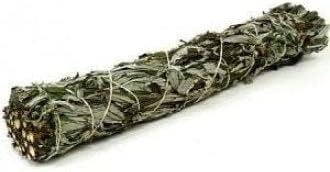
Black Sage smudge stick
£15.00
Blue Sage Smudge Stick
£7.99
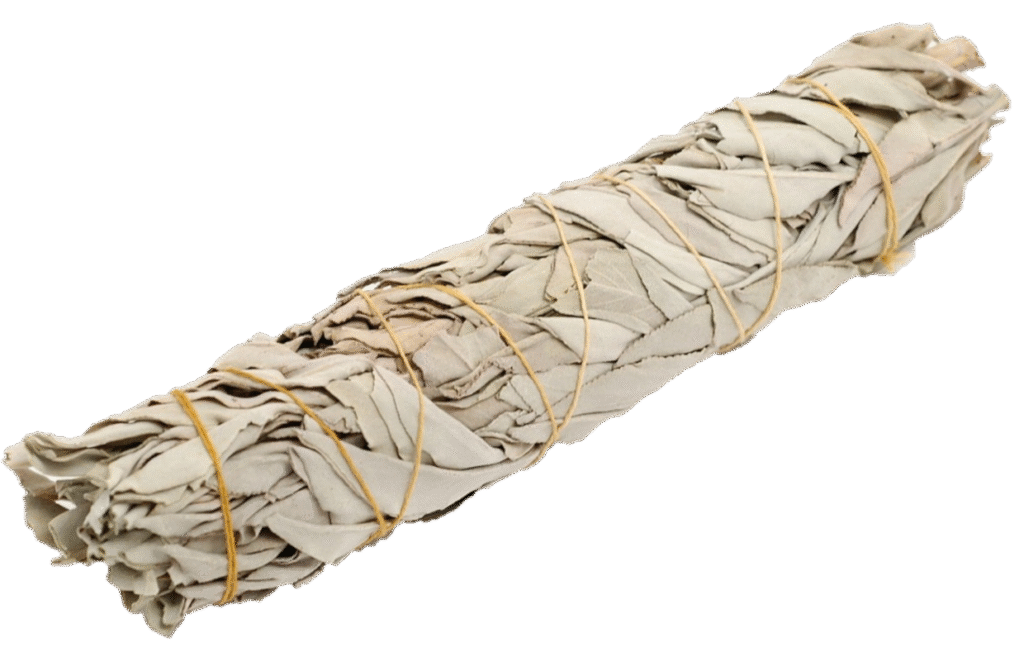
Californian white sage smudge stick
£6.50
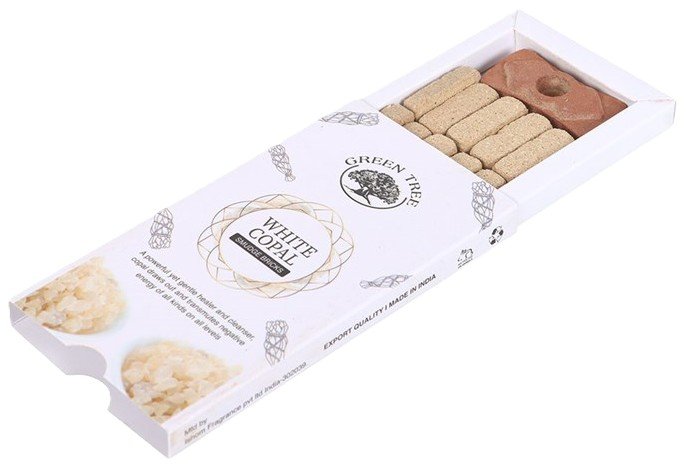
Copal Incense Bricks
£3.99
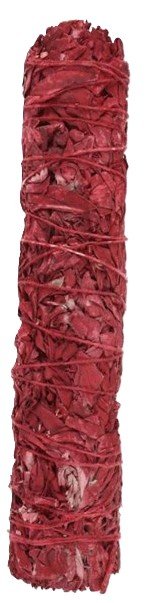
Large Dragon’s Blood Smudge Stick
£16.99
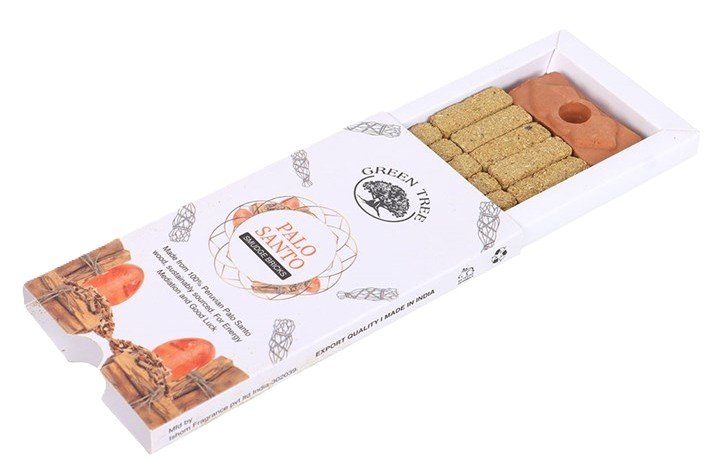
Palo Santo Smudge Bricks
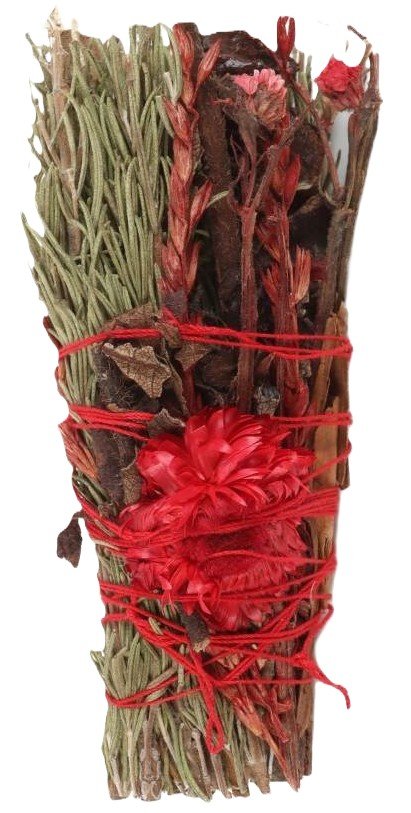
£3.99Rosemary and Red Flowers Smudge Stick
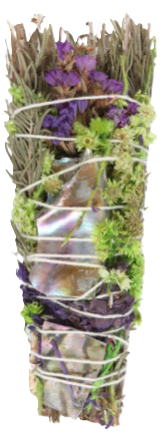
Original price was: £15.00.£12.00Current price is: £12.00.Rosemary, Lavender and Abalone Smudge Stick
Original price was: £15.00.£12.00Current price is: £12.00.Rosemary, Lavender and Orange Smudge Stick
Original price was: £20.00.£15.00Current price is: £15.00.