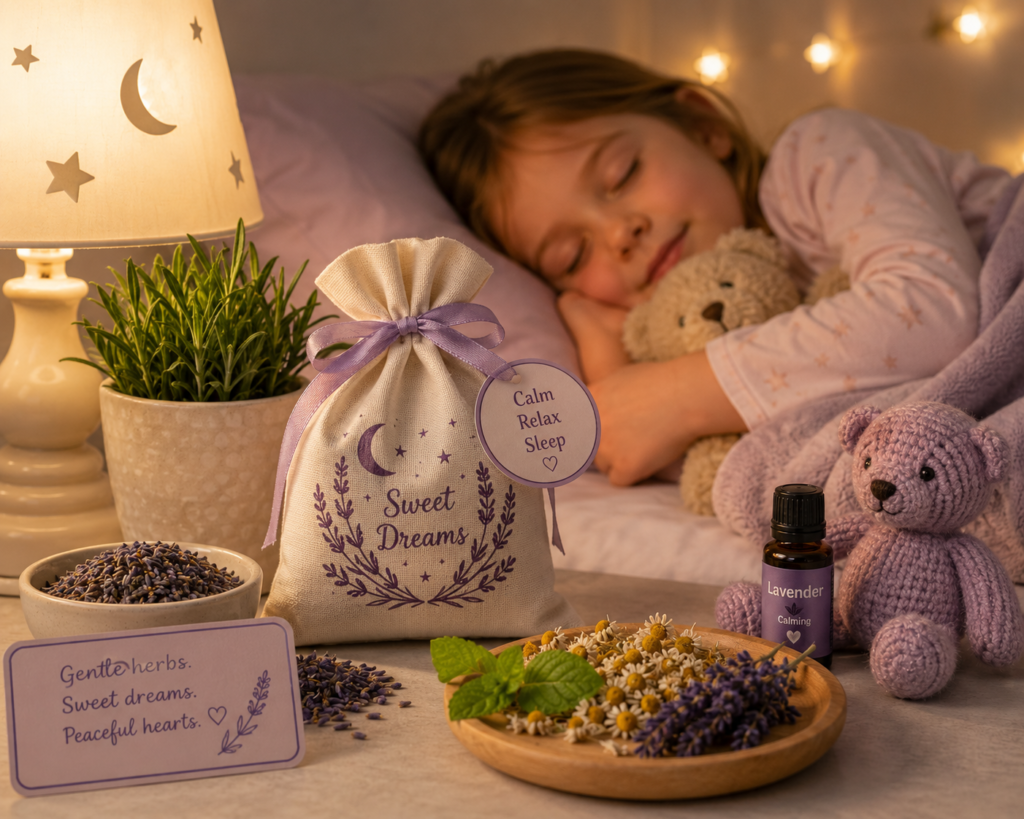
When designing calming bedtime herbal sachets for children—whether themed around banishing nighttime “creepies” (worries, shadows, or “monsters”) or as soothing sleep aids—safety, ingredient selection, and construction require specific formulation guidelines.
1. Child-Safe Botanical Ingredients (Ages 3+)
Children have more sensitive respiratory pathways and olfactory systems than adults. Use only mild, non-irritating dried botanicals with low volatile oil intensity:
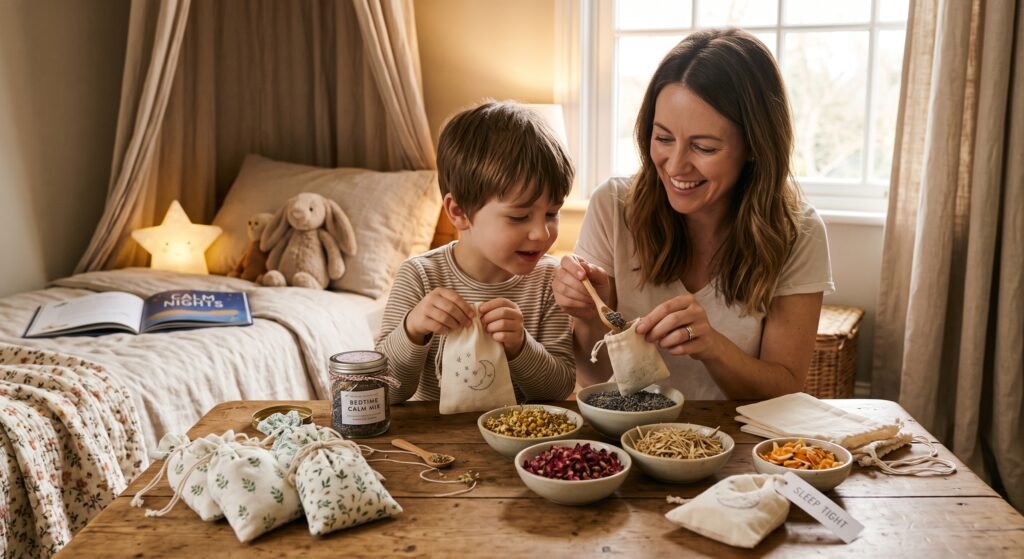
- German or Roman Chamomile Flowers (Matricaria chamomilla / Chamaemelum nobile): Gentle, sweet apple-like aroma that reduces restlessness and promotes calmness.
- English Lavender Buds (Lavandula angustifolia): Proven sedative properties via linalool and linalyl acetate. Note: Use True English lavender rather than Lavandin (Lavandula x intermedia), which has a higher camphor content.
- Lemon Balm Leaf (Melissa officinalis): Mild lemon scent that eases nervous tension and nighttime agitation.
- Sweet Marjoram (Origanum majorana): Grounding, warm herbal aroma suited for settling overstimulated minds.
- Rose Petals (Rosa damascena): Soft, comforting scent that blunts stronger herbal notes.
2. Botanicals to Strictly Avoid in Children’s Bedtime Sachets
- High-camphor/high-cineole herbs: Eucalyptus, Rosemary, Peppermint, Camphor, and Wintergreen. These can trigger respiratory spasms (bronchospasm) or irritation in young children.
- Hops (Humulus lupulus): Too heavy and sedating; often has strong hormonal/phytoestrogen considerations not suited for young children’s bedding.
- Mugwort (Artemisia vulgaris) / Wormwood: Often used in adult dream pillows to induce lucid dreams, which can cause vivid nightmares, night terrors, or sensory overload in children.
- Undiluted Essential Oils: Avoid dropping raw essential oils directly into child sachets to prevent direct skin contact, leaking, or overwhelming volatile vapours. Rely on whole dried flowers and leaves, or low-dose infused carrier medium (e.g. baking soda/flaxseed base).
3. Balanced Child-Safe Recipe Formulation
| Ingredient | Proportion (by weight) | Function |
| Dried Chamomile Flowers | 40% | Core calming base, gentle sweet fragrance |
| Dried English Lavender | 25% | Nervous system regulation, sleep induction |
| Dried Lemon Balm / Sweet Marjoram | 20% | Reduces bedtime restlessness and worry |
| Dried Pink Rose Petals | 15% | Aromic balance, soft texture |
4. Safety & Construction guide
- Double-Pouch Enclosure: Use an inner sealed/stitched muslin or unbleached cotton bag, placed inside a washable outer sleeve (cotton or linen). This prevents dried botanical dust or small seeds from escaping into the bed.
- No Loose Drawstrings or Buttons: For toddlers and young children, use securely sewn envelope closures or machine-stitched seams to eliminate choking and entanglement hazards.
- Placement: Place the sachet inside the pillowcase (under the pillow itself, rather than directly touching the face) or on the bedside table/night stand so the child enjoys the subtle ambient scent without direct contact.
Frequently Asked Questions
What are the recommended child-safe botanical ingredients for ages 3+ in calming bedtime sachets?
For children aged 3 and up, use mild dried botanicals with low volatile oil intensity such as German or Roman chamomile flowers, English lavender buds (True English lavender, not Lavandin), lemon balm leaf, sweet marjoram, and rose petals to create a gentle, calming aroma without irritants.
Which botanicals should be strictly avoided in children’s bedtime sachets?
Avoid high-camphor or high-cineole herbs like eucalyptus, rosemary, peppermint, camphor, and wintergreen; hops due to strong sedative effects; mugwort or wormwood because they can cause nightmares; and undiluted essential oils, which should not be added directly to sachets to prevent skin contact, leakage, or overpowering vapours.
What is the recommended balance of ingredients and their function in a child-safe sachet recipe?
A balanced recipe can include 40% dried chamomile flowers as the calming base, 25% dried English lavender for nervous system regulation and sleep induction, 20% dried lemon balm or sweet marjoram to reduce restlessness and worry, and 15% dried pink rose petals for aromatic balance and soft texture.
What safety and construction guidelines help prevent hazards in child calming sachets?
Use a double-pouch enclosure with an inner sealed muslin or unbleached cotton bag inside a washable outer sleeve; avoid loose drawstrings or buttons by using securely sewn envelope closures or machine-stitched seams; place the sachet inside the pillowcase (under the pillow) or on the bedside table so the scent is enjoyed without direct contact with the child.
Where should the calming sachet be placed to ensure safety and effective aroma for a child’s bedtime routine?
Place the sachet inside the pillowcase, under the pillow, or on the bedside table/night stand so the child benefits from the subtle ambient scent without direct contact with the face.