Azurite, a captivating deep-blue mineral, has long fascinated both scientists and crystal enthusiasts alike. Its striking colour and intricate formation have inspired myriad legends, artistic breakthroughs, and metaphysical uses throughout history.
Origins and Alternate Names
The name Azurite is derived from the Arabic word lazaward and the Persian lāžward, both of which refer to blue stones. This linguistic root later gave rise to the French word azur (azure), meaning blue. Historically, azurite has been known by various alternative names, including blue copper ore, chessylite (after a famous deposit in Chessy, France), and azurit—each echoing its distinctive, vibrant hue and its importance as a copper-bearing mineral.
Geological Composition and Physical Characteristics
Chemically, azurite is a copper carbonate hydroxide mineral with the chemical formula Cu3(CO3)2(OH)2. This specific composition gives it a vivid blue color that can range from bright, almost electric shades to deeper, more subdued indigo tones.
Typically found in botryoidal (grape-like clusters) or stalactitic forms, azurite frequently forms alongside malachite, another copper carbonate mineral. When these two minerals intergrow, they create a stunning green-and-blue gemstone known as azurmalachite.
Global Mining Locations and Variations
Azurite is found in copper-rich geological environments across the world, including Australia, Morocco, France, and Namibia. Notable deposits in the United States occur within the copper-rich veins of Arizona, particularly in Bisbee and Morenci.
The K2 Azurite Granite Variation
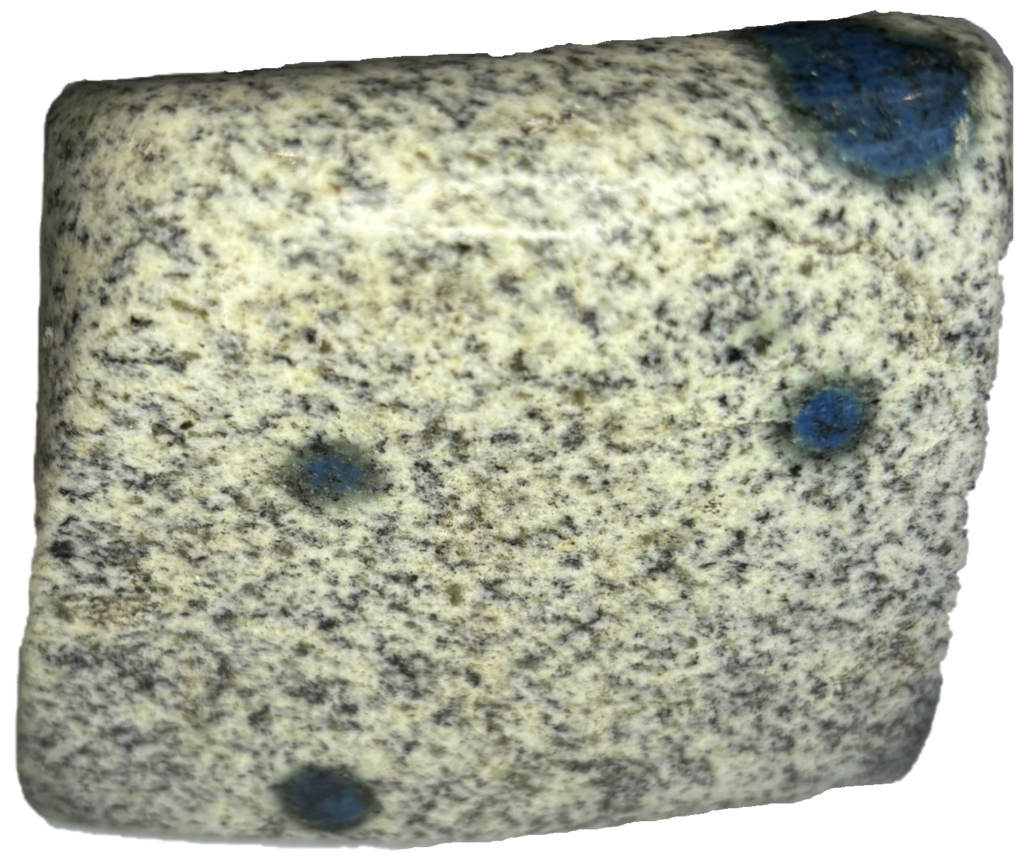
An especially prized and rare variant is found in the high-altitude regions of the Karakoram Range near the K2 mountain peak. Commonly referred to as K2 Jasper (though it is geologically a granite), this stone features spheres of intense, deep-blue azurite droplets naturally embedded within a bright white granite matrix.
Historical Uses and Archaeological Finds
Archaeological records reveal that ancient cultures valued azurite for both its beauty and its functional properties:
- Ancient Egypt: Artisans ground raw azurite into a fine powder to produce a rare, sacred blue pigment used in wall paintings, cosmetics, and amulets. It was heavily associated with royalty, mystery, and the divine.
- The Renaissance: From the Middle Ages through the Renaissance, azurite was the primary blue pigment used in European oil paintings and illuminated manuscripts. Over time, however, many of these painted blue skies have subtly weathered into green malachite due to atmospheric moisture.
Today, azurite continues to be a favorite among mineral collectors and is utilized in fine jewelry, ornamental carvings, and metaphysical tools.
Folklore, Legends, and Tales
Throughout history, multiple cultures have regarded azurite as a stone of heavenly wisdom and intuition.
- Ancient Myths: Some legends claimed that azurite possessed the power to reveal hidden truths and enhance psychic sight.
- Medieval Europe: Due to its resemblance to the night sky, it was believed to connect humans to celestial guardians and protect against the “evil eye” or malevolent forces. Its rarity made it an exclusive status symbol among wealthy merchants and nobility.
Metaphysical Meaning, Chakras, and Astrology
In the realm of crystal healing, azurite is revered as the “Stone of Heaven.” It is believed to stimulate the intellect, dissolve mental blocks, and help practitioners access higher states of consciousness. (Note: These benefits are rooted in metaphysical belief systems rather than scientific consensus).
The Chakra System
- Third Eye Chakra (Primary): Azurite is most closely linked with the Third Eye Chakra, which governs intuition, insight, and psychic awareness. It is used in meditation to clear energy blocks and foster clarity of mind.
- Crown Chakra: It is also used to activate the Crown Chakra, encouraging a harmonious flow of spiritual energy and higher wisdom.
Zodiac and Astrology Links
Astrologically, azurite aligns closely with the water signs Pisces and Scorpio, supporting their natural intuitive capacities. It is also tied to Sagittarius, enhancing the visionary, truth-seeking nature of those born under the sign.
Birthstone and Anniversary Traditions
While azurite is not an official modern birthstone, its celestial blue tones make it a popular alternative birthstone for Sagittarius (December). It is also frequently chosen as a meaningful, unconventional wedding anniversary gift to symbolize deep emotional bonds, loyalty, and insight.
Crystal Pairings for Azurite
Combining crystals can amplify their energetic properties. When pairing other minerals with azurite, focus on stones that support mental clarity, intuition, or grounding.
Best Crystals to Pair with Azurite
- Malachite: The ultimate pairing. Because they naturally grow together, malachite’s grounding, heart centred energy perfectly balances azurite’s high-vibrational spiritual energy.
- Lapis Lazuli: Both stones resonate strongly with the Third Eye and Throat chakras. Together, they enhance deep communication, inner truth, and intellectual thought.
- Clear Quartz: Known as the “Master Amplifier,” clear quartz boosts the natural intuitive frequencies of azurite, making it excellent for deep meditation.
- Black Tourmaline or Smoky Quartz: Because azurite opens up high-frequency spiritual centres, pairing it with a strong grounding stone prevents feelings of being “spacey” or ungrounded.
Crystals to Avoid Pairing with Azurite
- Carnelian or Sunstone: High-energy, fiery motivation stones can clash with the deeply introspective, quiet, and intellectual energy of azurite, creating a chaotic or conflicting energetic environment.
- Highly Stimulating Crystals (e.g., Citrine): While fine for daily productivity, pairing azurite with intense solar plexus stones can disrupt the calm, meditative focus required for third-eye work.
Frequently Asked Questions (FAQ)
Is azurite rare?
Yes, high-quality, vibrant blue azurite crystals are relatively rare. Because azurite easily weathers into malachite over geological time, pristine specimens are highly sought after by mineral collectors
Can azurite get wet?
No, azurite should not be submerged in water. It has a low score on the Mohs hardness scale (3.5 to 4) and contains copper. Water can damage its glossy luster, cause it to structurally degrade over time, or accelerate its conversion into green malachite. Never use water to clean it; stick to a soft, dry cloth.
Why does azurite turn green?
Azurite is chemically unstable when exposed to prolonged moisture and air. It undergoes a chemical reaction that alters it into malachite (a green copper carbonate). This process takes place over thousands of years in nature, but can be accelerated by improper storage.
Why does azurite turn green?
Azurite is chemically unstable when exposed to prolonged moisture and air. It undergoes a chemical reaction that alters it into malachite (a green copper carbonate). This process takes place over thousands of years in nature, but can be accelerated by improper storage.
How can you tell if azurite is real?
Real azurite features an irregular, rich, deep indigo colour and is often accompanied by patches of green malachite or a brown/gray rock matrix. Fake azurite is often made from dyed chalcedony, plastic, or resin, which will look overly uniform, lack crystalline structure, and feel warm or lightweight to the touch.
What chakra is azurite good for?
Azurite is primarily used to balance and activate the Third Eye Chakra, which enhances intuition, inner vision, and mental clarity. It can also be applied to the Crown Chakra for spiritual connection.
How should I cleanse and charge my azurite crystal?
Because azurite cannot tolerate water or salt, the safest methods to cleanse it are smoke smudging (using sage or palo santo), placing it on a selenite charging plate, or exposing it to indirect moonlight. Avoid direct sunlight, as heat and UV rays can cause its brilliant blue colour to fade.e, a captivating de
These are my personally selected and curated Azurite product collection