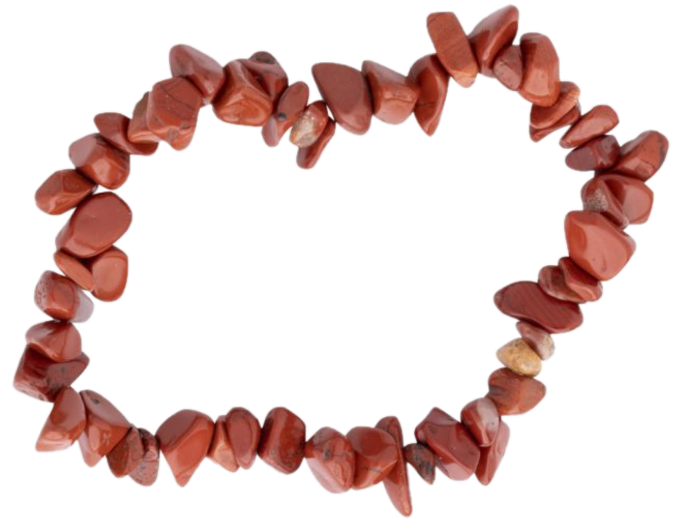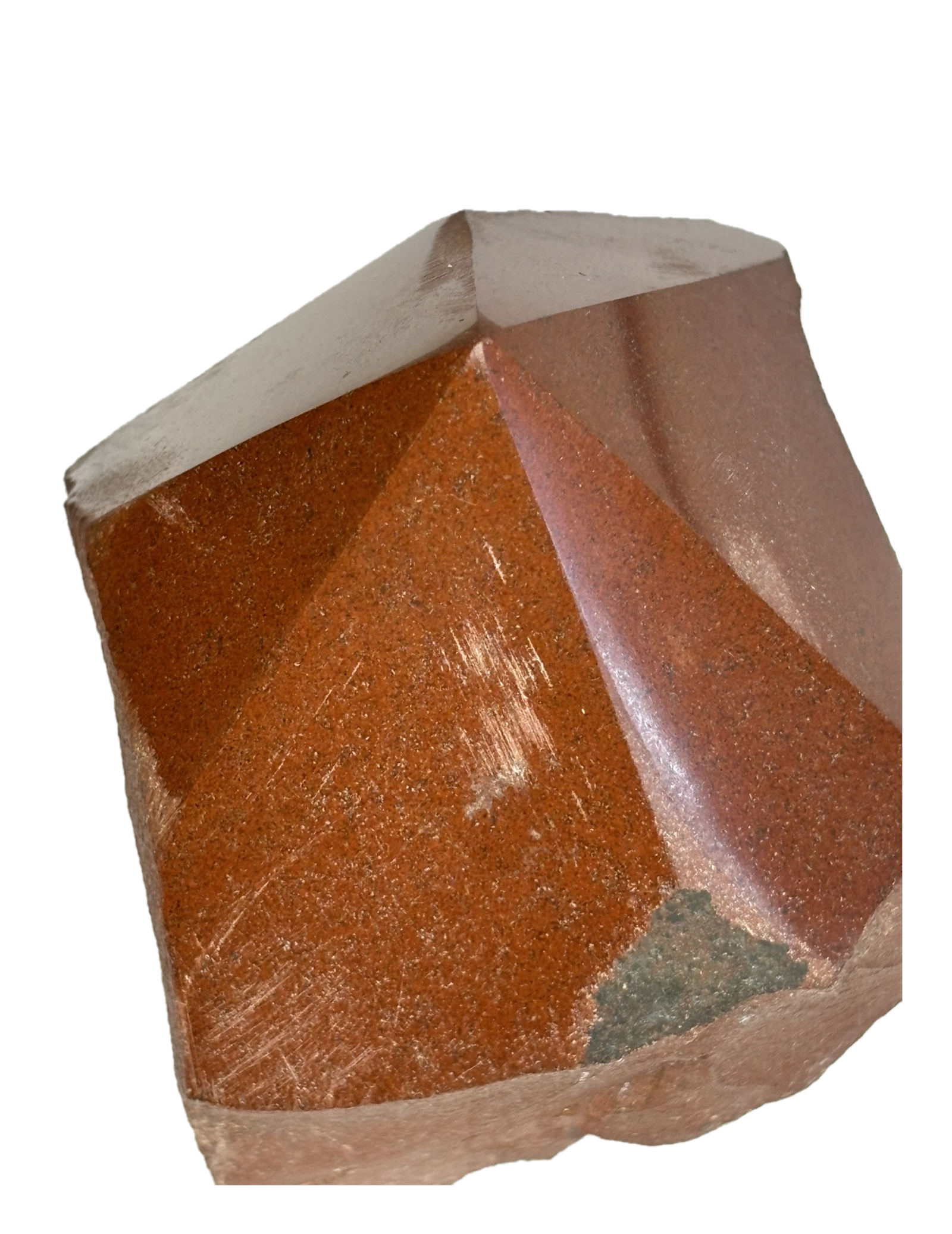
Red jasper is an opaque, microcrystalline variety of quartz renowned for its rich brick-red to terracotta colouring. For millennia, cultures across the globe have revered this dense mineral as a stone of vitality, endurance, and protection. Formed through ancient silica-rich sedimentary and volcanic processes, red jasper owes its fiery coloration to heavy iron oxide inclusions. Frequently utilised in ornamental carving, lapidary arts, and holistic practices, it serves as a cornerstone material among grounding gemstones. Its exceptional durability and smooth finish continue to make red jasper a staple in modern jewellery design, lapidary workshops, and mineral collections worldwide.
Alternate names
- The Stone of Endurance
- The Supreme Nurturer
- Blood of the Earth / Blood of Isis (historical Egyptian context)
- Silex (archaic and regional lapidary term)
- Basanite (historically confused touchstone variant)
The Stone’s Science and Composition
Red jasper is categorised under the quartz family as a dense, impure cryptocrystalline chalcedony aggregate ($\text{SiO}_2$). Unlike macrocrystalline quartz (such as amethyst or citrine), jasper comprises microscopic quartz crystals interwoven with fibrous chalcedony.
The defining red hue comes from finely dispersed iron oxide inclusions, predominantly haematite ($\text{Fe}_2\text{O}_3$), which infiltrate the silica during sedimentation or hydrothermal alteration. Mineral impurity levels often range between 5% and 20%, contributing to the stone’s complete opacity and distinctive earthy luster.
Key Physical Characteristics
| Property | Value / Description |
| Chemical Formula | $\text{SiO}_2$ (with $\text{Fe}_2\text{O}_3$ inclusions) |
| Crystal System | Trigonal (microcrystalline aggregate) |
| Mohs Hardness | 6.5 – 7.0 |
| Specific Gravity | 2.58 – 2.91 |
| Refractive Index | 1.540 – 1.553 |
| Lustre | Dull to vitreous; waxy when polished |
| Fracture | Conchoidal to splintery |
| Diaphaneity | Completely opaque |
Common Geologic Varieties
- Poppy Jasper: Characterised by orbicular, flower-like clusters of red, yellow, and brown haematite spherulites.
- Brecciated Jasper: Shattered fragments of red jasper naturally re-cemented by gray or white chalcedony and clear quartz veins.
- Ribbon / Banded Jasper: Distinct alternating sedimentary or volcanic bands of crimson red, cream, charcoal, or brown.
- Mookaite Jasper: An Australian radiolarian sedimentary rock showcasing intermixed tones of deep red, mustard yellow, and mauve.
Global Mining and Volcanic Sources
Red jasper forms primarily in silica-saturated hydrothermal veins, volcanic ash beds, and banded iron formations. Key deposit localities include:
- Madagascar: Known for saturated, high-purity red and multi-hued orbicular jasper deposits.
- South Africa: Sources substantial deposits from ancient Precambrian banded iron formations.
- Brazil (Minas Gerais): Abundant reserves producing carving-grade and tumbled lapidary material.
- India (Deccan Traps): Ancient basaltic lava flows hosting chalcedony and red jasper nodules.
- United States: Notable deposits across Arizona, California (Morgan Hill poppy jasper), and Oregon.
- Australia: Western Australian deposits yielding banded and silicified sediment variants.
Crystal Pairings: What to Combine and Avoid
Optimal Crystal Pairings
- Black Tourmaline / Obsidian: Amplifies grounding and protective energetic qualities without overstimulating the user.
- Carnelian: Synergises with red jasper’s iron foundation to stimulate physical vitality, motivation, and creative flow.
- Clear Quartz: Acts as a neutral amplifier, sharpening focus and balancing the dense, heavy vibration of red jasper.
- Smoky Quartz: Creates a cohesive anchor for stress reduction, emotional resilience, and physical endurance.
Crystal Pairings to Avoid
- High-Vibration Ethereals (Moldavite, Phenakite): The rapid, ungrounded frequency of tektites clashes with red jasper’s slow, earthbound density, often creating an unsettled or chaotic dynamic.
- Deep Calming Sleep Stones (Blue Lace Agate, Selenite, Lepidolite): Red jasper’s active, stimulating energy can counteract stones intended for sleep, sedation, and quiet introspection.
Archaeology, Art and Ancient History
Red jasper boasts a documented archaeological footprint dating to the Neolithic era:
- Ancient Egypt: Carved into protective amulets, including the Tyet (“Knot of Isis”), placed upon mummies to guard the deceased in the underworld.
- Minoan Crete: Found carved into cylinder seals and signet rings dating back to circa 1800 BCE, indicating high status and administrative power.
- Ancient Rome: Utilised as a popular material for intaglio signet rings because hot sealing wax does not readily adhere to polished jasper.
- Ancient Americas: Native civilisations across North and South America worked red jasper into bifacial projectile points, ceremonial beads, and decorative effigies.
Folklore, Legends and Sacred Tales
- The Norse Saga of Sigurd: Legend held that the hilt of the hero Sigurd’s dragon-slaying sword, Gram, was inlaid with red jasper to grant invulnerability and steadfast courage.
- Rainmaking Rituals: Indigenous groups throughout the arid regions of North America and Australia used red jasper stones in sacred ceremonies to divine moisture and draw seasonal rainfall.
- Christian Middle Ages: Known colloquially as the “Martyr’s Stone,” red jasper was historically associated with the blood of Christ and used to carve depictions of the Passion to protect the wearer against plague and venom.
Metaphysical and Mystical Healing Properties
In holistic tradition, red jasper is valued as a stabilising, supportive companion:
- Physical Vitality: Believed to support stamina, circulation, and physical endurance during prolonged exertion or illness recovery.
- Emotional Grounding: Associated with neutralizing emotional spikes, reducing anxiety, and fostering steady problem-solving.
- Mental Focus: Encourages pragmatic thinking, organizational discipline, and the fortitude to see long-term projects through to completion.
Astrological Connections
- Aries: Ruled by Mars, Aries harmonizes directly with red jasper’s iron content and fire energy, grounding the sign’s impulsive nature into focused stamina.
- Scorpio: Provides emotional stability and resilience, helping Scorpios navigate deep emotional currents without burnout.
- Leo: Complements Leo’s core solar vitality while anchoring excessive ego or scattered physical drive into sustained action.
The Chakra System
Red jasper connects primarily to the Root Chakra (Muladhara):
- Base Anchoring: Situated at the base of the spine, the root chakra governs safety, stability, and fundamental survival needs. Red jasper balances hyperactive or deficient root energies, anchoring personal awareness firmly into the physical body.
- Secondary Resonance (Sacral Chakra / Svadhisthana): Due to its warm terracotta undertones, red jasper also lends gentle grounding stimulation to the sacral center, supporting creative perseverance and somatic confidence.
Interesting Facts
- Touchstone Purity: Due to its fine grain and moderate hardness, black-to-dark-red jasper was historically utilized as a touchstone to test the gold and silver content of alloys via acid streaks.
- Precambrian Age: Some red jasper nodules found in banded iron formations formed more than two billion years ago during the Great Oxidation Event.
- Biblical Reference: Jasper is mentioned multiple times in the Old and New Testaments, notably listed as one of the twelve sacred foundation stones of New Jerusalem.
Modern Milestones: Birthstones and Anniversaries
- Zodiac / Mystical Birthstone: Historically recognized as an alternative or mystical birthstone for October and March.
- Wedding Anniversaries: Though not a standard modern birthstone (a role held by ruby and garnet for red hues), red jasper is traditionally given on the 18th and 42nd wedding anniversaries to symbolize steady endurance, fidelity, and unbreakable stability.
Extensive FAQ Section
Is red jasper safe to place in water?
Yes. With a Mohs hardness of 6.5–7.0 and no toxic soluble metals, red jasper can be rinsed in tap or distilled water. Avoid prolonged soaking in acidic solutions or saltwater, which can degrade secondary iron minerals or surface polishes.
How can I tell real red jasper from dyed stones or fake glass?
Real red jasper is opaque, cool to the touch, and relatively heavy. It typically exhibits subtle patterns, small quartz micro-veins, or slight tonal irregularities. Dyed imitations (like dyed howlite) or glass will often display dye pools inside cracks, microscopic air bubbles, or low surface hardness.
Can red jasper go in direct sunlight?
Yes. Red jasper’s color is derived from stable inorganic iron oxides ($\text{Fe}_2\text{O}_3$), meaning it will not fade or crack under routine exposure to sunlight, unlike heat-sensitive stones like amethyst or rose quartz
How do I clean and care for red jasper jewelry?
Clean red jasper with warm water, mild soap, and a soft microfiber cloth or soft toothbrush. Avoid harsh ultrasonic cleaners or aggressive industrial chemicals, as they may harm protective finishes or fracture brecciated variants.
These are my personally selected and curated Red Jasper products