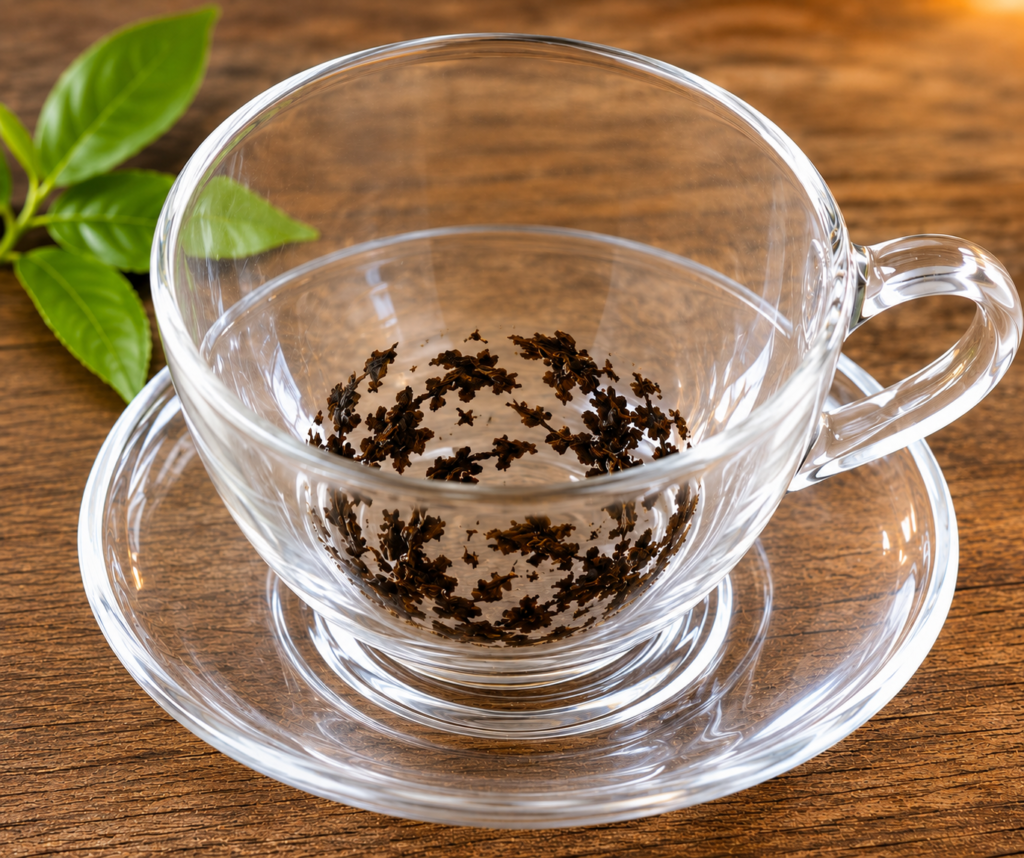
Tea Scrying, also known as tasseomancy, tasseography or tassology, is a traditional form of divination. It involves interpreting the shapes and patterns formed by tea leaves inside a cup. Additionally, coffee grounds or wine sediment may be used in similar methods. It relies on symbol interpretation to reveal meanings and guidance.
With roots in Asian, Ancient Greek and European folk traditions, it transforms the simple act of drinking tea into reflection. Practitioners view the resulting patterns as messages or insights about character, future events or personal balance. It is a practice rooted in cultural storytelling and symbolic interpretation, inviting calm attention and mindful reflection.
Crucially, you do not need specialised psychic abilities to begin tea leaf scrying. However, the practice benefits from patience, focused intention and careful preparation. Choosing suitable tea ware, using whole loose-leaf tea and understanding how the different areas of the cup are interpreted can help create a more meaningful and structured scrying experience.
The Origins & History of Tea Scrying
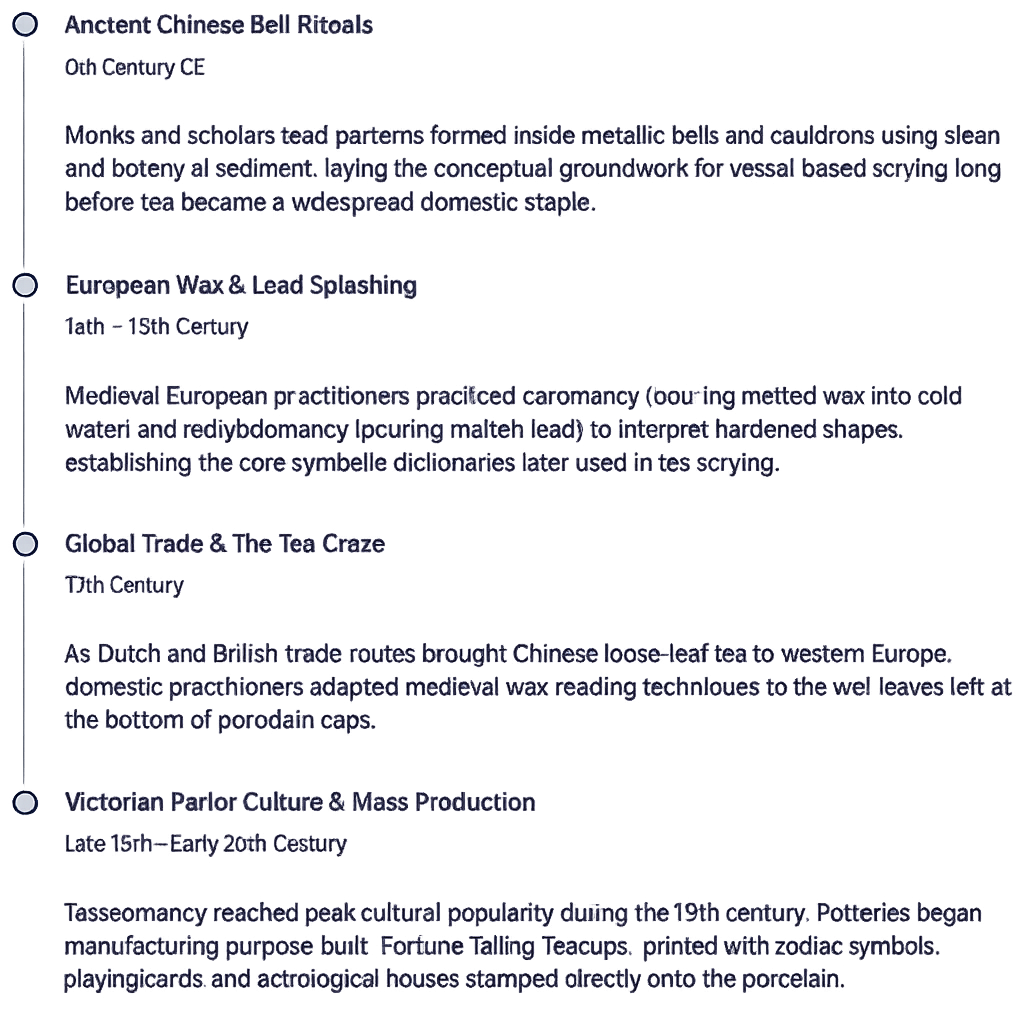
Before tea leaf reading became a popular parlour art in Victorian drawing rooms, interpreting sediment was a rooted folk practice across multiple cultures:
Notable Practitioners & Cultural Figures
Throughout history, several key figures and cultural traditions have shaped how tasseomancy is practised and recorded:
- Romani Readers & Travelling Traditions: Central to the popularisation of fortune-telling across Europe, Romani practitioners incorporated tasseomancy alongside palmistry (chiromancy) and card reading. However, operating as itinerant seers, Romani readers helped transition tea leaf scrying from esoteric rites to accessible folk divination.
- Sybilla (18th Century Pseudonym): Author of some of the earliest printed European pamphlets mapping specific meanings to tea shapes, formalising symbols like anchor (hope), coffin (endings), and clover (luck).
- Highland Seers (Scottish & Irish Tradition): Known in Gaelic lore as Taibhsear, regional readers passed down oral traditions of reading tea leaves alongside second sight (Dà-shealladh), using it as a community tool to predict weather, arrivals, and harvests.
- C.G. Jung & Synchronicity Studies: While not a commercial fortune teller, psychologist Carl Jung studied symbolic divination systems (including scrying and the I Ching), noting that visual shapes in tea leaves act as a projection screen for the subconscious mind.
Visual Symbol Breakdown: Interpreting Real Tea Leaf Patterns
When looking into a cup after inversion, leaves fall into distinct structural arrangements.
These range from isolated single-leaf symbols to dense, webbed clusters for Tea Scrying.
Common Symbol Formations & Worked Examples
| Formation Type | Visual Appearance | Classical Interpretation | Example Scenario |
| The Anchor | A vertical stem with a horizontal bar or curved base | Security, stability, long-term grounding | Appearing near the rim suggests a stable contract or resolution arriving soon. |
| The Ring / Circle | Closed circular loop or halo of fine leaf particles | Marriage, completion, financial union | Located near the handle indicates a personal commitment or domestic milestone. |
| Birds / Wings | V-shapes, outstretched wings, or flying clusters | Incoming news, fast communication, travel | Flying toward the handle means news arrives to you; away means you send message out. |
| Dappled Dust / Dots | Specks or tiny individual leaf fragments scattered loosely | Wealth, currency, small opportunities | Numerous tiny specks at the bottom of the cup signify incremental financial gains. |
| The Tree / Branch | Forking lines branching outward toward the rim | Growth, family expansion, physical health | A strong, upward-branching shape indicates personal progress and vitality. |
The Essential Toolkit
Before initiating a session, gather tools that allow the tea leaves freedom of movement while providing optimal visual clarity:
| Tool | Ideal Specifications | Why It Matters |
| Tea Cup | Wide-mouthed, smooth, white or light-coloured interior | Provides high visual contrast against dark leaves and ample room for patterns to spread. |
| Saucer | Flat, matching light-coloured ceramic | Acts as the drainage catchment during the inversion ritual. |
| Tea Blend | Large-leaf loose tea (Black, Green, or Oolong) | Teabag dust (“fannings”) is too fine to form readable shapes. Avoid teas containing dried fruit chunks or flower petals that obscure leaf shapes. |
| Water | Freshly boiled spring or filtered water | Ensures clean brewing without residual chemical aromas. |
Step-by-Step Ritual & Cup Setup
The physical sequence of preparing, sipping, and inverting the vessel is what distributes the leaves across the cup’s interior walls. Follow this established methodology:
1.Brew Direct in the Cup:Do not use a strainer or infuser.
Place approximately 1 teaspoon of loose-leaf tea directly into the teacup. Pour hot water directly over the leaves and allow them to steep uncovered. Leaving the leaves free-floating in the water is essential for creating unique symbol clusters.
2.Focus Intention and Sip:Leave roughly one tablespoon of liquid at the bottom.
The querent (the person seeking insight) should sit quietly, hold the cup with both hands, and reflect on an open-ended question or life theme. Drink the tea slowly, leaving about a tablespoon of liquid and all settled leaves at the base.
3.Swirl the Leaves:Use your non-dominant hand.
Holding the cup handle with the non-dominant hand, gently swirl the remaining liquid and leaves in a smooth circular motion three times. This coats the interior walls of the cup with suspended leaves.
4.Invert onto the Saucer:Allow excess liquid to drain for 1 to 3 minutes.
Place your saucer face-down over the top of the cup, then quickly and carefully flip both upside down together. Tap the base of the cup gently three times to drop excess moisture, allowing the liquid to drain out into the saucer while leaves adhere to the porcelain.
5.Orient the Vessel:Align the handle due South.
Turn the cup right-side up. Orient the handle facing directly toward you (“South” on an intuitive compass dial). The handle represents the querent and acts as the grounding anchor of the reading.
Mapping the Teacup Topography
Once the cup is right-side up, interpret the leaves based on their spatial location within the vessel. Tasseomancy uses a three-dimensional grid to map time, personal relevance, and external influences:
1. Vertical Time Spheres
- The Rim (Top Third): Represents immediate events, active influences, or outcomes unfolding within days or weeks.
- The Middle Wall: Speaks to the near future, unfolding processes, or choices in motion.
- The Base (Bottom): Represents long-term outcomes, hidden underlying forces, or distant developments.
2. Horizontal Proximity to Self
- Near the Handle: Represents personal matters, immediate home life, close family, or internal thoughts.
- Opposite the Handle: Symbolises external influences, outside events, foreign places, or social circles.
Frequently Asked Questions
Can I read tea leaves using a teabag?
No. Teabags contain crushed leaf particles (“dust and fannings”) designed to infuse quickly. When poured into a cup, these tiny fragments form a uniform, muddy sludge rather than distinct shapes, lines, or imagery required for scrying.
What if all the leaves drop to the bottom of the cup?
If all leaves pool at the base, too much liquid was left in the cup before swirling, or the cup was inverted too quickly without proper coating. Re-add a small splash of hot water, swirl three times with intention, and drain again on the saucer.
Can I perform a reading for myself?
Yes. Self-reading is a common form of intuitive journaling. However, ensure you approach the symbols with neutral curiosity rather than projecting your immediate fears or wishes onto ambiguous shapes.
Does the tea type change the reading’s meaning?
The variety of tea (Black, Green, Oolong, Herbal) does not alter the symbolic outcome, though large-leaf black tea (like Orange Pekoe or Earl Grey) remains the standard because dark leaves yield high visual contrast against light porcelain.