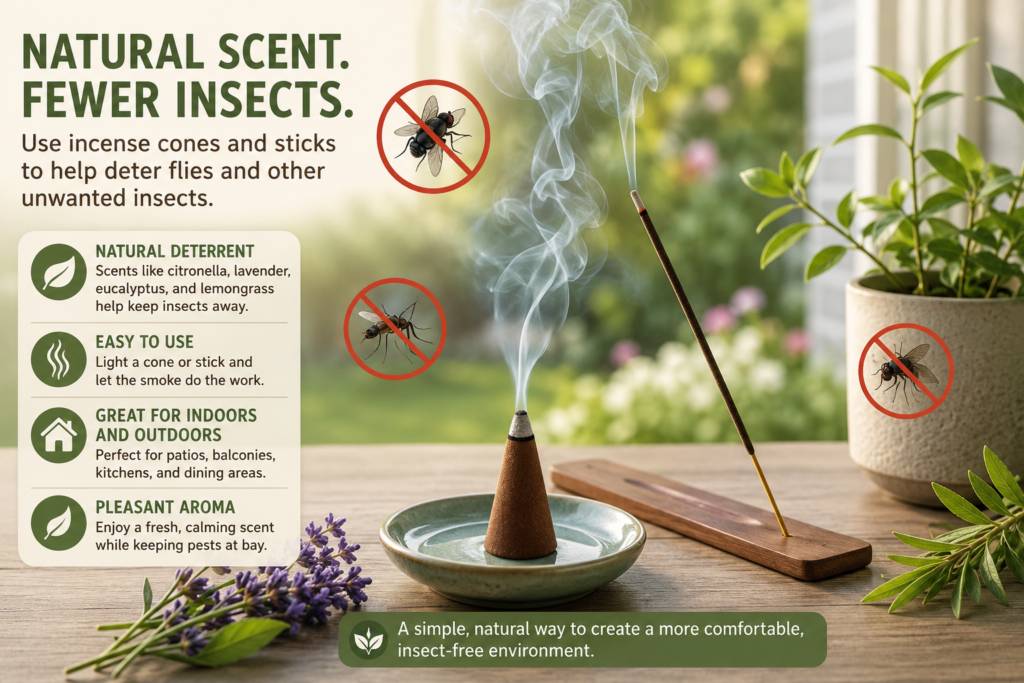
Using plant-based incense is a highly effective, eco-friendly way for Fly and Insect Protection both indoors and out. The secret lies in the aromatic smoke, which releases natural botanical compounds that mask human scents and disrupt insect tracking senses. Indoors, pair slow-burning sticks with cracked windows to create a gentle breeze that coaxes pests outside without overwhelming your rooms. Outdoors, switch to high-output cones and position them upwind from your seating area to let the air currents spread a dense, protective shield. It is a clean, chemical-free tactic that transforms your space into a bug-free sanctuary.
By leveraging the natural defence mechanisms of plants, you can deter flies, mosquitoes, and gnats while filling your home or patio with crisp, earthy aromas.
How Natural Incense Deters Flying Insects
In nature, plants produce volatile organic compounds—essentially their essential oils—to defend themselves against herbivores and pests. When you burn high-quality, plant-based incense, these active compounds are released into the air through smoke.
Flies and mosquitoes rely heavily on their acute sense of smell to locate food sources and breeding grounds. The smoke from specific botanical ingredients masks the scents that attract insects (like carbon dioxide and lactic acid) while actively repelling them with aromas they find intolerable.
Top Plant-Based Ingredients to Look For
When shopping for eco-friendly insect-repelling incense, avoid synthetic “perfume oils” or charcoal bases dipped in artificial fragrances. Instead, look for sticks and cones made from raw botanicals, plant resins, and pure essential oils.
- Citronella: The classic standard. It works by masking the metabolic scents that attract mosquitoes and flies.
- Lemongrass & Citronella Grass: High in citral and geraniol, these grasses offer a sharp citrus scent that flying insects avoid.
- Neem: A powerhouse in organic gardening, neem leaves and oil contain azadirachtin, a natural compound that disrupts insect feeding and breeding behaviours.
- Eucalyptus & Lemon Eucalyptus: Contains high concentrations of PMD (para-menthane-3,8-diol), which is highly effective at scrambling an insect’s tracking senses.
- Lavender: While calming to humans, the linalool found in lavender is highly repulsive to flies, moths, and mosquitoes.
- Palo Santo & White Sage: These traditional resins produce dense, aromatic smoke packed with natural terpenes that clear out flying pests quickly.
The Eco-Friendly Check: Look for incense that uses a biodegradable bamboo core (for sticks) and a natural binding agent like makko powder (derived from the bark of the Machilus thunbergii tree) rather than chemical glues or combustion accelerators.
Indoor vs. Outdoor Application: Tailoring Your Strategy
To get the most out of your natural incense, you need to adjust your approach based on the environment. While the plant-based active ingredients remain the same, air currents and space constraints change how the smoke behaves.
Indoor Use: Targeted Clearing & Ventilation
When using incense indoors to clear out houseflies, fruit flies, or gnats, the goal is to drive the insects out without overwhelming your living space with smoke.
- Create an Escape Route: Never trap insects in a sealed room with incense. Open a window or door on opposite sides of the space to create a gentle cross-breeze. This carries the repelling aroma through the room and gives disoriented flies a clear exit point.
- Opt for Slow-Burning Sticks: Incense sticks are ideal for indoors because they burn slowly and evenly over 45 to 60 minutes, releasing a manageable, steady stream of essential oils into the air.
- Placement Safety: Place your incense burner on a heat-resistant surface, well away from curtains, drafts, and out of reach of pets or children. Central locations like kitchen counters (away from open food) or living room side tables work best.
Outdoor Use: Perimeter Defence & Smoke Density
Outdoors, the main challenge is wind shifting and dispersing the insect-repelling compounds before they can do their job.
Create a Multi-Point Perimeter: For larger outdoor spaces, a single stick or cone won’t cut it. Place multiple burning points roughly 6 to 8 feet apart around the perimeter of your gathering area to form an uninterrupted shield against mosquitoes and flies.
Establish an Upwind Barrier: Check the direction of the wind and place your incense holders upwind from your seating, patio table, or deck. The natural air current will act as a delivery system, carrying the protective smoke barrier directly across your outdoor living area.
Utilise High-Output Cones: Incense cones excel in outdoor settings. Because they lack a wood core and burn from a narrow tip down to a wide base, they release a much denser, thicker volume of smoke in a shorter window (typically 20 to 30 minutes)—perfect for rapidly clearing a patio before a barbecue.
Frequently Asked Questions
Is incense safe to use around pets?
You should exercise caution. Cats and dogs have incredibly sensitive respiratory systems, and certain essential oils (like eucalyptus and tea tree) can be toxic to them if ingested or heavily inhaled. Always burn incense in well-ventilated rooms, and ensure your pets have a clear path to leave the area if the smoke bothers them.
What is the difference between sticks and cones for insect control?
Incense cones lack a bamboo core, meaning you get pure botanical material burning all at once. Cones tend to output a thicker, denser volume of smoke over a shorter period (about 20–30 minutes), making them excellent for quick outdoor clearing. Sticks burn more slowly and evenly (about 45–60 minutes), providing a longer-lasting, steady barrier.
Can eco-friendly incense be used completely indoors?
Yes, provided the space is well-ventilated. Unlike chemical coils designed strictly for outdoor use (which often contain synthetic pyrethroids), clean plant-based incense is safe for indoor environments. Just avoid burning them in small, sealed rooms to prevent heavy smoke accumulation.
How do I verify if incense is genuinely environmentally friendly?
Check the ingredient list for transparency. Genuinely eco-friendly brands will explicitly state their base materials (like wood powder or makko) and specify that they use pure essential oils rather than “fragrance” or “perfume.” Additionally, look for brands that pack their products in plastic-free, recyclable paper packaging.
These are my personally selected and curated range of incense products to deter insects
Products by Category
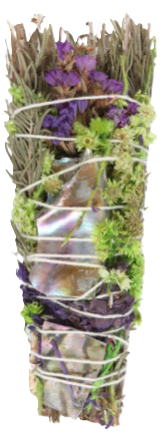
Rosemary, Lavender and Abalone Smudge Stick
Original price was: £15.00.£12.00Current price is: £12.00.