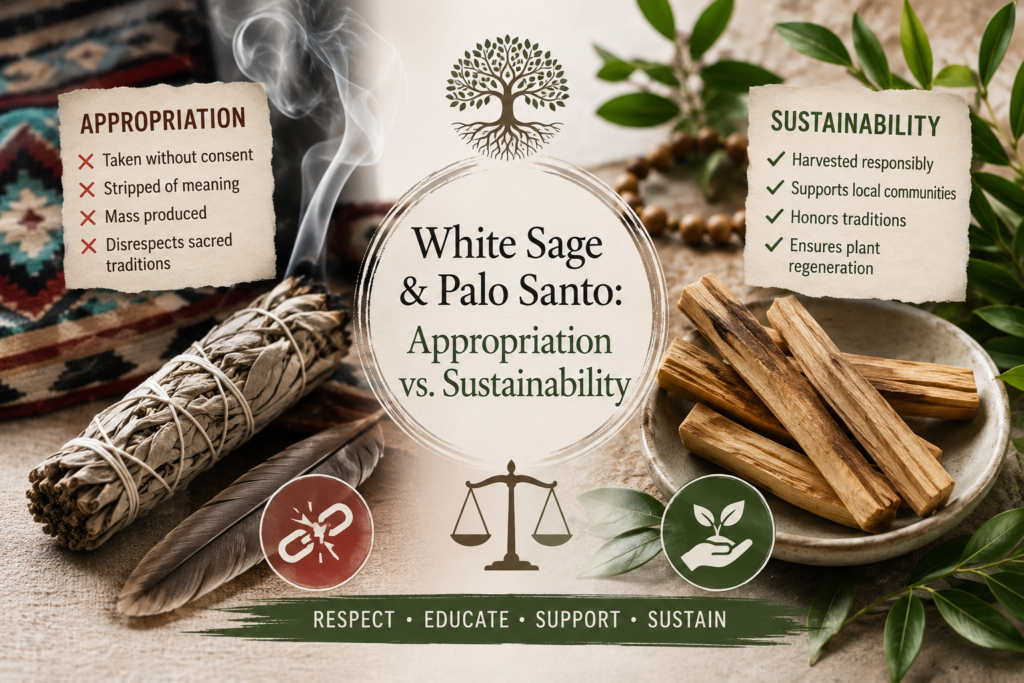
White Sage and Palo Santo have transcended their indigenous roots to become global wellness staples, but their popularity comes with a heavy price. The commercialisation of these sacred plants triggers a complex dual crisis: the cultural appropriation of deeply spiritual, closed indigenous practices, and the ecological threat of overharvesting wild habitats. When we burn these materials without understanding their origin, we risk turning sacred medicines into mere commodities. Balancing personal mindfulness with global awareness is essential. To practice truly ethical wellness, we must untangle the threads of consumer demand, cultural respect, and ecological stewardship.
While resetting your space with these sacred botanicals feels like a positive act, their sudden commercial popularity carries a heavy ecological and cultural price tag. If you use or are considering using these plants, understanding their origins, conservation status, and cultural history is crucial to practising mindful, respectful space clearing.
1. Key Terms Defined
To navigate this discussion respectfully, we must understand the distinct terminology used by practitioners, indigenous elders, and conservationists:
- Smudging: A closed, sacred ceremonial practice belonging to specific Native American and First Nations communities (such as the Anishinaabe, Lakota, and Chumash). It involves precise protocols, prayers, and sacred medicines.
- Smoke Cleansing: A universal, open practice of burning dried herbs, wood, or incense to purify a space or person. This practice exists across globally diverse cultures.
- Endangered vs. Threatened Status: Endangered species face imminent extinction across all or a significant portion of their range. Threatened species (or those of local conservation concern) are vulnerable to becoming endangered due to habitat destruction or overexploitation.
- Wildcrafting vs. Poaching: Sustainable wildcrafting involves gathering wild plants following strict ecological guidelines (never taking more than a tiny fraction, leaving roots intact). Poaching is the illegal harvesting of wild plants from protected public or private lands for commercial profit.
2. The Ecological Reality: Are Sage and Palo Santo Endangered?
The rapid surge in global demand has created localized ecological crises for both of these revered plants.
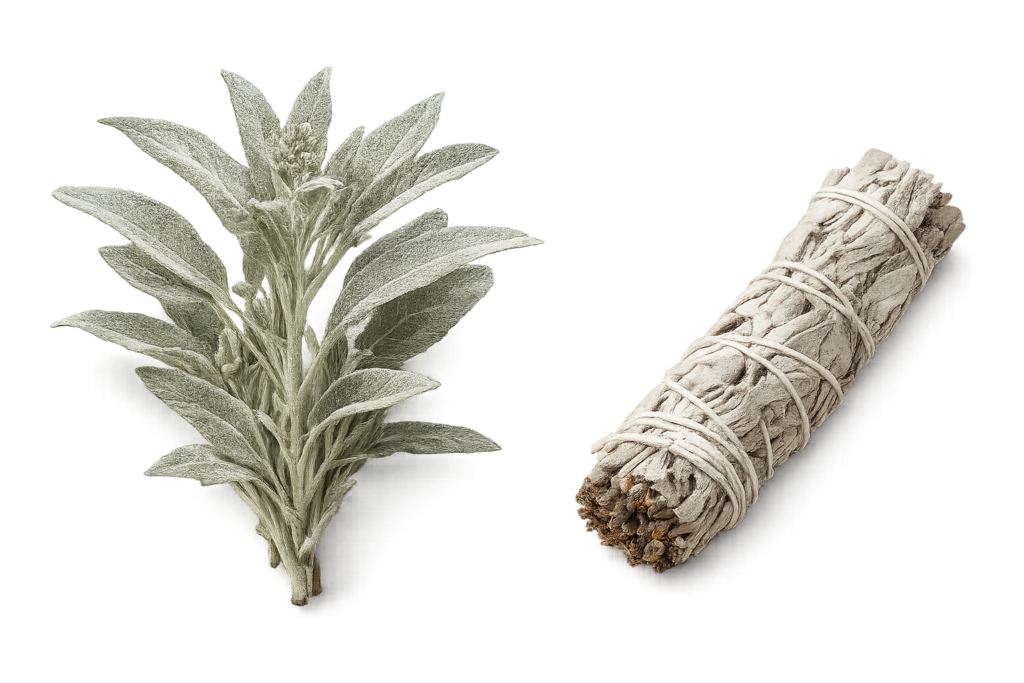
White Sage (Salvia apiana)
- The Botanical Status: Globally, Salvia apiana is not currently listed on the federal endangered species list.
- The Threat: It is severely threatened at the local level. White sage is endemic to a highly specific, fragile strip of coastal sage scrub in Southern California and northern Baja California.
- The Crisis: This region is rapidly shrinking due to urbanisation, wildfires, and climate change. Worse, the high demand for cheap sage has fuelled rampant illegal poaching. Poachers trespass onto protected reserves, rip entire plants out by the roots, and strip fragile ecosystems bare to supply online marketplaces and wholesale distributors.
Palo Santo (Bursera graveolens)
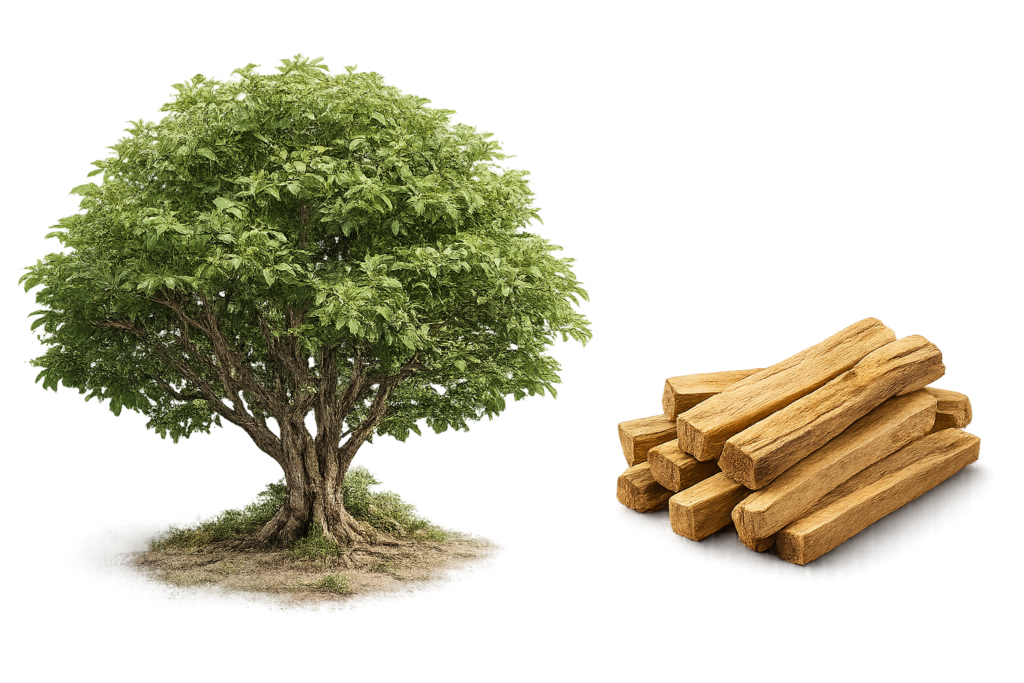
- The Botanical Status: The species widely sold in the wellness market, Bursera graveolens, is categorised as “Least Concern” by the International Union for Conservation of Nature (IUCN).
- The Confusion: It is frequently confused with Bulnesia sarmientoi, a completely different, heavily endangered South American tree also commonly referred to as “Palo Santo.”
- The Crisis: While Bursera graveolens is not extinct, its traditional, ethical harvesting method is highly threatened. Indigenous communities harvest Palo Santo exclusively from trees that have died naturally and aged on the forest floor for four to ten years. This ageing process allows the wood’s aromatic resins to fully develop. Mass commercial demand has led to unethical suppliers cutting down living trees prematurely, disrupting delicate dry forest ecosystems and producing inferior, non-aromatic wood.
3. Cultural Comparison: Appropriation vs. Appreciation
Understanding the difference between honouring a practice and appropriating it is key to a conscientious spiritual journey.
| Attribute | Indigenous Smudging (Closed) | Universal Smoke Cleansing (Open) |
| Cultural Origin | Specific Native American and First Nations tribes. | Global (including ancient Celtic, Roman, Baltic, and Asian traditions). |
| The Sacred Medicines | White Sage, Sweetgrass, Tobacco, and Cedar. | Rosemary, Lavender, Garden Sage, Mugwort, Juniper, and Pine. |
| Core Purpose | Deep spiritual alignment, tribal ceremony, community prayer, and ancestral connection. | Space purification, physical air cleansing, stress relief, and setting personal intentions. |
| How It Is Performed | Highly specific ceremonial protocols, often led by an elder or keeper of the medicine. | Casual, intuitive burning of dried plants in a fireproof vessel. |
Why the Distinction Matters
For generations, Native American spiritual and ceremonial practices were systematically outlawed by the United States and Canadian governments. Under policies like the U.S. Code of Indian Offences, indigenous people faced imprisonment for practising their traditional ceremonies, including smudging.
These laws were not fully overturned until the American Indian Religious Freedom Act of 1978. Because of this history, the commodification of “smudging kits” by non-indigenous brands—while indigenous people only recently regained the legal right to practice their faith—is a painful form of cultural appropriation. Using the term “smoke cleansing” for your home practice is a simple, powerful way to respect this history.
4. How to Ethically Source Sacred Plants
If you feel a deep, authentic connection to white sage or Palo Santo and wish to keep using them, you can do so responsibly by adhering to these strict guidelines:
- Buy Directly from Indigenous-Owned Businesses: Ensure your money directly supports the communities preserving these sacred traditions. This keeps the economic benefits within the cultures that nurtured the practice.
- Choose Farm-Grown Sage: Avoid any white sage labelled “wild-harvested” or “wildcrafted” unless the seller can explicitly prove they own the land or have a legally binding, sustainable harvesting agreement. Farm-grown Salvia apiana is highly sustainable and does not deplete wild populations.
- Demand Palo Santo Transparency: Only buy from suppliers who work directly with certified Ecuadorian or Peruvian communities engaged in active forest regeneration. Ethical brands should explicitly state that their wood is gathered solely from naturally fallen branches and dead trees.
5. Sustainable, Culturally Respectful Alternatives
You do not need to use threatened or culturally sensitive plants to clear the energy in your home. Some of the most potent clearing herbs are common, highly sustainable plants you can grow in a windowsill or find at a local nursery:
- Common Garden Sage (Salvia officinalis): The culinary sage in your kitchen is a direct relative of white sage. It carries a beautiful, comforting herbal aroma and has a long history of clearing stagnant energy in European folk traditions.
- Rosemary & Lavender: Rosemary is historically used for mental clarity, protection, and memory, while lavender infuses a space with peace, tranquillity, and emotional healing. Both are exceptionally easy to grow and dry.
- Local Conifers (Pine, Cedar, Juniper): If you live near evergreen trees, collecting fallen twigs of cedar or pine needles is a wonderful, grounding way to connect with the local land. Burning conifer needles offers a rich, forest-floor aroma that cleanses the home of heavy energy.
- Look to Your Own Ancestry: Explore the ancient cleansing practices of your own ancestors. Whether that is burning mugwort (European folk magic), lighting incense (Asian ancestral veneration), or burning frankincense and myrrh (Middle Eastern and Mediterranean traditions), connecting to your roots adds a profound layer of meaning to your practice.
Cleansing with Conscience
True spiritual purification cannot begin with an act of ecological or cultural extraction. When we choose locally grown, sustainably harvested, or ancestrally aligned plants, we bring integrity to our practice. By making conscious choices, we ensure our personal search for peace does not disrupt the peace of the earth or the communities that care for it.
These are my personally selected and curated White Sage and Palo Santo products